The Ultimate Guide to Elvira, Mistress of the Dark (1988)
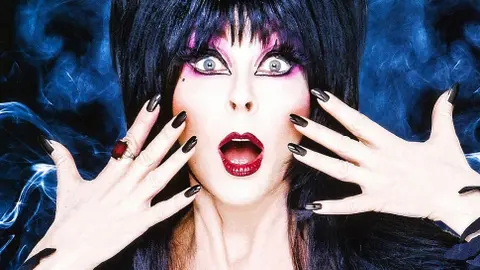
The Ultimate Guide to Elvira: Mistress of the Dark (1988)
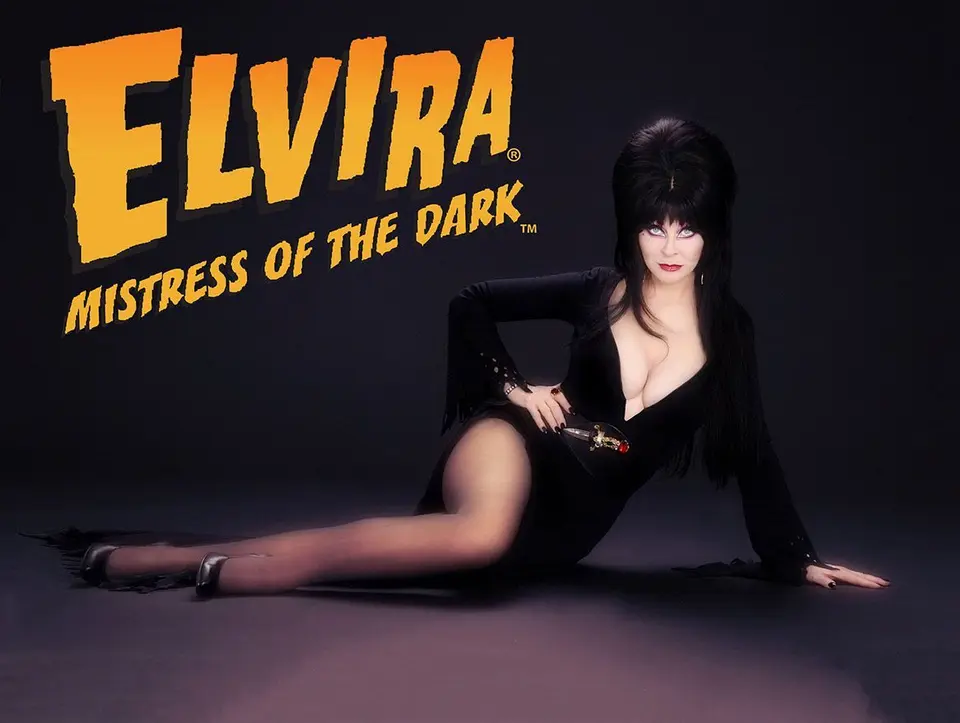
 I’m reasonably sure a significant percentage of my personality can be traced directly back to Cassandra Peterson.
Specifically, Cassandra Peterson as Elvira.
I don’t remember discovering Elvira because, as far as I’m concerned, she has just always existed. I saw Elvira: Mistress of the Dark when I was a kid, became completely obsessed with her and never really stopped. The horror, the camp, the sarcasm, the double entendres that sailed directly over my head until I was old enough to realize what she was actually talking about…it was basically an instructional course in developing my sense of humor.
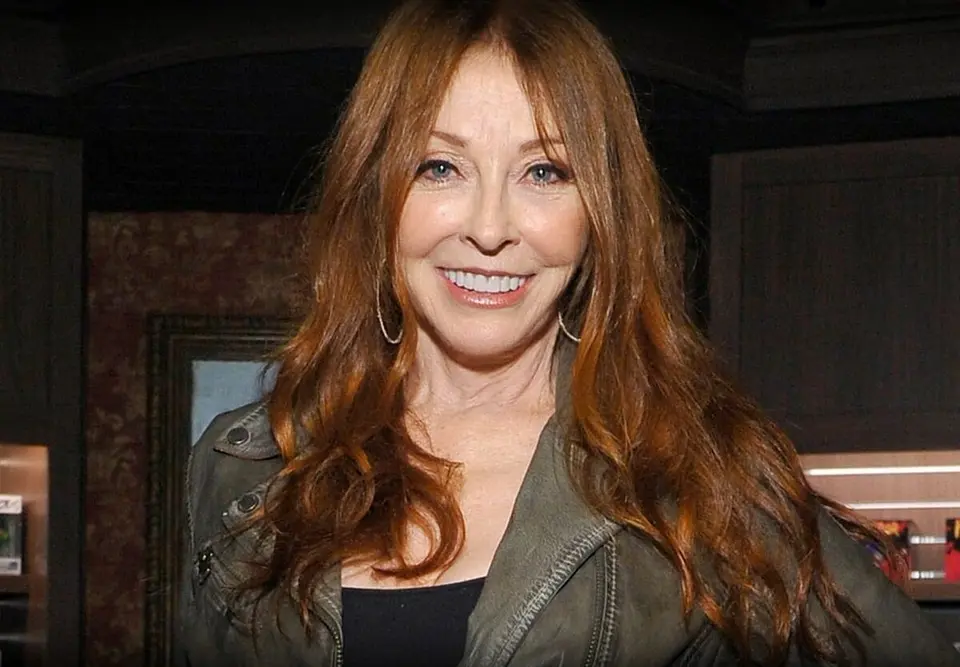
Years later, I would get the completely surreal opportunity to interview Cassandra multiple times for Pop Culture Weekly. She has also been my biggest inspirations as a wannabe horror host, which means there is probably a direct line from me sitting in front of a television watching Elvira as a kid to a shocking number of decisions I have made as an adult.
There are worse people to blame.
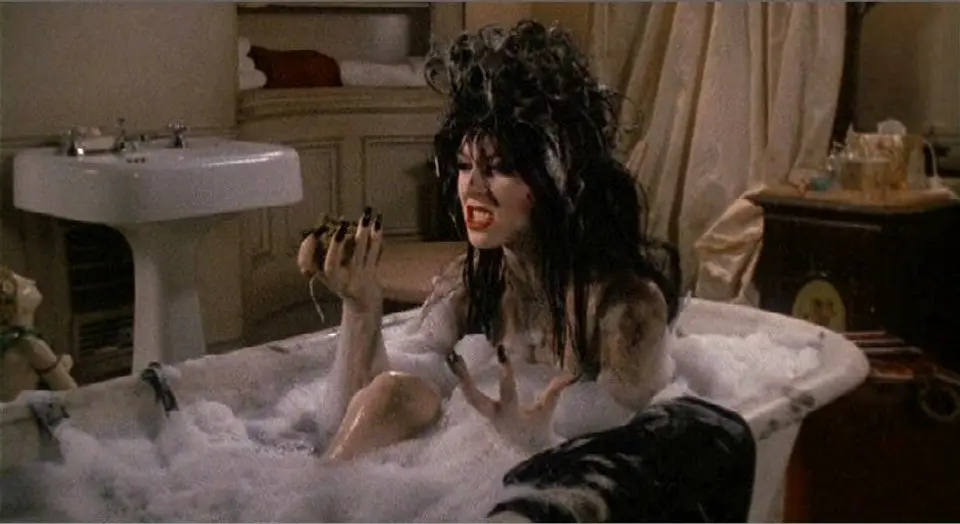
But my love for Elvira: Mistress of the Dark isn’t simply because I love Elvira. The movie itself works. It is campy, ridiculous, sexy, sweet, endlessly quotable and just spooky enough to live comfortably in the Halloween section of your movie collection without ever really becoming a horror movie. It has witchcraft, supernatural shenanigans and enough horror imagery to earn its spooky credentials, but its primary mission is making you laugh. And that it does.
What makes Elvira: Mistress of the Dark particularly fascinating is how successfully it accomplishes something that could have gone horribly wrong: it takes a character audiences primarily knew from sitting on a couch introducing old horror movies and builds an entire world around her.
Elvira wasn’t originally a sitcom character with years of established supporting characters and mythology waiting to be expanded. Audiences knew the black dress, the enormous hair, the dagger, the cleavage, the sarcasm and the groan inducing jokes. But what happens when she gets off the couch?
Elvira: Mistress of the Dark figured it out. The movie gave Elvira a bigger world without making her smaller. It expanded the character without fundamentally changing her. It let her be sexy without apologizing for it, ridiculous without making her stupid and surprisingly kind without suddenly turning her into somebody else.

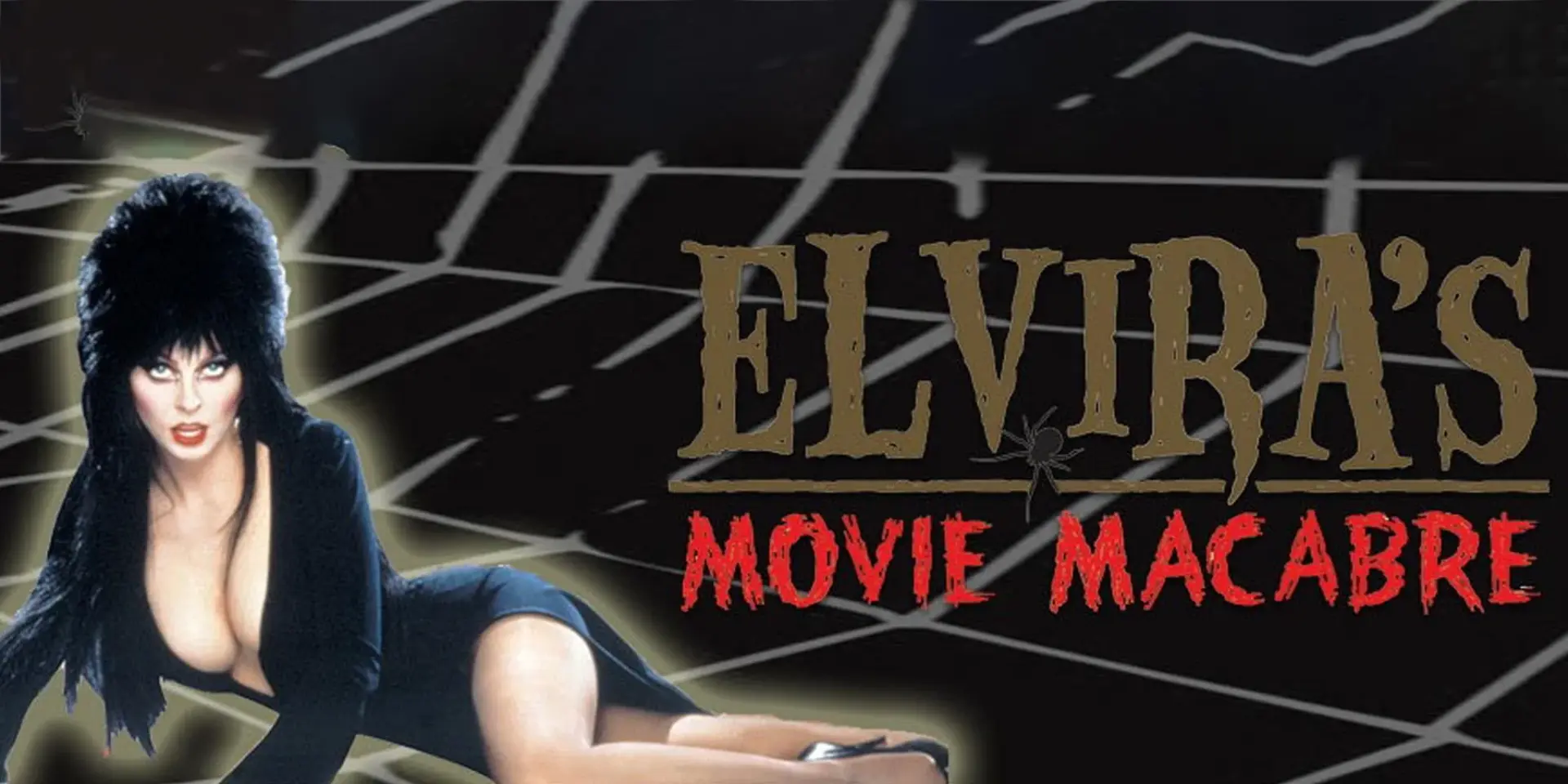
Before the Movie: Elvira Takes Over Television
In 1981, Los Angeles television station KHJ-TV was preparing a new horror-host program built around the old-school tradition of a larger-than-life personality introducing wonderfully questionable movies. Peterson auditioned for the job and brought with her a Valley Girl-style character she had been developing during her time with the Groundlings. The station wanted spooky. Peterson brought funny. Somewhere in the middle, Elvira appeared.
Movie Macabre debuted that year, with Elvira introducing B-movies while interrupting them with jokes, sarcastic commentary and the kind of double entendres that would eventually become inseparable from the character. The towering black hair, plunging black gown, pale complexion and dramatic makeup made her instantly recognizable, but the comedy made her more than another horror-host costume.
The show also established a creative partnership that would eventually become crucial to the movie. Fellow Groundlings performer John Paragon worked with Peterson on Elvira material, helping sharpen the knowingly bad jokes, sexual innuendo and complete commitment to silliness that defined the character.
As Movie Macabre expanded through syndication, Elvira moved far beyond local television. Appearances, advertising, merchandise and an increasingly valuable character brand followed. By the time Hollywood seriously came calling, the question was no longer whether people recognized Elvira. They absolutely did. The question was whether she could leave the television set behind and still be Elvira.
From Sitcom Idea to Feature Film
As Elvira’s popularity grew, television seemed like the obvious next step. NBC entertainment president Brandon Tartikoff was a fan of the character and approached Peterson about developing a series around her. This would eventually happen with a pilot of The Elvira Show in 1993.
But at that time, Peterson had a different goal. She wanted a movie.
That choice makes more sense in the context of the 1980s than it might now. Television and film were much more rigidly separated, and Peterson has said she worried that committing Elvira to a television series first could permanently define her as a television character. She wanted to prove that Elvira could carry a feature before settling into another weekly format.
Tartikoff agreed, and NBC financed the movie. Peterson has described the arrangement as unusually freeing: she, Paragon and Sam Egan were able to shape the film around the character they actually knew rather than handing Elvira over to a studio that might decide what she was supposed to be. They were able to create it themselves.
The feature format also solved a creative problem. Instead of simply stretching Elvira's Movie Macabre to feature length, the writers could finally discover what Elvira looked like in an actual world with goals, relationships, enemies and consequences.
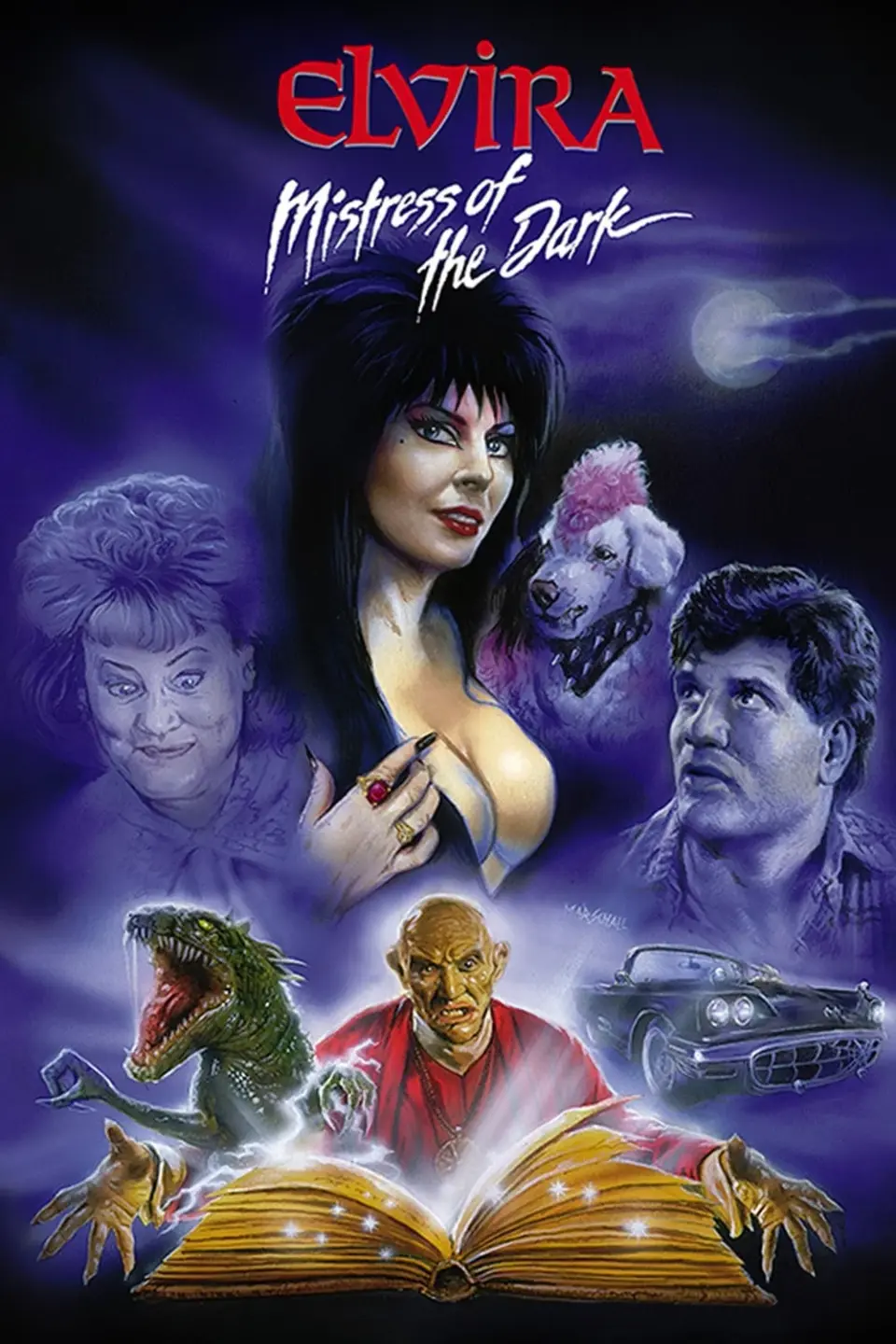
Writing Elvira for the Real World
Peterson wrote the screenplay with Paragon and Egan. Peterson and Paragon knew Elvira’s comedic voice inside out; Egan supplied the structural discipline that could turn that voice into a movie. Peterson has called him the “structure guy” and joked that NBC essentially wanted an adult in the room and that's what Egan was.
That balance was essential. A character like Elvira can generate jokes all day. A movie still needs momentum, stakes and supporting characters who can reveal something about its lead.
The screenplay’s smartest decision is that it never decides Elvira needs to become more respectable simply because she is now the protagonist. It does not soften her sexuality or make her secretly embarrassed by the things that made people love her in the first place. Instead, it puts her somewhere those qualities become even funnier: a town that regards practically everything about her as a threat to civilization.
At the same time, the movie gives her emotional dimension. She is still vain, horny, impulsive and fully capable of saying something inappropriate at the exact moment a normal person would probably try diplomacy. But she is also generous, loyal and much more compassionate than many of the people judging her. That gives the character depth without forcing her to become solemn, which would have been a crime against nature anyway.
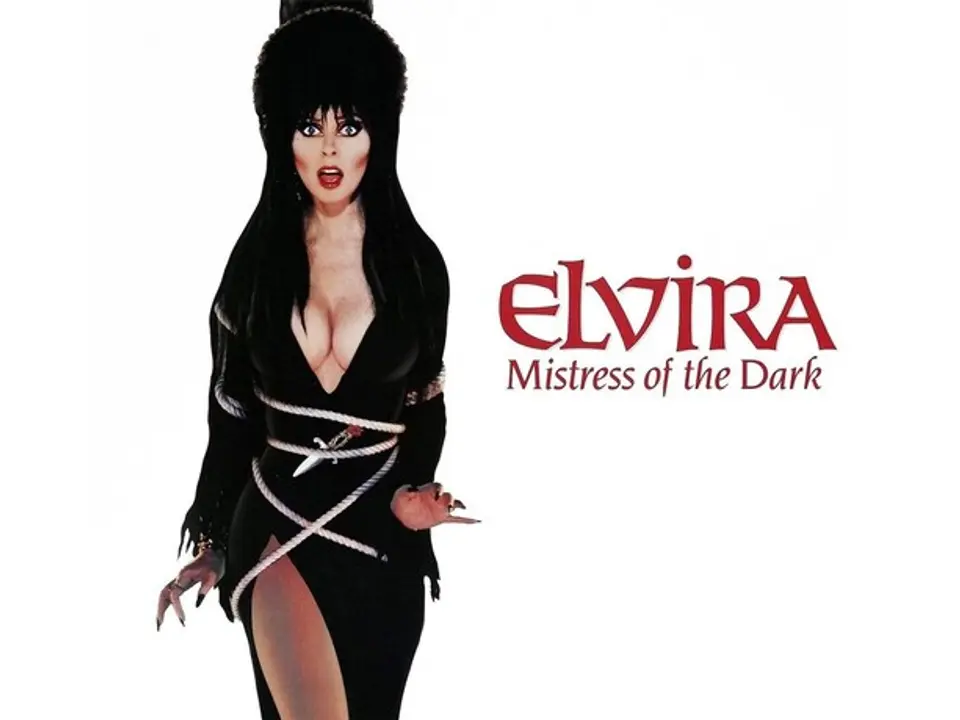
Getting Elvira: Mistress of the Dark Made
Getting Elvira onto a movie screen took several years. NBC backed the project with a reported budget in the neighborhood of $7 million, and Peterson was unusually involved for the star of a first feature built around a television persona. She was not simply performing somebody else’s version of Elvira; she was a writer, producer and the person most responsible for protecting the character.
James Signorelli came aboard to direct. His background included comedy and extensive work with Saturday Night Live, which made him a sensible choice for a movie that needed to treat ridiculous material seriously enough for the jokes to work.
Production lasted roughly six weeks, with filming spread across Southern California. Locations included Agua Dulce, Montrose, Santa Monica and Burbank, allowing the movie to create a heightened version of small-town America without abandoning the practical texture that keeps Fallwell from feeling like a soundstage sketch.
The feature also required something Movie Macabre never had to provide: scale. Elvira suddenly needed streets, cars, houses, crowds, supernatural effects and a world large enough for her to move through. The production’s solution was simple and smart. Rather than make everything as outrageous as Elvira, it built a world ordinary enough to make her extraordinary.
Casting the Weird Little World of Fallwell
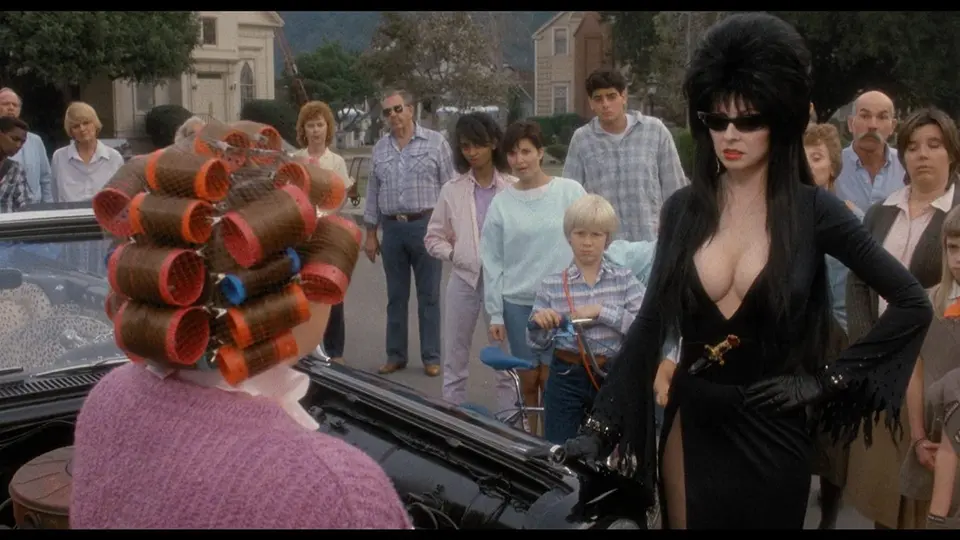
A movie built around Elvira only works if the people around her are strong enough to push back. The supporting cast does exactly that without trying to out-Elvira Elvira.
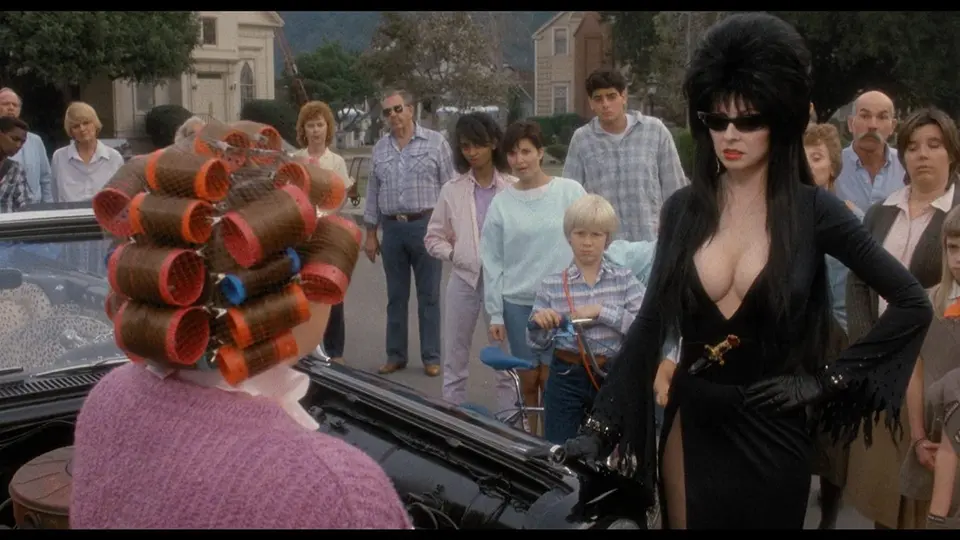
W. Morgan Sheppard gives the film genuine menace as Vincent Talbot, while Daniel Greene brings an easygoing warmth as Bob Redding. Edie McClurg is practically engineered for this universe as Chastity Pariah, Fallwell’s walking moral panic, reacting to Elvira as if one low cut dress could bring down Western civilization.
Susan Kellermann plays Patty, one of Elvira’s few allies, while Jeff Conaway brings exactly the right amount of self-satisfaction to Travis. Around them, Kurt Fuller, William Duell, Pat Crawford Brown, Kris Kamm and the rest of the ensemble help make Fallwell feel populated rather than merely constructed around a star. Paragon even appears briefly, because why not?
The key is that most of them play their world relatively straight. Elvira is already heightened. Surrounding her with equally outrageous characters would make her disappear into the noise. Instead, Fallwell has rules, expectations and people who take those rules very seriously.
Then Elvira arrives and breaks practically all of them by getting out of the car.
Production Design, Costumes and the Perfect Elvira Aesthetic
If the screenplay’s smartest move was putting Elvira somewhere she did not belong, the production’s smartest move was making that somewhere visually obvious the second she arrived.
Fallwell is clean, respectable and aggressively conventional. Elvira is all sharp blacks, exaggerated curves, towering hair and theatrical glamour. Betsy Heimann’s costume work preserves the iconic Elvira silhouette while allowing the surrounding wardrobe to reinforce that contrast. Cardigans, pastels and sensible small-town clothes become part of the joke simply by existing in the same frame as her.
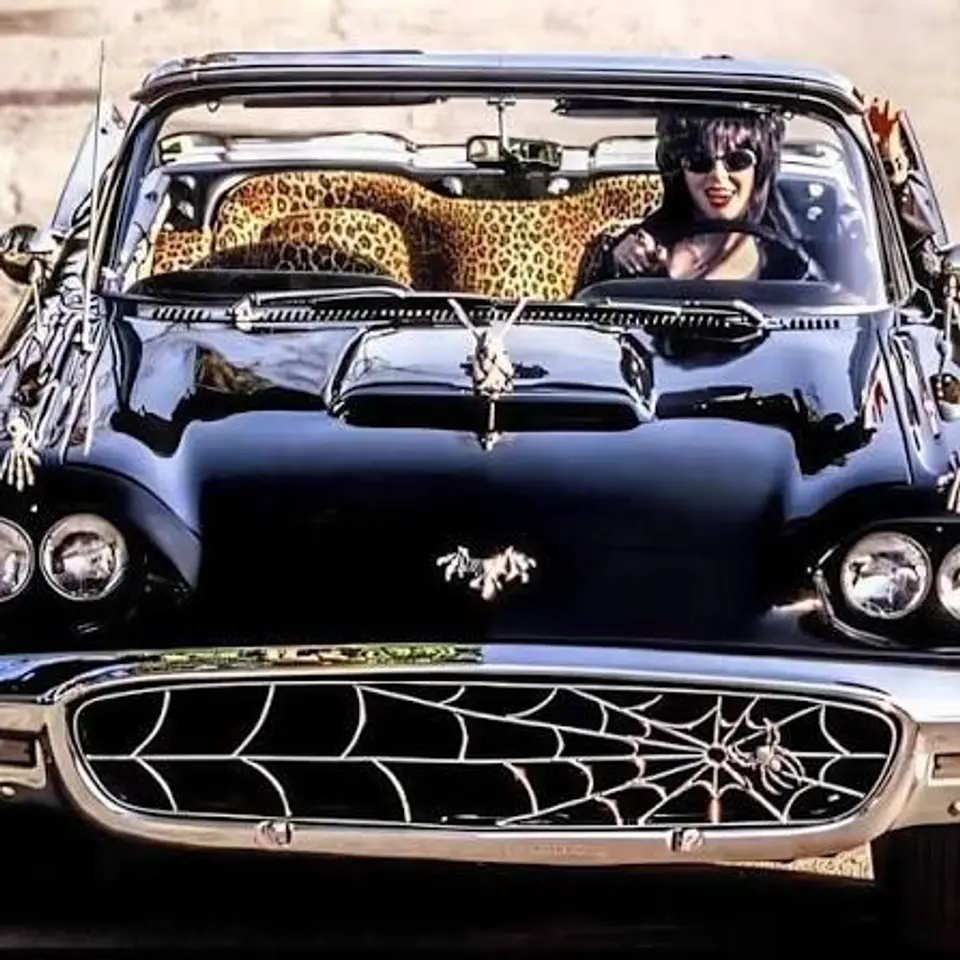
The Macabre Mobile is another perfect example of what the feature could do that television had only suggested. The movie finally had to define what Elvira actually drove, and the result is enormous, black, ridiculous, unmistakable and somehow completely logical the second you see her behind the wheel.


Her inherited house lets the film move even closer to traditional horror imagery, bringing shadows, antique clutter, strange objects and gothic texture into a town otherwise obsessed with looking respectable. The supernatural material can therefore grow naturally out of the production design rather than feeling like it wandered in from another movie.
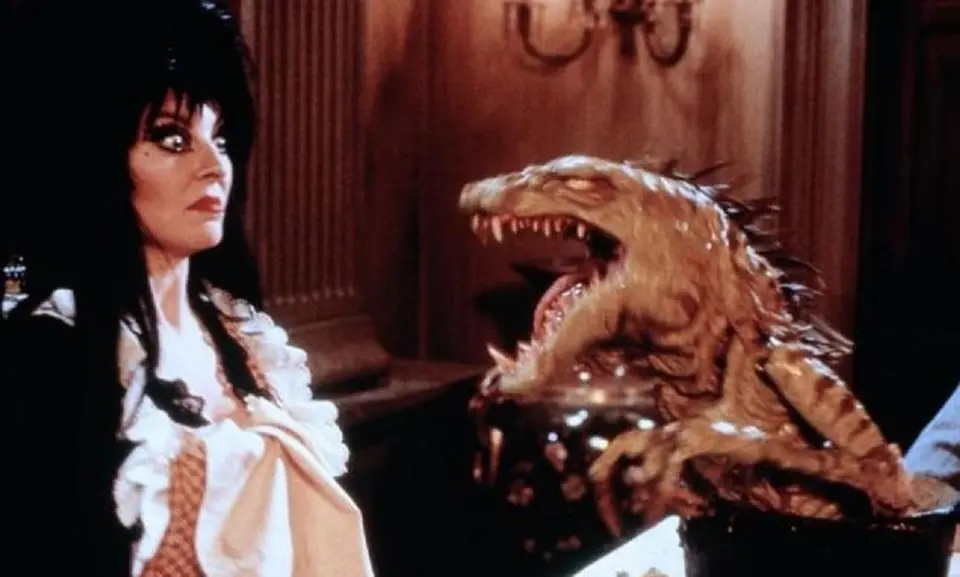
The practical effects fit that approach too. They are not chasing photorealism, which tbh, they shouldn't. Elvira came from a horror-host tradition built around loving cheap monsters, strange props and wonderfully imperfect movies. The feature has enough polish to feel theatrical while retaining enough handmade weirdness to still feel like Elvira.
Even its bigger flourishes embrace excess. That is exactly right. Understatement has never exactly been the Elvira brand.
Elvira Herself: Taking the Character Off the Couch
This is where the entire movie either works or dies.
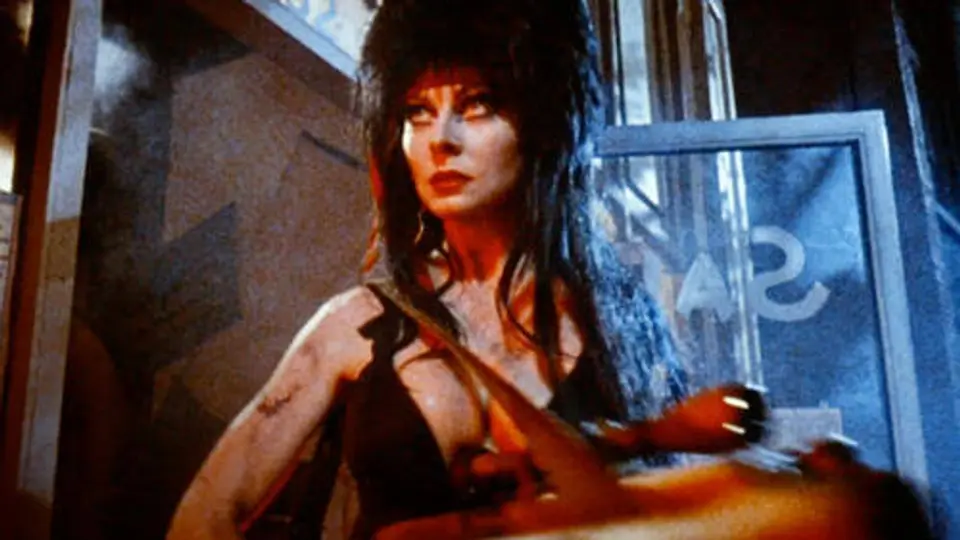
On Movie Macabre, Elvira’s primary relationship was with the audience. She looked into the camera, told jokes and reacted to movies. Elvira: Mistress of the Dark has to turn that persona into somebody who can carry a story without explaining her into oblivion.
The movie understands that her confidence is not an onion that needs to be peeled away so we can discover the “real woman underneath.” The confidence is part of the real woman. She likes how she dresses. She likes sex. She likes attention. She likes making jokes. She is not waiting for some guy in Fallwell to teach her that she is worthy of love because, frankly, Elvira already assumed that part was obvious.
That does not mean she is invulnerable. The movie lets her be disappointed, frustrated and lonely without humiliating her or treating those emotions as punishment for being too much. That is so important for her character and the film.
Fallwell works as the perfect pressure cooker because Elvira does not arrive trying to overthrow anybody’s values. She is mostly trying to handle her own business. Everyone else turns her existence into a crisis. She keeps being herself until the town has to decide whether that is actually the problem.
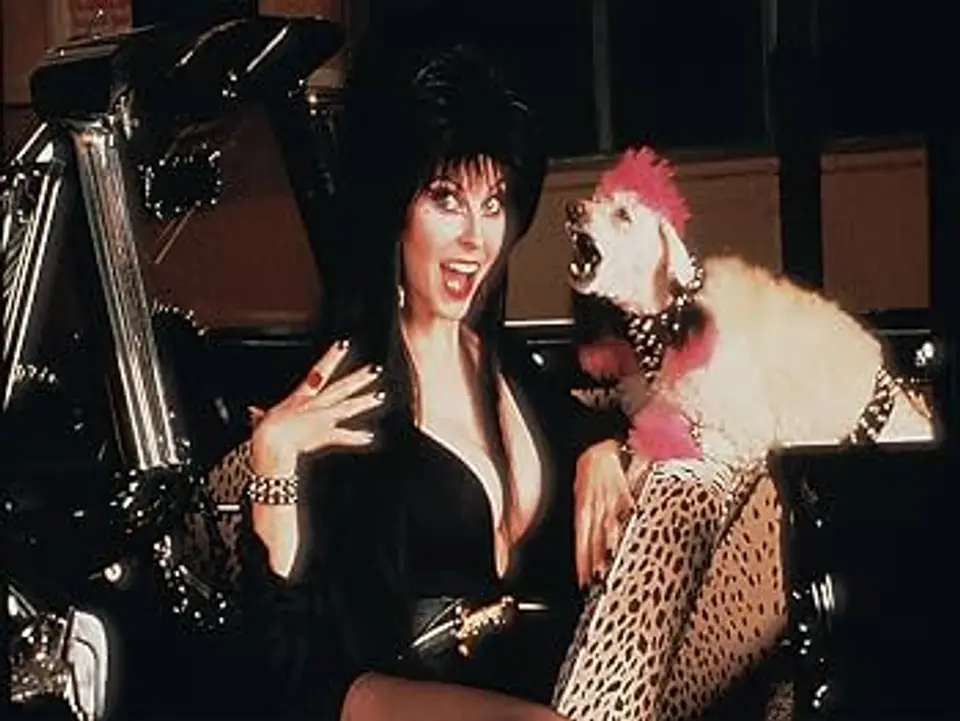
Peterson’s humor is baked into that characterization. The jokes are not little Elvira intermissions pasted onto a conventional story. They are how she thinks: defensive, flirtatious, obnoxious, playful and occasionally so terrible that you have to admire the commitment.
That last part is really important to me because I am reasonably sure decades of exposure to Elvira permanently altered my brain chemistry and my personality.
Her humor lives in that magical space where the joke can be incredibly obvious and still land because of the delivery. A line that would make you groan coming from almost anybody else becomes hilarious because Elvira says it with complete confidence and moves on like she just delivered Shakespeare.
The feature also gives her something the couch never really could: a community. As she forms connections with people around her, the movie reveals how much heart the character has without getting syrupy about it. She can act self-centered, but she does not like seeing outsiders bullied or controlled. That warmth keeps a feature-length dose of Elvira from flattening into one joke repeated for 90 minutes.

I think most importantly, the film never rewards her for becoming quieter. There is no makeover toward respectability and no revelation that the black dress was secretly armor hiding a conventional person underneath.
Elvira wins by remaining... Elvira.
That is the entire trick, and it is why Elvira: Mistress of the Dark is more than a feature length victory lap for a popular horror host. The television format introduced her but the movie proved it never defined her limits.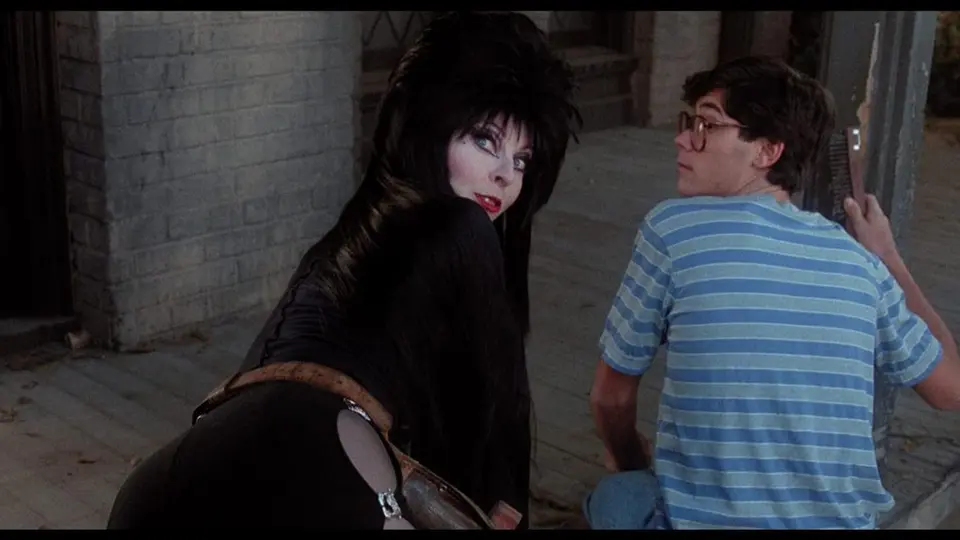
Sex and Double Entendres
You cannot really discuss Elvira without discussing sex, because Elvira certainly is not going to avoid the subject for your comfort. What makes the movie’s approach work is autonomy. Elvira understands exactly how she looks, exactly what effect she has on people and exactly how much fun she can have with both. The joke is rarely that Elvira is too sexual, it's that everyone else is absolutely losing their minds about it. And that's just one of the very many reasons I love her.
Fallwell reacts to her body, clothes and humor like she has arrived carrying a contagious disease. Chastity Pariah seems personally offended by the possibility that another woman might be comfortable with herself in public. Elvira barely has to push before the town starts panicking, although naturally she keeps pushing anyway because at that point why not?
And then there are the double entendres.
There are so many double entendres that the sheer commitment becomes part of the joke. And it's Peterson’s delivery that is essential to actually making them work. She tosses the lines away instead of leaning on them, letting the audience catch the joke while Elvira is already moving on to the next one. At that point, you simply have to respect it.
That repetition is part of the charm. Elvira’s humor is not built around sophistication. It's built around commitment. The puns can be terrible by design, the innuendo can be visible from space, and Peterson sells every line like she has just invented comedy.
The movie also understands that sexual confidence and emotional depth are not opposites. Elvira can flirt aggressively without losing agency and be desired without the movie deciding her body is the only interesting thing about her. She can also misread a situation, say something catastrophically inappropriate and chase a joke several exits past where any normal person would have stopped.
That is one of the many things that keeps her fun.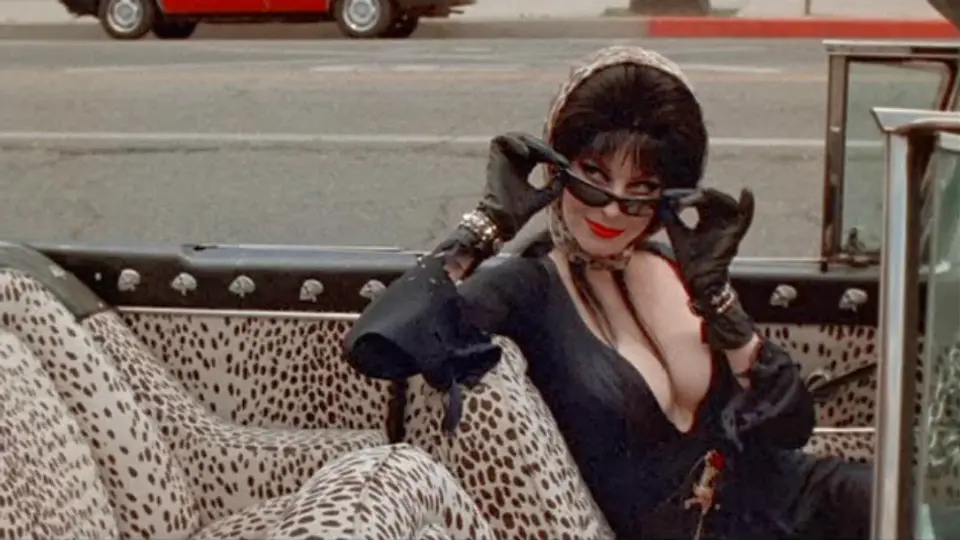
What Happens in Elvira: Mistress of the Dark
Elvira is working as a horror host in Los Angeles when she learns that a relative has died and left her an inheritance. Since she has plans that require considerably more money than she currently possesses, she heads to the small town of Fallwell, Massachusetts, expecting to collect whatever she has been left and get back to her life.
Fallwell is not prepared for her.
Her arrival immediately clashes with the town’s aggressively conservative residents, but Elvira also begins connecting with some of the younger locals and a few adults who are considerably less interested in policing everybody else’s behavior. Meanwhile, her inheritance turns out to involve more than she expected, and the strange family history surrounding it begins pulling the story toward witchcraft, supernatural trouble and B-movie chaos.
That is as far as I’m taking you. Because if you have somehow made it this far in life without seeing Elvira: Mistress of the Dark, I am not going to be the person who ruins the fun for you.
The Horror-Comedy Balance: Spooky, Silly and Perfect for Halloween
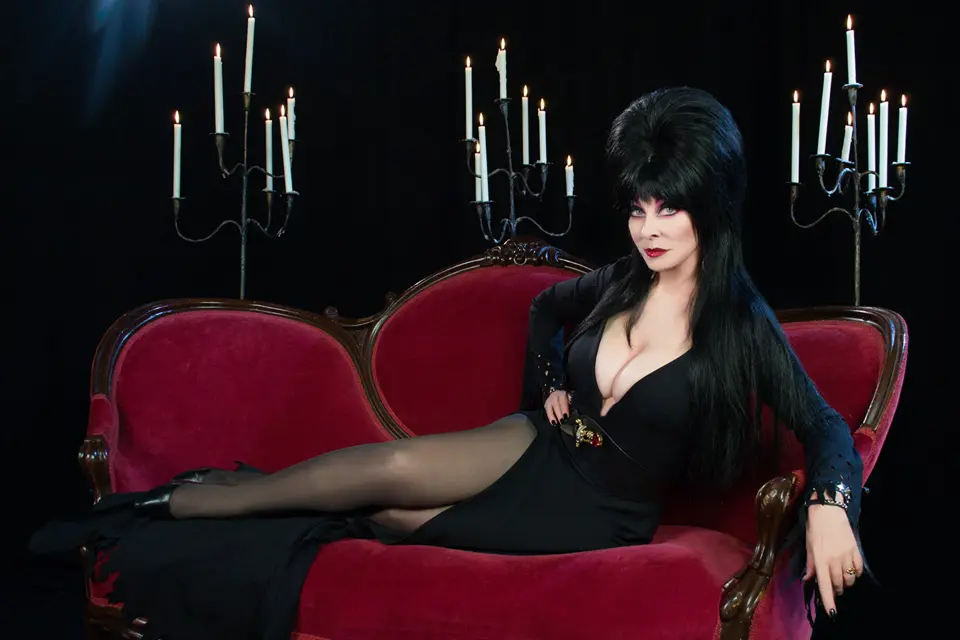
Calling Elvira: Mistress of the Dark a horror movie is not exactly wrong, but it does not tell the whole story. The movie has witchcraft, supernatural danger, gothic imagery, creepy family history and enough spooky atmosphere to live happily beside your October favorites. It is just not especially interested in frightening you.
The comedy drives everything.
That balance is a huge reason the movie has become such an easy Halloween watch. It gives you the atmosphere without demanding that you spend the next two hours watching people get dismembered. Sometimes you want The Exorcist. Sometimes you want Halloween. And sometimes you want Elvira.
The horror material works because she already belongs to that world. Things that would signal danger to a conventional protagonist are practically interior decorating to Elvira. The contrast comes from Fallwell, whose residents treat her like the dangerous supernatural presence long before anything genuinely supernatural happens.
The B-movie influence is everywhere too. Elvira doesn't approach horror from a place of solemn reverence. She loves the cheap monsters, ridiculous effects, gothic clichés and melodrama that horror hosts have spent decades celebrating. That makes the film a perfect bridge between horror and comedy without requiring it to choose one side.
That is also why it feels so perfectly at home around Halloween. I love horror, obviously, but I also love the entire orbit around horror: horror hosts, Halloween specials, campy monster movies, spooky comedy and all the weird little things that make October feel like its own genre. This movie lives directly in the middle of that orbit.
It is not trying to scare the hell out of you, it's inviting that hell over for drinks.
Music, Score and Soundtrack
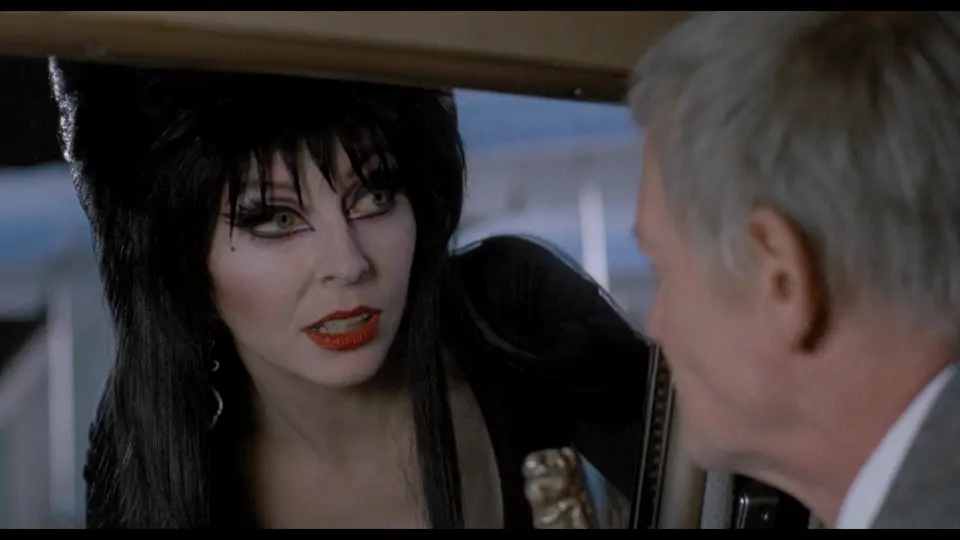
The music in Elvira: Mistress of the Dark works the same way almost everything else in the movie does: it takes familiar material, gives it a slightly sideways spin and refuses to act embarrassed about any of it.
James B. Campbell composed the original score, which has to move between broad comedy, spooky atmosphere and the movie’s more supernatural stretches without suddenly turning Elvira into a grim gothic heroine. The music keeps one foot in horror while leaving the other firmly planted in comedy, which is exactly where this movie lives.
The soundtrack also pulls from a wonderfully odd collection of songs, including I Put a Spell on You, Town Without Pity, Maniac, Shout and Once Bitten, Twice Shy. Because licensing the original recordings was too expensive, several familiar songs were performed as covers for the film rather than using the hit versions audiences already knew.
That could have made the movie feel cheap. Instead, it fits.
There is something extremely Elvira about taking recognizable songs, running them through a slightly off-brand B-movie filter and carrying on like this was obviously the plan all along.
The movie also includes Here I Am, written by Gary Poirot and John Paragon and performed by Elvira herself, along with Chicken Fried Steak, written and performed by Groundlings founder Gary Austin. Those tracks help keep the soundtrack tied directly to the weird little creative universe around Peterson rather than feeling like somebody simply dropped an ’80s compilation album over the movie.
There was never a conventional soundtrack album for the film, and much of the music remained unavailable outside the movie. (Are you listening, powers that be?) Some material, including Here I Am and versions of Once Bitten, Twice Shy, later surfaced through Elvira music compilations. The result is not one of those soundtracks that became bigger than the movie. It does something more useful: it helps make the movie feel unmistakably like Elvira.
Which, at this point, is becoming something of a theme.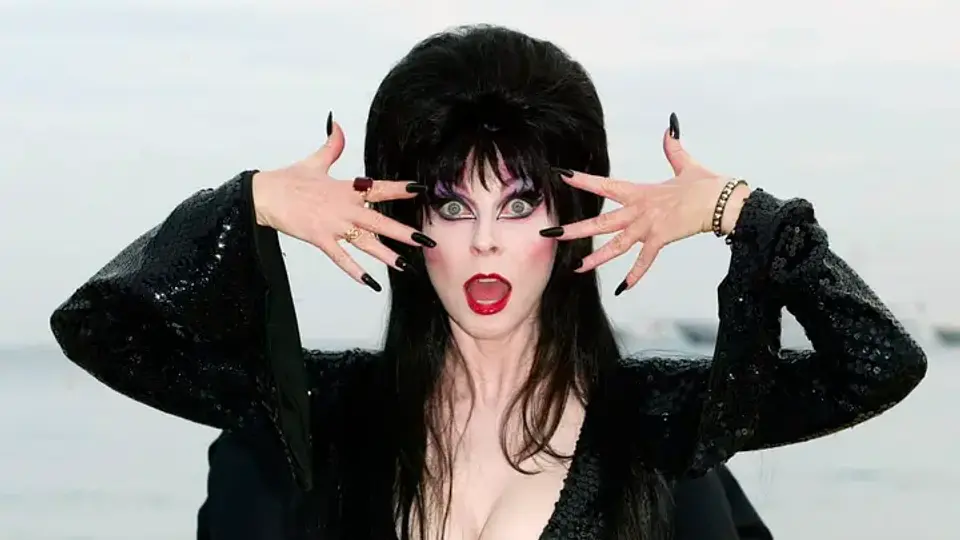
Selling Elvira While the Distributor Was Falling Apart
The marketing for Elvira: Mistress of the Dark had all the ingredients you would expect from Elvira herself: publicity appearances, advance screenings, promotional stunts and enough personality to make the movie feel like an event rather than just another late-September comedy. Los Angeles hosted a special sneak preview on September 24, 1988, and New York got a preview screening followed by an “Elvira-ized” event at Central Park’s Loeb Boathouse. Then the movie opened nationally on September 30.
And then the story gets considerably... less fun.
New World Pictures was in serious financial trouble throughout 1988. By March, its parent company was carrying hundreds of millions of dollars in debt and reporting major losses. By July, the Los Angeles Times was calling the company cash-strapped as it put Marvel Entertainment up for sale, blamed poorly performing movies and high debt costs for its problems, and warned that more losses were coming. Just two weeks before Elvira reached theaters, New World was still restructuring enormous chunks of its debt. That's not exactly the ideal situation for the company responsible for getting your first starring movie into theaters.
Peterson has repeatedly said that New World’s financial collapse gutted the rollout the film was supposed to receive. Her account is that money intended to put prints into far more markets simply was not there when the movie was ready to open. The surviving box-office record supports at least the basic problem: Elvira: Mistress of the Dark opened on only 627 screens, a tiny footprint compared with the kind of nationwide saturation a major studio release could receive.
It still debuted at number seven with $1.66 million for the weekend, averaging about $2,648 per theater. The film ultimately earned $5,596,267 domestically against a reported production budget of roughly $7 million to $7.5 million. On paper, that is a box-office disappointment. There is no way around it.
But the numbers also need context. The movie was not released by a healthy distributor spending aggressively to establish a new franchise. It arrived while New World was desperately restructuring debt, selling assets and trying to stop the financial bleeding. By November, the company would report another substantial operating loss for the third quarter and say it expected more losses in the fourth.
Peterson has long argued that the movie simply never had the theatrical opportunity it needed. The movie opened in only 627 theaters and its distributor was having a very public financial crisis at exactly the same time.
That's important to note when looking at its release because the film’s eventual reputation looks completely different from its opening weekend story. The theatrical numbers alone suggested Elvira had failed to make the jump to movies.
The next several decades would make that conclusion look pretty ridiculous.
Contemporary Reception: Critics Weren’t Exactly Ready for Her
The reviews in 1988 were not a bloodbath, exactly, but nobody was rolling out a velvet rope for Elvira either.
A lot of critics seemed to agree on one thing: Cassandra Peterson herself was the reason to watch. Kevin Thomas at the Los Angeles Times called Elvira a “terrific personality” even while arguing that the movie around her was cheap-looking, heavy-handed and nowhere near as funny as she deserved. The Washington Post was more generous, calling the film “stupid fun” and comparing its broad, character-driven comedy to Pee-wee Herman while still treating the plot and effects as flimsy.
That basic split shows up again and again. The character worked. The critics were much less convinced that the movie did.
Several reviewers complained that the screenplay leaned too hard on breast jokes, double entendres and one-liners. Others thought the supernatural plot arrived too late or that the B-movie references were too obvious. Time Out dismissed the story as predictable and the effects as cheap, while The New York Times treated the whole thing as an attempt to cash in on Elvira’s popularity.
Which is kind of funny in retrospect, because the stuff critics were most suspicious of is exactly the stuff fans ended up loving.
Fans embraced the shameless puns, the boob jokes, the terrible effects, the broad performances, the camp and the fact that it looks like a movie made by people who had spent years watching bad horror movies and thought, “Yes. More of that.”
That does not mean every negative review was wrong. The movie is not especially interested in subtlety, and if you do not find Elvira funny (which, if you don't, what is wrong with you?), 96 minutes of Elvira is going to feel like a very long night. But contemporary reviews often treated the movie’s lack of sophistication like it was an accident when, in many cases, it was the entire point.
The more interesting reviews were the ones that understood the distinction. The Washington Post recognized that the movie was essentially a vehicle for Peterson’s persona. Even some later summaries that landed around the middle of the road acknowledged that the movie was good-hearted, self-aware and built around Elvira’s specific brand of raunchy camp rather than trying to transform her into something more respectable.
That gap between critics and fans would only get wider with time.
Today, Rotten Tomatoes lists the movie at 58% from critics and 66% from audiences, which feels almost hilariously appropriate for a cult movie that spent decades being rescued by the people who actually wanted what it was selling.
The critics did not entirely miss Elvira. They just underestimated how many people were going to want her forever.
Recognition, Nominations and a Little Awards-Season Whiplash
For a movie that arrived to mixed reviews and a disappointing box-office run, Elvira: Mistress of the Dark still managed one of the stranger little awards-season contradictions imaginable.
Cassandra Peterson was nominated for Best Actress at the Saturn Awards for her performance as Elvira. At almost the same time, the Golden Raspberry Awards nominated her for Worst Actress for the exact same performance.
That feels weirdly perfect.
Genre voters looked at Elvira and saw one of the year’s best performances. The Razzies looked at Elvira and saw one of the worst. More than three decades later, I think the fact that people are still buying the movie in 4K probably settles the argument more effectively than either trophy ever could.
Home Video Saves Elvira
The theatrical run may have been disappointing, but the movie’s life was nowhere near over. In fact, this is where the story starts getting a lot better.
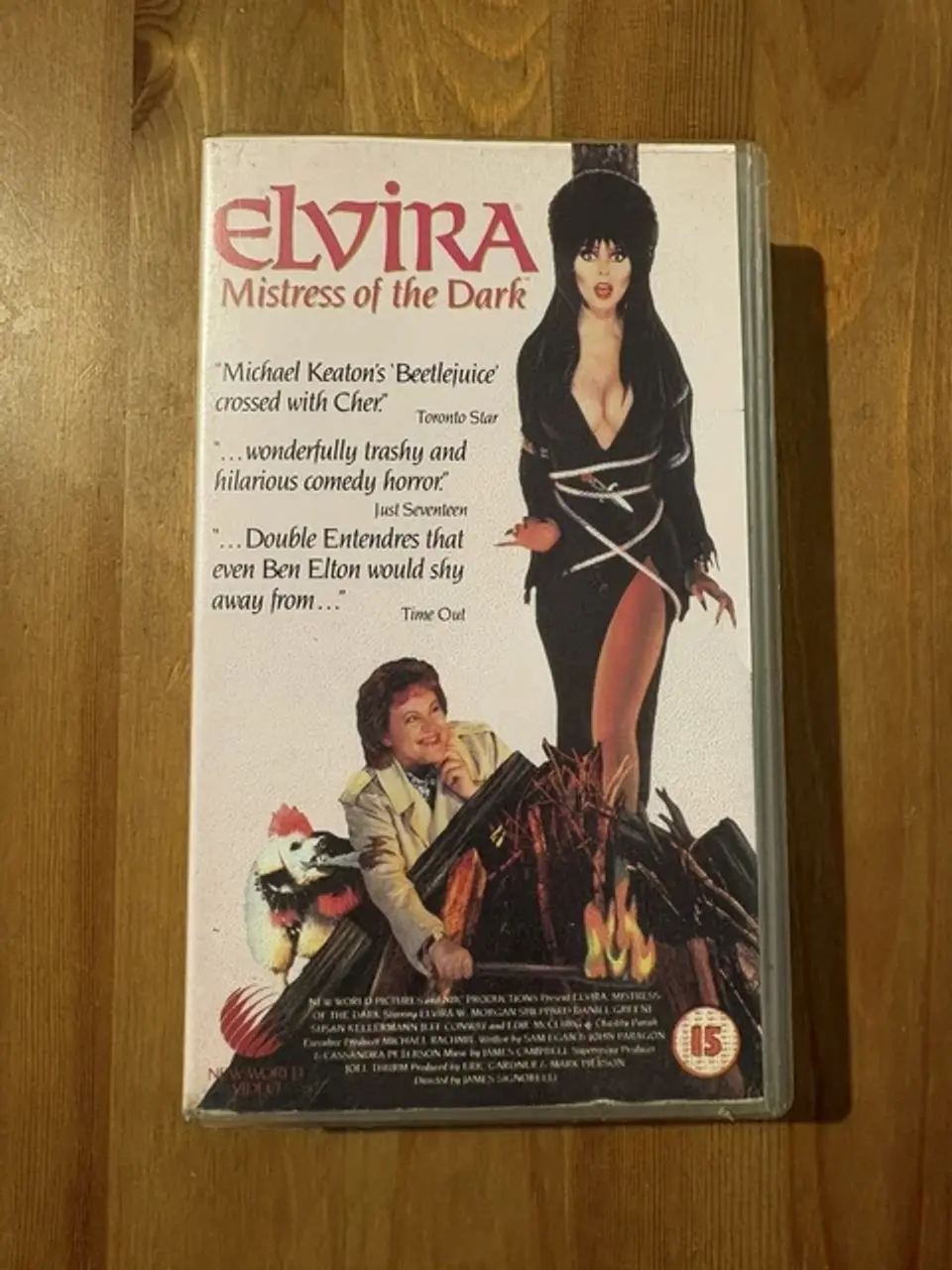
Elvira: Mistress of the Dark made the jump to home video quickly, arriving on VHS and LaserDisc in the late 1980s and then becoming the kind of title that could quietly keep finding new people long after its original theatrical window had closed. Television airings helped too. A movie that had struggled to reach enough theaters suddenly had years to sit on video-store shelves, turn up on cable and get passed from one horror fan to another.
That matters enormously for a movie like this because Elvira was always built for repeat exposure. The jokes get funnier when you know they are coming. The visual gags become comfort food. The production design feels increasingly cozy instead of cheap. And once somebody likes Elvira, they tend to want more Elvira, which is a sentence that probably explains a significant portion of my life.
The film kept getting reissued as formats changed. DVD editions followed, including releases in 2001 and 2011, while early Blu-ray editions used older masters that were functional but not exactly the kind of treatment a cult favorite deserves.
Then the restoration era finally caught up with her.
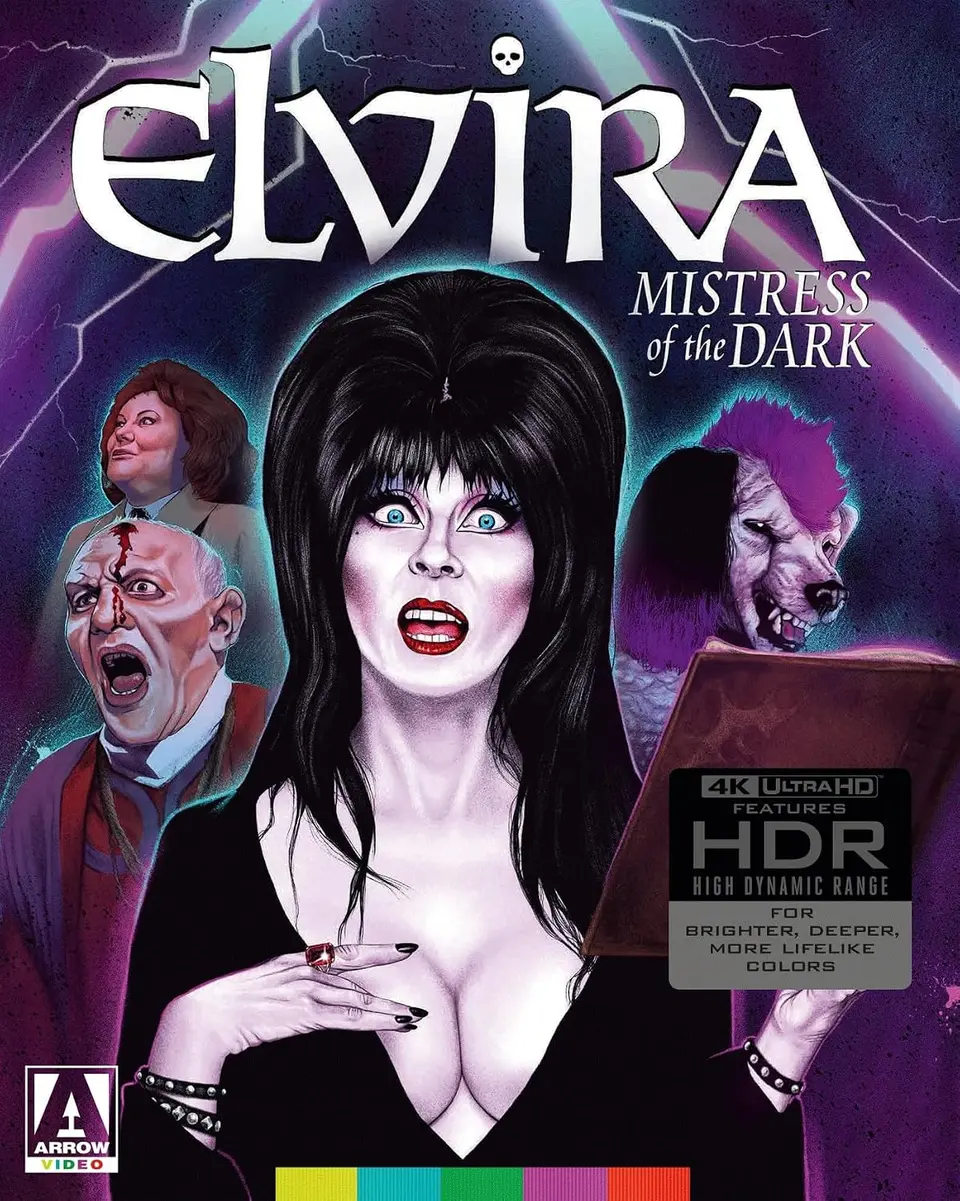
Arrow Video released a far more ambitious edition built from a new 4K scan of original film elements, pairing the movie with archival commentaries, new and revised documentaries, storyboards, image galleries and the original trailers. A U.S. Blu-ray followed in 2021, and in November 2024 Arrow released the film on 4K Ultra HD in the United States.
That is a pretty spectacular turnaround for a movie that once looked like it might disappear into the pile of late-’80s box-office disappointments.
Instead, every new format gave it another chance to be discovered.
And people kept discovering it.
That is really the bridge between the movie’s disappointing theatrical history and its cult reputation. Home video changed the question from “Did enough people buy a ticket in 1988?” to “Did people keep watching it?”
They did. They watched it a lot.
From Box-Office Disappointment to Cult Classic
Cult classics are usually not born in a marketing meeting. They happen because a movie refuses to go away. Elvira: Mistress of the Dark refused to go away.
The movie’s home video life, cable exposure, fan conventions and Elvira’s own continued visibility meant the film never became some forgotten curiosity from 1988. Instead, it became the thing people discovered after they had already fallen in love with Elvira somewhere else. For some viewers, it was the television show. For others, it was Halloween appearances, commercials, pinball machines, convention photos, Halloween costumes, drag performances, late-night reruns or simply seeing that black dress somewhere and wondering who the hell this woman was.
Then they found the movie.
And unlike a lot of celebrity vehicles that age badly once the celebrity moment passes, this one actually benefits from distance. The broad comedy feels more deliberately camp now. The handmade effects have charm. The exaggerated small-town morality plays even more clearly as satire. The movie’s refusal to apologize for Elvira’s sexuality feels less like an ’80s gimmick and more like one of the reasons the character has stayed relevant.
Its audience has also grown well beyond the horror crowd that first knew her. Elvira became a major queer and drag icon, and the movie’s story about a glamorous outsider being judged by a conservative town has only become easier for audiences to read through that lens. The film never turns into a message movie, thankfully, but it gives people who have spent their lives being told they are too loud, too sexual, too weird, too queer or simply too much a heroine who responds by becoming even more herself.
That's a pretty damn good recipe for a cult classic.
The continued investment in deluxe physical releases says a lot too. Boutique labels do not spend years restoring, remastering and loading a movie with commentaries, documentaries, galleries and collector packaging because nobody cares. Arrow’s Blu-ray and 4K editions exist because there is a durable audience that still wants this movie, still talks about it and, apparently, still needs to own it again every time somebody adds more pixels.
I understand this completely.
The most satisfying part is that the movie’s original box-office performance now feels like the least interesting thing about it. The number is still part of the history, but it no longer defines the movie.
Its fans did that instead.

 Collecting a Cult Classic
If you need another sign that Elvira: Mistress of the Dark has long since escaped the shadow of its original box-office run, look at what happened to the stuff surrounding it.
The movie itself became collectible. Original one-sheets, lobby material, promotional photos, VHS editions, LaserDiscs and later boutique physical media releases all became part of the film’s afterlife. That is especially fitting for Elvira, because she was already a merchandising machine before the movie ever opened. The feature did not invent that side of the character, but it gave collectors another visual universe to pull from: the Macabre Mobile, Fallwell, the inherited house, movie-specific costumes and imagery that could live separately from the television couch.
And Elvira collecting only got more elaborate from there.
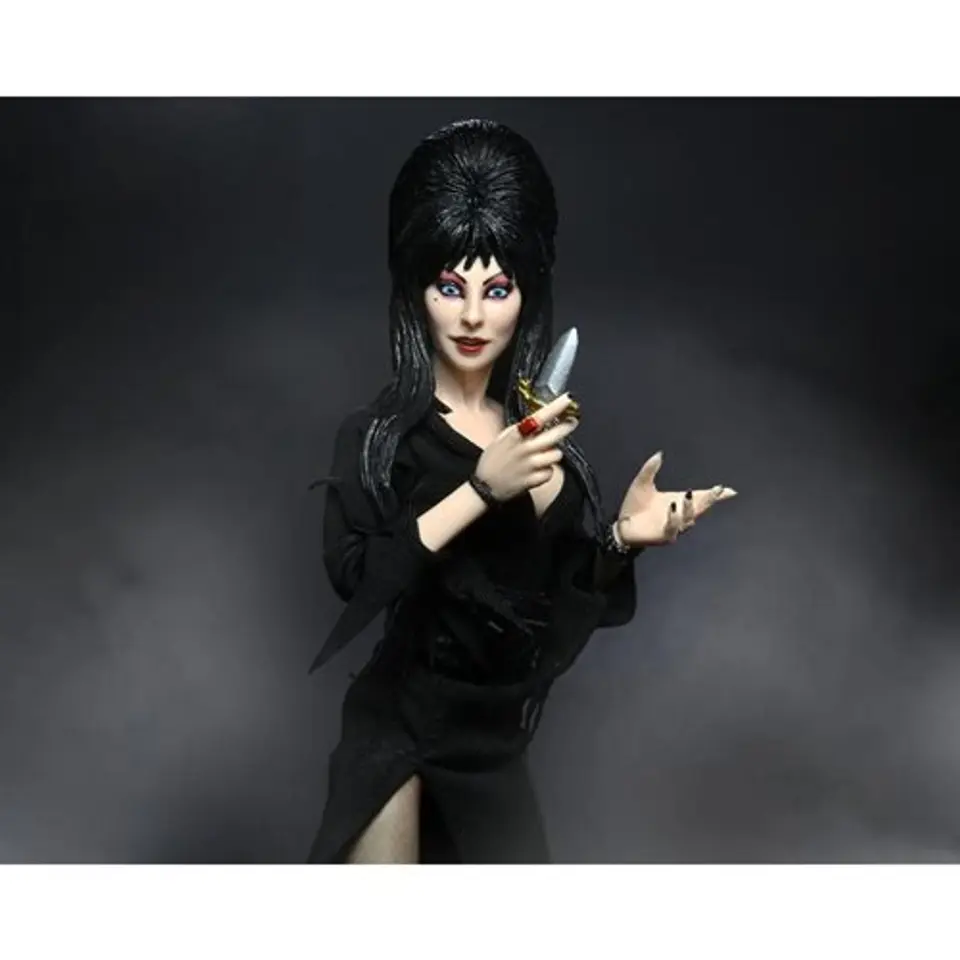
Over the decades, the character has appeared as action figures, dolls, statues, ornaments, Funko Pops, enamel pins, apparel, barware, Halloween decorations and enough other merchandise to make the phrase “I’ll just buy one Elvira thing” sound adorable in retrospect. Funko alone has produced multiple versions of her, including anniversary, glitter and black-light editions, while companies such as NECA, Super7 and high-end statue makers have repeatedly returned to the character. The official Elvira Bootique sells collectibles, apparel, autographed pieces and merchandise built around different eras of her career.
Not every one of those products is specifically tied to this movie, and I do not want to pretend this section is a complete history of Elvira merchandise because that is a whole other rabbit hole. But the continued appetite for the character absolutely helps explain why Elvira: Mistress of the Dark keeps getting rediscovered. A new figure, Funko, shirt, convention appearance or Halloween display can send somebody back to the movie just as easily as a cable airing once did.

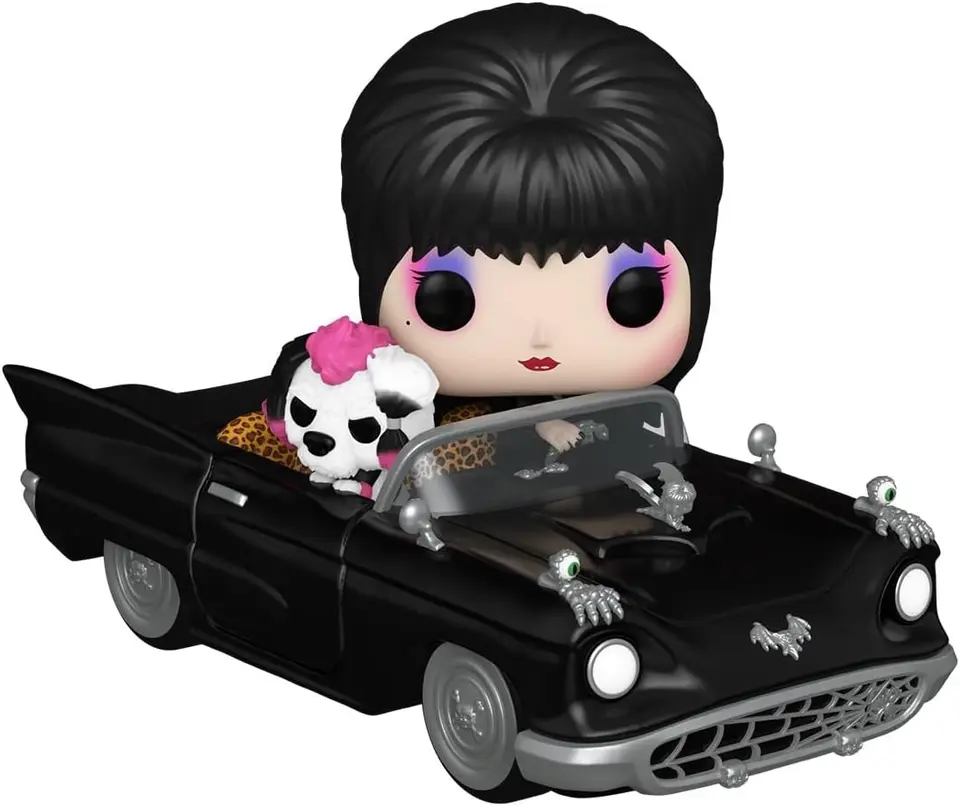
The film’s imagery has become part of the broader Elvira iconography too. The Macabre Mobile in particular has taken on a life of its own, showing up in photos, merchandise and fan recreations because of course it has. Elvira could not simply drive a normal car. That would violate several laws of nature.
There is also something very satisfying about the collector culture around a movie that did not receive a huge theatrical rollout the first time around. The audience eventually built the footprint that the distributor never did. Instead of 627 theaters, the movie ended up on shelves, in collections, at conventions, in Halloween displays and inside the homes of people who kept buying it again every time somebody released a nicer version.
Again, I understand this completely.
At this point, owning Elvira: Mistress of the Dark is not just about having access to the movie. Streaming can handle access. Collecting it is about wanting the object, the artwork, the packaging and the little physical reminder that this weird movie survived long enough to become something people actively preserve.
For a cult classic, that feels like the appropriate victory lap.
After the Movie: Elvira Keeps Going
The disappointing theatrical run did not end Elvira’s movie ambitions. It just made the next one considerably harder.
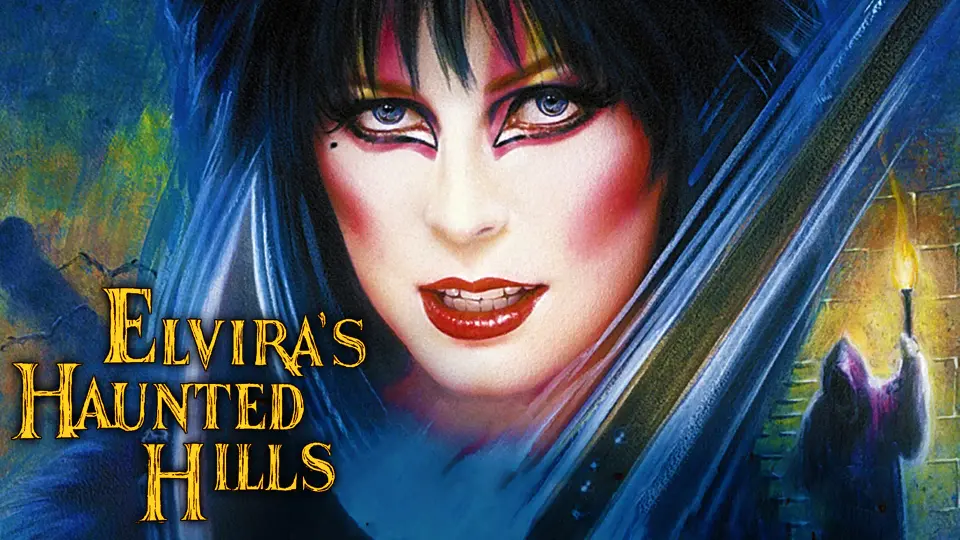
For years, Peterson tried to get another feature off the ground before eventually taking matters into her own hands. The result was Elvira’s Haunted Hills, a second Elvira movie written by Peterson and John Paragon and directed by Sam Irvin. Rather than continue the story of Mistress of the Dark, it sent Elvira in a completely different direction: a deliberately old-fashioned gothic spoof set in 1851 and built as a love letter to the Roger Corman / Vincent Price Poe movies and Hammer-style horror.
That distinction is worth making because Haunted Hills is NOT Mistress of the Dark 2. Peterson herself has described it as a separate tangent rather than a direct continuation, which is one reason I am not going to turn this section into a miniature guide to that movie. It deserves its own.
What does matter here is what its existence says about the first film. More than a decade after Mistress of the Dark underperformed in theaters, there was still enough affection for Elvira as a movie character that Peterson was willing to build another feature around her. Haunted Hills premiered in 2001 and rolled through festivals and special screenings before its wider home-video life, proving that Elvira’s cinematic appeal had survived long after the industry had treated the first movie like a dead end.
Peterson has also spent years talking about wanting to return directly to the world of Mistress of the Dark. In 2019, she said she had been developing a story about what happens to Elvira after the ending of the 1988 film, and she later described having a very fleshed-out treatment that she still wanted to make if financing ever came together.
Whether that movie ever happens or not, the important part is that the idea never really died.
Neither did Elvira.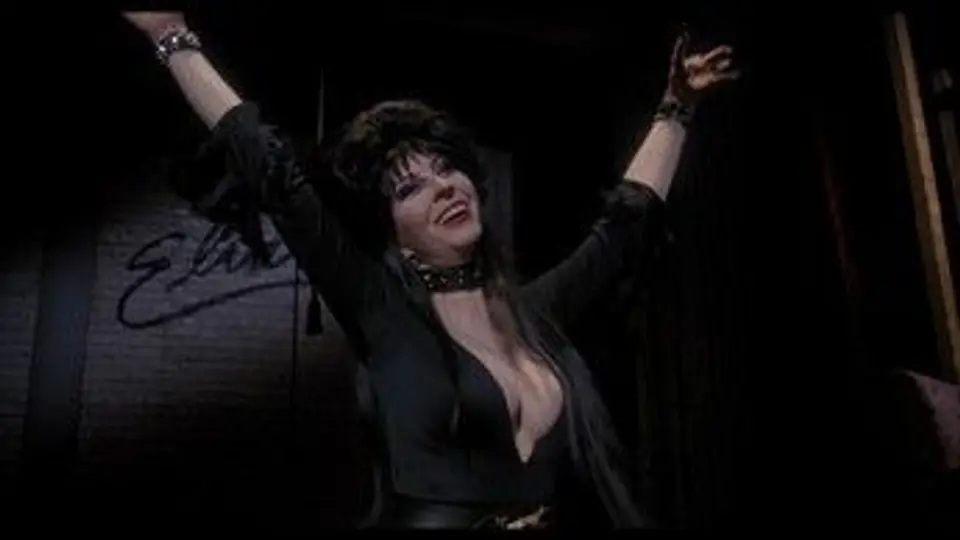
Why Elvira: Mistress of the Dark Still Matters
There is a temptation with cult movies to explain their survival by pretending everybody else was simply too dumb to appreciate them the first time around. I do not think that is what happened here. Elvira: Mistress of the Dark is messy. It is broad. Some of the effects look cheap because some of the effects were cheap. The plot occasionally exists mainly to move Elvira toward the next joke.
That is also exactly why sanding those edges off would miss the point.
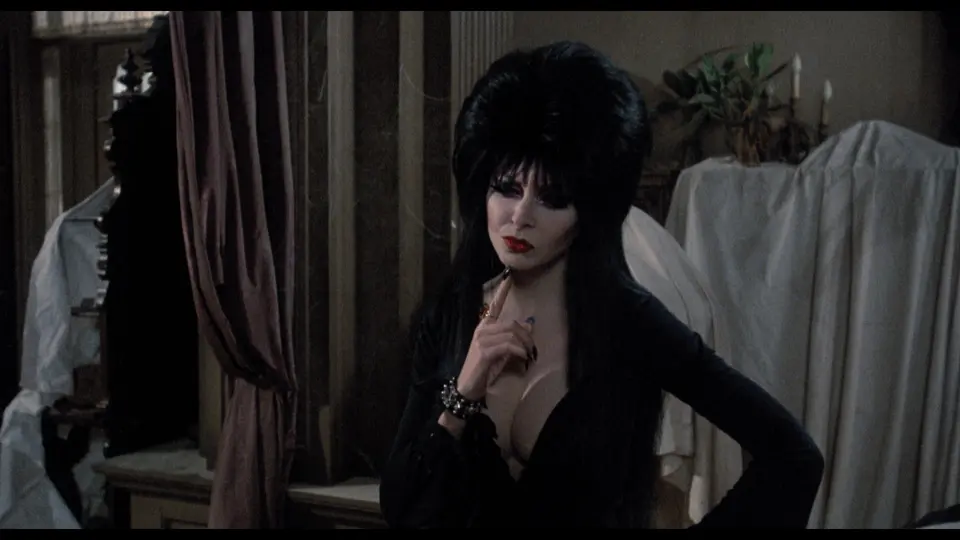
The movie captured a very specific version of Elvira at exactly the right moment: after she had become a nationally recognizable horror host, but before decades of nostalgia had turned every piece of her iconography into something sacred. It is confident enough to throw her into a feature film and reckless enough to let that movie be weird, horny, sentimental, supernatural and gloriously stupid whenever the mood strikes.
More importantly, it gave Elvira a life beyond introducing somebody else’s movies. The television character could joke about B-movies. The feature proved she could be the center of one.
That sounds obvious now because Elvira has spent more than four decades becoming one of the most recognizable Halloween figures in American pop culture. Her official history stretches across television, movies, books, music, live appearances and more than a thousand licensed products, and she has long since become something much bigger than a local horror host. But Elvira: Mistress of the Dark was a crucial step in proving the character could survive outside the format that created her.
The movie also helped lock in something that became central to Elvira’s larger legacy: she is an outsider who never asks permission to be herself. That has made her especially meaningful to queer audiences and drag performers, communities that embraced Elvira long before Peterson publicly discussed her own relationship with a woman. By 2021, the Los Angeles Times was describing that LGBTQ+ connection as already longstanding, while Out celebrated Elvira as an established queer icon rather than some newly discovered one.
None of that requires the movie to become homework, and thank God for that.
You can still just put it on in October, laugh at the head jokes, admire the Macabre Mobile and wonder how one woman managed to walk into a Massachusetts town dressed like that without causing several elderly residents to simply evaporate.
That may actually be the best part of its legacy. Elvira: Mistress of the Dark can mean something without acting like it means something. It is sincere without becoming precious, camp without becoming cynical and ridiculous without ever looking down on the people who love ridiculous things.
And I really, really love ridiculous things.
Final Thoughts: Elvira Got Off the Couch
I have loved Elvira for so long that separating the character from my own relationship with horror, Halloween and comedy is basically impossible at this point. She was there when I was a kid, when half the jokes went over my head. She was there when I finally understood the jokes and somehow found them even funnier. Years later, I got to sit across from Cassandra Peterson and interview the person responsible for all of it, which is still one of those sentences that does not feel entirely real when I type it.
But that personal connection is not why Elvira: Mistress of the Dark deserves to be remembered.
It deserves to be remembered because it did the difficult thing. It took a character whose entire television identity had been built around sitting on a couch and commenting on other people’s movies, then trusted that character enough to build a whole movie around her without apologizing for what made her popular.
Elvira gets the house, the car, the town, the romance, the supernatural mythology, the villains, the jokes, the cleavage and, yes, an almost heroic commitment to the word “head.”
The movie did not become the theatrical hit everyone hoped for. That part still sucks. But theatrical success is only one version of success, and this film got something much harder to manufacture: permanence.
People kept watching it. They kept quoting it. They bought it on VHS, DVD, Blu-ray and 4K. They dressed like Elvira. Drag performers embraced her. Horror fans adopted the movie into their Halloween rotation. Collectors kept buying the merchandise. New viewers kept discovering her.
The movie that was supposed to prove Elvira could get off the couch ended up proving something much bigger.
She never needed the couch in the first place.


On Air Talent / Creator / Author / Producer
Kyle McMahon is an American television personality, radio host, journalist, actor, singer and songwriter. He is known for appearing in Oprah's Lifeclass, the Oscar winning film Selma, hosting Pop Culture Weekly with Kyle McMahon on iHeart Radio and touring with LFO and O-Town.

All the Movies, Shows & Specials Coming to 4K UHD & Blu-ray in October 2026
 Apple Podcasts
  YouTube
  Spotify
  iHeartRadio
  Audible
  Amazon Music
  JioSaavn
  Spreaker
  RSS Feed