Halloween (1978) Review: John Carpenter’s Horror Masterpiece Still Terrifies
 There are horror movies I love, and then there are the jewels in the horror crown. For me, Halloween is one of those jewels in my horror crown.
It has always been there in my life. One of my earliest memories of Halloween is watching it at somebody’s house when I was far too young to actually be watching Halloween, which, naturally, meant it terrified the absolute stuffing out of me. Somewhere in that childhood terror is part of the foundation for the horror fan I became.
All these years later, I finally got to see John Carpenter’s Halloween on the big screen for the first time. Regal Cinemas held theatrical screenings of the first three Halloween films, and there was absolutely no universe where I was passing up that opportunity. My screening was sold out, packed with everyone from college kids to old folks. Like legit old folks. (I want to be as cool as those old folks in there watching Halloween on a late Friday night, one day.)
And sitting in a packed theater nearly five decades after Halloween was released made something incredibly clear: this movie has not lost its power. Not a frame of it.
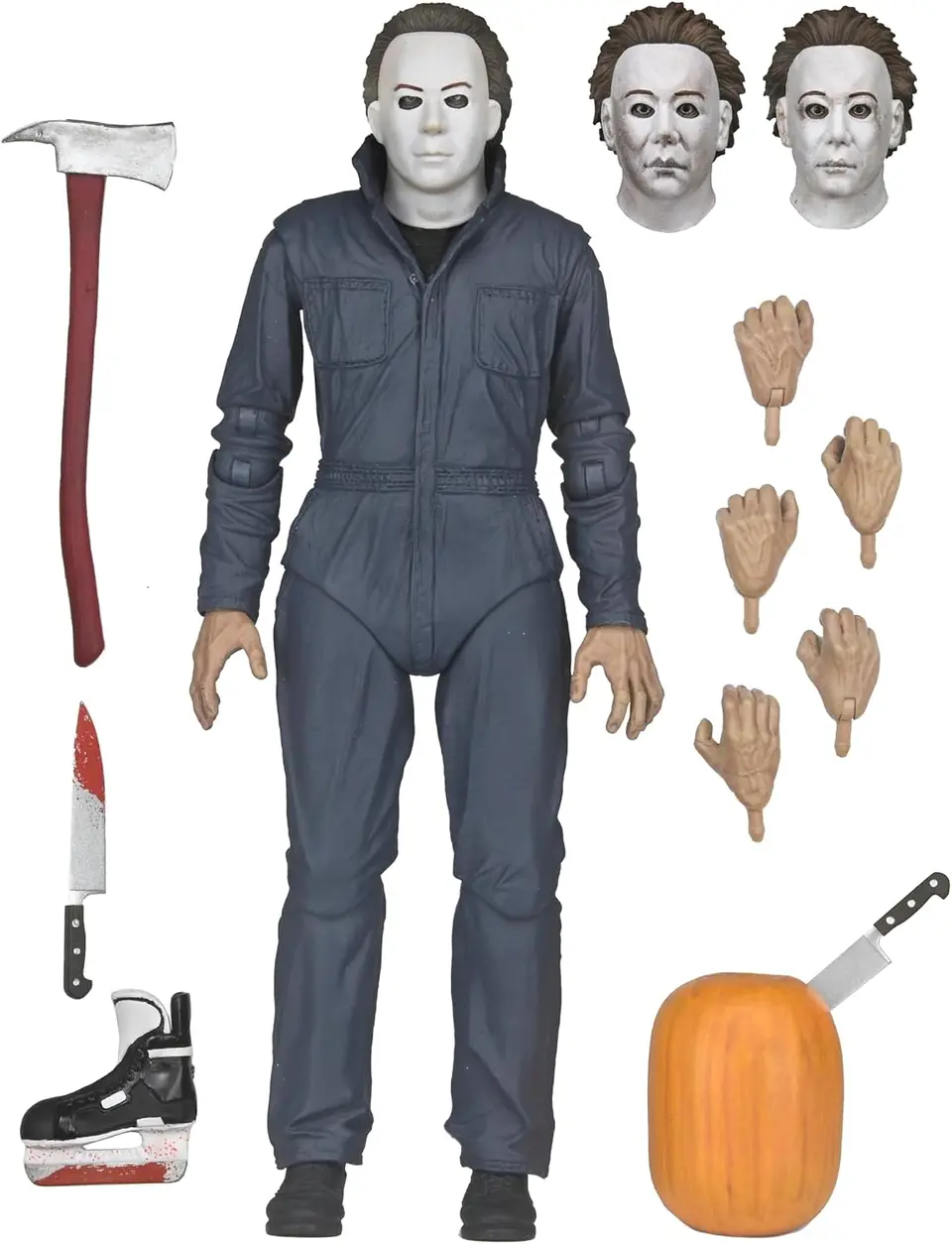
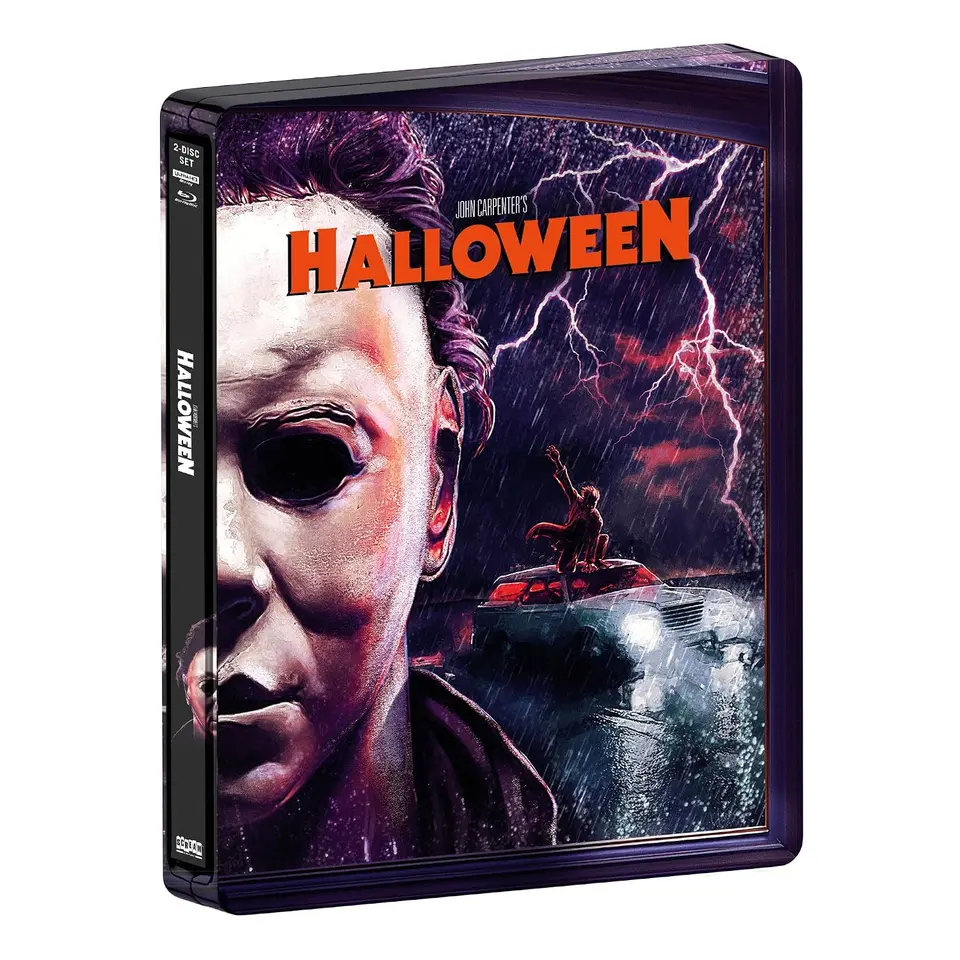
Don’t you dare touch my Halloween. Every single frame is perfect and belongs in the friggin Louvre.  Snag The Halloween Collection (1995 - 2002) here.
The Terror of Not Knowing
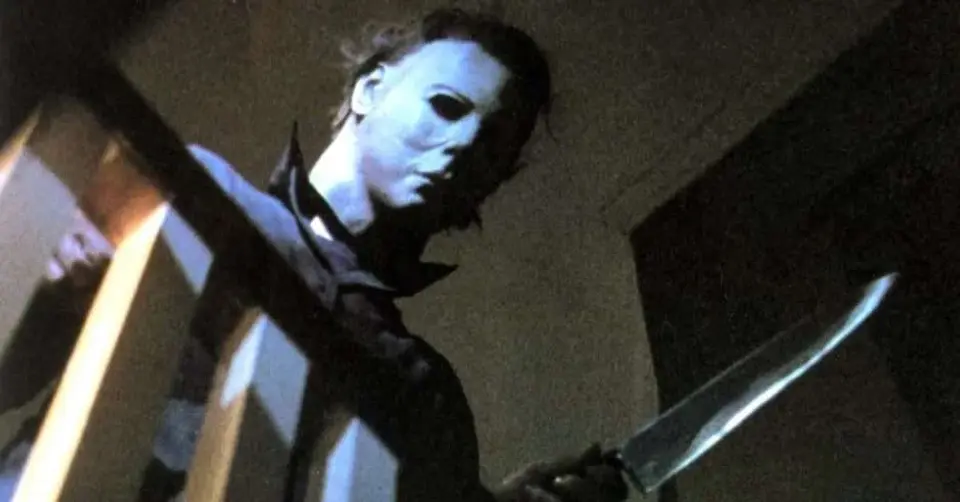
The thing that makes Michael Myers terrifying in the original Halloween is remarkably simple: we don’t know why he kills. We don’t know his motivation. We don’t get a tragic psychological explanation that conveniently organizes evil into something understandable. We just know he does it. THAT'S IT!
That absence is infinitely scarier than an explanation could ever be. Carpenter and co-writer Debra Hill don’t ask us to solve Michael Myers. They give us a suburban neighborhood, an otherwise mundane day in Laurie Strode’s life and the increasingly horrifying realization that this mysterious psychopath has begun fixating on her.
The fear comes from the waiting.
Michael appears at a distance. He disappears. He watches. He stands somewhere he shouldn’t be. Carpenter makes you start scanning the frame because once you realize Michael could be there, every empty doorway, hedge and patch of darkness becomes suspicious.
That is where Halloween lives. It isn’t dependent on gore. In fact, there isn’t any gore at all. It doesn’t need a constant procession of elaborate kills. It builds terror out of the possibility that Michael is nearby, watching, and you might not see him until he wants you to.
It is astonishing how many movies spent the following decades borrowing the ingredients without fully recreating the meal.
Carpenter Knows Exactly What He’s Doing
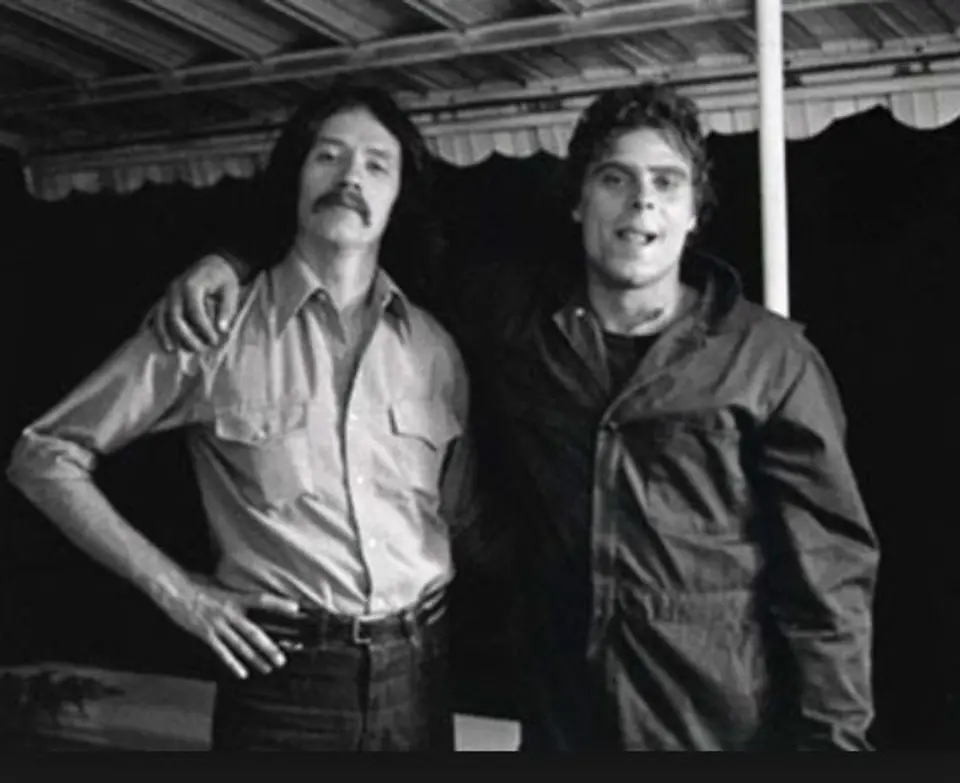
Halloween was made independently for roughly $300,000, with principal photography lasting only about four weeks. Somehow, Carpenter and cinematographer Dean Cundey made a movie that looks like it should be studied one frame at a time.
The opening sequence alone is fucking insane.
Seeing through the creepy little eyes of creepy little Michael Myers immediately puts us in an uncomfortable position, and Carpenter’s camera movement announces that we are in very good hands indeed. Then the movie just keeps producing images that have burned themselves into horror history.
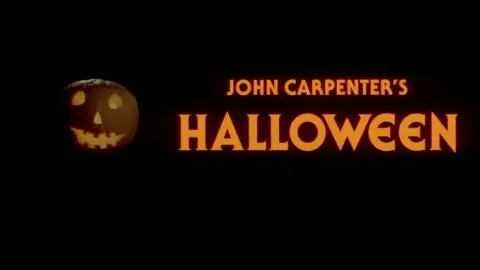
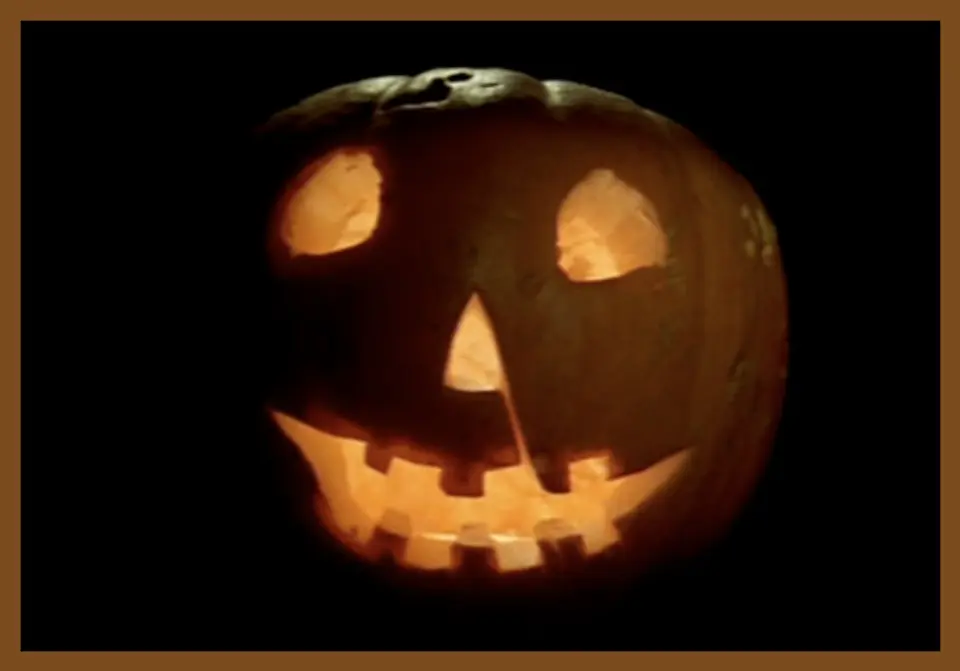
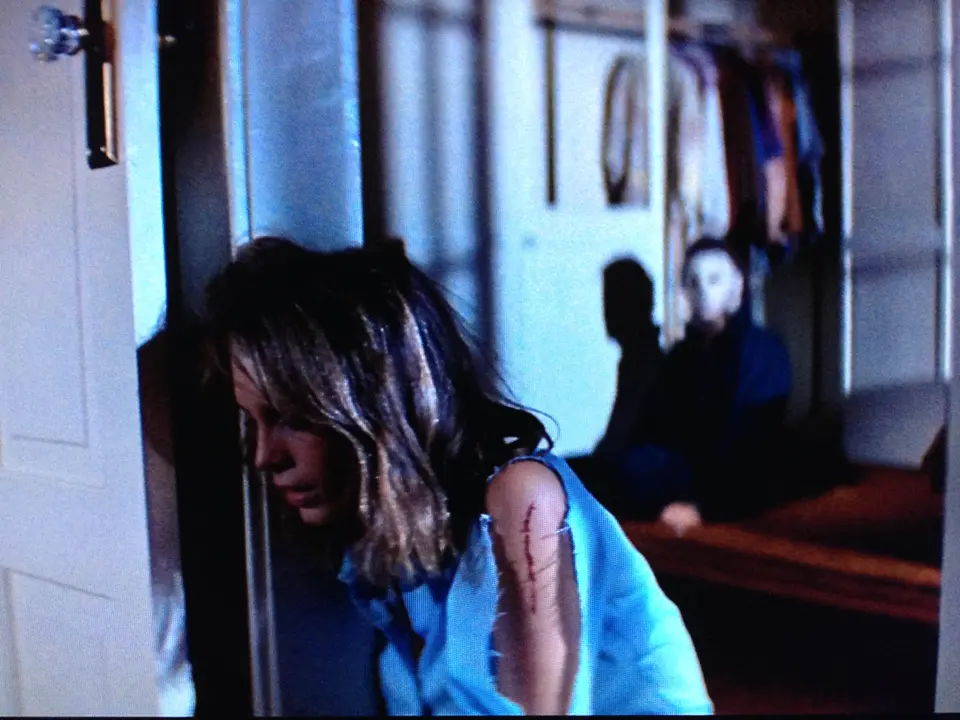
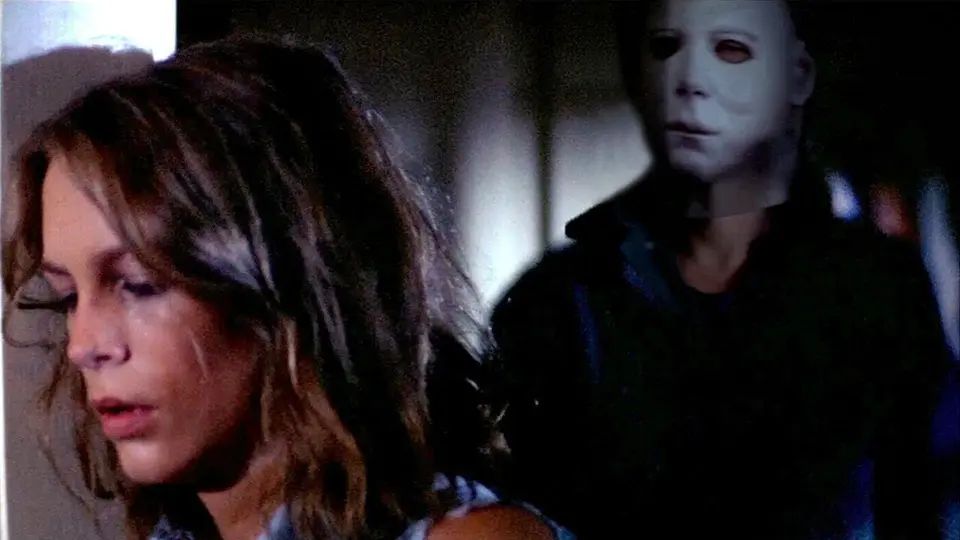
The opening pumpkin. The pullback out of the Myers house and onto the street. Michael materializing within ordinary suburban spaces. Laurie framed in the doorway with Michael rising behind her.
It goes on and on.
Carpenter’s useof negative space is genius because he understands that what isn’t immediately visible can be more frightening than what is. Once he teaches you how to watch Halloween, you stop passively looking at the movie and start searching it. Your eyes wander into the background. You check the edges of the frame. You look into darkness because Carpenter has conditioned you to expect that Michael might be looking back.
There is an additional layer of filmmaking sorcery here because Haddonfield wasn’t Haddonfield at all. Halloween was shot around Los Angeles in the spring. The production had to avoid palm trees and reuse artificial autumn leaves to create the illusion of an Illinois October. None of that matters while you’re watching it. Halloween feels like Halloween.
Maybe that isn’t entirely because the neighborhood itself screams October. The movie became so culturally intertwined with the holiday that its imagery, music and atmosphere now help define what Halloween feels like. The film didn’t simply borrow the holiday. Eventually, the holiday borrowed some of itself back from the film.
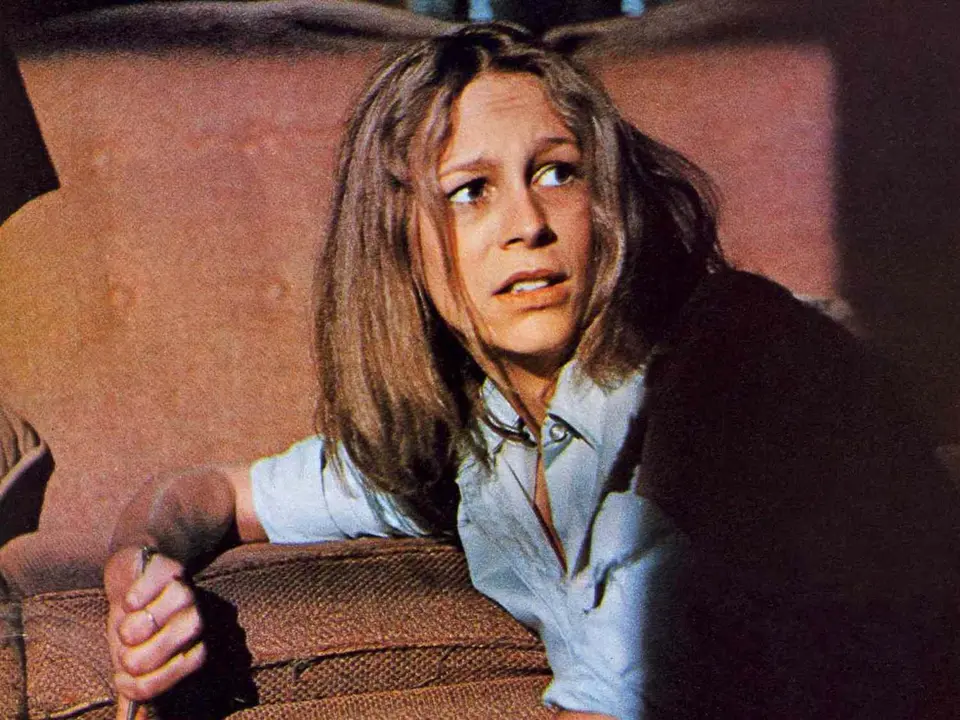
Jamie Lee Curtis Is the Heart of Halloween
For everything Carpenter does behind the camera, Halloween falls apart without Jamie Lee Curtis.
This was Curtis’s feature-film debut, and she completely sells Laurie Strode. She gives the film its emotional core because Laurie feels like an actual teenager living an ordinary life before something incomprehensible invades it. Curtis never treats Laurie like a future horror icon because, of course, Laurie doesn’t know she is one. She’s just trying to get through this terrible Halloween night.
That normalcy is essential. Michael is terrifying partly because Laurie’s world is so recognizable before he enters it. Babysitting, friends, school, neighborhood streets and teenage nonsense surround her. Annie can be annoying, but I’d assume any horny teenager is annoying to me, so I’m willing to give her some latitude.
Curtis gives us someone worth being afraid for. Her fear feels immediate, but so does her intelligence and her instinct to survive. The entire movie would be a different, lesser film with a lesser actor at its center.
Then there is Donald Pleasence as Dr. Sam Loomis, who spends the movie quite literally explaining to everyone who will listen, including us, that Michael is dangerous and ruthless.
Loomis doesn’t know Michael’s motivation either. He can’t give us the why. What he knows is what Michael is capable of and what Michael will do.
Pleasence makes that certainty terrifying. There is no wink in his performance and no sense that Loomis is indulging in spooky season theatrics. He believes every warning he gives because he has spent years confronting something he ultimately cannot explain. The more seriously Loomis takes Michael, the more seriously we do too.
The Sound of Michael Myers
And then there is that score.
John Carpenter’s Halloween theme is so intertwined with Michael Myers and this franchise that it has escaped the boundaries of the movie entirely. At this point, it belongs to horror itself.
It is sparse, minimalist and instantly iconic. More importantly, Carpenter knows exactly how to use it. The score doesn’t merely accompany the terror. It becomes as prominent a presence in the film as any character, breathing in and out and subtly signaling to the audience that shit’s about to get fucking real.
The simplicity is part of its power. Halloween doesn’t need a giant orchestral wall announcing that you should be frightened. A handful of notes can change the temperature of an entire scene because the movie has taught us what those notes mean.
By the time you hear them, Michael doesn’t necessarily need to be visible. Your body already knows he is coming.

The Blueprint That Everybody Copied
Halloween did not invent every component of the slasher movie, and horror existed quite happily before Michael Myers walked into Haddonfield. What Carpenter and Hill did was assemble those elements with such precision that Halloween became THE blueprint for virtually every slasher that followed.
The masked killer. The suburban setting. The young victims. The final girl. The stalking camera. The killer who seems to emerge from nowhere. The visual language of being watched. Countless filmmakers copied those pieces. Far fewer copied Carpenter’s patience.
That is one reason Halloween still works when so many movies influenced by it feel dated. Carpenter understands restraint. He allows ordinary life to exist long enough for Michael’s presence to corrupt it. He trusts silence. He trusts composition. He trusts the audience to look into an empty portion of the frame and become uncomfortable without somebody jumping out every four minutes.
The Library of Congress selected Halloween for the National Film Registry in 2006, and it belongs there. This is more than an enormously influential horror movie. It is an extraordinary example of how limitations can sharpen filmmaking rather than diminish it.
I also love that the franchise eventually became a playground for wildly different interpretations of Michael and his mythology. I love Rob Zombie’s Halloween films precisely because Zombie takes the material somewhere distinctly his own. But the terrifying purity of Carpenter’s original comes from refusing to give us that kind of psychological access. Here, Michael remains something unknowable.
Nearly 50 Years Later, Halloween Still Has It
Seeing Halloween theatrically for the first time changed the scale but not my opinion. If anything, watching it with a sold-out audience made me appreciate how incredibly alive this movie remains all these years later.
There were college kids watching a film released decades before they were born. There were people who could have conceivably seen it during its original theatrical run. And there I was, watching one of the movies that helped create my horror obsession finally projected where it belonged.
Halloween isn’t required viewing because horror fans are obligated to respect their elders. It isn’t homework. It is required viewing because it still fucking works.
The stalking works. The atmosphere works. The score works. Curtis works. Pleasence works. Nick Castle works. Cundey’s photography is gorgeous. Carpenter’s direction is masterful. Michael Myers remains frightening because the movie never makes the mistake of believing we need to understand him in order to fear him.
Whether you love horror, love movies or simply want to understand why generations of filmmakers have been chasing what Carpenter accomplished here, Halloween remains essential.
And after finally seeing it on a giant screen with a sold-out crowd, I stand by my assessment more than ever: don’t touch a damn frame.
Put the whole friggin thing in the Louvre.



On Air Talent / Creator / Author / Producer
Kyle McMahon is an American television personality, radio host, journalist, actor, singer and songwriter. He is known for appearing in Oprah's Lifeclass, the Oscar winning film Selma, hosting Pop Culture Weekly with Kyle McMahon on iHeart Radio and touring with LFO and O-Town.

All the Movies, Shows & Specials Coming to 4K UHD & Blu-ray in October 2026
 Apple Podcasts
  YouTube
  Spotify
  iHeartRadio
  Audible
  Amazon Music
  JioSaavn
  Spreaker
  RSS Feed