The Ultimate Guide to Elvira: Cassandra Peterson, Movie Macabre, Movies & More
The Ultimate Guide to Elvira, Mistress of the Dark and the Queen of Halloween
When it comes to horror hosts, there are legends. There are local icons. There are wonderfully weird men and women who spent decades sitting beside coffins, wandering through foggy graveyards and introducing movies where the rubber monster suit occasionally had a visible zipper.
And then there is Elvira.
I have always loved horror hosts because they make watching horror feel communal. Although they were a bit before my time, there's something powerful about them, even today. They are not just introducing a movie, they're inviting you into their wonderfully strange little corner of the world. Elvira took everything I love about that tradition and turned it into something much, much bigger. She could introduce a terrible B-movie, roast it mercilessly, sell you a beer, show up at a theme park, release a record, star in a movie or two and still make the whole thing feel like you had stumbled onto the coolest late night television show you probably were not supposed to be watching.
I first got into Elvira when I was little through the ads, Halloween promotions and all the wonderfully spooky stuff that seemed to be everywhere in the '90s. I was exactly the kind of horror loving kid all of that was designed to hook, and boy did it work. I've been a huge Elvira fan ever since.
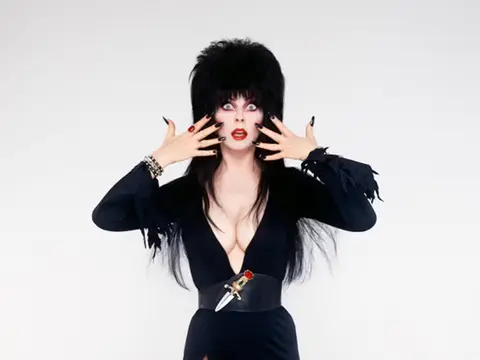
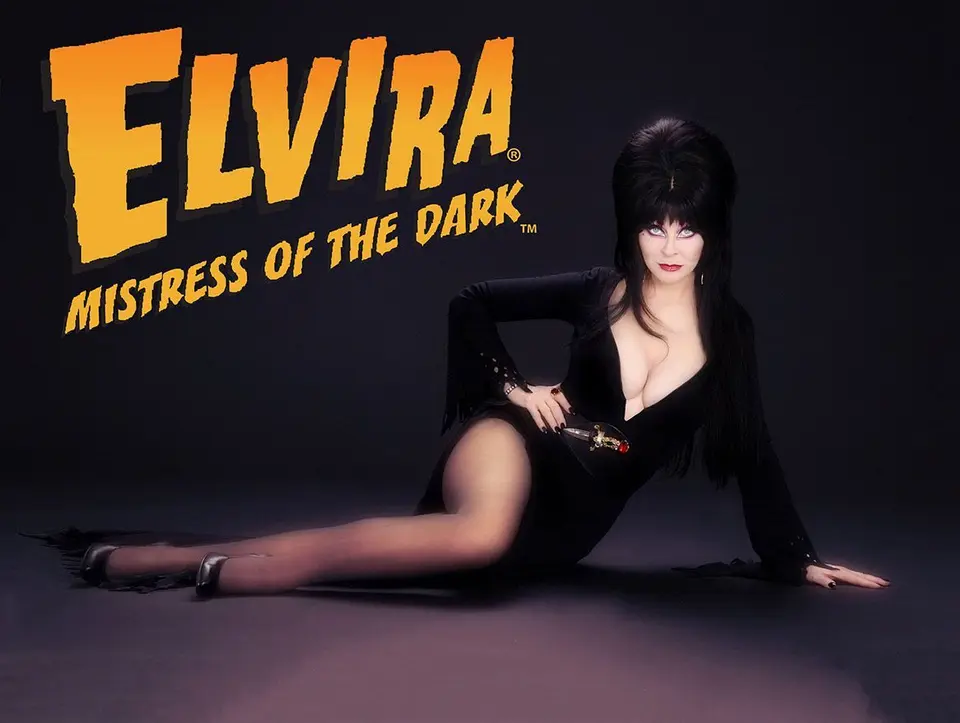
Created and embodied by Cassandra Peterson, Elvira the Mistress of the Dark debuted on Los Angeles television in 1981 and became something almost no horror host before her had managed to become: a genuine mainstream celebrity. The towering black hair, plunging dress and dagger were instantly recognizable, but the look was only half the equation. Elvira was funny. She was sarcastic. She was knowingly ridiculous. She could deliver a double entendre with a completely straight face and then make fun of the movie she was supposedly there to promote.
More than four decades later, Elvira has outgrown the television show that created her. There have been movies, television revivals, stage shows, comics, books, albums, games, pinball machines, Halloween attractions and enough merchandise to furnish a very specific and deeply fabulous haunted mansion. Along the way, Peterson also turned the character into a symbol of individuality, camp and outsider culture while becoming particularly beloved within the LGBTQ+ community.
This is the complete story of how a local Los Angeles horror host became the Mistress of the Dark - and one of the most enduring pop culture creations Halloween has ever produced.
Before Elvira: The Incredible Life of Cassandra Peterson
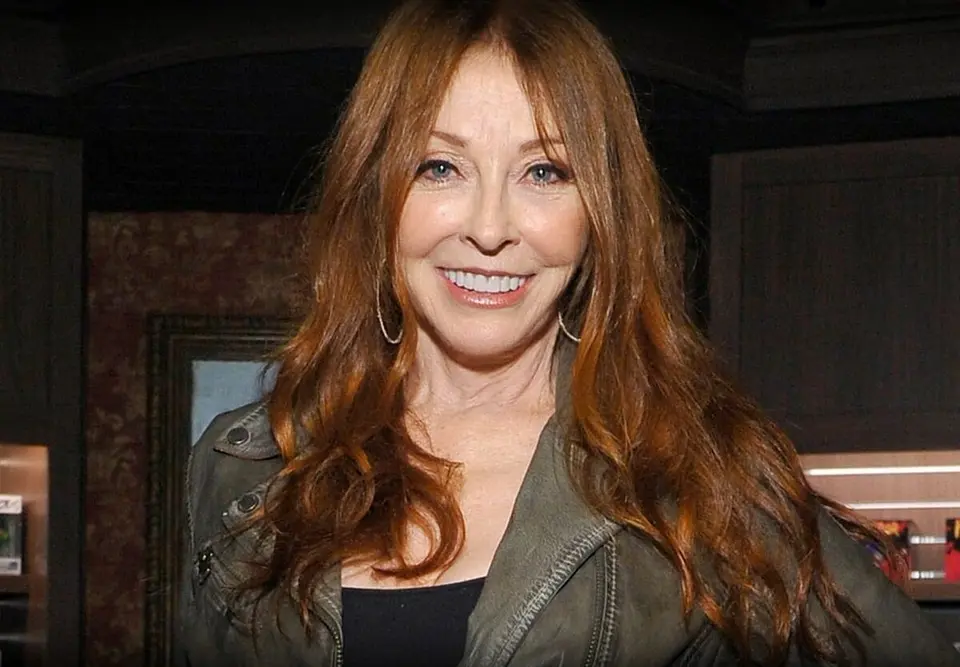
Elvira may look like she materialized fully formed from a fog covered crypt somewhere in Southern California, but Cassandra Peterson had already lived several lives before she ever put on that iconic black wig.
Born in Manhattan, Kansas, and raised in Colorado Springs, Peterson developed an early fascination with horror and the macabre after suffering serious burns as a toddler. While other kids might have been frightened by movie monsters, she has said she identified with them. That attraction to outsiders, monsters and theatricality would eventually become pretty useful.
As a teenager, Peterson was drawn to Las Vegas and its spectacular stage shows. She became a showgirl while still extraordinarily young, performing in the Folies Bergère at the Dunes. During her Vegas years she met Elvis Presley, an encounter that became one of the defining stories of her pre-Elvira life. Peterson has credited Presley with encouraging her to leave Las Vegas and pursue singing rather than remaining a showgirl.
She listened.
Peterson spent time pursuing music, including performing in Italy, before eventually returning to the United States and moving deeper into acting and comedy. One of the most important stops came when she joined The Groundlings in Los Angeles. The legendary improv troupe has produced an almost absurd number of major comedy performers, and Peterson's time there helped sharpen the quick delivery, character work and improvisational instincts that would become essential to Elvira.
By 1981, all of those seemingly disconnected pieces - horror, showmanship, music, comedy, sex appeal and a willingness to be gloriously ridiculous - were about to collide.
Creating Elvira, Mistress of the Dark
Los Angeles station KHJ-TV wanted to revive the local horror-host format with a new program called Movie Macabre. The station initially explored working with Maila Nurmi, whose Vampira had become one of television's earliest and most influential horror hosts during the 1950s. When that plan did not move forward, the search shifted toward finding a new female host.
Peterson auditioned and got the job, but the character still had to be created.
That distinction matters because Elvira was not simply Vampira with an '80s makeover. The two characters shared obvious gothic visual DNA, and the similarities eventually became the subject of a legal dispute, but Elvira's personality was radically different. Vampira was eerie, aloof and otherworldly. Elvira sounded like someone who had wandered out of a California mall, accidentally entered a haunted castle and decided she liked it there.
Peterson developed the character with her friend Robert Redding, combining the enormous black bouffant, dramatic eye makeup and revealing black gown with a personality built around Valley Girl attitude, bawdy jokes and relentless self-awareness. The contrast was the magic trick. Elvira looked like she should be summoning the dead. Instead, she was making boob jokes and insulting the movie.
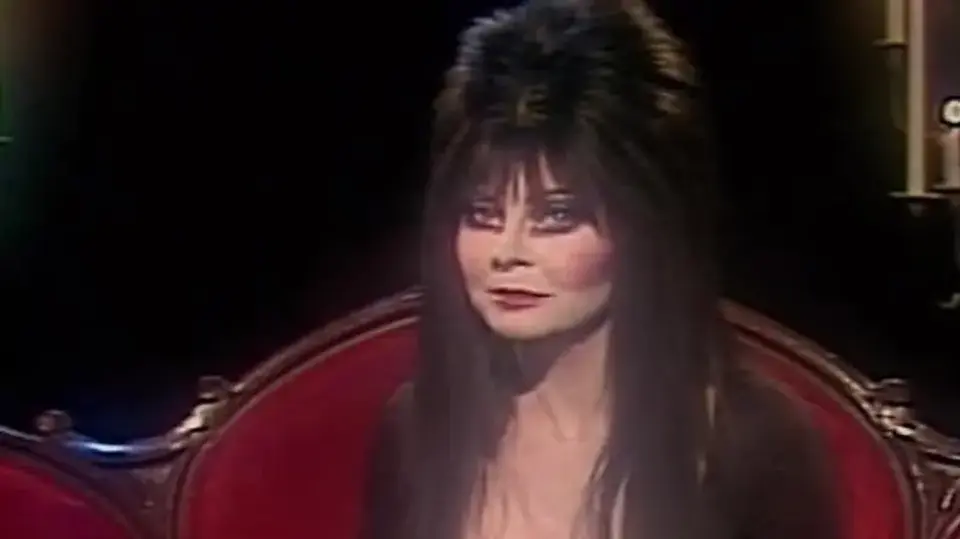
Movie Macabre premiered in September 1981, with Elvira introducing horror and science-fiction films while appearing in comedy segments wrapped around the feature. Many of those movies were exactly the sort of low-budget oddities horror hosts had always specialized in, but Elvira never pretended otherwise. The badness was part of the fun.
And audiences got the joke almost immediately.
What began as a Los Angeles television program expanded into national syndication, carrying Elvira far beyond Southern California. Her timing could not have been much better. Cable television was expanding, home video was exploding, horror was having an enormous decade and Halloween was becoming increasingly commercialized. Elvira fit all of it without seeming manufactured for any of it.
That is one of the reasons the character has lasted. Peterson understood that horror fandom could be sincere without being solemn. You could genuinely love this stuff and still laugh at the bad aspects of it. For anyone who grew up loving horror hosts, monster movies and the wonderful ritual of somebody welcoming you into a spooky late-night world, Elvira feels like the ultimate evolution of that idea.
She was no longer merely introducing the monsters. She had become the attraction.
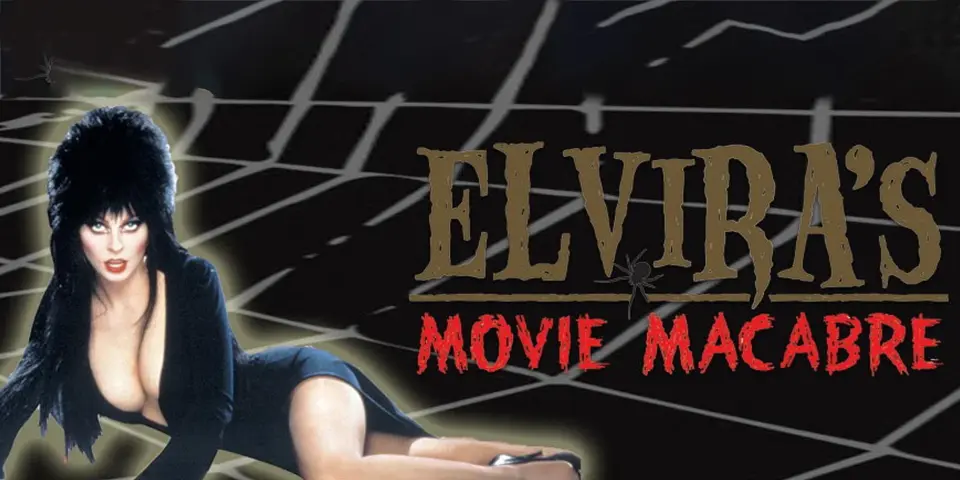
Movie Macabre: From Local Television to National Phenomenon
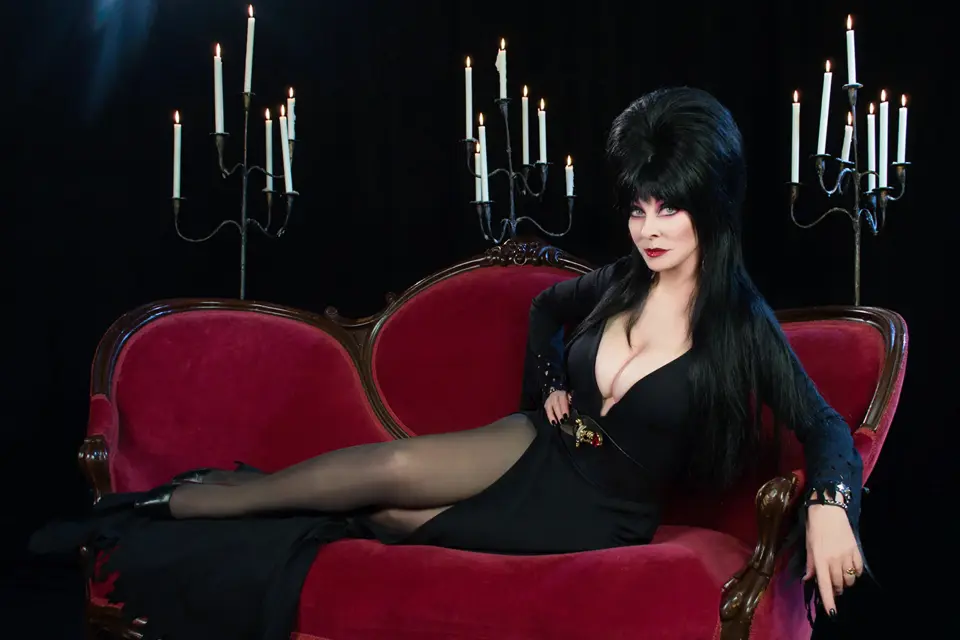
The original Movie Macabre was beautifully simple television. Elvira sat on a red Victorian couch in a wonderfully cheap-looking haunted-house set, introduced an old horror or science-fiction movie and returned throughout the broadcast to comment on what everyone had just watched. If the movie was ridiculous, she said so. If the monster looked like it had been assembled fifteen minutes before airtime, that was probably getting mentioned too.
The format put Peterson squarely in the tradition of local horror hosts who had spent decades turning inexpensive movie packages into appointment television. What separated Elvira was how quickly the character escaped the boundaries of that format. Movie Macabre began on KHJ-TV in Los Angeles, but syndication carried the show into markets around the country, and suddenly a character created for local late-night television was becoming a national personality.
It helped that Elvira arrived at almost exactly the right moment. Horror was booming during the 1980s, cable television was creating more places for genre programming, and the home-video revolution was changing how fans discovered older movies. Elvira could exist comfortably in all of those worlds. She felt connected to the old-school horror-host tradition without feeling remotely old-fashioned. In fact, she was the newer, cooler version of it.
The movies themselves ranged across decades of low-budget horror, science fiction and exploitation cinema, and that was part of the charm. Movie Macabre was never dependent on showing great films. In some ways, a terrible movie gave Elvira more to work with. The feature became part of a larger comedy show built around Peterson's reactions, sketches and jokes, which meant viewers could have a great time even when the movie absolutely did not deserve their loyalty.
That relationship between host and audience is what horror hosts do better than almost anybody else on television. Watching one feels less like somebody is presenting programming to you and more like somebody has invited you over to watch something weird. Elvira was especially good at creating that feeling. She was in on the joke with the audience, not performing above them.
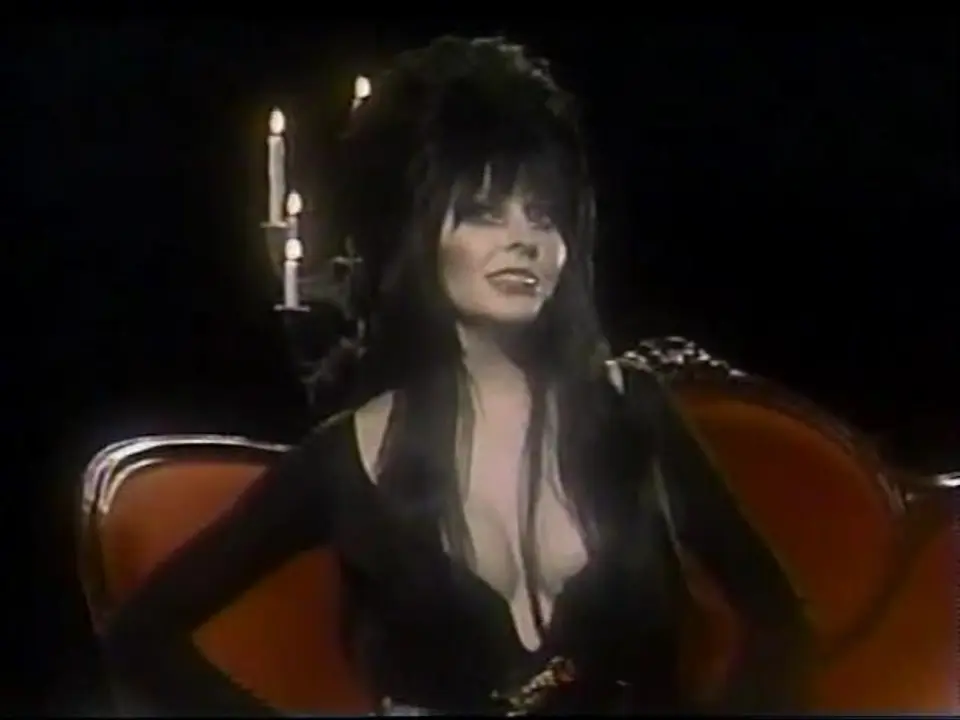
That's a huge part of why Movie Macabre works so well for me. I love horror hosts in general, but Elvira takes that feeling of hanging out with somebody who loves this wonderfully weird stuff as much as you do and turns the personality dial all the way up.
Movie Macabre also established one of the most important things about Elvira's appeal: Peterson never treated horror fandom as something that needed to be defended or taken painfully seriously. She could love monster movies while making fun of them. She could embrace gothic imagery while turning practically every available sentence into a double entendre. The joke was never that horror fans were ridiculous. The joke was that all of this was ridiculous and wasn't that exactly why we loved it?
By the middle of the decade, Elvira's fame had expanded far beyond the program. Television appearances, advertising campaigns, personal appearances and merchandise made her increasingly difficult to avoid, particularly around Halloween. She became one of those rare characters whose silhouette alone could do most of the marketing. You did not need to see the face. The hair and neckline pretty much handled the introduction.
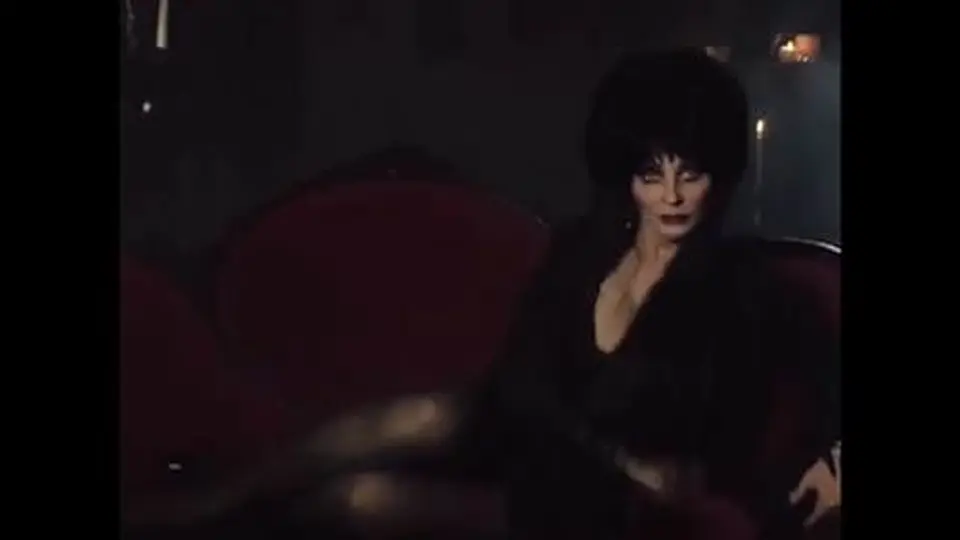
The original Movie Macabre run ended in 1986, but by then the show had already done its job. Elvira was no longer simply the host of a television series. She was a brand, a celebrity and a pop culture character who could move into virtually any medium Peterson wanted to try next.
And next came the point where Hollywood decided the woman introducing the movies should probably get one of her own.
Elvira Becomes a Pop Culture Empire
Long before "personal brand" became a phrase capable of making everyone in a meeting quietly reconsider their career choices, Cassandra Peterson understood that Elvira could be much more than a television character.
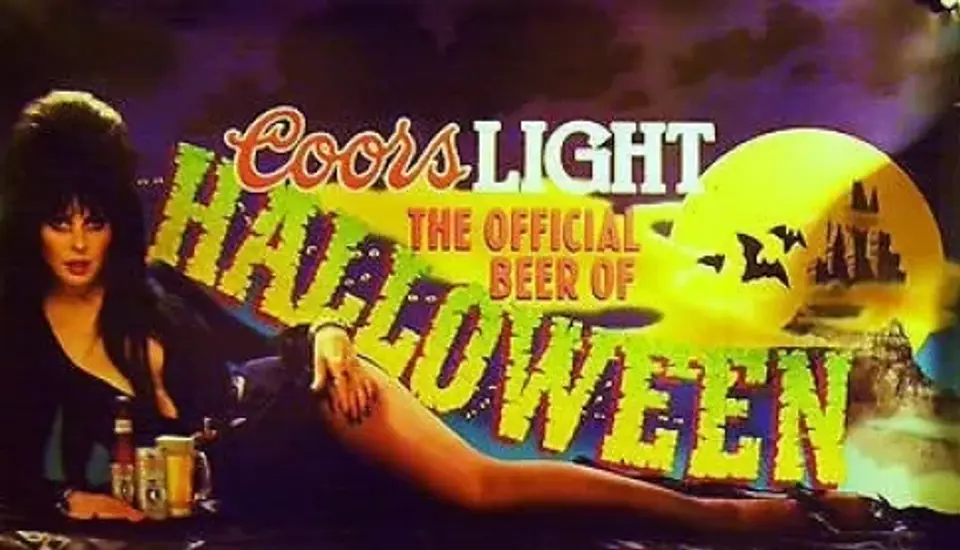
Her national profile exploded through appearances on talk shows, variety programs and specials, but advertising pushed her into an entirely different level of visibility. The most famous partnership was with Coors, which made Elvira the face of its Halloween promotions beginning in the 1980s. Cardboard displays of Elvira appeared in stores and bars across the country, turning her into a seasonal fixture far beyond the audience that actually watched Movie Macabre.
The campaign also produced one of the stranger controversies in Elvira history. Some religious groups objected to using a character associated with horror and Halloween to sell beer, and pressure eventually helped bring the long-running relationship to an end. If you are trying to design the most perfectly 1980s controversy imaginable, "Elvira is too satanic to sell Coors" is difficult to improve upon.
More important was what those campaigns demonstrated. Elvira worked as an image even when there was no movie attached. She could sell beer, appear in commercials, host Halloween programming, make personal appearances or stare at you from a cardboard display in a liquor store, and the character still made immediate sense.
Peterson and her team were also unusually protective of Elvira as a business. Rather than allowing a studio or television network to completely control the character, Peterson maintained ownership and built Elvira into an independently controlled property. That decision would become enormously important as the character moved through different networks, distributors and entertainment companies over the following decades.
It also opened the door to merchandise. Posters, calendars, costumes, trading cards and collectibles increasingly transformed Elvira from someone audiences watched into someone fans could bring home. The character's visual design was practically engineered for merchandise: instantly recognizable, slightly dangerous, funny and unmistakably Halloween without being restricted to Halloween.
By the late 1980s, the transition was complete. Elvira had begun as a host introducing other people's movies. Now she had enough recognition, enough personality and enough of an audience to carry a movie herself.
Elvira: Mistress of the Dark (1988)
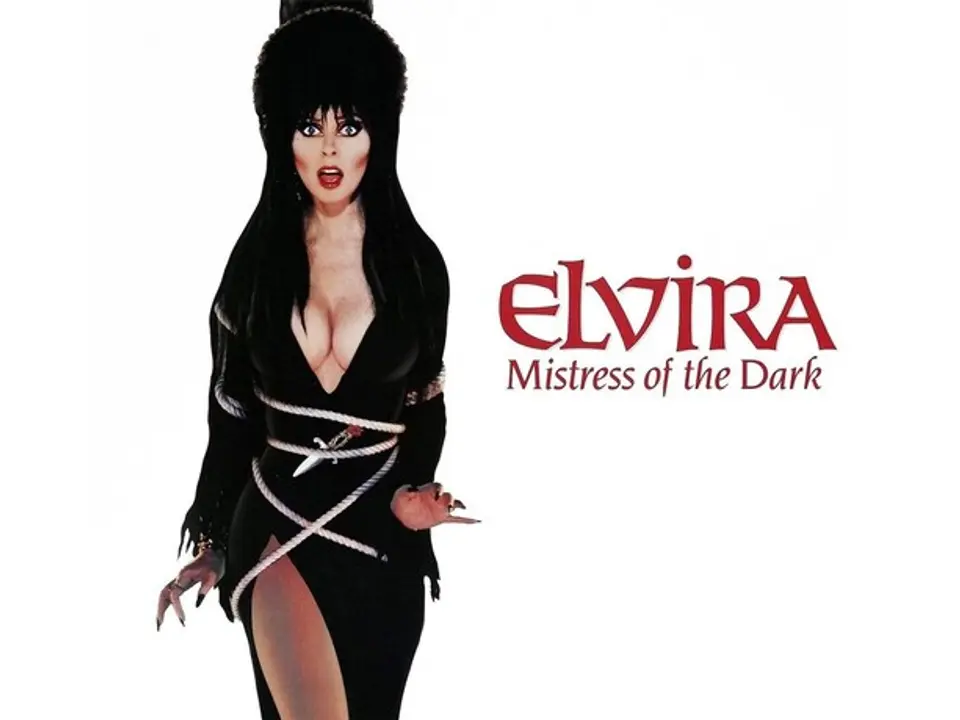
Released: September 30, 1988
Directed By: James Signorelli
Written By: Sam Egan, John Paragon and Cassandra Peterson
Starring: Cassandra Peterson, W. Morgan Sheppard, Daniel Greene, Edie McClurg, Susan Kellermann and Jeff Conaway
Elvira's jump to the big screen came in 1988 with Elvira: Mistress of the Dark, a supernatural comedy built around exactly the collision that made the character work: Elvira versus people who are absolutely horrified by Elvira.
After learning that she has inherited part of her late great-aunt's estate, Elvira travels to the deeply conservative town of Fallwell, Massachusetts, hoping the inheritance will help finance her dream of mounting a Las Vegas show. Instead, she finds a suspicious community, an unusual family inheritance and a town spectacularly unprepared for her arrival.
Peterson co-wrote the screenplay with Sam Egan and longtime creative collaborator John Paragon, while James Signorelli directed. The movie wisely resisted turning Elvira into a conventional horror heroine or sanding down the character for mainstream audiences. The gothic imagery, camp, broad comedy and sexual humor all survived the move to a feature film.
Its theatrical fortunes were considerably less glamorous. Produced through New World Pictures during a turbulent period for the company, the film suffered from distribution problems and a limited theatrical release. It failed to become the box-office breakout its creators hoped for, but home video gave it a much longer life.
Over the years, Elvira: Mistress of the Dark became a genuine cult favorite and one of the defining pieces of the Elvira mythology. It proved that the character could carry a story beyond the horror-host format and introduced her to generations of viewers who never saw the original Movie Macabre broadcasts.
And yes, I love it. Then again, asking me to pick which part of Elvira I love is a pretty useless exercise because the answer is essentially all of it.
The full story of the film deserves its own Ultimate Guide, because there is a lot more to dig into there. For Elvira's larger history, though, the important thing is what happened after the box-office disappointment: she survived it. More than survived it, really. Elvira kept expanding.  Buy Elvira, Mistress of the Dark (4K UHD Blu-Ray) here!
For more, check out The Ultimate Guide to Elvira, Mistress of the Dark (1988).
Beyond Movie Macabre: VHS, Specials and The Elvira Show
Elvira's television career never depended on one series staying on the air forever. Once the character became recognizable on sight, Peterson could drop her into almost any format and the audience immediately understood the assignment.
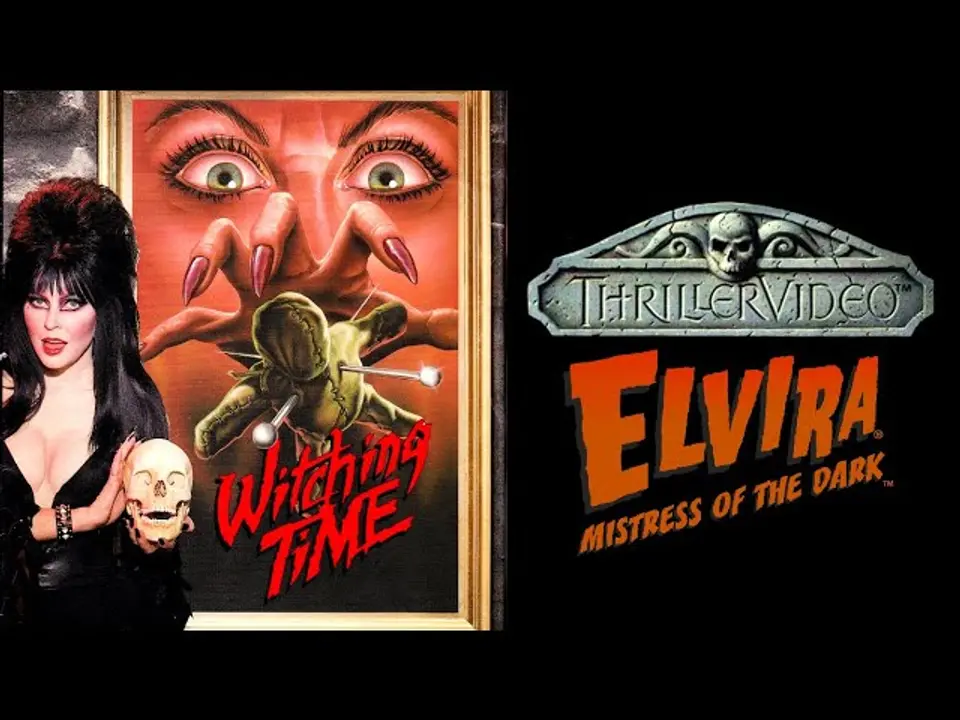
One of the most important extensions came through ThrillerVideo, the direct-to-video horror line launched in 1985 by International Video Entertainment. Elvira hosted a substantial number of releases on VHS and Betamax, introducing horror, thriller and science-fiction titles in much the same spirit as Movie Macabre. The format was perfect for the home-video boom because it essentially let fans take a miniature Elvira hosted movie night home with them.
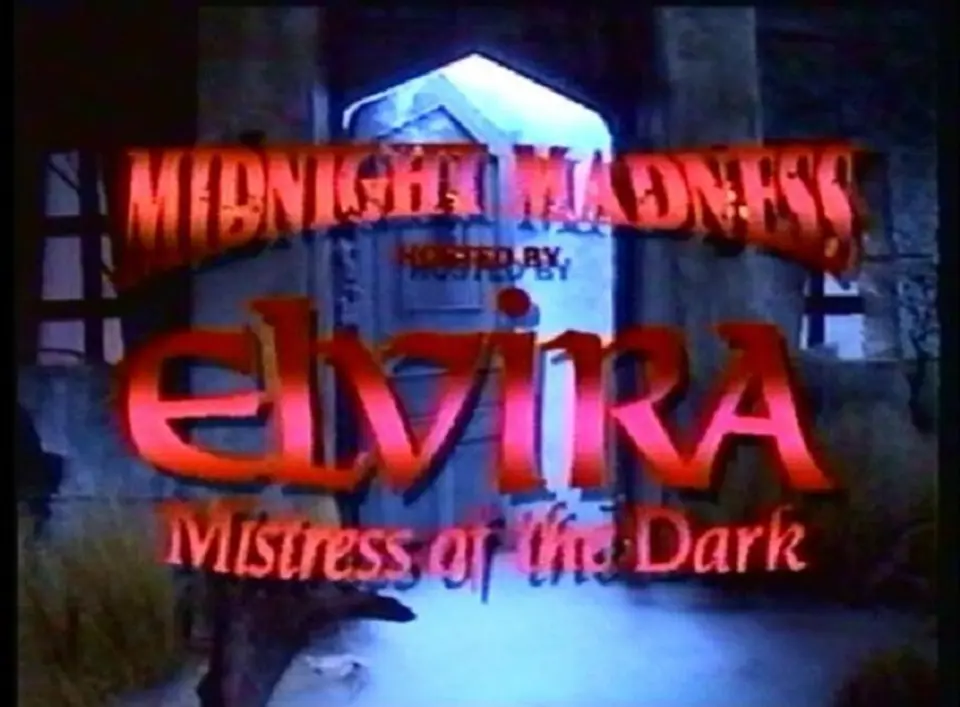
The selections included everything from older genre films to British television productions such as episodes of Hammer House of Horror. Peterson was also selective about what she would put the Elvira name on, declining to host some of the more graphic titles offered to the line. That distinction is useful because it shows how carefully the character was being managed even at a point when horror VHS shelves were turning into the Wild West with tracking lines.
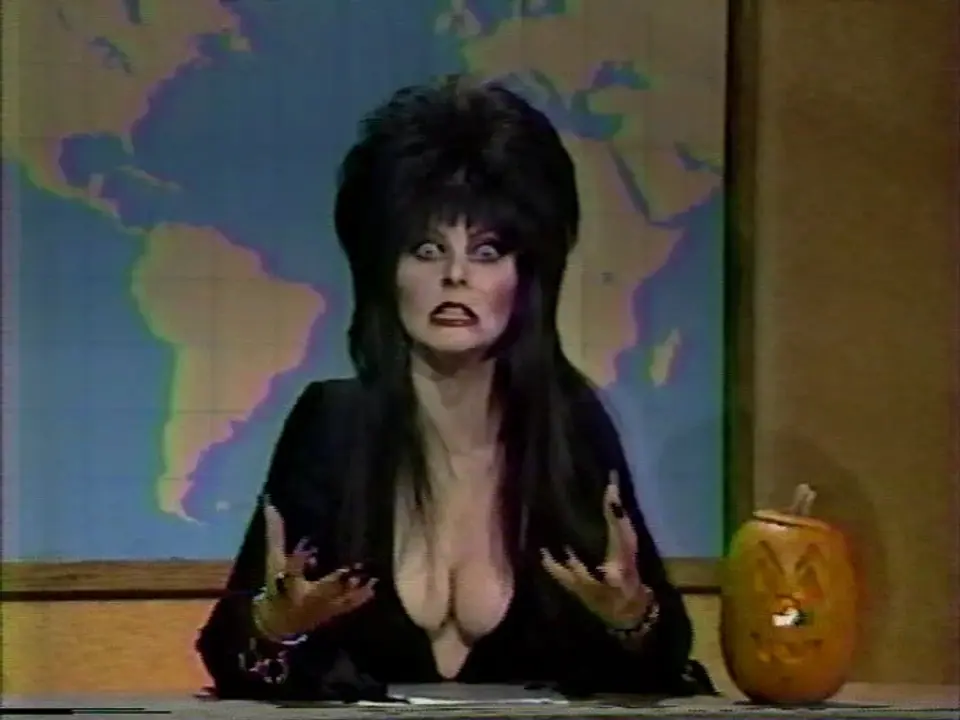
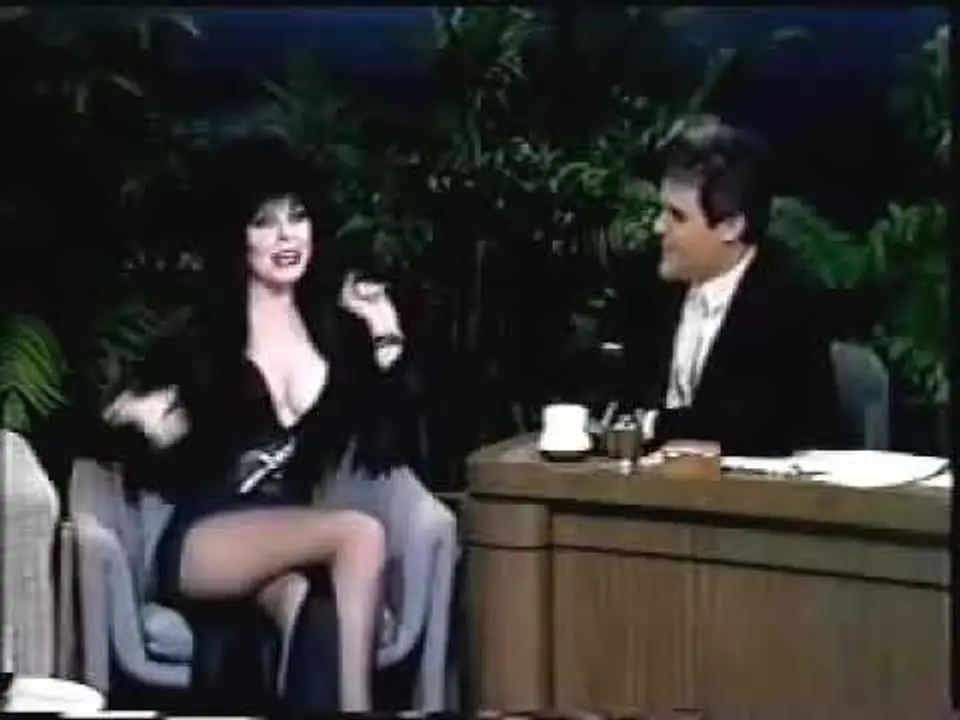
Elvira also became a natural fit for television specials and guest appearances. She hosted Halloween programming, appeared on MTV, turned up on shows ranging from The Fall Guy to The Super Mario Bros. Super Show!, and even appeared at WrestleMania 2. The point was not that every appearance became a defining career moment. The point was that Elvira had become portable. You could put her almost anywhere and she still felt like Elvira.
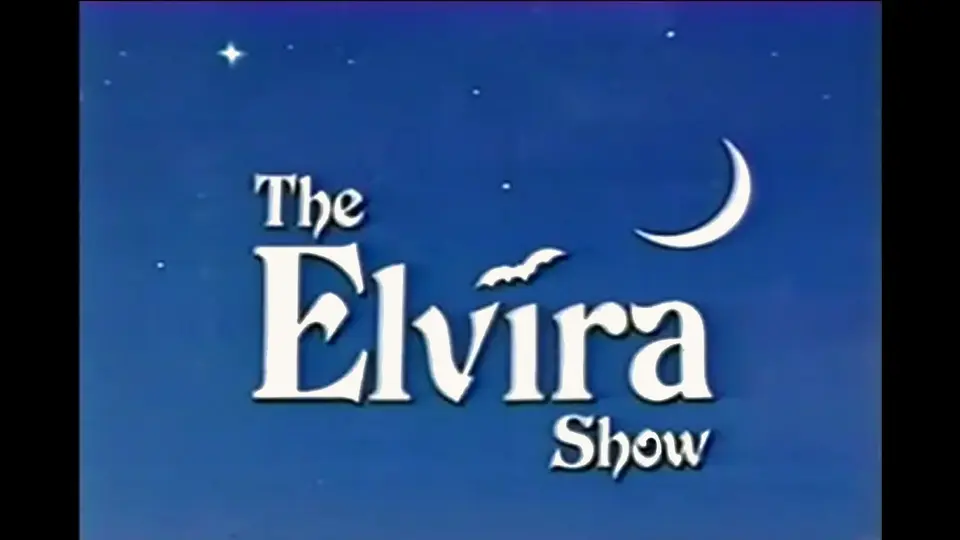
That adaptability reached an especially interesting almost-moment in 1993 with The Elvira Show, a CBS sitcom pilot developed by Peterson, John Paragon and Anne Beatts. The concept placed Elvira in a Kansas town with her Aunt Minerva, played by Katherine Helmond, as the two witches navigated suburban life, family complications and the sort of supernatural chaos that tends to follow Elvira around like unpaid credit-card debt.
The pilot had the bones of a very specific kind of '90s supernatural sitcom, only with Elvira dropped into the middle of it. Peterson remained fully herself rather than being transformed into a toned down network version of the character, and that is probably why the unaired pilot remains such a fascinating what-if for fans.
CBS ultimately passed on the series, leaving The Elvira Show as a single pilot rather than a full run. Still, it demonstrates how close Elvira came to having a weekly scripted television vehicle years after the original Movie Macabre had ended.
More importantly, none of these projects needed to replace Movie Macabre. They expanded the ecosystem around it. By the 1990s, Elvira was no longer tied to one network, one format or even one medium. She could host a tape, appear in a sitcom pilot, turn up in a Halloween special or guest star somewhere completely unexpected and still feel completely at home.
That flexibility would become the secret weapon of the next several decades.
Elvira's Haunted Hills (2001)
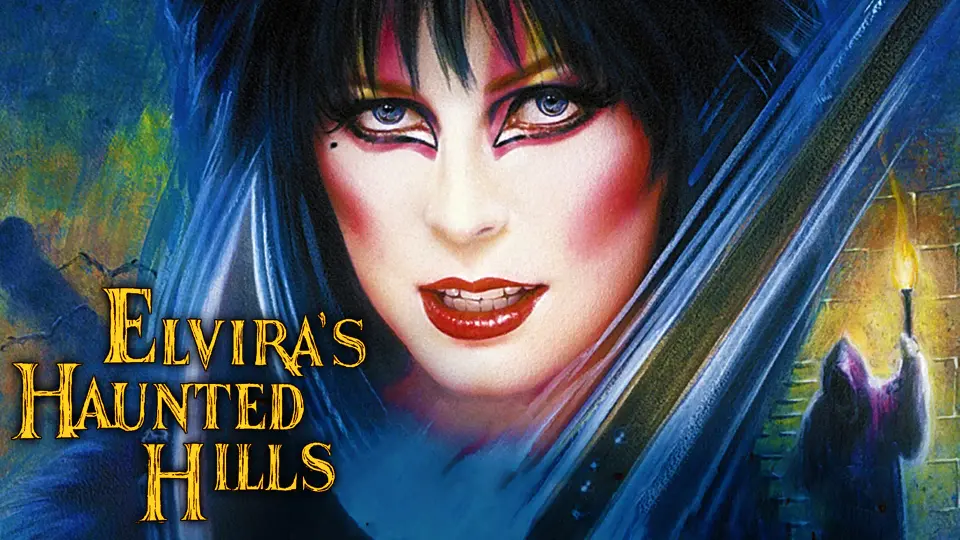
Released: September 2001
Directed By: Sam Irvin
Written By: Cassandra Peterson and John Paragon
Starring: Cassandra Peterson, Richard O'Brien, Mary Scheer, Scott Atkinson and Mary Jo Smith
More than a decade after her first feature film, Elvira returned to the big screen with Elvira's Haunted Hills, a deliberately old-fashioned horror comedy that leaned much harder into parodying the gothic horror movies that had helped shape the character in the first place.
Set in 1851, the film finds Elvira traveling through the Carpathian Mountains on her way to Paris when she winds up at a crumbling castle populated by a spectacularly suspicious assortment of aristocrats. The plot gives Peterson an excuse to drop Elvira into a world of fog, secret passages, doomed romance and increasingly ridiculous gothic melodrama, which is pretty much the cinematic equivalent of handing her the keys and asking her not to damage the hearse.
Peterson and John Paragon wrote the screenplay, with Sam Irvin directing and Richard O'Brien among the principal cast. Unlike the 1988 film, this one was produced independently and reached audiences primarily through festivals and home entertainment rather than a major theatrical rollout.
It did not become a mainstream hit, but that was never really the point. Elvira's Haunted Hills plays like a love letter to the sort of creaky horror movies Elvira had spent her career introducing and mocking, particularly the lush Gothic productions associated with Roger Corman and Hammer-style horror. For the larger Elvira story, it is important because Peterson managed to make another feature on her own terms long after Hollywood had stopped treating the character like a conventional movie franchise.
As with the first film, we will save the deep production history for its own Ultimate Guide. Here, the bigger takeaway is simpler: Elvira could disappear from movie theaters for years and still return without needing to be reinvented. Buy Elvira's Haunted Hills (Blu-Ray) here!
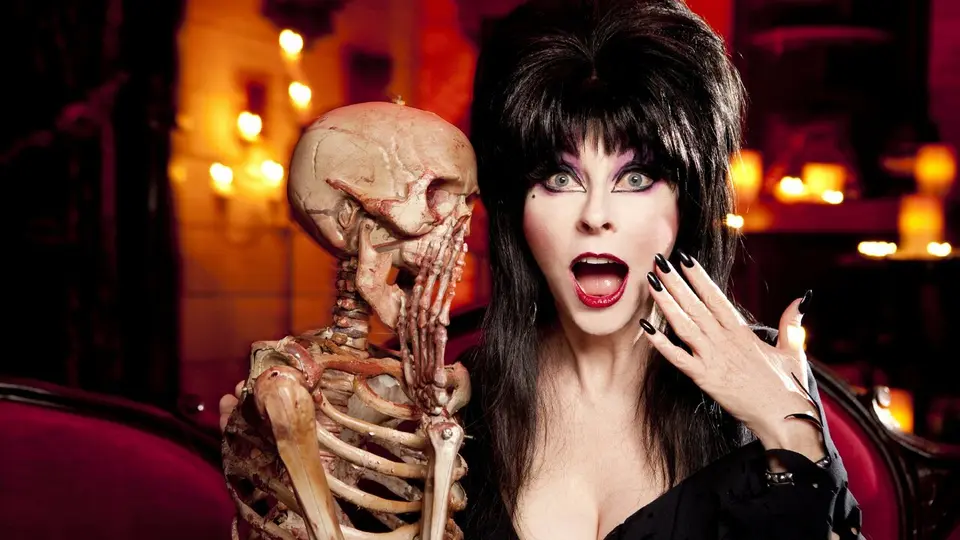
Movie Macabre Returns
In 2010, nearly a quarter century after the original run ended, Elvira returned to the format that started everything with a new incarnation of Movie Macabre.
The revival kept the basic premise intact: Elvira introduced and interrupted horror and science-fiction movies with newly produced host segments, jokes and commentary. The television landscape had changed almost beyond recognition since 1981, but the format still worked because it had never depended on expensive production or elaborate mythology. It depended on the host.
The 2010 series was syndicated nationally and introduced Elvira's horror host persona to viewers who may have known the character from movies, Halloween appearances, merchandise or pop culture references without ever actually seeing her host a film. In that sense, the revival functioned almost like a reminder of the source code. Before the costumes, pinball machines and licensed everything, Elvira was a woman on a couch making fun of a movie.
The revival lasted for a relatively brief run, but it proved something useful: Movie Macabre was not simply nostalgia for one particular era of local television. The format could still work decades later because Peterson's relationship with the audience remained the real attraction.
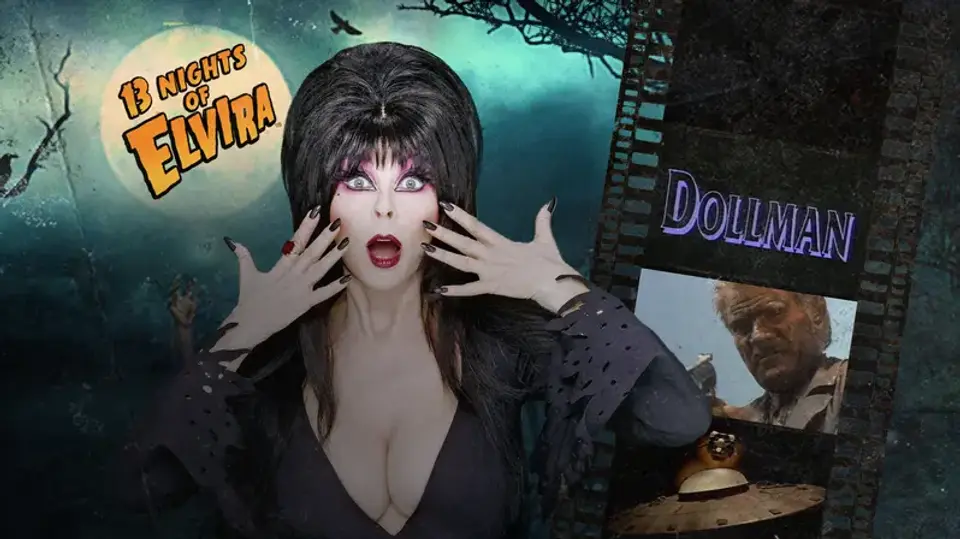
13 Nights of Elvira
That idea returned again in 2014 with 13 Nights of Elvira, a streaming series produced for Hulu. Each installment paired Elvira with a different horror or cult movie, bringing the horror host format directly into the streaming era.
The platform had changed from local broadcast television to national syndication to VHS and finally streaming, but the ritual was basically the same. Elvira welcomed viewers, set the tone, mocked the movie and made the experience feel like an event instead of somebody simply clicking play on a title in a library containing several thousand other things they could be watching.
The series also illustrated how unusually well Elvira adapted to changes in distribution. A lot of television personalities are inseparable from the format that created them. But Elvira survived almost every format that came after hers. Broadcast, cable, home video, syndication and streaming all gave her somewhere to sit down and insult a monster movie.
By this point, that adaptability was no longer a lucky accident. It was one of the defining features of the character's longevity.
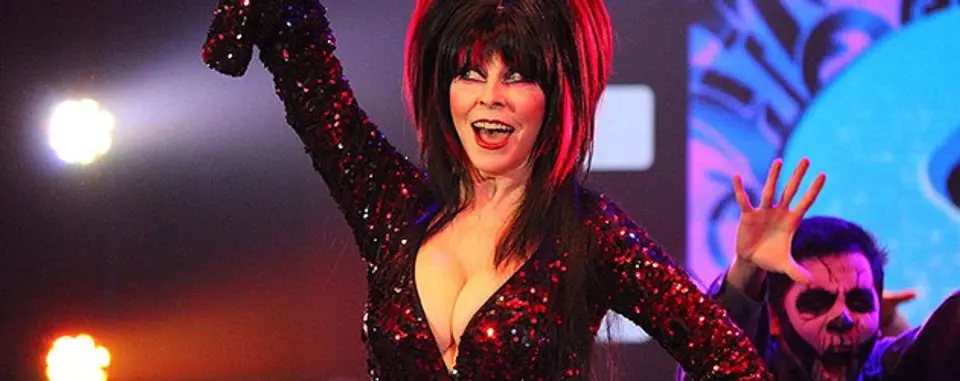
Elvira and Knott's Scary Farm
If Movie Macabre made Elvira a television icon, Knott's Scary Farm helped turn her into something even harder to define: a living Halloween tradition.
Peterson began appearing at Knott's Berry Farm's annual Halloween Haunt in the 1980s, and the relationship eventually became one of the longest-running and most beloved parts of Elvira's career. Over the decades, her elaborate stage shows mixed comedy, music, dancers, horror parody, pop culture jokes and the kind of unapologetically ridiculous spectacle that makes considerably more sense when everybody outside the theater is being chased through fog by monsters.
The Knott's shows mattered because they gave fans a version of Elvira that television could never completely capture. She was not simply appearing in prerecorded segments or popping up for a guest spot. These were full scale live productions built around Peterson's timing, stage presence and ability to work directly with an audience.
As somebody who loves basically every incarnation of Elvira, I think this part of her history is especially great because it turns the character into an actual Halloween experience rather than something you only watch on a screen.
They also reinforced just how closely Elvira had become tied to Halloween itself. Plenty of celebrities become associated with a holiday because they made one famous movie or recorded one seasonal song. Elvira spent decades physically showing up every October and helping people celebrate it. At some point, she stopped merely being part of Halloween entertainment and became one of Halloween's recurring characters.
The stage shows evolved constantly, with new themes, costumes, parody numbers and pop culture targets. Peterson worked with longtime collaborators including John Paragon, and the productions grew increasingly elaborate while keeping the basic formula intact: Elvira enters, everybody loses their minds and eventually something gloriously tasteless happens.
Her final regular live Elvira show at Knott's took place during the 2017 Scary Farm season. By then, generations of fans had grown up watching her at the park, and the farewell carried considerably more emotional weight than anybody would reasonably expect from a woman whose career includes an impressive number of jokes about her own cleavage.
Knott's later honored that history with Yours Cruelly, Elvira XXPerience in 2024, a retrospective built around costumes, memorabilia, archival footage, artwork and material from Peterson's own collection. Rather than attempting to replace the live shows, the attraction treated them as what they had become: an important piece of Halloween and theme park history.
That feels appropriate. Elvira's Knott's era was not a side job squeezed between television projects. It became one of the major pillars of the character's legacy.
Elvira's Music: Haunted Hits, Monster Raps and Halloween Records
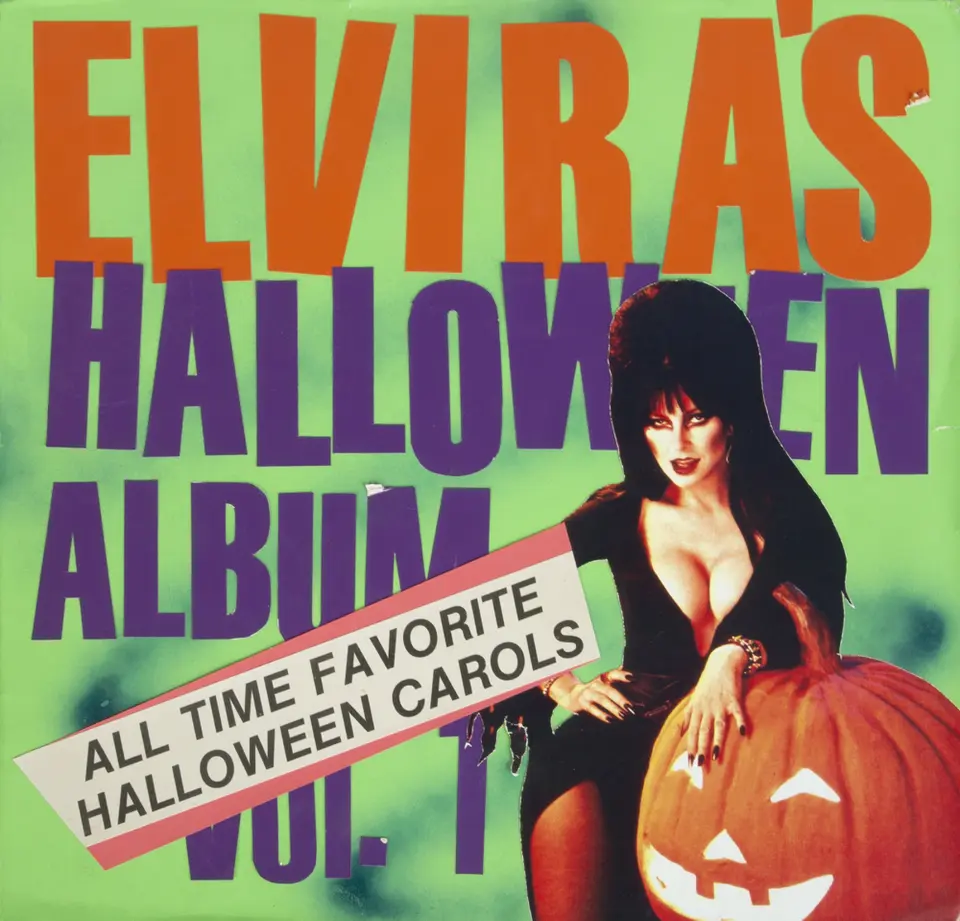
Music had been part of Cassandra Peterson's life long before Elvira existed, so it makes sense that the character eventually found her way onto records too.
One of the earliest releases was 3-D TV, credited to Elvira and the Vi-Tones in 1982. That was followed by Elvira Presents Vinyl Macabre: Oldies but Ghoulies (Volume 1) in 1983, which helped establish a formula Peterson would return to repeatedly: classic novelty and horror-themed songs packaged with Elvira's introductions, jokes and original material.
Elvira Presents Haunted Hits (buy it here) followed later in the decade, gathering Halloween-friendly tracks under the Elvira banner. By the 1990s, she returned with Elvira Presents Monster Hits (buy it here) and Elvira Presents Revenge of the Monster Hits (buy it here), collections that mixed familiar spooky standards with newly recorded Elvira performances and comedy pieces.
The music works for essentially the same reason Movie Macabre works. Elvira does not need to dominate every second. She acts as the host who turns a collection of songs into an Elvira experience. Even when the track belongs to somebody else, her presence gives the album a point of view.
There were also original songs that became fan favorites in their own right, including Monsta' Rap and Haunted House. Peterson later continued popping up in music outside her own compilations, including a collaboration with Leslie and the LY's on Zombie Killer and an appearance with Kim Petras on Turn Off the Light (listen here!).
Elvira's Gravest Hits arrived in 2010, collecting material from across the character's recording history and reminding everyone that, yes, there is enough Elvira music for a greatest-hits album. Of course there is. At this point I would be more surprised to discover a medium she somehow forgot to invade.
The music catalog is not the largest part of Elvira's career, but it is an important one because it shows how completely Peterson understood the character as a host rather than merely an actress playing a role. Elvira could host a movie, a stage show, a television special or a Halloween record and somehow make all of them feel like extensions of the same world.
Elvira in Comics: From Horror Host to Comic Book Star
Elvira's move into comic books was almost inevitable. The character already looked like she had escaped from the cover of a particularly disreputable horror comic, and the format gave writers and artists something television could not: absolutely no reason to obey the laws of physics, budgets or good taste.
Her first major comic-book home came at DC Comics in 1986 with Elvira's House of Mystery. The series revived the name and horror-anthology tradition of DC's long-running House of Mystery, with Elvira stepping into the role of host. It ran for eleven issues plus Elvira's Haunted Holidays Special, putting a very 1980s pop culture phenomenon inside a comic tradition that stretched back decades.  Buy Elvira's House of Mystery (Omnibus) on Amazon here!
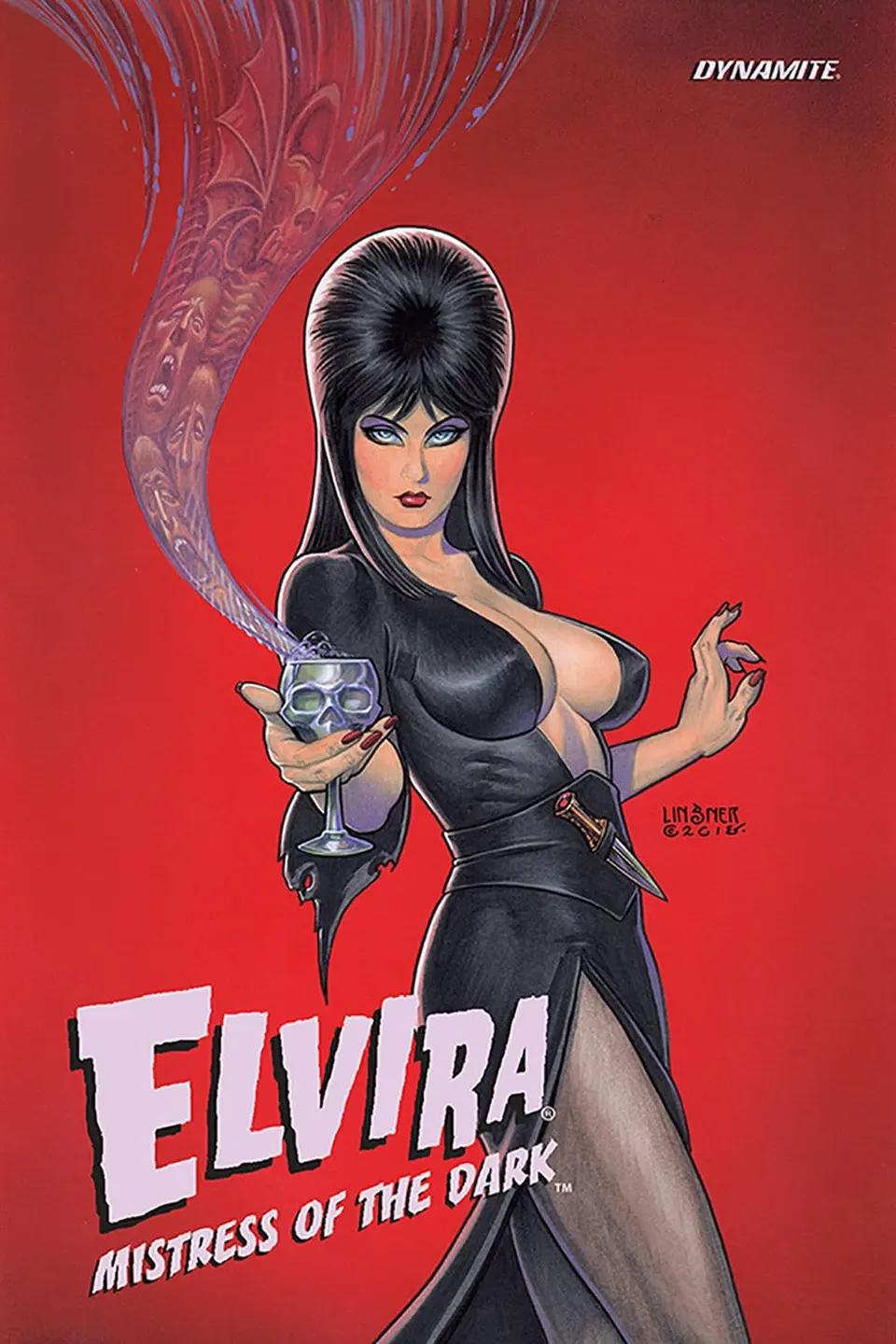
The really enormous chapter began in 1993 when Claypool Comics launched Elvira, Mistress of the Dark. Instead of merely standing outside the stories and introducing them, Elvira became the star of supernatural adventures, horror spoofs and pop culture parodies. The series ultimately reached an extraordinary 166 issues, with creators including Paul Dini, Kurt Busiek, Jo Duffy, Richard Howell and many others contributing over its run.
That number is worth sitting with for a second. One hundred and sixty-six issues. There are superheroes with capes, tragic origin stories and several billion dollars in box-office revenue who would be delighted with that kind of run.
After the Claypool era ended, Elvira eventually found another long-term comic home at Dynamite Entertainment. A new Elvira: Mistress of the Dark series launched in 2018 with writer David Avallone and artist Dave Acosta, sending Elvira through horror history and opening the door to a growing library of miniseries, crossovers and parodies. Dynamite has since paired her with characters and properties including Vincent Price and, in a particularly inevitable meeting of chaotic pop culture women, Harley Quinn. Some of the most popular collections include Elvira In Horrorland, Elvira Meets H.P. Lovecraft, and Harley Quinn X Elvira.
The comics work because Elvira is unusually suited to them. Her humor already breaks the fourth wall. Her world has always been part horror movie, part parody and part show-business satire. A comic can send her through literary horror, old Hollywood, Hell or the apocalypse without requiring anybody to explain why Elvira is there. Of course she is there. At this point the surprising thing would be finding a corner of horror culture she has not visited.
Books, Memoirs and Becoming Elvira
Elvira also escaped television through prose. Beginning in the 1990s, Peterson and John Paragon collaborated on a series of Elvira novels including Transylvania 90210, Camp Vamp and The Boy Who Cried Werewolf. Like the comics, the books treated Elvira as a character who could carry her own adventures rather than simply introduce somebody else's story.
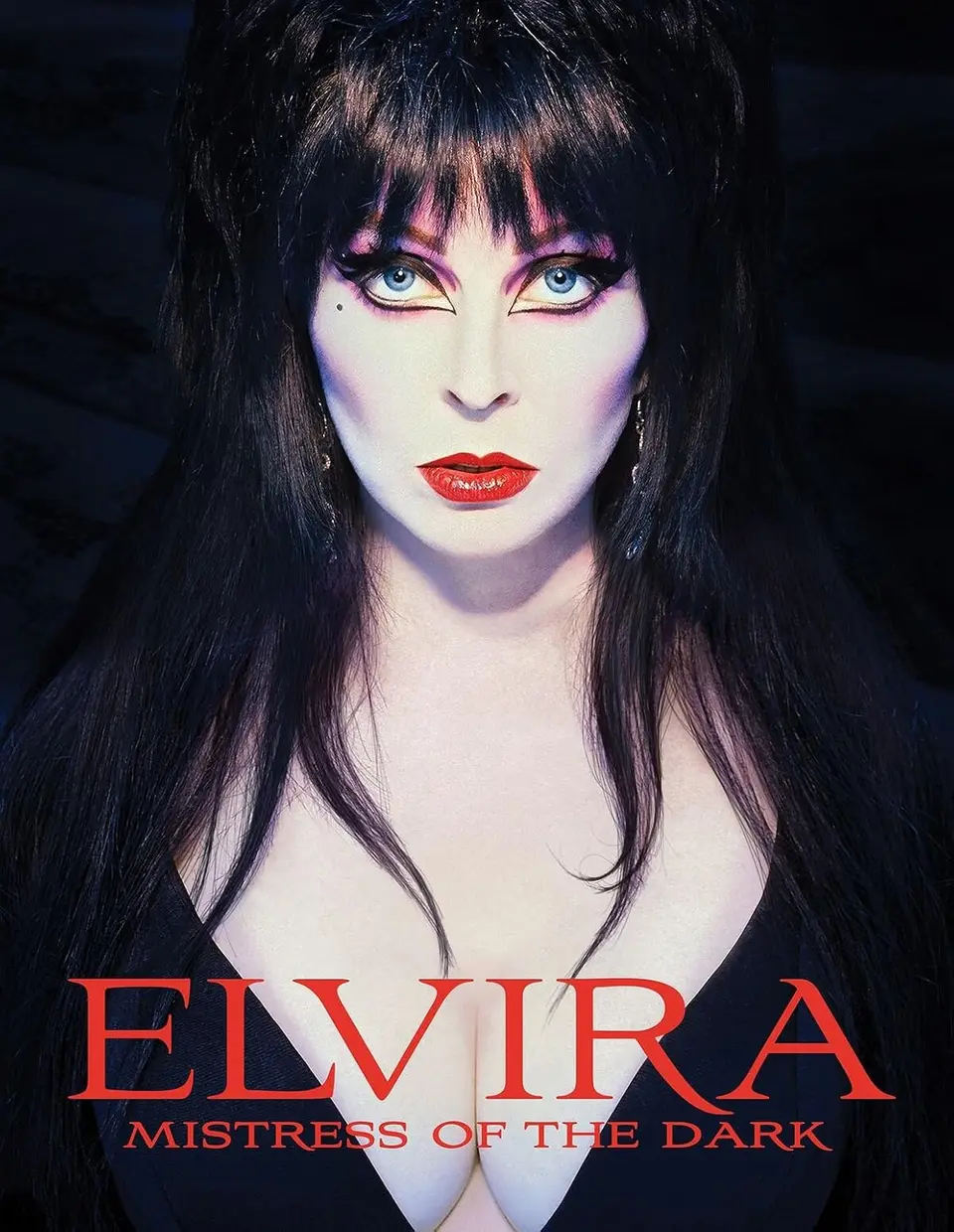
Testing the waters, Elvira released the hardcover photo book Elvira, Mistress of the Dark which immediately became a best seller.

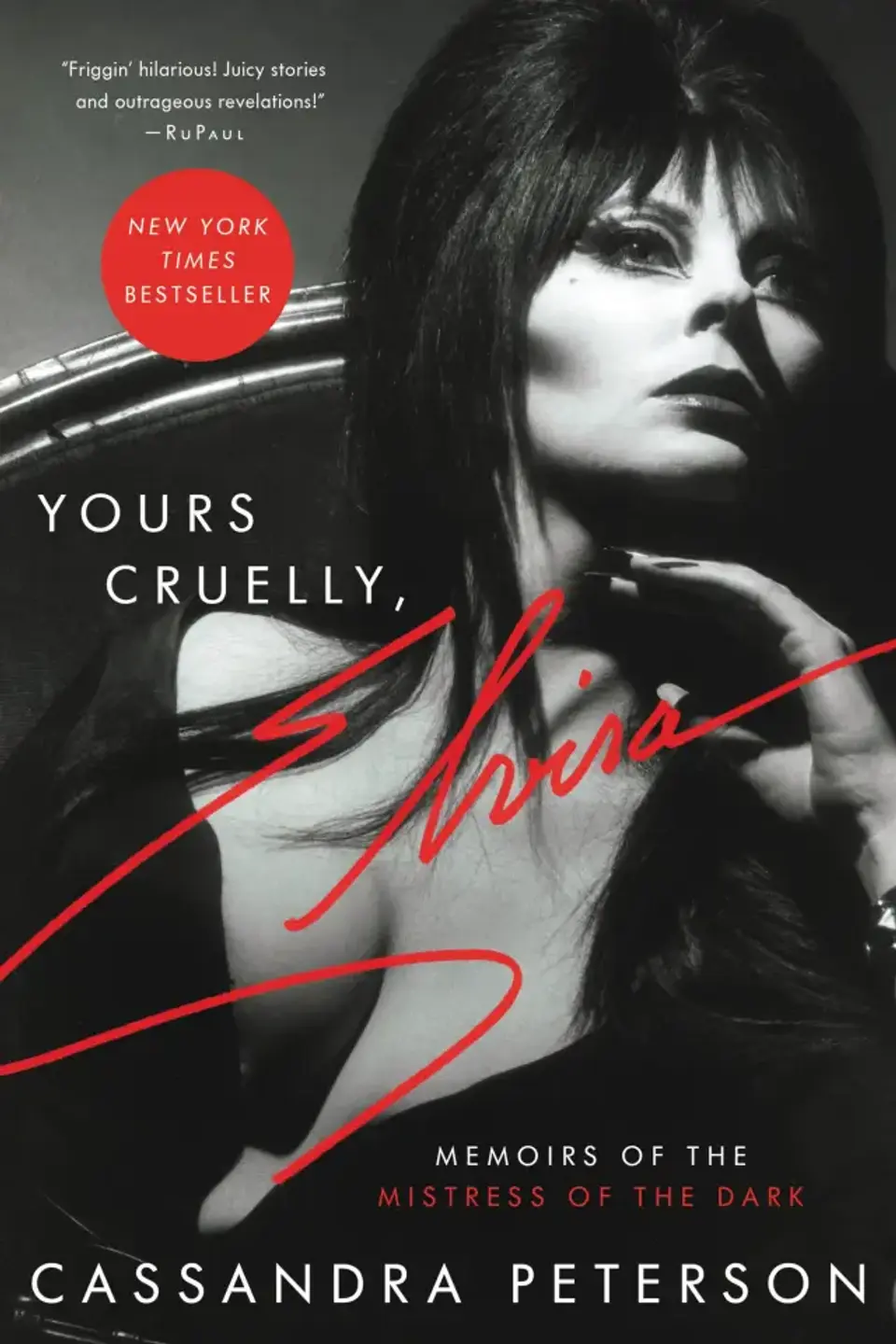
The most important book connected to Elvira, however, came from Peterson herself. Yours Cruelly, Elvira: Memoirs of the Mistress of the Dark was published in 2021 and finally allowed her to tell the story behind the character in her own voice. The memoir covered her childhood, Las Vegas years, show-business career, the creation of Elvira and the complicated reality of maintaining a public persona for four decades.
It also revealed a major part of Peterson's private life that she had never publicly discussed before: her long-term relationship with Teresa "T" Wierson. Peterson's decision to share that relationship added another dimension to the affection Elvira had already inspired within the LGBTQ+ community. The revelation did not rewrite what Elvira meant to fans so much as make Peterson's own story more visible alongside the character she had spent decades protecting.
The memoir has continued to take on a life of its own. A graphic-novel adaptation, Yours Cruelly: Becoming Elvira, written by Peterson with David Avallone and illustrated by Mariano Benitez-Chapo, was announced through Dynamite, bringing the autobiography into the same medium where Elvira had already accumulated hundreds of appearances.
For a character built around mystery, wigs, cleavage and a deliberately ridiculous supernatural persona, one of the most interesting later chapters in the Elvira story has been Peterson allowing audiences to see more of the person underneath it. That has not diminished the illusion. If anything, knowing how much work, independence and sheer stubbornness went into keeping Elvira alive makes the whole thing more impressive. Buy Yours Cruelly: Memoirs of the Mistress of the Dark here!
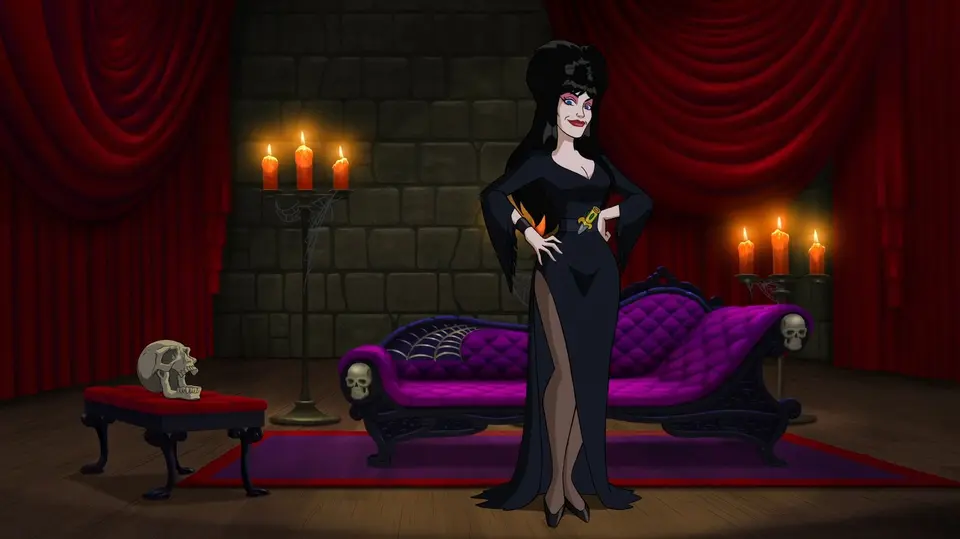
Games, Pinball and Interactive Elvira
Naturally, Elvira also wound up in video games. Because television, movies, records, comics, novels, live shows and enough licensed merchandise to fill a crypt were not keeping her busy enough.
The best-known early games were Elvira: Mistress of the Dark and Elvira II: The Jaws of Cerberus, adventure role-playing games that leaned far more heavily into genuine horror than someone familiar only with Elvira's comedy might expect. They combined exploration, puzzles and grisly imagery with Peterson's character serving as the recognizable center of the experience. Elvira later returned to gaming in Waxworks-related releases, casino and slot-machine projects and other licensed appearances.
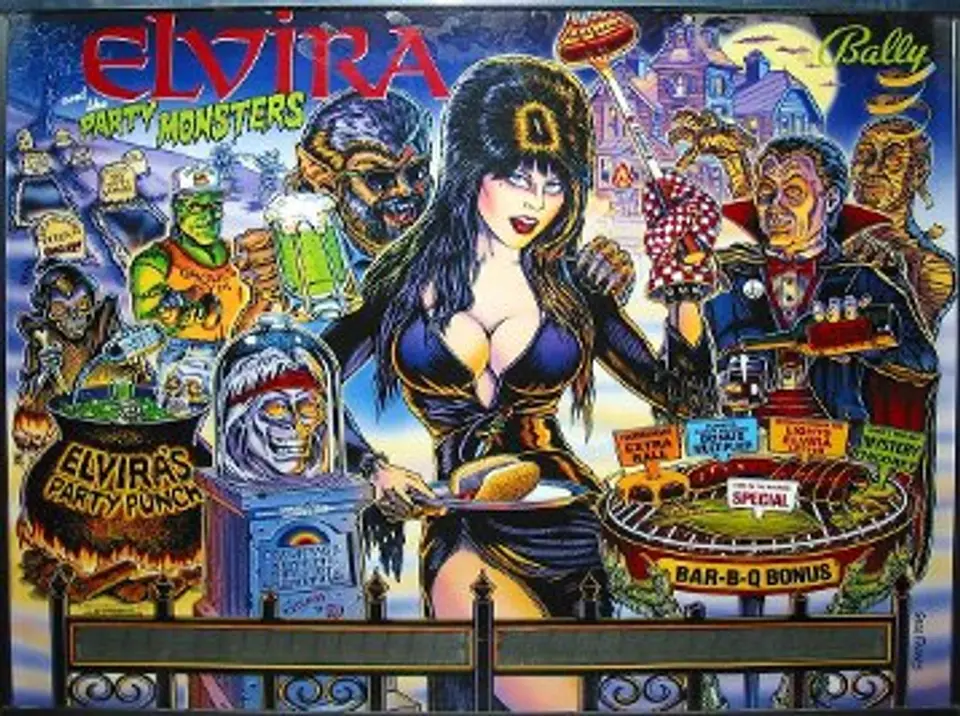
Her most enduring interactive legacy may be pinball. Elvira and the Party Monsters arrived in 1989, followed by Scared Stiff in 1996. Both machines became cult favorites, blending horror imagery, jokes and Peterson's recorded dialogue with exactly the kind of noisy arcade spectacle Elvira was born to inhabit. A third machine, Elvira's House of Horrors, followed from Stern Pinball in 2019, giving her the increasingly ridiculous distinction of spanning three major Elvira pinball machines across three decades.
The older tables have continued to find new audiences digitally as well. Modern recreations of Scared Stiff and Elvira and the Party Monsters have brought the machines into contemporary pinball platforms, preserving Peterson's voice work and the original tables for people who do not happen to have room in their house for a full-sized pinball machine. Cowards.
There is something wonderfully appropriate about Elvira working so friggin well in pinball. The character has always thrived on sensory overload: flashing lights, bad jokes, monsters, screaming, music and somebody making an inappropriate comment at precisely the wrong moment. A pinball machine is basically an Elvira stage show that occasionally steals your quarters.
The Elvira Merchandise Empire
By this point it should be obvious that Elvira did not merely become a character people watched. She became a character people loved. And... she became a character people bought.
That distinction is important because merchandise was not an afterthought to the Elvira phenomenon. It was one of the engines that kept the character visible between television projects, movies and live appearances. Calendars, posters, trading cards, Halloween costumes, action figures, statues, apparel, home decor, dolls and collectibles turned Elvira into something closer to a permanent piece of horror iconography than a conventional television personality.
I say this as somebody who owns just about everything Elvira I can get my hands on. Sometimes I even buy two of something so I can keep one and display the other, which is either sensible collecting or evidence that Cassandra Peterson has been extremely successful at her job.
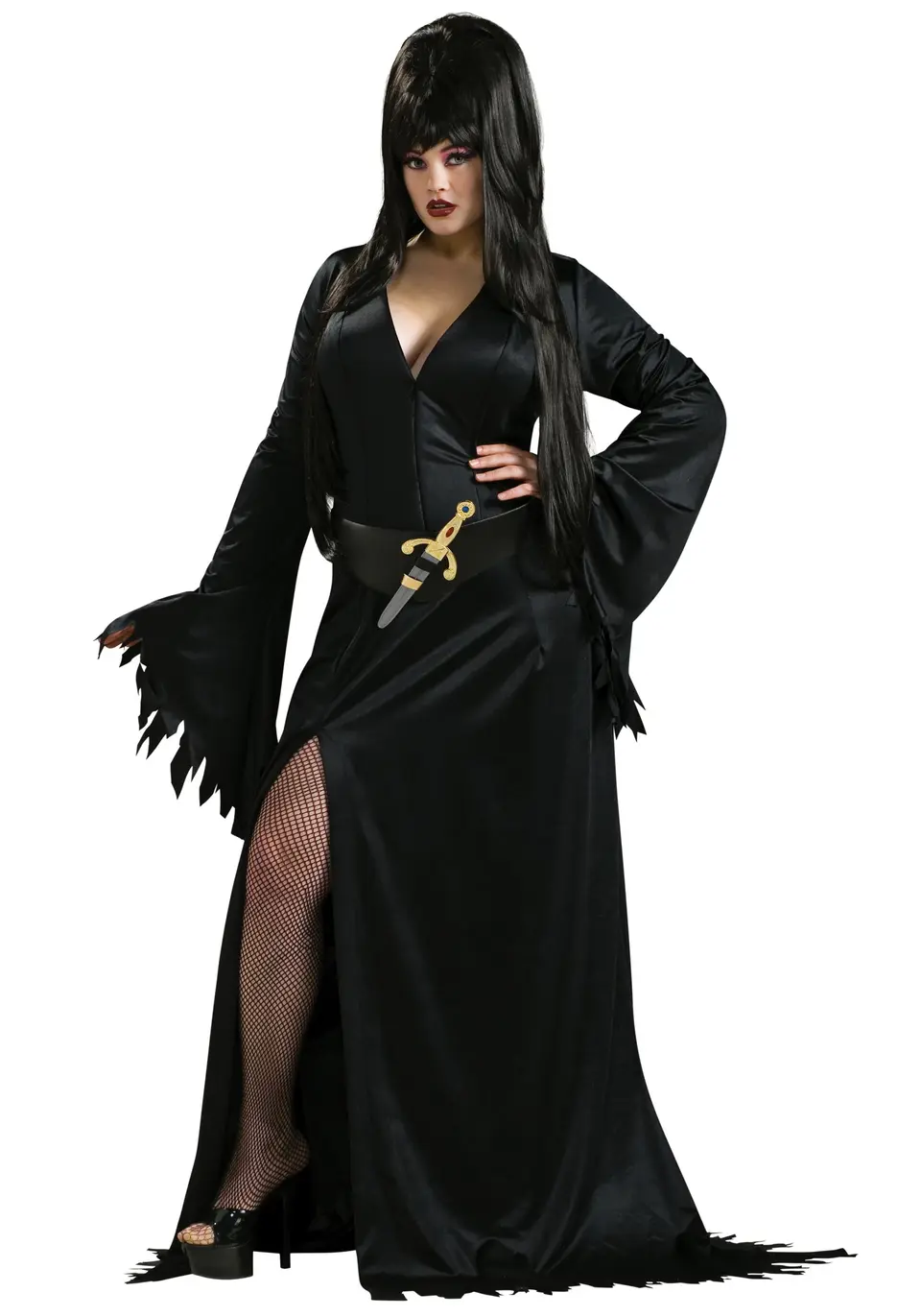
The costume may be the clearest example. Every October, people who have never seen an episode of Movie Macabre still know exactly who they are looking at when somebody walks into a Halloween party with the black bouffant, plunging gown and dagger. That is branding at a level most entertainment franchises spend terrifying amounts of money trying to manufacture, and Peterson managed it with a look that was essentially locked in during the early 1980s.
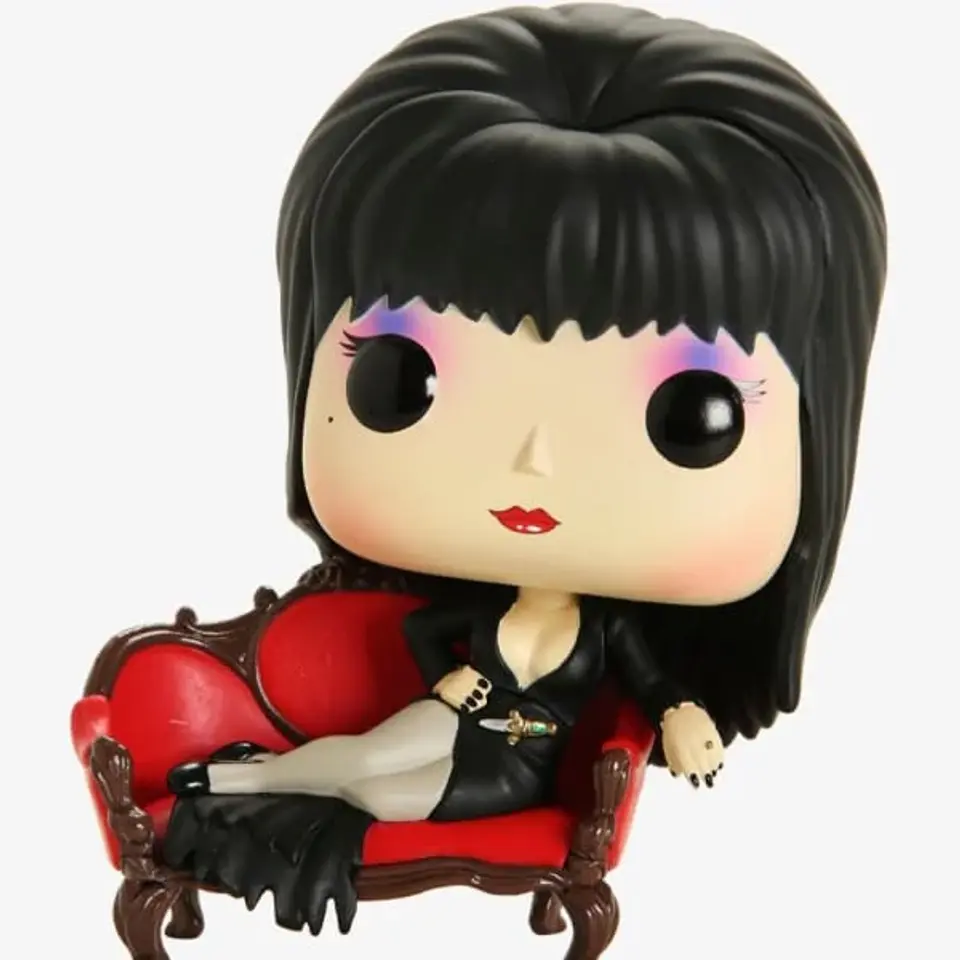
Over the years, companies including NECA, Funko and numerous specialty collectible manufacturers have produced Elvira figures, dolls, statues, vinyl toys and limited-edition pieces. The character has appeared on everything from tiki mugs to lunch boxes, while new collaborations continue to arrive decades after her television debut. This is amazing for a character over four decades out, amazing for fans...(& horrible for my wallet). 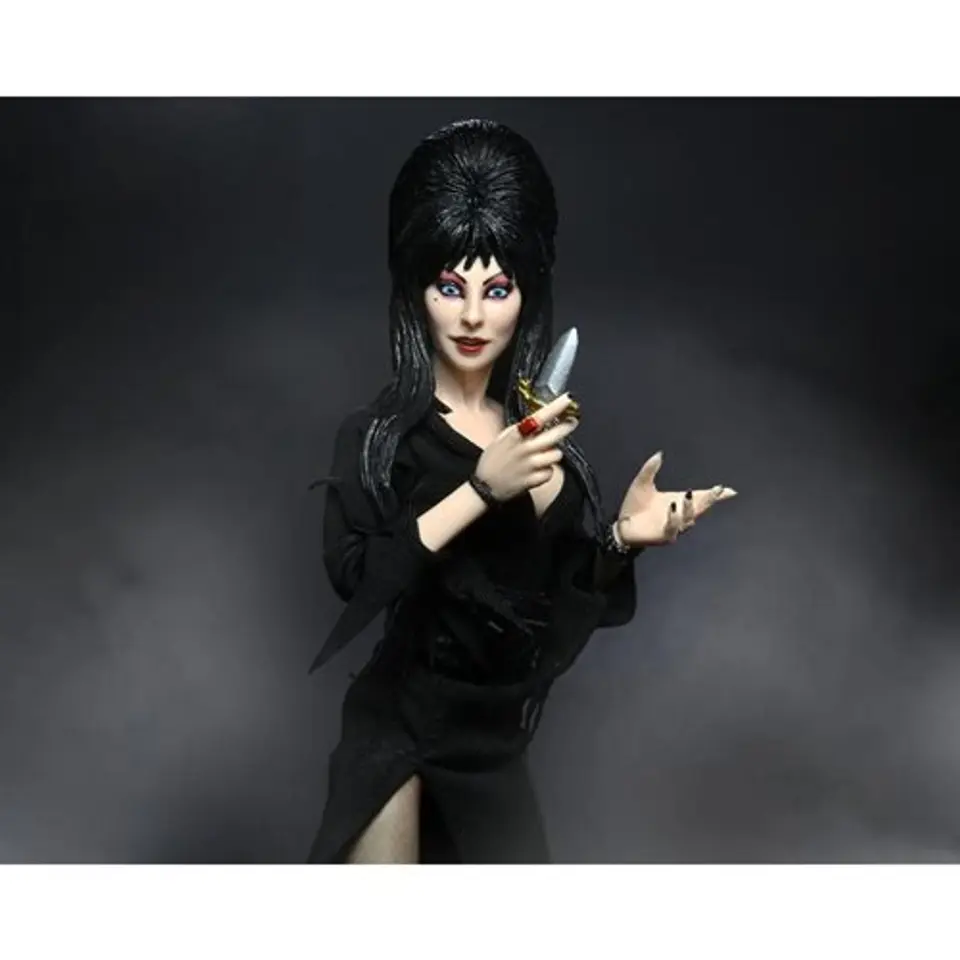
What makes the merchandising especially interesting is that it rarely feels disconnected from the character. Elvira was always theatrical, visual and knowingly commercial. She could stand next to a beer display, appear on a pinball backglass or stare out from a toy shelf without seeming like somebody had awkwardly pasted a celebrity endorsement onto a product.
That also helps explain why the brand has aged so well. A television series can disappear. A network can change direction. A theatrical release can underperform. But if the character remains visible in stores, conventions, Halloween aisles and collectors' shelves, she never really leaves the culture.
And Elvira has been haunting those shelves for more than four decades.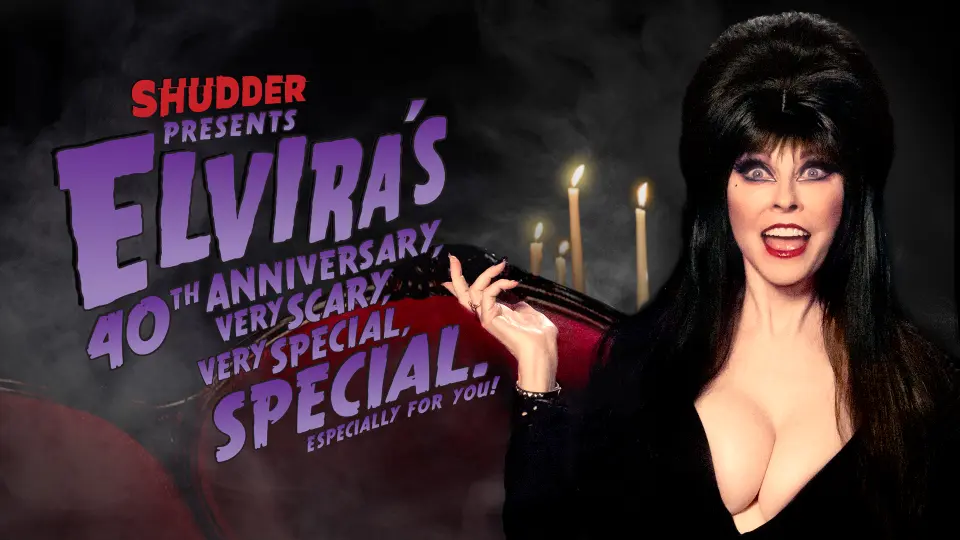
Elvira's 40th Anniversary and the Shudder Return
In 2021, Elvira marked forty years since the debut of Movie Macabre by returning to the hosting format once again for Elvira's 40th Anniversary, Very Scary, Very Special Special on Shudder.
The event premiered September 25, 2021 and featured Elvira hosting a four-film marathon built around Elvira: Mistress of the Dark, House on Haunted Hill, The City of the Dead and Messiah of Evil. It was basically the original Elvira formula transported into the modern streaming era: old movies, host segments, jokes and the comforting knowledge that somebody else was watching this nonsense with you.
The timing gave the special more weight than a routine anniversary appearance. The same month, Peterson released Yours Cruelly, Elvira, meaning audiences were getting both sides of the story at once: the immortal television character still doing exactly what she had done in 1981, and the woman behind her finally telling the story of how difficult, strange and occasionally unbelievable the journey had been.
The Shudder special also proved that the horror-host format still had life in it. Streaming services had made it easier than ever to find almost any horror movie instantly, but access was never the entire appeal of Movie Macabre. Elvira gave the viewing experience personality, ritual and community. Forty years later, that still worked.

The New Cassandra Peterson Era
As Peterson moved through her seventies, the balance between Cassandra and Elvira began to shift.
That did not mean the character disappeared. Elvira continued to appear through licensing, archival projects, themed attractions, collectibles and special appearances. But Peterson became increasingly open about stepping away from the physical demands of regularly dressing as Elvira, especially after decades of stage shows, convention appearances and Halloween events.
That transition has created an interesting new phase in her career because Cassandra Peterson herself is now almost as culturally recognizable as the character she created. The memoir played a major part in that, but so did interviews and public appearances where Peterson could talk about Elvira from the perspective of its creator rather than always performing through the persona.
I've been lucky enough to have Cassandra on Pop Culture Weekly multiple times over the years, and she is every bit as amazing as I could have hoped. When you have loved a character for most of your life, there is always that tiny fear that meeting the person behind it could somehow change the magic. With Cassandra, it only made me love Elvira more.
In 2025, she expanded that side of the brand with Elvira's Cookbook From Hell, a horror-themed entertaining and recipe book that Peterson jokingly framed as part of her evolution into the "Martha Stewart of the Macabre." The concept fits Elvira almost suspiciously well. Of course there should be a cookbook. Of course there should be gothic party ideas. Of course the woman who spent four decades welcoming people into horror movies eventually decided she should also tell us what snacks to serve while watching them. Buy Elvira's Cookbook From Hell: Sexy, Spooky Soirées and Celebrations for Every Occasion here!
Peterson also released Elvira's First Book of Monsters, a children's book designed to introduce younger readers to classic monsters in a friendly, playful way. That project may seem like an odd fit until you remember that Elvira has always treated monsters as fun rather than something audiences should be embarrassed to love. Buy Elvira's First Book of Monsters here!
The brand also continued into live Halloween entertainment with Elvira's Trick or Treat Mayhem at the Los Angeles Haunted Hayride in 2025, another example of how the character can remain present even when Peterson is not committing to a nightly stage-show schedule.
And Peterson has teased a mysterious film project expected in 2026 without publicly revealing what it is. Until she decides to tell us more, that is exactly where the speculation should remain: mysterious film project. We have all survived enough fake entertainment rumors to know better than to build an entire paragraph out of wishful thinking.
What is clear is that retirement from regularly wearing the costume is not the same thing as retirement from Elvira. Peterson spent decades turning the character into something that can continue through books, comics, merchandise, attractions, archival projects and whatever comes next.
At some point, Elvira became bigger than that iconic wig.
Why Elvira Matters
Plenty of performers become associated with a role. Far fewer create a character so durable that the character starts functioning like folklore.
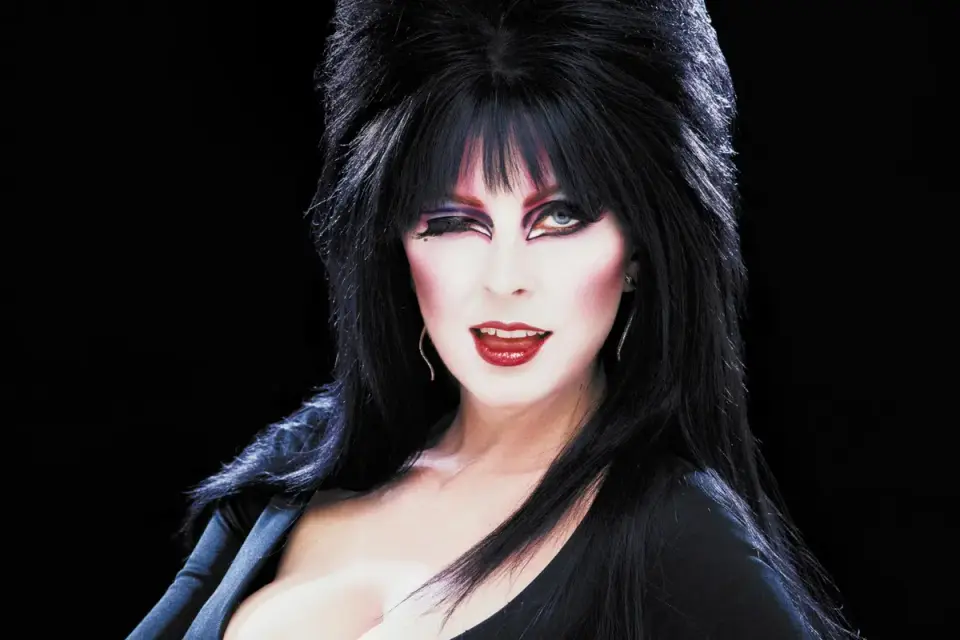
Elvira sits in that strange territory now. She is obviously Cassandra Peterson's creation, but she also belongs to the visual language of Halloween. The hair, the dress, the makeup and the attitude are so recognizable that the character can be understood in seconds by people who were not alive when Movie Macabre first aired.
That longevity is not simply nostalgia. Peterson built Elvira around contradictions that kept the character flexible. She is campy but not disposable. Sexy but never passive. Ridiculous but never stupid. She can be the punchline and still control the joke. That balance is harder than it looks, and a lot of imitators over the years have discovered that putting on a black dress and making horror jokes does not automatically produce an Elvira.
Her influence on horror hosting is equally important. Horror hosts existed long before 1981, but Elvira demonstrated how far the format could travel beyond local television. She took the basic horror-host relationship - one person welcoming an audience into a strange little world - and expanded it into movies, merchandise, music, books, live shows and national advertising without losing the intimacy that made the format appealing in the first place.
That is why she still matters to horror fans. Elvira never treated loving horror as something embarrassing, and she never demanded that fans prove how serious they were about it either. She made room for monster movies, schlock, camp, old Hollywood, bad effects, glamour, stupidity and genuine affection to exist in the same place.
For me, the formula is pretty simple. She's funny, smart, campy and has actual heart underneath all of the jokes and spectacle. And after more than four decades of doing this, she has more than earned the title: she is the goddamn Queen of Halloween.
And that combination made her especially powerful for people who already felt a little outside the mainstream.
Elvira, Camp and LGBTQ+ Culture
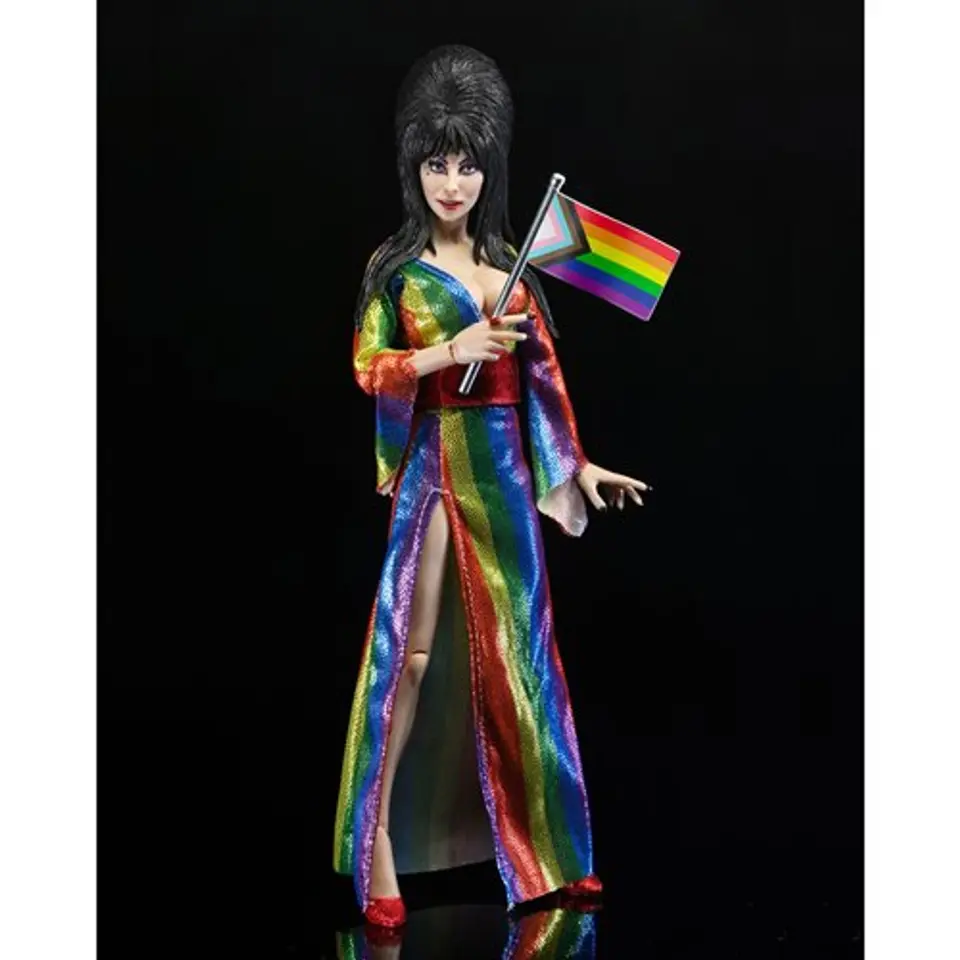
Elvira's relationship with LGBTQ+ audiences did not begin with Peterson's memoir. Queer fans had embraced the character for decades before Peterson publicly discussed her long-term relationship with Teresa Wierson.
The reasons are not difficult to understand. Elvira is theatrical, exaggerated, self-created and completely uninterested in behaving the way respectable people think she should. She takes traits that could be used against her - sexuality, flamboyance, bad taste, outsider status - and turns them into the entire source of her power. That is basically camp with a dagger attached.
Peterson has also spoken about Elvira's appeal as a figure who is strong, tough and unwilling to take crap from anyone, qualities she believes helped the character resonate with LGBTQ+ fans. She has described the Elvira transformation itself as something that feels close to drag, which makes sense when you look at how deliberately constructed the character is: hair, makeup, costume, posture, voice, attitude and all.
There is also something deeply appealing about Elvira's complete lack of shame. She is not waiting for permission to be louder, sexier, stranger or more ridiculous. She walks into conservative spaces and immediately exposes how fragile everybody else's rules are. That is a joke in Elvira: Mistress of the Dark, but it is also one of the character's defining ideas across forty-plus years.
Peterson's 2021 memoir added a personal dimension to that legacy when she discussed her relationship with Wierson publicly for the first time. The revelation mattered because it connected Peterson herself more openly to a community that had already treated Elvira as one of its icons.
The Halloween Icon
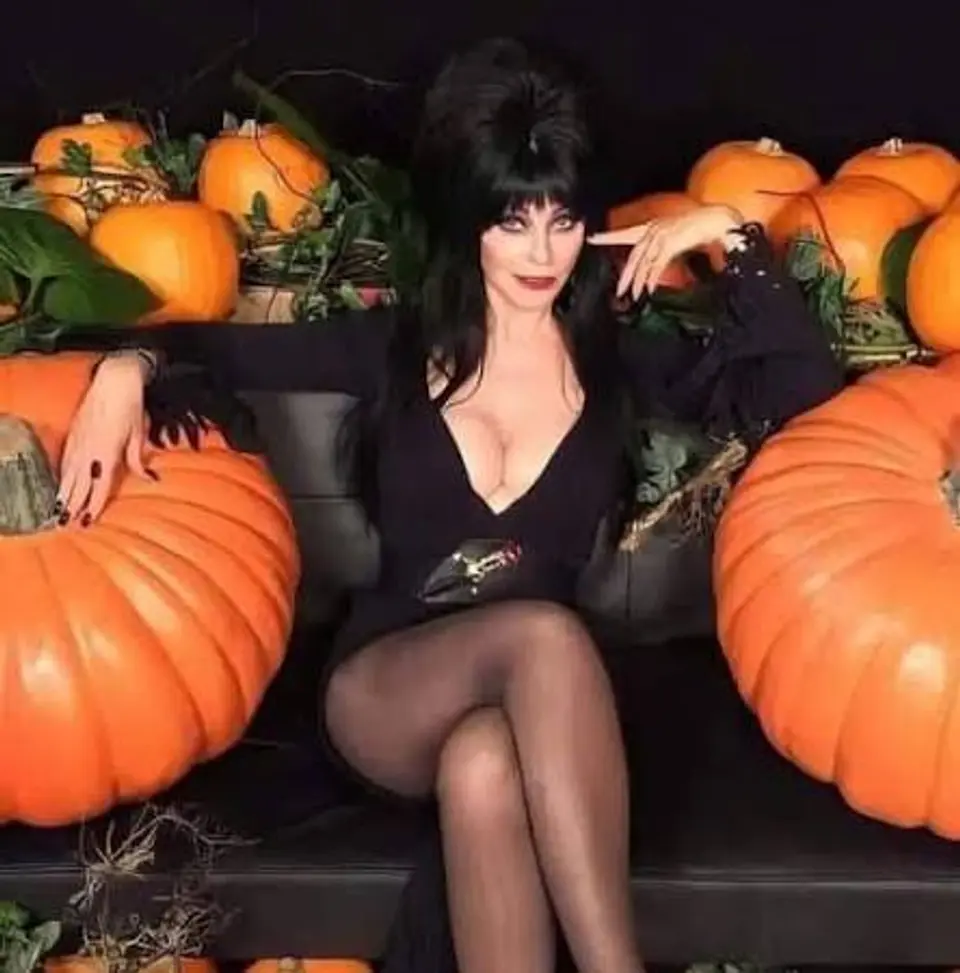
The simplest explanation for Elvira's longevity may also be the most obvious: Halloween comes back every year.
Peterson has acknowledged that the holiday helped keep the character alive because every October creates a natural reason for Elvira to return. She has even suggested that Elvira could eventually function as a perennial Halloween figure in the same way other characters have become inseparable from major holidays. That sounds ambitious until you consider that she has already spent more than four decades working toward exactly that outcome.
Very few entertainment characters are tied to a holiday without being trapped inside one movie or one story. Elvira is different. She is not the protagonist of Halloween. She is more like its host.
That distinction is important. Halloween does not require anyone to know Elvira's continuity, watch her movies or understand the history of Movie Macabre. She simply fits the atmosphere. Costumes, decorations, parties, horror marathons, haunted attractions, novelty records and ridiculous seasonal merchandise are all areas where Elvira already feels like she belongs.
That is why the character keeps reappearing without feeling like a reboot. Nobody needs to explain why Elvira is back in October. October is why Elvira is back.
The Legacy of Cassandra Peterson and Elvira
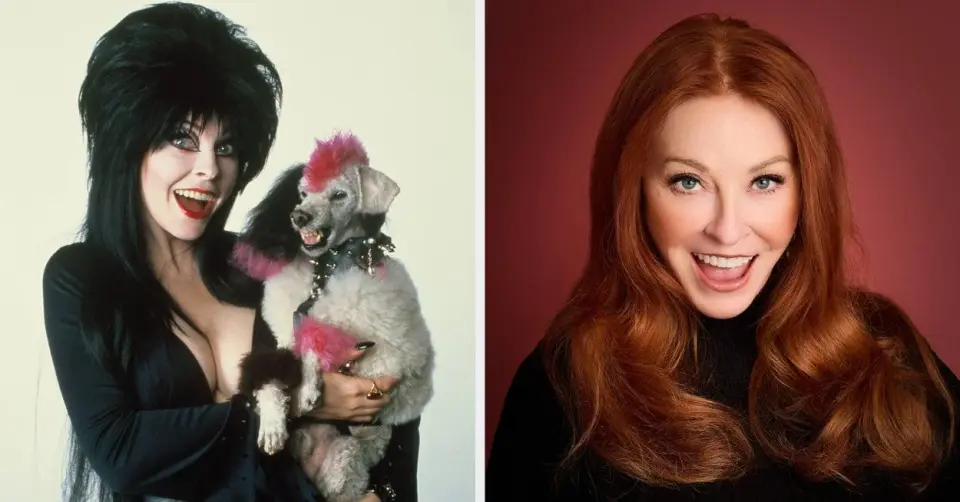
There is a version of this story where Elvira lasts a few seasons as a local television curiosity and disappears into the enormous graveyard of regional pop culture. Honestly, that would have been the normal outcome.
Instead, Cassandra Peterson spent more than forty years refusing to let the character become somebody else's property, somebody else's idea of what she should be or somebody else's forgotten television relic. She protected the rights, adapted the format, took the character into different media and kept finding new ways for Elvira to exist even when the entertainment business around her changed completely.
That business instinct matters as much as the costume. Peterson has said that Elvira became a brand she worked on year-round, even though audiences often assumed she simply disappeared after Halloween. The ownership and licensing decisions made early in the character's life are a major reason Elvira could survive network changes, failed pilots, uneven theatrical distribution and entire generations of media technology.
But the reason people care is simpler than that.
Elvira is muthafuggin fun.
She makes horror feel welcoming. She makes bad movies more entertaining. She makes Halloween feel bigger. She reminds people that loving monsters, camp, old movies and weird little corners of pop culture can be communal instead of solitary.
That is the part that connects most directly to why I love horror hosts in the first place. The best of them do not merely introduce a movie. They create a ritual around watching it. They make you feel like you are part of a club where everybody understands that the movie may be terrible but that absolutely DOES NOT mean the night has to be.
Elvira took that idea farther than anyone ever has.
I've been a fan since I was a kid seeing Elvira everywhere around Halloween in the '90s, and somehow the deeper I have gotten into her movies, shows, books, collectibles and the woman behind all of it, the more there is to love. That does not happen with every childhood icon.
The Last Word
More than forty years after Cassandra Peterson first sat down to introduce a horror movie on Los Angeles television, Elvira is no longer easy to categorize.
She is a horror host, but that description is too small. She is an actress, comedian, character, brand, Halloween mascot, comic-book star, recording artist, pinball fixture, merchandising phenomenon and one of the most recognizable women in horror history.
Most importantly, she is still unmistakably Elvira.
The entertainment industry changed around her again and again. Local television gave way to cable. VHS gave way to DVD. DVD gave way to streaming. Print media shrank. Theatrical distribution changed. Social media turned everybody into their own miniature broadcasting network. Through all of it, Elvira remained important. Vital.
That may be the best measure of what Peterson created. The character is specific enough to be instantly recognizable but flexible enough to survive almost anything.
So if Peterson never puts on the wig regularly again, Elvira is not going anywhere. She is already embedded in horror culture, queer culture, Halloween culture and the entire wonderfully tacky universe that exists where all three overlap.
And every October, somewhere, somebody will see the black hair, the dress and the dagger and immediately know exactly who just walked into the room.
The Queen of Halloween....still hosting the party.

On Air Talent / Creator / Author / Producer
Kyle McMahon is an American television personality, radio host, journalist, actor, singer and songwriter. He is known for appearing in Oprah's Lifeclass, the Oscar winning film Selma, hosting Pop Culture Weekly with Kyle McMahon on iHeart Radio and touring with LFO and O-Town.

All the Movies, Shows & Specials Coming to 4K UHD & Blu-ray in October 2026
 Apple Podcasts
  YouTube
  Spotify
  iHeartRadio
  Audible
  Amazon Music
  JioSaavn
  Spreaker
  RSS Feed