Universal Monsters: The Complete History & Ultimate Guide
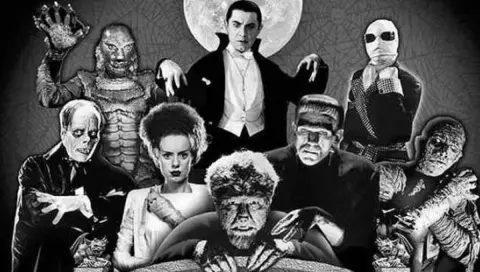
The Ultimate Guide to Universal Monsters
I have a confession to make that probably gets my horror-fan card temporarily confiscated: for most of my life, I was not into old black-and-white movies.
Then I found the Universal Monsters franchise, and that particular opinion got thrown directly into a burning windmill.
I came to these movies relatively late, within the last decade or so. The obsession really kicked into another gear after I broke my knee and spent a ridiculous amount of time stuck in bed with my laptop, working and watching movies. Pluto TV had a Universal Monsters channel, which meant I suddenly had Dracula, Frankenstein's Monster, the Wolf Man, the Mummy, the Invisible Man and the Creature from the Black Lagoon keeping me company while my knee did absolutely nothing useful.
Watching the movies one after another changed the way I looked at old films. These weren't dusty museum pieces that I was supposed to appreciate because somebody with elbow patches told me they were important. They were powerful, creative and atmospheric, sometimes funny and often surprisingly emotional.
And considering what the filmmakers had available to them, some of what they accomplished is absolutely insane.

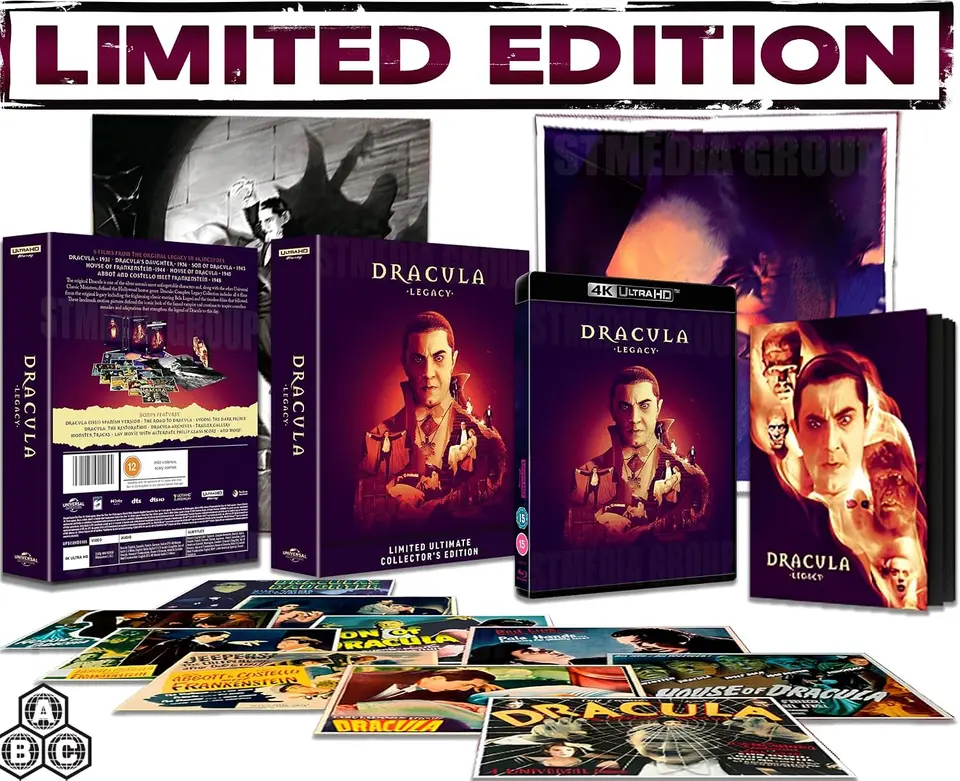
More importantly, I started realizing how much of the horror I already loved was sitting right there in these movies: The laboratory, the castle, the villagers, the transformations, the tragic monster, the elegant vampire, the creature lurking somewhere humans probably should have left alone. Universal didn't invent every one of those ideas, obviously, but its movies helped turn them into the visual language of horror.
And then there is the other thing Universal was doing decades before Hollywood became obsessed with the phrase “cinematic universe”: crossing its monsters over. Long before Nick Fury wandered into Tony Stark's house, Universal was basically asking, “Okay, but what if Frankenstein's Monster met the Wolf Man?”
These are the OGs. If you love horror, I am not going to show up at your house and revoke your membership because you haven't watched Frankenstein. But I do think every horror fan should spend some time with Universal Monsters. If nothing else, you get to see an enormous part of the origin story of horror on film.
Before the Monsters Took Over: Universal Discovers Horror
Universal's classic monster era did not suddenly materialize in 1931 with Bela Lugosi standing in a doorway. The studio had already spent years discovering that audiences had a healthy appetite for the strange, grotesque and macabre.
Dr. Jekyll and Mr. Hyde (1913)
Based on the 1886 gothic novella The Strange Case of Dr. Jekyll and Mr. Hyde, this 26-minute silent film came from IMP, Carl Laemmle's Independent Moving Pictures Company, which became part of Universal. Directed by Herbert Brenon, it belongs to the prehistory of Universal horror: an early sign that transformation, duality and monsters who are uncomfortably human were already fertile territory.
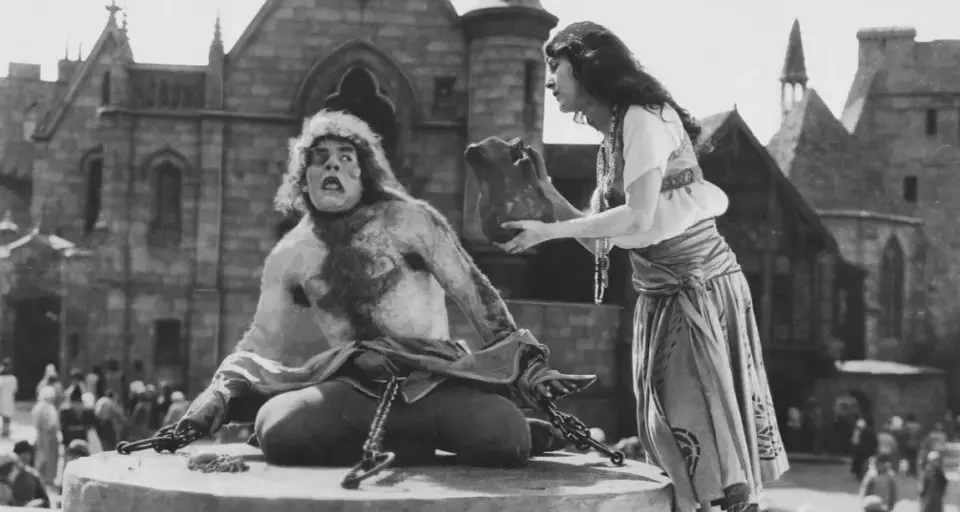
The Hunchback of Notre Dame (1923)
Lon Chaney starred as Quasimodo in Universal's adaptation of Victor Hugo's novel. It isn't a supernatural monster movie in the later Universal sense, but Chaney's extraordinary physical performance and makeup helped establish the idea that horror could be built around a figure who was visually frightening while also deeply tragic. Get The Hunchback of Notre Dame (1923) on Amazon here.
The Phantom of the Opera (1925)
Chaney returned as the Phantom, and his self-created makeup remains one of silent cinema's great horror images. The unmasking is still effective a century later, which is a pretty good argument against the idea that old horror automatically stops working once enough decades pass. Get The Phantom of the Opera (1925) on Amazon here.
These movies helped establish both Universal's relationship with horror and the mixture that would define many of its greatest monsters: spectacle on the outside, tragedy underneath.
The Golden Age Begins
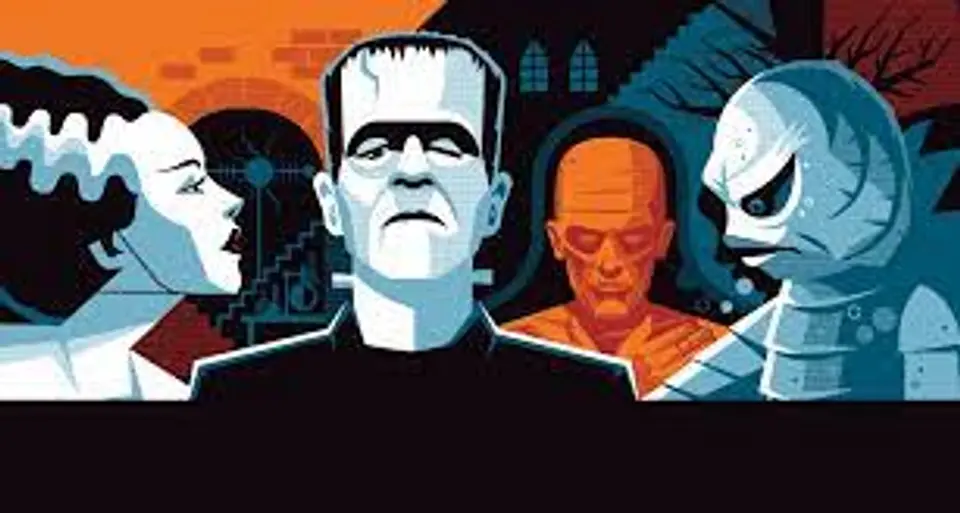
The arrival of sound changed movies, and Universal was about to figure out exactly what to do with it. During the 1930s and 1940s, the studio created the versions of these characters that became embedded in popular culture. Bela Lugosi, Boris Karloff and Lon Chaney Jr. didn't simply star in successful horror movies. Their performances helped define what Dracula, Frankenstein's Monster and the Wolf Man looked and felt like for generations.
Dracula (1931)
Universal's Dracula was based primarily on the stage adaptation of Bram Stoker's novel, with Lugosi bringing the role he had already played onstage to the screen. His cape, stare, deliberate movements and unmistakable delivery became so influential that Dracula impressions nearly a century later still tend to sound suspiciously like Bela Lugosi.
The movie can feel restrained compared with modern horror, but that is part of the experience. It is eerie rather than frantic, and Lugosi understands that he doesn't need to chase anybody down a hallway when he can just stand there looking like Bela freaking Lugosi.
A Spanish-language version was produced simultaneously at Universal, with a separate cast filming at night on many of the same sets. In 2000, Dracula was selected for preservation in the National Film Registry. Get Dracula (1931) on Amazon here.

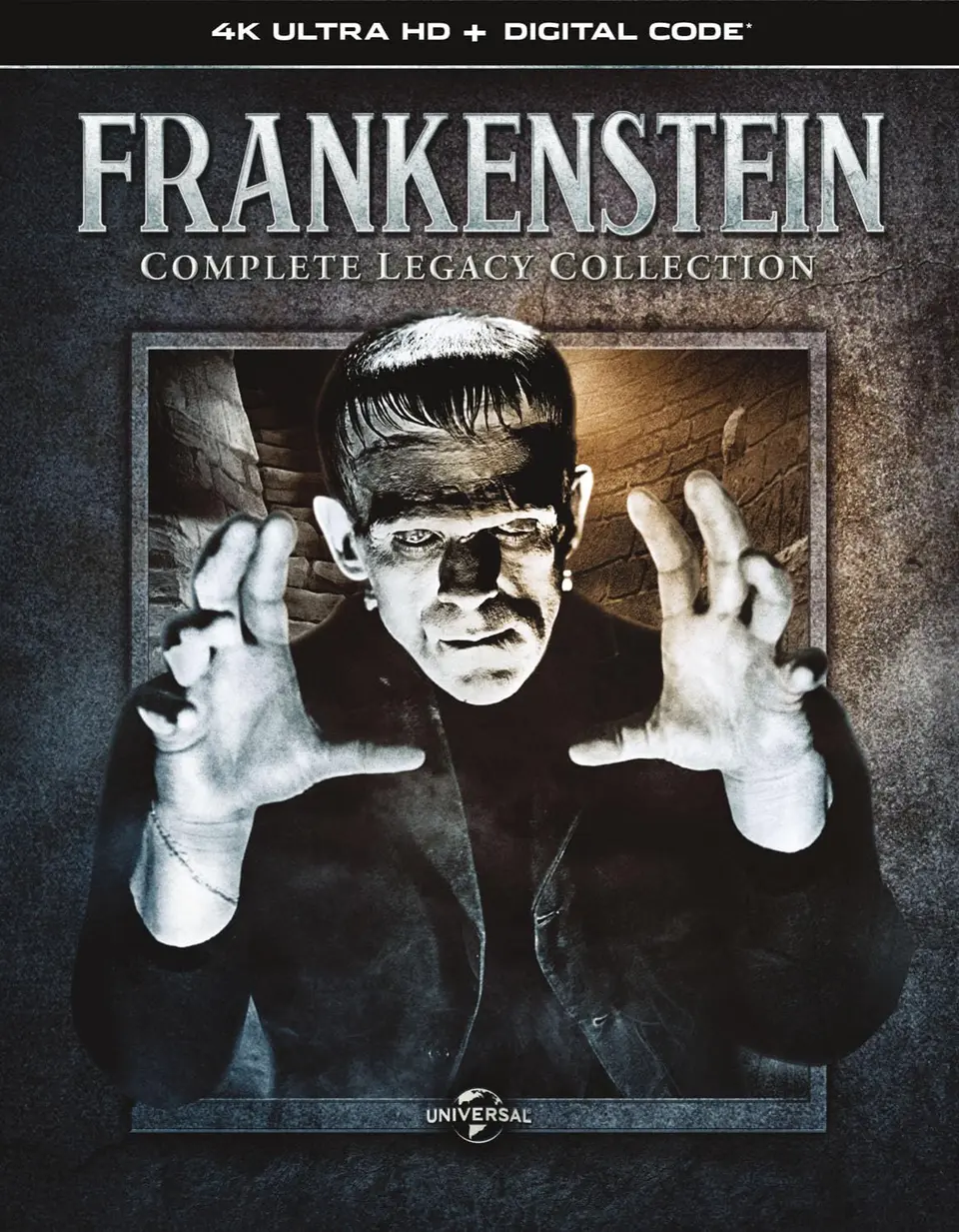
Frankenstein (1931)
If I have to choose one Universal Monster as my monster, it is Frankenstein's Monster.
Universal's Frankenstein, adapted through Peggy Webling's stage play from Mary Shelley's 1818 novel Frankenstein, stars Colin Clive as Henry Frankenstein and Karloff as the creature he brings to life. And yes, the creature is Frankenstein's Monster, not Frankenstein. I know. You know. The entire world is still going to call him Frankenstein sometimes. We have lost this battle.
What gets me about the Monster isn't only the iconography, although that iconography is basically unbeatable. It is the tragedy. He had no choice in being born. Somebody else decided to create him, and almost immediately the world decided that what had been created was an abomination. The idea of the Monster is frightening, but the circumstances of his existence are heartbreaking. He can be dangerous and sympathetic at exactly the same time.
That tension is why the character has lasted. Karloff can frighten you in one scene and make you feel terrible for him in another. The flat head, heavy eyelids, neck electrodes and enormous silhouette became one of the most recognizable character designs in the history of movies, but there is a performance underneath all of it.
And for me, the original is still the one. Get Frankenstein (1931) from Amazon here.
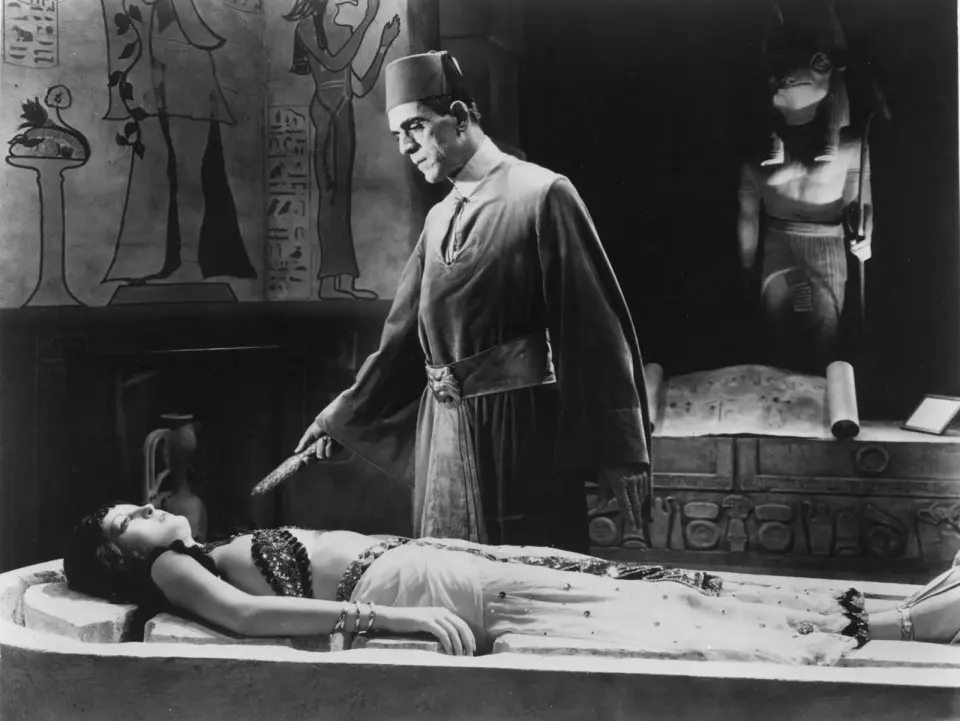
The Mummy (1932)
Karloff returned for The Mummy, this time as Imhotep, an ancient Egyptian priest brought back from the dead. The movie is considerably more romantic and melancholy than the bandaged-monster stereotype it helped inspire might suggest. Universal took the public fascination with ancient Egypt and turned it into horror mythology that has been recycled, spoofed and reinvented ever since.
Get The Mummy (1932) from Amazon here.
The Invisible Man (1933)
Based on H.G. Wells' 1897 novel, The Invisible Man sits somewhere between horror and science fiction and stars Claude Rains as Jack Griffin. It is also a fantastic showcase for just how inventive these movies could be. The invisibility effects remain delightful because you can practically feel the filmmakers figuring out how to accomplish something audiences had never seen before.
The movie also lets itself be darkly funny, which makes Griffin's descent into madness even more entertaining. Get The Invisible Man (1933) from Amazon here.
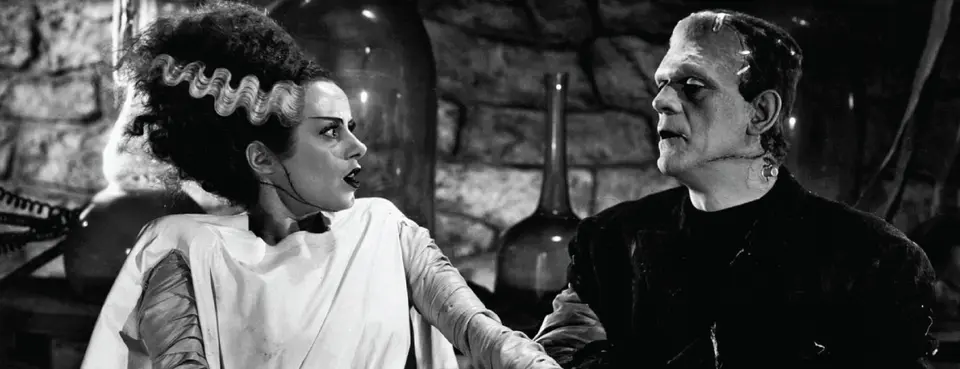
Bride of Frankenstein (1935)
James Whale returned to direct Bride of Frankenstein, bringing Karloff and Colin Clive back and introducing Elsa Lanchester as the Bride. The sequel is stranger, funnier and more ambitious than its predecessor, and it digs even deeper into the Monster's loneliness and desire to be understood.
I love the Bride, which makes it almost comical how little screen time was required to turn her into an immortal horror icon. The towering hair with the white streaks is instantly recognizable even to people who have never watched the movie. That is the power of Universal Monsters in miniature: sometimes a few minutes of film can echo through pop culture for the next ninety years.
Get The Bride of Frankenstein (1935) from Amazon here.

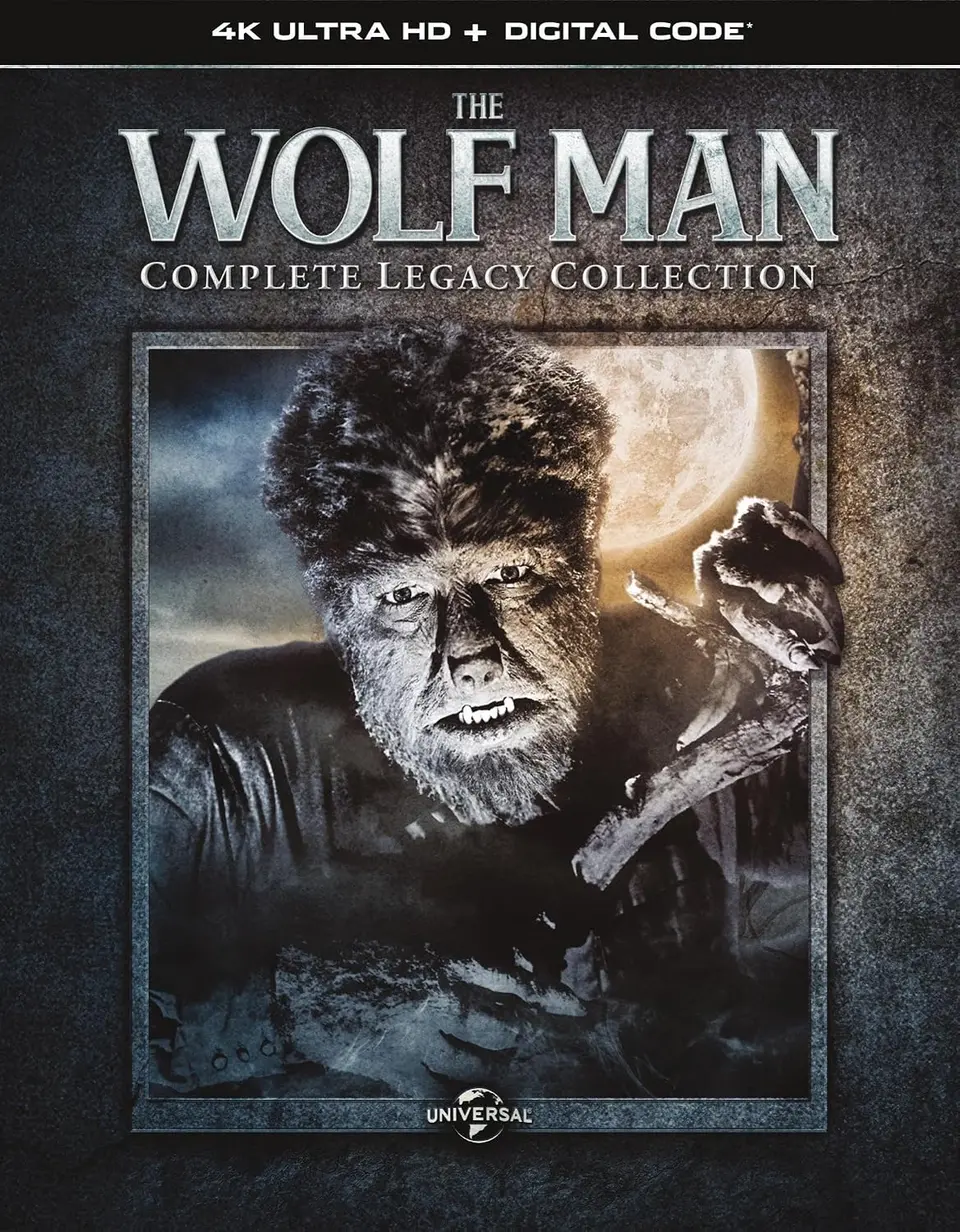
The Wolf Man (1941)
Universal had already made 1935's Werewolf of London, but The Wolf Man is the movie that cemented Universal's werewolf iconography. Chaney Jr. stars as Larry Talbot, whose return home leads to a bite, a curse and one of horror cinema's defining tragic transformations.
Talbot belongs beside Frankenstein's Monster as another Universal creature whose tragedy is inseparable from the horror. He doesn't choose what happens to him. He fears it. That makes the monster more than something waiting around a corner.
The Sequels Build the Monster Mythology
The Sequels Build the Monster Mythology
The famous first movies are only part of the classic Universal story. Once the monsters worked, Universal did what movie studios have done ever since somebody discovered audiences will buy another ticket: it made sequels. A lot of them.
The interesting part is that these follow-ups did more than repeat the originals. They expanded the mythology, changed actors, bent continuity until it made alarming noises and gradually turned individual horror movies into recognizable franchises.
Frankenstein's Family Keeps Growing Get a Frankenstein Funko Pop Here.
After Bride of Frankenstein, Universal returned to the Monster with Son of Frankenstein (1939), which brought Karloff back for his third and final performance as the creature and introduced Bela Lugosi's Ygor. The series continued with The Ghost of Frankenstein (1942), where Lon Chaney Jr. took over as the Monster, before the Frankenstein storyline collided with the Wolf Man and became part of Universal's larger crossover machine.
This is one of the places where the modern-franchise comparison gets especially fun. The actor playing the Monster could change, continuity could get fuzzy and death could become more of a scheduling inconvenience than a permanent condition, but audiences knew the character and knew the world. Universal had created something sturdy enough to survive recasting long before superheroes made it fashionable.
Dracula Gets a Daughter and a Son Snag a Dracula Tee Here.
Universal followed Dracula with Dracula's Daughter (1936), starring Gloria Holden as Countess Marya Zaleska. The film begins in the aftermath of the 1931 movie and turns the vampire story toward a character who desperately wants to escape what she is. It is moodier, stranger and more psychologically complicated than the title might make you expect.
Then came Son of Dracula (1943), with Lon Chaney Jr. as Count Alucard. Yes, Alucard is Dracula spelled backward. Horror was having fun with that trick decades before video games got ahold of it. By this point, Universal was less concerned with maintaining one pristine Dracula timeline than with keeping the vampire mythology alive and usable.
The Mummy Becomes the Mummy We All Picture
Here is one of the funny quirks of Universal Monsters history: Karloff's 1932 The Mummy is not actually the movie most responsible for the shambling, bandaged mummy image that became a Halloween staple.
Universal effectively rebooted the concept with The Mummy's Hand (1940), introducing Kharis, played by Tom Tyler. Lon Chaney Jr. took over the role for The Mummy's Tomb (1942), The Mummy's Ghost (1944) and The Mummy's Curse (1944). These movies pushed the franchise toward the wrapped, relentless monster that became the default pop-culture mummy.
So if you grew up thinking of a mummy as a bandaged corpse slowly stalking people who really should have known better than to open that tomb, you have the later Universal cycle to thank as much as the Karloff original.
The Invisible Man Becomes an Idea
The Invisible Man series took an even looser approach to continuity. The Invisible Man Returns (1940) starred Vincent Price as a new invisible protagonist, followed by The Invisible Woman (1940), Invisible Agent (1942) and The Invisible Man's Revenge (1944). Instead of following one character forever, Universal realized that invisibility itself was the franchise.
That may be why the concept has proved so easy to reinvent. The hook is bigger than Jack Griffin. Give a new character invisibility, then ask what it does to them or what someone else can do with it, and you have another story.
By the middle of the 1940s, Universal had built several separate monster series at once. The next logical step was apparently to stop pretending they belonged in separate rooms.
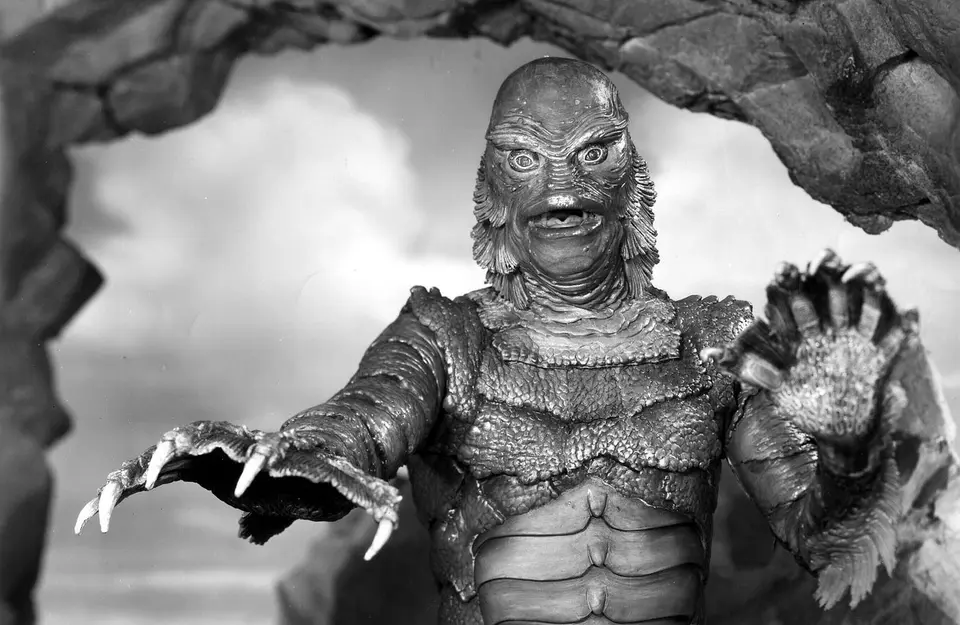
The Creature Arrives
Creature from the Black Lagoon (1954)
By the 1950s, horror was changing. Science fiction, atomic-age anxiety and new kinds of movie monsters were taking over. Then Universal gave us one last essential addition to the classic lineup.
Creature from the Black Lagoon follows an expedition into the Amazon where scientists encounter the Gill-man, an amphibious humanoid who has been doing perfectly fine without them. Naturally, humanity arrives and everything goes wonderfully.
I love the Creature. The design is magnificent, the underwater photography is gorgeous, and the movie has an entirely different texture from the castles, villages and laboratories associated with the earlier Universal cycle. Originally released in 3D, it proved Universal could create a monster for a new era without simply rebuilding Frankenstein's laboratory again.
Get Creature from the Black Lagoon (1954) from Amazon here.
Universal Invents the Monster Crossover
Individual monster franchises were one thing. Eventually Universal realized it owned a toy box full of famous monsters and there was absolutely no reason to keep them separated.
This is where Universal Monsters starts looking suspiciously familiar to anyone raised on modern franchise filmmaking. Sequels had already created continuity around individual characters, but the “Monster Rally” movies began smashing those worlds together. It wasn't the meticulously mapped, post-credit-scene machine of the Marvel Cinematic Universe, but the basic pleasure is exactly the same: you know these characters separately, and now you get to watch them collide.
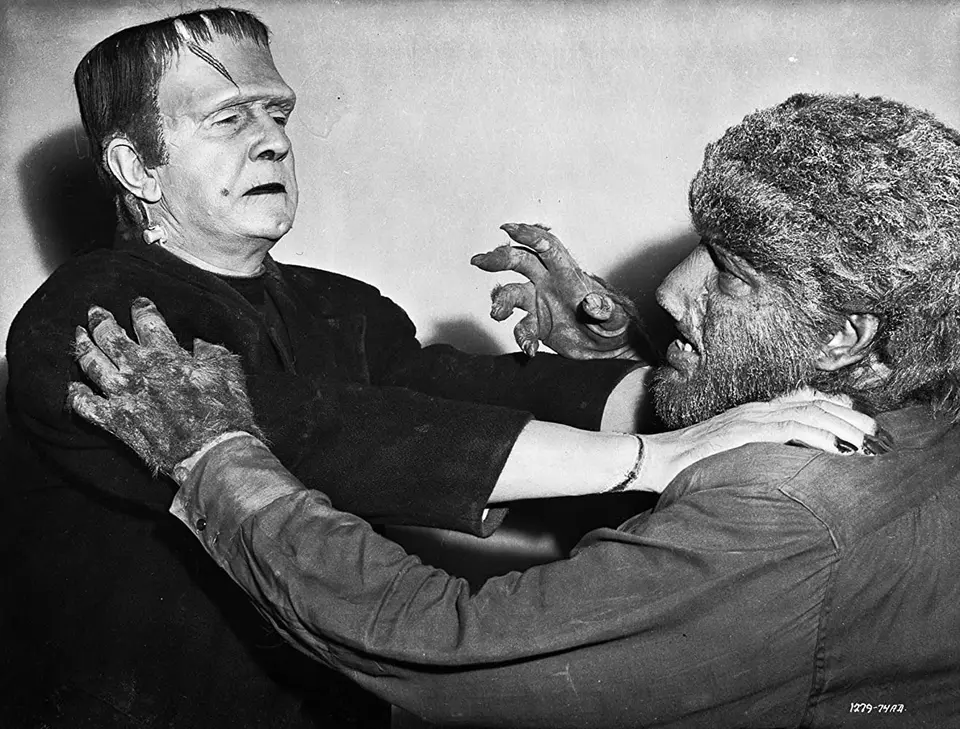
Frankenstein Meets the Wolf Man (1943)
The title tells you why everyone bought a ticket. Chaney Jr.'s Larry Talbot crosses paths with Frankenstein's Monster, played here by Lugosi, giving Universal its first major monster-versus-monster event. If The Avengers made interconnected movies feel revolutionary in 2012, Universal was already letting its horror icons crash into one another almost seventy years earlier.
Get Frankenstein Meets the Wolf Man (1943) on Frankenstein: Complete Legacy Collection (Blu-Ray) on Amazon here.
House of Frankenstein (1944)
House of Frankenstein escalated the idea by bringing Dracula, Frankenstein's Monster and the Wolf Man into the same movie. At this point Universal wasn't merely making sequels. It was selling the monsters themselves as the attraction, which is a very modern franchise instinct wrapped in a 1940s horror movie.
Get House of Frankenstein (1944) on Frankenstein: Complete Legacy Collection (Blu-Ray) on Amazon here.
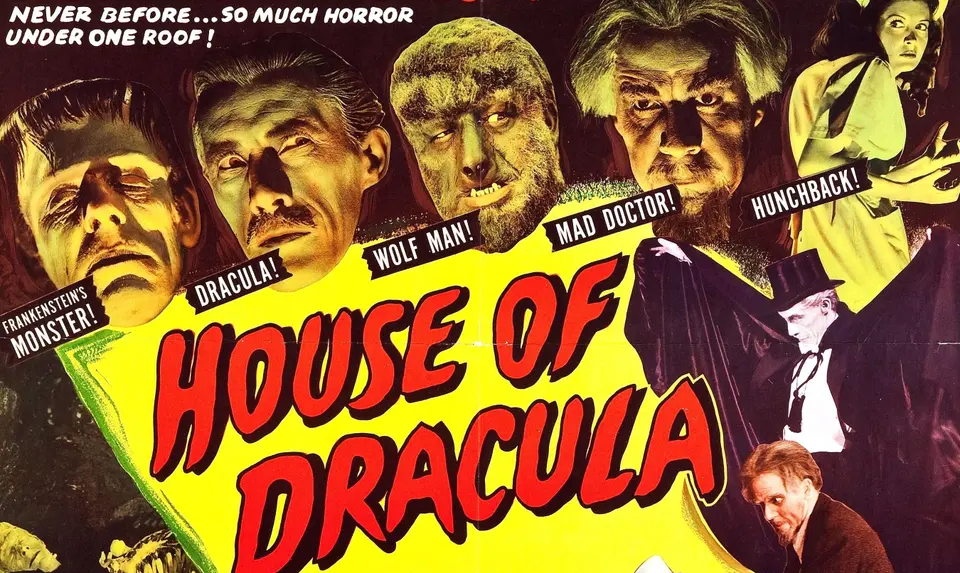
House of Dracula (1945)
House of Dracula brought Dracula, Frankenstein's Monster and the Wolf Man back together, with a plot involving attempts to cure the monsters of their respective conditions. The premise is almost wonderfully mundane when you say it out loud: even Dracula and the Wolf Man eventually need a doctor's appointment.
Get House of Dracula (1945) on Dracula: Complete Legacy Collection (Blu-Ray) on Amazon here.
Abbott and Costello Meet the Monsters
Abbott and Costello Meet Frankenstein (1948)
By 1948, these monsters were recognizable enough that Universal could put them opposite one of America's biggest comedy teams and trust the audience to understand exactly what was being played with. Abbott and Costello Meet Frankenstein features Lugosi returning as Dracula, Chaney Jr. as the Wolf Man and Glenn Strange as Frankenstein's Monster.
The important thing is that the monsters aren't treated as complete jokes. Abbott and Costello bring the comedy; the monsters are allowed to remain monsters. That balance is a huge reason the movie works and why it became much more than a novelty crossover.
The Movies End. The Monsters Don't.
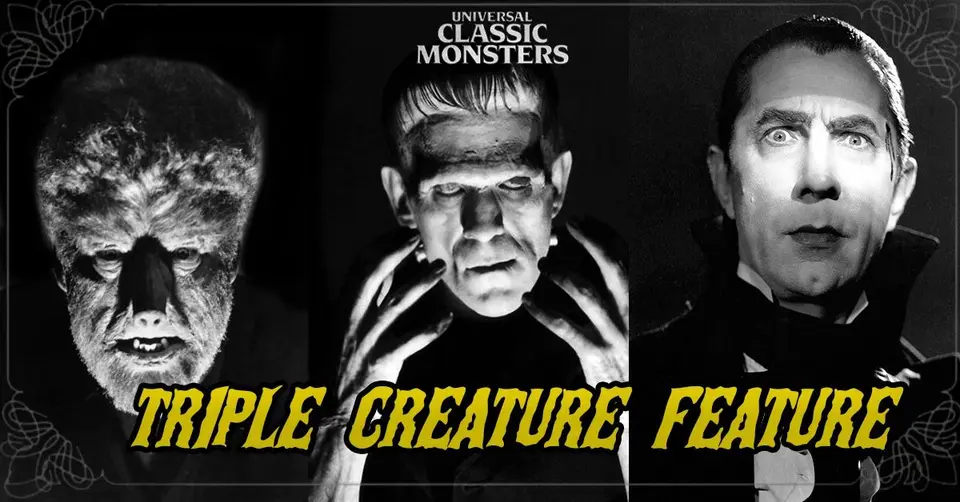
The classic theatrical cycle eventually faded, but Universal Monsters had already become bigger than the movies that created them. In 1957, Screen Gems released a package of Universal horror films to television. Local stations filled late-night and weekend schedules with them, often pairing the movies with horror hosts. Suddenly a new generation that hadn't been anywhere near a theater in 1931 was growing up with Dracula and Frankenstein.
That television afterlife is incredibly important. Horror hosts and local creature-feature broadcasts helped turn old studio movies into communal pop-culture traditions. The monsters weren't simply preserved. They were reintroduced.
The Munsters
The Munsters premiered in 1964 and transformed Universal-style monster imagery into a family sitcom. The joke was beautifully simple: the Munsters considered themselves a perfectly normal family while the outside world was horrified by them. The series ran for 70 episodes and spawned films, television movies, an animated special, The Mini-Munsters, the syndicated The Munsters Today, the pilot Mockingbird Lane and Rob Zombie's 2022 film The Munsters. Get The Munsters on DVD from Amazon here.
From Hammer Horror to The Monster Squad
Universal didn't own Dracula, Frankenstein or many of the underlying literary characters, which meant other studios could reinterpret them. Britain's Hammer Films famously brought gothic horror back in vivid color, with Christopher Lee as Dracula and Peter Cushing as Victor Frankenstein. Those films are not part of the Universal Monsters continuity, but they demonstrate how durable the characters had become. Universal's versions had helped establish the cinematic vocabulary; now new filmmakers could speak it differently.
Dracula (1979)
Universal returned to Dracula with a lush adaptation starring Frank Langella, based on the stage revival of the same theatrical lineage that had helped lead to the 1931 film. Get Dracula (1979) on Blu-Ray from Amazon here.
The Monster Squad (1987)
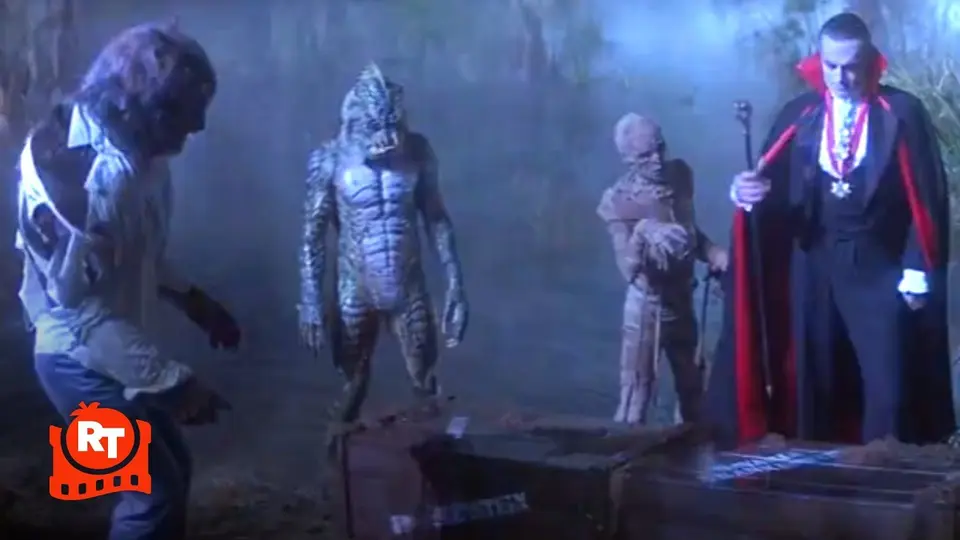
Few movies demonstrate the cultural immortality of these characters better than The Monster Squad. Dracula, Frankenstein's Monster, the Wolf Man, the Mummy and the Gill-man are essentially treated as horror's all-star team. The movie wasn't a theatrical hit, but home video helped turn it into a cult favorite. Also, yes, Wolf Man has nards.
Get The Monster Squad (1987) on 4K Blu-Ray from Amazon here.
Universal Tries to Reinvent the Monsters
The great blessing and curse of owning characters this famous is that eventually somebody will say, “We should bring these back.” Universal has said some version of that sentence many, many times.
The Mummy (1999)
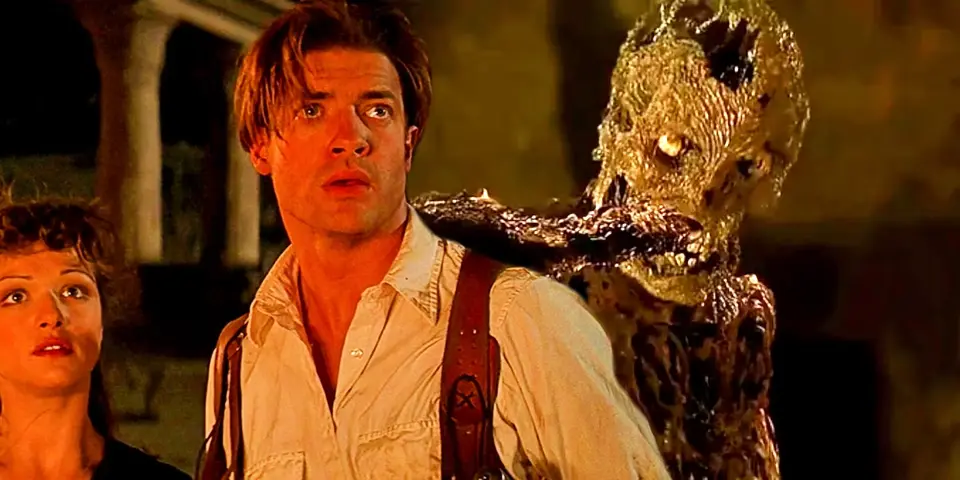
The most successful modern reinvention was The Mummy (1999), starring Brendan Fraser and Rachel Weisz. Rather than attempting to recreate Karloff's movie beat for beat, it turned the material into a huge romantic action-adventure with horror running through it. It worked because it understood that revival does not have to mean imitation.
The film spawned two direct sequels and The Scorpion King, which became a franchise of its own.
Van Helsing (2004)
Van Helsing put Hugh Jackman into a maximalist monster mash involving Dracula, Frankenstein's Monster and werewolves. Subtle, it is not. But there is something undeniably fun about Universal once again treating its monster mythology like one enormous playground.
The Wolfman (2010)
The Wolfman went in the opposite direction, returning to gothic tragedy with Benicio Del Toro, Anthony Hopkins and Emily Blunt. It was a more direct attempt to reconnect with the atmosphere of the classic monster tradition.
The Dark Universe: The Cinematic Universe That Wasn't
Eventually Universal looked at the modern franchise landscape and apparently realized it had been sitting on the original monster crossover playbook the entire time. The plan was the Dark Universe: a modern interconnected franchise built around Universal's classic monsters.
Dracula Untold was initially discussed in connection with the concept, but Tom Cruise's The Mummy (2017) became the official launch. Russell Crowe played Dr. Jekyll, whose Prodigium organization was positioned as connective tissue for future films. Plans and announcements involved Johnny Depp as the Invisible Man, Javier Bardem as Frankenstein's Monster and a new Bride of Frankenstein.
Then The Mummy arrived, and the Dark Universe essentially became the cinematic-universe equivalent of buying matching family pajamas before the first date.
The movie grossed roughly $410 million worldwide, but its enormous production and marketing costs made that insufficient to launch the franchise Universal had envisioned. The interconnected plan collapsed after one movie.
The Monsters Go Standalone Again
After the Dark Universe collapsed, Universal made the smartest possible move: stop worrying about making every monster share an office building and concentrate on making individual movies that actually worked.
The Invisible Man (2020)
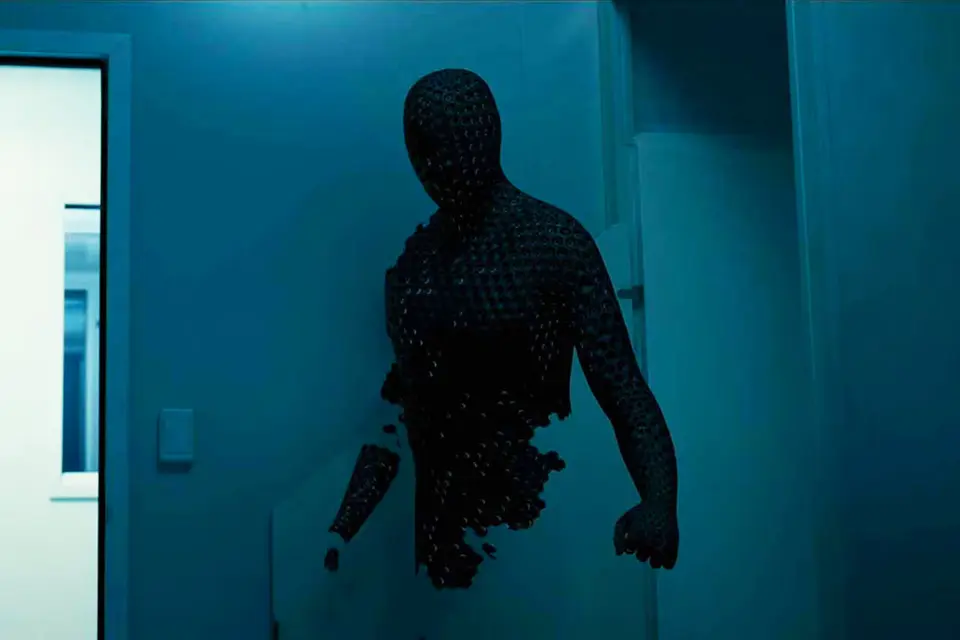
Leigh Whannell's The Invisible Man, starring Elisabeth Moss, reinvented invisibility through a modern story of abuse, control and surveillance. Produced on a relatively modest budget, it became a major critical and commercial success even as the COVID-19 pandemic abruptly shortened its theatrical run. Get The Invisible Man (2020) (4K Blu-Ray) from Amazon here.
Renfield (2023)
Renfield turned Dracula's toxic relationship with his servant into a horror-comedy, with Nicholas Hoult as Renfield and Nicolas Cage having what appears to be the time of his life as Dracula. Get Renfield (4K Blu-Ray) from Amazon here.
Abigail (2024)
Abigail plays with Universal's vampire legacy through a modern kidnapping story that goes very, very badly for the kidnappers. The movie has connections in concept to Dracula's Daughter, but works primarily as its own contemporary vampire film. Get Abigail (2024) (Blu-Ray) from Amazon here.
Wolf Man (2025)
Whannell returned to Universal's monster stable with Wolf Man, a modern reinterpretation built around transformation, family and body horror rather than simply recreating Chaney Jr.'s Larry Talbot story. Check out my review of Wolf Man (2025) here. Get Wolf Man (2025) (4K Blu-Ray) from Amazon here.
So What Actually Counts as a Universal Monster?
This gets surprisingly messy, because Dracula, Frankenstein, the Mummy and several of the other characters existed long before Universal put them on a movie screen. Universal does not own the basic idea of Dracula any more than it owns vampires. What Universal created was a specific cinematic tradition around those characters, complete with performances, makeup designs, imagery and a studio identity that eventually became its own brand.
That is why I am using “Universal Monsters” here in the broader historical sense rather than pretending every Dracula movie ever made somehow belongs to Universal. Hammer’s Dracula films are not Universal Monsters movies. The Monster Squad is not secretly part of the continuity. They matter to this story because they show how deeply Universal’s versions shaped the way later filmmakers and audiences imagined these characters.
The core lineup most people mean when they say Universal Monsters includes Dracula, Frankenstein’s Monster and the Bride, the Mummy, the Invisible Man, the Wolf Man, the Creature from the Black Lagoon and the Phantom of the Opera, with characters such as the Hunchback, Dr. Jekyll and Mr. Hyde and Dracula’s Daughter often folded into the larger family. There is no sacred monster constitution hidden underneath Universal Studios. The edges are fuzzy. Th Grab a Universal Monsters Poster Here.e iconography is not.
The Monsters Escape the Screen
One of the reasons Universal Monsters stopped being merely a collection of old movies is that they escaped the movies almost immediately after television gave them a second life. Once kids could discover Frankenstein, Dracula and the Wolf Man at home, those faces started showing up everywhere.
Model kits became a major part of the monster boom. Aurora’s Frankenstein kit became a sensation in the early 1960s and helped launch a line that included Dracula, the Wolf Man, the Mummy, the Creature, the Phantom and other horror figures. For a generation of fans, assembling and painting those kits was another way of living with monsters whose original movies had been made decades before they were born.
Then came masks, action figures, lunch boxes, trading cards, coloring books, Halloween decorations, toys, shirts, statues, collectibles and basically every other object humanity has invented that can reasonably support a picture of Frankenstein’s face. Universal Monsters became merchandise before “franchise ecosystem” was something executives said in meetings with a completely straight face.
Comics, games and animation kept the characters circulating too. Sometimes they appeared through officially licensed Universal products; other times creators simply drew from the same public-domain literary monsters and the enormous visual influence Universal had left behind. You can see that DNA all over horror and fantasy gaming, from castles full of vampires to lumbering stitched-together creatures that look awfully familiar even when nobody is allowed to call them Frankenstein.
That is part of what makes the Universal Monsters different from a franchise that lives or dies with its latest movie. They became cultural objects. You can go years without Universal releasing a major Frankenstein film and Frankenstein’s Monster will still be on T-shirts, cereal boxes, Halloween decorations and somebody’s tattoo.
Universal Monsters Become Theme-Park Monsters
If there is one place where Universal has never forgotten what it has in the basement, it is the theme parks.
The monsters have been recurring fixtures of Universal’s Halloween attractions for decades, particularly through Halloween Horror Nights, where Universal has repeatedly rebuilt and remixed its classic creatures for modern haunted houses. That is almost the perfect environment for them. These characters began as cinematic nightmares, survived by being replayed on television, and eventually became physical monsters that can jump out at you while you are holding an overpriced themed beverage.
But Universal eventually went much bigger than seasonal appearances.
Dark Universe at Universal Epic Universe
When Universal Epic Universe opened in Orlando in 2025, one of its five themed worlds was Dark Universe, an entire land built around the Universal Monsters. And yes, there is something deeply satisfying about the name Universal once attached to a failed Tom Cruise cinematic universe finally being used for something this cool.
The land is set in Darkmoor, where the experiments of Victoria Frankenstein have created a world populated by monsters. Its centerpiece attraction, Monsters Unchained: The Frankenstein Experiment, brings together Frankenstein’s Monster, Dracula, the Wolf Man, the Creature and other characters in a full-scale modern Universal attraction. The land also includes Curse of the Werewolf, themed dining, character encounters and enough gothic architecture to make me consider simply moving in and refusing to leave.
More importantly, Dark Universe proves that Universal sees these characters as something much larger than nostalgic DVD-box-set material. A studio built an entire modern theme-park world around monsters created in movies from the 1920s through the 1950s, and people are still lining up to see them. That is not nostalgia barely hanging on. That is longevity most franchises would kill for.
Universal Horror Unleashed
Universal pushed the monsters beyond the traditional theme parks again with Universal Horror Unleashed in Las Vegas, a year-round horror destination that opened in 2025. One of its permanent haunted houses is devoted to Universal Monsters, sending guests through environments tied to Dracula, the Mummy, Frankenstein and the larger classic-monster mythology.
That means that in 2026, someone can watch Frankenstein, a movie released in 1931, and then travel to a modern attraction where Universal has physically rebuilt that mythology around them. There are franchises born in the 2010s that would commit unspeakable acts for that kind of staying power.
The Secret to Their Immortality
The strangest thing about Universal Monsters is that Universal has repeatedly proved it does not need one perfectly maintained continuity to keep them alive.
There is no single canon stretching neatly from Dracula in 1931 to Wolf Man in 2025. Actors change. Stories reboot. Some movies connect and others absolutely do not. Entire cinematic universes are announced, photographed for publicity and then quietly buried after one movie. Yet the monsters survive all of it.
That is because the characters became archetypes without becoming empty. Dracula can be seductive, terrifying, tragic, funny or completely unhinged. Frankenstein’s Monster can be frightening or heartbreaking. The Invisible Man can become a story about scientific madness in 1933 and a story about abuse and surveillance in 2020. The Wolf Man can be gothic tragedy, body horror or both. The basic ideas are strong enough to survive reinvention.
And somehow the original versions still stand beside all of those reinventions rather than underneath them. That may be the most impressive part. Watching the 1931 Frankenstein today does not feel like looking at the primitive prototype of a character modern movies eventually figured out. Karloff’s Monster is still one of the definitive versions. Lugosi is still Dracula. The Bride still owns that hair. The Gill-man still looks incredible.
Why Universal Monsters Still Matter
There is a reason Universal can keep returning to these characters after nearly a century. They are bigger than any single continuity.
Frankenstein's Monster is instantly recognizable whether somebody has watched the 1931 movie or not. Dracula's cape, accent and aristocratic menace have been copied and parodied so many times that Lugosi's influence has become part of the default cultural image of a vampire. The Bride can appear for minutes and become an eternal Halloween icon. The Wolf Man helped cement the tragic cinematic werewolf. The Creature remains one of the most beautiful monster designs ever put on film.
And what I love most about these movies now is that their age has stopped being a barrier for me. Universal Monsters are the movies that changed my mind about black-and-white cinema. Once I actually sat down and watched them, I didn't see primitive versions of things modern filmmakers eventually perfected. I saw filmmakers doing extraordinarily creative work with the technology, resources and restrictions they had. I saw stories that still worked. I saw images I had known my entire life without fully understanding where they came from.
That is why I think horror fans should watch them. Not because there is a test afterward. Not because you have to earn the right to wear a Michael Myers T-shirt. Watch them because horror becomes even more interesting when you can see its cinematic family tree.
Long Live the Monsters
I didn't discover Universal Monsters as a kid. I discovered them after I already loved horror, when a broken knee left me stuck in bed and a Pluto TV channel gave me the easiest film-history course imaginable.
Somewhere in that marathon, these movies stopped being “old black-and-white movies” and became something completely different. They became part of why I love horror.
Frankenstein's Monster is still my monster because underneath one of the most famous scary faces ever created is a character who never asked to exist and was condemned almost immediately for existing anyway. Dracula is still impossibly cool. The Creature is still gorgeous. The Bride is still iconic. The Phantom still works. And nearly a century after Universal's monsters first took over movie screens, filmmakers are still finding new reasons to resurrect them.
The Universal Monsters franchise has survived changing audiences, changing technology, television, home video, streaming, remakes, reboots and at least one spectacularly dead cinematic universe.
Of course it has.
These monsters were built to come back from the dead.

On Air Talent / Creator / Author / Producer
Kyle McMahon is an American television personality, radio host, journalist, actor, singer and songwriter. He is known for appearing in Oprah's Lifeclass, the Oscar winning film Selma, hosting Pop Culture Weekly with Kyle McMahon on iHeart Radio and touring with LFO and O-Town.

All the Movies, Shows & Specials Coming to 4K UHD & Blu-ray in October 2026
 Apple Podcasts
  YouTube
  Spotify
  iHeartRadio
  Audible
  Amazon Music
  JioSaavn
  Spreaker
  RSS Feed