Dracula Was Never Just About Vampires: How the Count Changes With Us
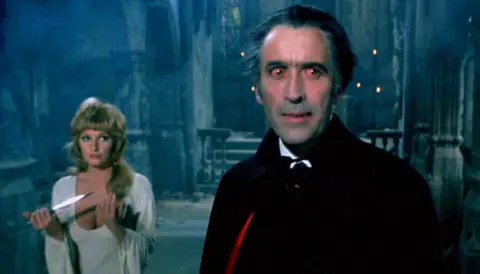
Dracula Was Never Just About Vampires
 There are certain characters pop culture simply refuses to let die. James Bond. Batman. Godzilla. Spider-Man. But Dracula is in a category all his own because, well technically, refusing to die is kind of his entire thing.
We have been putting Dracula on screens for more than a century. We've killed him. Resurrected him. Made him terrifying. Made him romantic. Made him sexy. Made him tragic. Made him funny. Made him fight Hugh Jackman. Nicolas Cage played him. At this point, the only genuinely shocking Dracula adaptation would be one where the Count gets eight uninterrupted hours of sleep and develops a healthy relationship with sunlight.
And yet through all of that, we're still not tired of him. That's the crazy part.
There are thousands of horror characters and no shortage of vampires. Yet every generation eventually wanders back to this one Transylvanian count and decides that everybody before them got Dracula slightly wrong. New cape. New castle. New hairstyle. New emotional baggage. Same guy. Except he isn't really the same guy. Dracula changes when we change.  Snag a Universal Monsters Dracula Funko Pop here.
Bram Stoker gave us the character, but more than a century of movies, television, books and pop culture have continuously rebuilt him around whatever scares us, fascinates us or turns us on at the moment. Sometimes Dracula is an invading monster. Sometimes he's forbidden desire. Sometimes he's a tortured romantic. Sometimes immortality looks like ultimate power and sometimes it looks like the worst possible punishment.
That's why I don't think Dracula was ever just about vampires. The fangs are basically the delivery system.
Dracula Is Whatever We Need Him to Be
Bram Stoker published Dracula in 1897, and while I'm not going to drag you through a surprise English literature course here, the original novel gave generations of storytellers an almost ridiculously adaptable monster.
Dracula is foreign and mysterious. He's aristocratic and ancient. He's powerful. He brings death with him, but he can also seduce, manipulate and infiltrate. He crosses borders. He enters homes. He turns the people around you into something unfamiliar. Even before filmmakers started getting their hands on him, there was a lot more happening beneath those fangs than just "vampire bites people."
Then movies arrived and discovered something incredibly important: Dracula could be changed without really breaking Dracula. That's a superpower almost as useful as immortality.
Look at Nosferatu. Count Orlok isn't technically named Dracula, largely because the filmmakers did not have permission to adapt Stoker's novel and decided copyright law was more of a suggestion. But the DNA is unmistakable. This version of the vampire is grotesque, diseased and almost plague-like. There is nothing particularly romantic about Orlok creeping toward you with those claws. Nobody is looking at him and thinking, "I can fix him." Get Nosferatu (2024) 4K UHD Blu-Ray here!
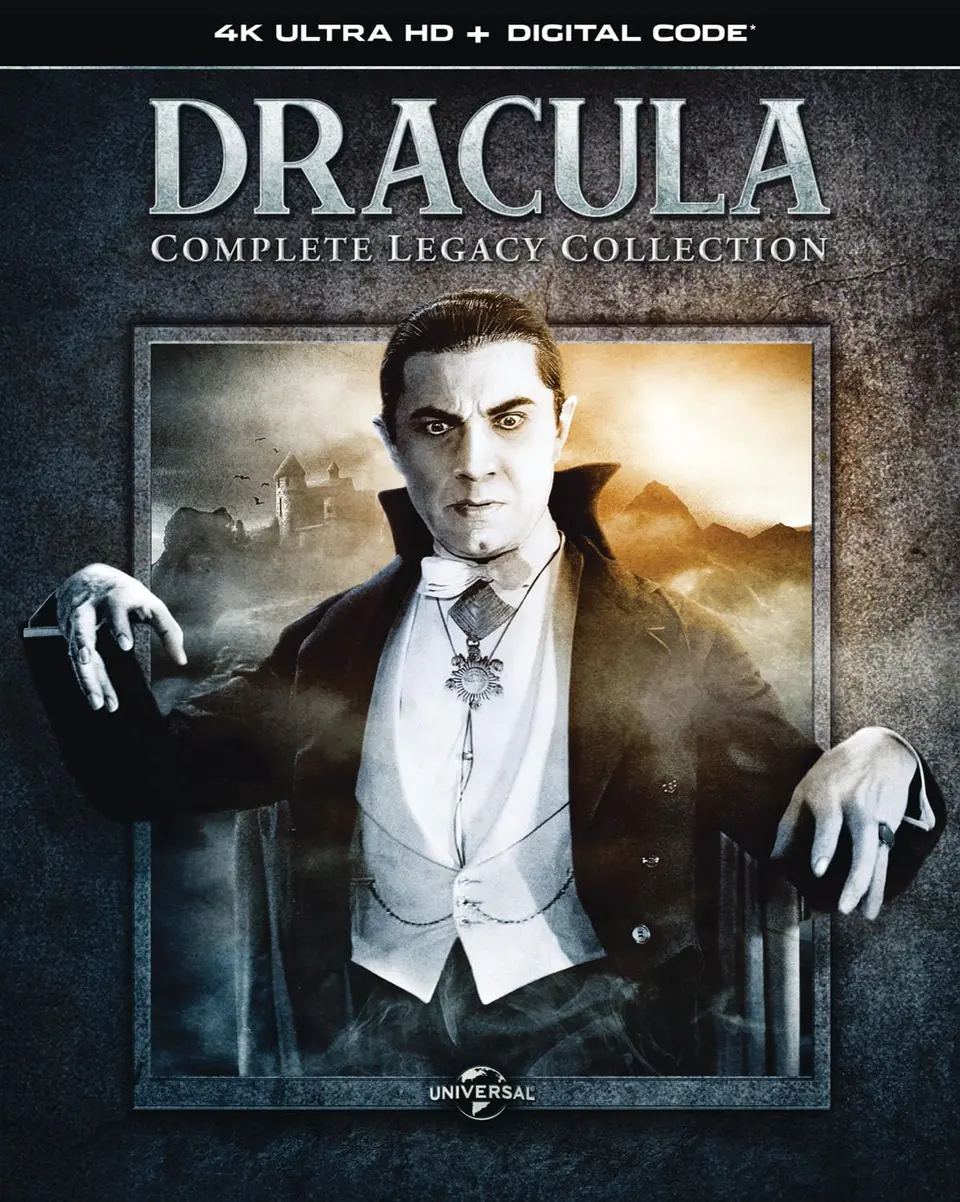
Then Bela Lugosi arrives in 1931 and suddenly Dracula has presence. He isn't merely some frightening looking creature crawling out of the darkness. He's standing in a room wearing evening clothes, speaking calmly and making everyone deeply uncomfortable without raising his voice.
That version became so culturally dominant that you can still do a terrible Dracula impression nearly a century later and everybody immediately knows what you're doing. Cape. Accent. Intense eye contact. Congratulations, you're Dracula!!
But even that wasn't going to last forever, because eventually Dracula got hot. And horror movies were never the same again.
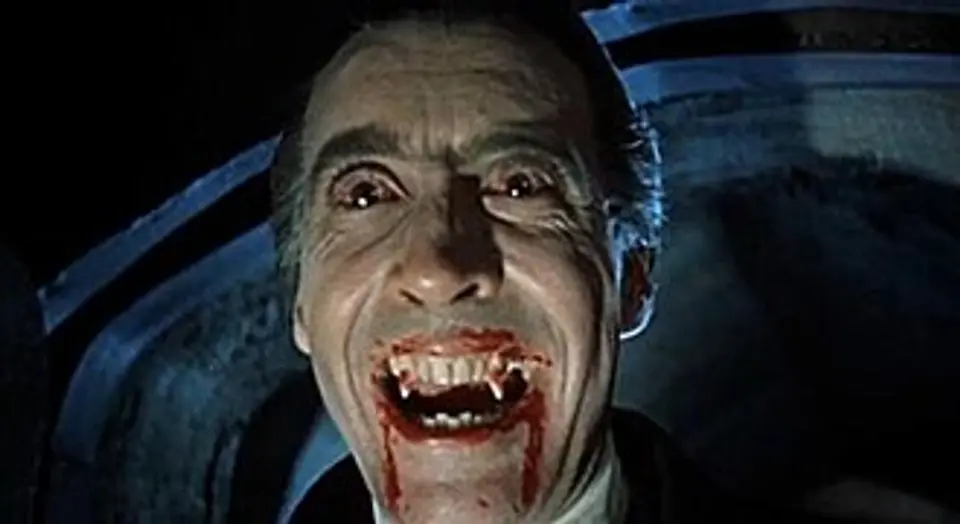
Dracula Gets Sexy
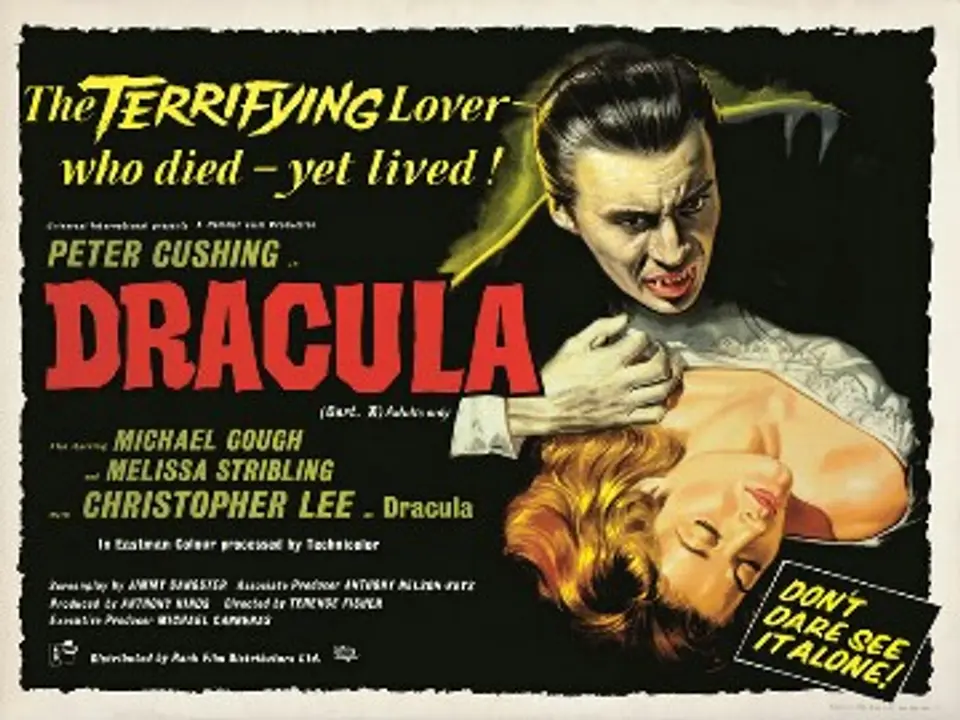
Christopher Lee's Dracula is where the evolution becomes impossible to ignore. Lee could absolutely make Dracula terrifying, but Hammer's movies understood that fear and attraction did not have to be opposites. Dracula wasn't only dangerous because he could kill you. There was something magnetic about him, and that made the danger considerably more complicated, which is a completely insane thing to say about an undead man who survives by drinking human blood, but here we are.
The sexuality that had always existed around vampire mythology became increasingly difficult to pretend wasn't there. Dracula could represent desire you weren't supposed to have, temptation you weren't supposed to give into and the possibility that the monster outside your bedroom might be considerably more interesting than whatever respectable person society expected you to choose instead.
At some point audiences stopped only asking, "How do we escape Dracula?" Now there was another question hanging around: "Okay, but do we definitely want to?" And once that door opened, Dracula was never going back inside the coffin quite the same way. Get Scars of Dracula (4K UHD Blu-Ray) here!
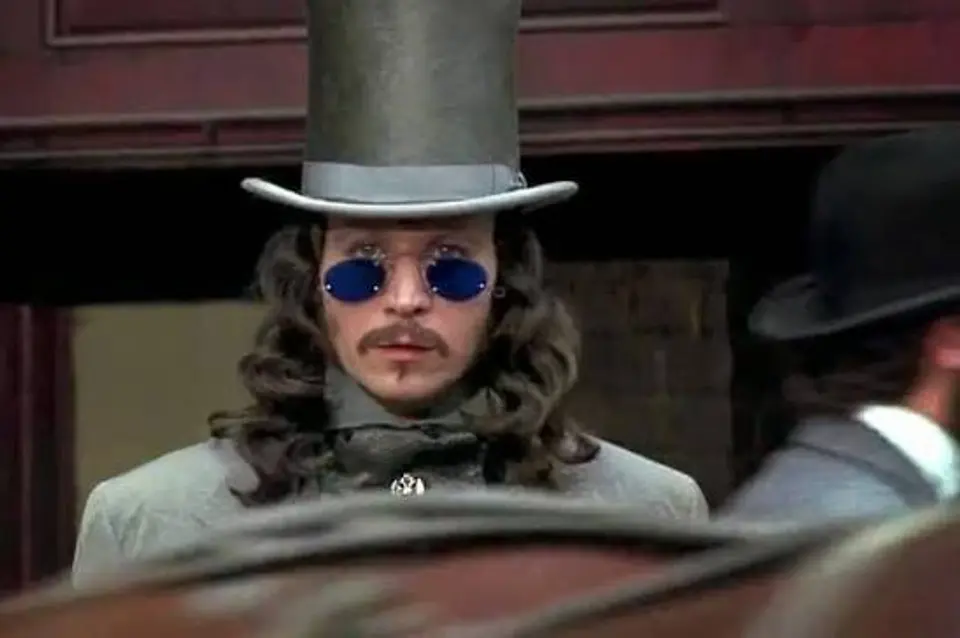
Dracula Gets a Broken Heart
The next major shift wasn't making Dracula scarier. It was making him sad. By the time Francis Ford Coppola's Bram Stoker's Dracula arrived in 1992, the Count wasn't simply a predator with excellent real estate. He had become a tragic figure driven by love, loss and centuries of pain. The movie is still gothic, bloody, weird and gloriously over-the-top, but it also helped cement an idea that has followed Dracula ever since: maybe the monster is suffering too.
That isn't really the Dracula Bram Stoker wrote. The whole reincarnated love story angle is an adaptation invention. But it worked so well culturally that it practically fused itself onto the character.
Suddenly Dracula wasn't only lusting after someone. He was longing... and that is a very different kind of monster.
Once you give Dracula a broken heart, you permanently break the character emotionally. Now immortality isn't automatically the coolest thing in the world. It can be a prison. Living forever means losing people forever. Desire becomes grief. Power becomes isolation. The castle gets a lot less aspirational when you realize this man has basically spent several hundred years doom-scrolling through his own memories.
And filmmakers loved it because now Dracula could be dangerous, seductive and sympathetic all at once. You could fear him and feel bad for him. You could understand why he became the thing he became without necessarily forgiving the whole murder-and-blood-drinking situation. That's a much richer character than simply "evil vampire lives in castle."
Television Realized Dracula Could Mean Almost Anything
Movies kept reinventing Dracula, but television really leaned into the idea that vampires could function as metaphors for practically anything. Immortality could be loneliness. Bloodlust could be addiction. The secret life of a vampire could become a story about identity, repression or living outside society. Eternal youth could sound amazing until everybody you know gets old and dies while you keep looking suspiciously moisturized.
And Dracula fits right into all of it. That's the brilliance of the character. He carries enough recognizable pieces that you can stretch him almost ridiculously far and still know who he is.
The cape is optional. The themes aren't. He can be terrifying in one story and emotionally wrecked in another. He can be an aristocratic monster, a romantic antihero, a manipulator, a lonely immortal or a walking metaphor with impeccable tailoring.
Every version says something about the era making him. The earliest screen vampires often reflected fear of invasion, disease and the unknown. Later Draculas became wrapped up in sexuality and forbidden desire. More modern versions keep asking what living forever would actually do to a person emotionally. Apparently the answer is: nothing good. Which brings us to the most recent evolution, where filmmakers have stopped pretending the romance is merely subtext.
Luc Besson Put the Love Story in the Title
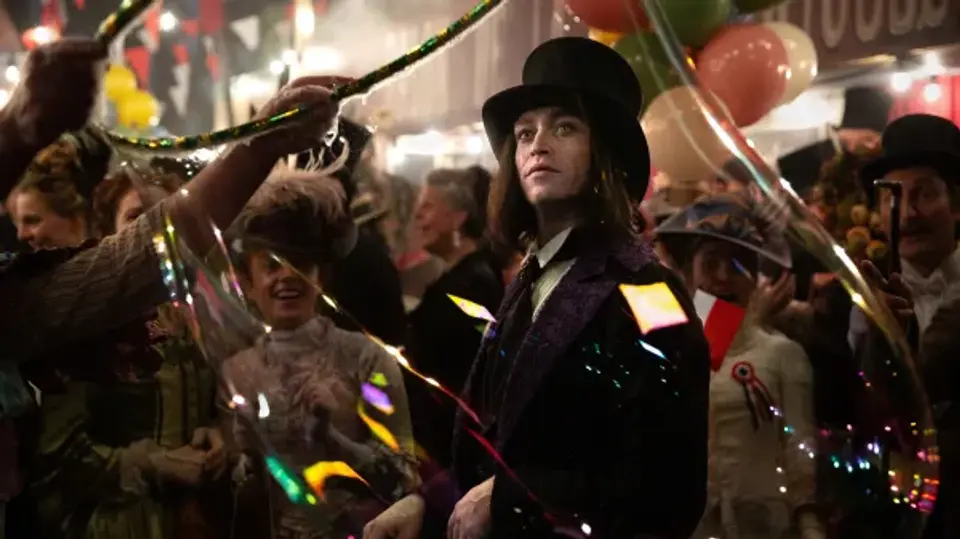
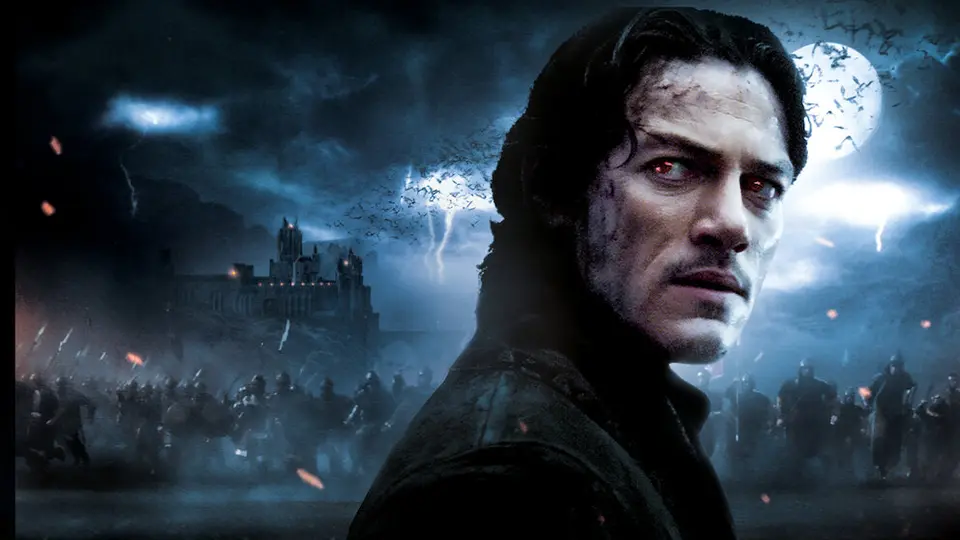
Luc Besson's Dracula: A Love Tale (2026) doesn't exactly hide what it's interested in. It's right there in the title. Buy Dracula: A Love Tale (Blu-Ray) here!
After decades of filmmakers gradually transforming Dracula from terrifying outsider to seductive monster to emotionally devastated immortal boyfriend, Besson basically looked at the entire evolution of the character and said, "Fine. We're doing the love story." And weirdly, that feels less like a radical reinvention than the logical endpoint of where Dracula has been heading for decades.
The fascinating thing about this version is that immortality isn't necessarily presented as some ultimate supernatural gift. If the person you love is gone, living forever can become the punishment.
That idea came up directly when I talked with Besson about the film. His version treats immortality less like a superpower and more like a punishment: living forever sounds considerably less appealing when the person you wanted to spend forever with is gone.
In my conversation with Caleb Landry Jones and Zoë Bleu, that same emotional core kept coming up - longing, obsession and the pressure of taking on a character who already carries more than a century of cultural baggage. Which is a pretty good place to ask the obvious question: why Dracula?
Why Dracula?
This is the part I keep coming back to, because vampires as a concept are everywhere. We have entire franchises full of them. Some sparkle. Some run nightclubs. Some go to high school for several suspiciously long decades. Some are basically superheroes with a blood problem. But Dracula is still Dracula, and there is a reason the character keeps getting revived while so many other monsters stay tied to one specific era or interpretation. Dracula is incredibly specific and weirdly flexible at the same time.
You can remove the cape. You can change the accent. You can make him younger, older, uglier, hotter, funnier, sadder or more terrifying. You can move him out of Transylvania. You can give him a tragic backstory, strip the tragedy away, make him pure evil or turn him into the guy audiences are secretly rooting for.
As long as a few pieces remain - immortality, hunger, seduction, danger, isolation, the possibility of becoming something other than human - the character still works. That flexibility is why Dracula can survive cultural whiplash that would completely destroy a less adaptable character.
Frankenstein's Monster is deeply tied to creation, abandonment and what happens when humanity decides it can play God. The Wolf Man is built around transformation and losing control of yourself. Those characters can absolutely evolve, but their central metaphors tend to travel with them.
Dracula can absorb almost anything: sex, disease, class, immigration, addiction, loneliness, grief, queerness, power, aging, immortality, desire, religious fear, romantic obsession, the terror of dying and the terror of not dying. That last one might be the most important, because the older the character gets, the more storytellers seem interested in flipping the fantasy of immortality on its head. Grab this dope Dracula T-Shirt here.
Living forever sounds incredible when you are thinking about never getting old. It sounds considerably less incredible when you think about burying everyone you've ever loved. Suddenly Dracula's greatest power starts looking a lot like the thing that has ruined him.
And that is exactly the kind of contradiction that keeps a character alive. Dracula can be powerful and miserable. Seductive and repulsive. Romantic and monstrous. Sophisticated and completely feral. He can be the thing outside the window and the person staring out of it.
You can change which side of him matters most depending on what story you want to tell. That is why every few years somebody confidently announces that they're bringing us a "new take" on Dracula and, against all logic, there actually can still be a new take.

What Dracula Says About Us
The more Dracula changes, the less interesting it becomes to ask which version is the most accurate. Accurate to what? Bram Stoker's novel will always be there. If somebody wants to make a page-for-page faithful adaptation, great. I'll be there with snacks. But Dracula became bigger than one book a very long time ago.
The character is now part of the cultural language of horror. Filmmakers can assume we know the basics before the movie even starts. Dracula. Vampire. Blood. Castle. Sunlight bad. You don't need a forty-minute mythology PowerPoint before getting to the point.
That familiarity gives storytellers room to ask a different question: what does Dracula mean this time? When he's presented primarily as an invading force, the story tells us something about what people fear coming from outside their world. When he's seductive, it tells us something about desire and repression. When he's romantic, it tells us that audiences have become interested in understanding the monster instead of only destroying him. When immortality becomes tragic, it says something about the way we think about grief, time and what it would actually mean to keep living after everything that gave your life meaning is gone.
And when Nicolas Cage plays him as the world's most toxic boss in Renfield, it tells us that sometimes cinema is a gift and we should simply say thank you. The point is that Dracula doesn't stay culturally relevant by resisting change. He stays culturally relevant because he absorbs it.
Dracula Changes When We Change
That is ultimately why I don't think Dracula was ever just about vampires. Obviously, he is a vampire. I am not trying to blow the lid off some 129-year conspiracy here. But the vampire is the framework, and what keeps changing is what we put inside it. We have used Dracula to talk about fear of outsiders, disease, sex, repression, class, power, grief, love, loneliness, obsession and death. We have turned him from nightmare into sex symbol into tragic antihero and back again. Sometimes we want him to scare us. Sometimes we want to understand him. Sometimes, apparently, we want him to find true love.
And every version leaves something behind for the next one. Bela Lugosi gave Dracula an image that still defines him. Christopher Lee made the character more openly dangerous and sexual. Francis Ford Coppola pushed the tragic romance so hard that it permanently changed what audiences were willing to accept from Dracula. Modern filmmakers keep taking those pieces, rearranging them and adding whatever emotional crisis we're currently working through as a species.
Which feels slightly unfair to Dracula, but the man has had more than a century to complain. He hasn't, probably because he's busy staring dramatically out a castle window. The reason Dracula survives isn't that we've failed to come up with newer monsters. It's that Dracula keeps becoming one.
Every generation looks at the same basic character and sees something different staring back. Our fears change. Our desires change. The way we think about love, death, sex, power and immortality changes. So Dracula changes too.
We've spent more than a century telling ourselves we're coming back because vampires are cool. And vampires are cool. But if that were the whole explanation, Dracula would have disappeared into the crowd a long time ago. He didn't. He just keeps getting another movie, another actor, another cape and another emotional problem he absolutely did not ask for.
And at this point, I don't think that's going to stop until the sun burns out. Which, ironically, would finally be great news for Dracula.

On Air Talent / Creator / Author / Producer
Kyle McMahon is an American television personality, radio host, journalist, actor, singer and songwriter. He is known for appearing in Oprah's Lifeclass, the Oscar winning film Selma, hosting Pop Culture Weekly with Kyle McMahon on iHeart Radio and touring with LFO and O-Town.

All the Movies, Shows & Specials Coming to 4K UHD & Blu-ray in October 2026
 Apple Podcasts
  YouTube
  Spotify
  iHeartRadio
  Audible
  Amazon Music
  JioSaavn
  Spreaker
  RSS Feed