Why Physical Media and Premium Formats Still Matter in the Streaming Age
Welcome back to the blog, cinephiles! In our latest episode of the podcast, we had the immense pleasure of speaking with the incredibly talented Lee Cronin, the visionary behind films like Evil Dead Rise and the upcoming reimagining of The Mummy. During our wide-ranging conversation, Lee touched upon something that truly resonated with me: the enduring importance of physical media and premium formats in an age dominated by streaming. It’s a topic that’s near and dear to my heart, and one I felt deserved a deeper dive here on the blog. As we navigate an ever-evolving digital landscape for consuming our favorite films, it’s easy to overlook the tangible, the high-fidelity, and the lasting power of a Blu-ray disc or a meticulously crafted 4K release. This post aims to explore precisely that – why these formats aren’t just nostalgic relics, but vital components of the modern cinematic experience, offering advantages that streaming, for all its convenience, simply can’t replicate. We'll delve into the intrinsic value of ownership, the unparalleled quality of premium formats, the crucial role they play in preserving a filmmaker's artistic intent, and the sheer joy of curating a personal library. So, settle in, grab your favorite snack, and let's talk about why physical media and premium formats still matter, perhaps now more than ever.
The Shifting Landscape of Film Consumption
It's no exaggeration to say that the way we consume movies has undergone a revolution. Gone are the days of dusty video rental stores and anxiously awaiting a film's release on VHS or DVD. The internet, and more specifically, the rise of streaming services, have fundamentally altered our relationship with cinema. With a few clicks, we can access vast libraries of content, available on demand, anytime, anywhere. This accessibility is undeniably powerful, democratizing film consumption and making a world of stories available at our fingertips. However, this ease of access comes with its own set of trade-offs. The ephemeral nature of streaming, where titles can disappear as quickly as they arrive, the compression inherent in digital delivery, and the subscription models that can become increasingly expensive and fragmented, all contribute to a feeling of disposability. While convenient, this digital deluge can sometimes dilute the experience, turning films into fleeting moments rather than lasting artifacts.
Lee Cronin's Perspective: Physical Media and Premium Formats
Lee Cronin's mention of physical media and premium formats struck a chord because it highlights a creator's understanding of the nuances involved in delivering their work to audiences. As a filmmaker, the intention is to create something that is not only seen but felt, experienced with the highest possible fidelity. He spoke about the satisfaction of knowing that a film, particularly one as visually rich and sonically intricate as horror often is, is being presented in its optimal form. This isn't just about the technical specifications; it's about respecting the craft, the attention to detail that goes into every frame, every sound cue. When a director like Lee Cronin expresses his appreciation for these formats, it underscores their importance not just to consumers, but to the very people who bring these stories to life. It’s a testament to the idea that sometimes, the most profound way to connect with art is through a more deliberate, more intentional engagement, one that physical media and premium formats facilitate.
The Enduring Appeal of Physical Media: Tangibility and Ownership
At its core, the appeal of physical media boils down to two fundamental human desires: tangibility and ownership. In a world where so much of our lives are becoming intangible – digital files, cloud storage, virtual interactions – the ability to hold a movie in your hands is incredibly satisfying. A Blu-ray disc, or even a well-designed DVD, is a physical object. It has weight, it has packaging, it has artwork. It’s something you can display on a shelf, something you can point to and say, "I own this." This sense of ownership is profoundly different from a subscription. When you subscribe to a streaming service, you are essentially renting access to content. The platform owns the infrastructure, and you are granted a license to view. If the service decides to remove a film, or if you decide to cancel your subscription, your access is gone. With a physical disc, however, the film is yours. You can watch it whenever you want, regardless of licensing agreements, server outages, or the whims of a streaming giant. This permanence offers a sense of security and control that is increasingly rare in our digital age. Furthermore, the act of collecting physical media transforms movie watching into a more deliberate and personal ritual. Building a library is a journey, a curated expression of your taste and your cinematic passions. Each disc represents a memory, a discovery, a film that has left an impact. It's a tangible testament to your love for cinema.
Beyond Streaming: The Advantages of Premium Formats (4K Blu-ray, etc.)
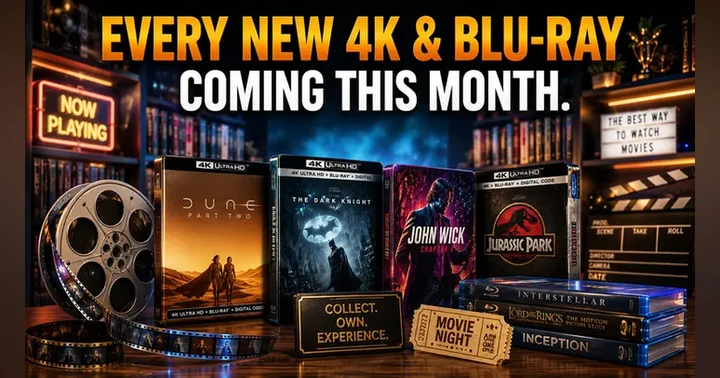
While the concept of ownership is a significant draw, the advantages of premium formats like 4K Ultra HD Blu-ray extend far beyond mere possession. These formats are designed to deliver the highest possible audio and visual fidelity, offering an experience that often surpasses what streaming services can provide. Let's talk about picture quality. Streaming services, even those offering 4K content, employ aggressive video compression to manage bandwidth. This compression, while necessary for efficient streaming, can lead to a noticeable degradation in image quality. You might experience banding in gradients, loss of fine detail, and a general softening of the image. 4K Blu-rays, on the other hand, contain significantly more data. This translates to sharper images, richer colors, and a more dynamic range. High Dynamic Range (HDR) technology, commonly found on 4K Blu-rays, further enhances the visual experience by offering brighter highlights, deeper blacks, and a wider spectrum of colors, bringing the film closer to what the filmmakers intended to capture on set. Then there's the audio. While streaming services offer surround sound, the bitrates are often limited. 4K Blu-rays can support uncompressed or lossless audio formats like Dolby Atmos and DTS:X, which provide a truly immersive soundscape. The nuances of sound design, the subtle whispers, the explosive impacts, the atmospheric score – all are delivered with incredible clarity and impact, enveloping the viewer in the film's world. For the discerning viewer who values the artistry of filmmaking, these premium formats are not an indulgence, but a necessity for experiencing a film as it was meant to be seen and heard.
Filmmaker's Intent: Preserving the Director's Vision
This is where the conversation truly intersects with the creative process, as highlighted by Lee Cronin's perspective. Filmmakers pour their heart and soul into their work, meticulously crafting every element to achieve a specific emotional and aesthetic impact. The visual language, the color grading, the sound mix – these are not arbitrary choices; they are deliberate decisions designed to enhance the storytelling and immerse the audience. When a film is released on a premium format like 4K Blu-ray, it represents the closest possible representation of the director's original vision. The director of photography's carefully chosen lighting, the colorist's precise adjustments to evoke a mood, the sound mixer's intricate layering of audio cues – all of these elements are preserved in their full glory on a physical disc. Streaming, with its inherent compression and potential for alterations, can inadvertently dilute or even distort this vision. A filmmaker might spend months perfecting a particular shade of blue or a subtle audio detail, only to see it compromised by the limitations of digital delivery. Therefore, supporting physical media, especially premium formats, is an act of respecting and preserving the art of filmmaking. It allows audiences to connect with the film on a deeper level, appreciating the meticulous craft and intention behind every shot and every sound. It’s about experiencing the film as the creator intended, uncompromised and in its most potent form.
The Cinephile's Collection: Building a Personal Library
For many, the act of collecting physical media is more than just acquiring discs; it's about building a personal cinematic library. This library becomes a reflection of one's individual tastes, a curated testament to the films that have moved, inspired, or entertained them. Unlike a transient playlist on a streaming service, a physical collection offers a sense of permanence and pride. Each shelf space is a deliberate choice, filled with films that hold personal significance. The artwork on the slipcovers, the liner notes within the cases, the special features that offer behind-the-scenes insights – these all contribute to a richer, more engaging relationship with the film. It’s about the joy of discovery, stumbling upon a hidden gem at a local record store or finding a rare import online. It’s about the satisfaction of completing a series, or assembling a collection of works by a favorite director or actor. This personal library is a tangible archive of cinematic history, a source of endless rewatchability, and a testament to a lifelong passion. It’s a space where memories are made, where you can revisit beloved stories and share them with others, creating new cinematic moments together. In a digital world that often feels ephemeral, a physical collection provides a grounding, a lasting legacy of your cinematic journey.
Conclusion: Why Physical Media is More Than Just Nostalgia
As we wrap up this exploration, it’s clear that the conversation around physical media and premium formats in the streaming age is far from over. The convenience of streaming is undeniable, and it has opened doors to cinema for countless individuals. However, as we've discussed, the advantages of physical media – the tangible ownership, the superior quality of premium formats, the preservation of filmmaker's intent, and the personal joy of curating a collection – remain profoundly relevant. Lee Cronin’s insights in our recent episode, "Lee Cronin on Making ‘The Mummy’ Terrifying Again," served as a powerful reminder that for creators and discerning audiences alike, these formats offer a depth of experience that cannot be replicated. Physical media is not simply a nod to the past; it is a vital component of experiencing cinema in its most potent and enduring form. It’s about respecting the art, cherishing the ownership, and ensuring that the magic of movies continues to be experienced with the highest possible fidelity. So, the next time you’re considering adding a film to your library, think about the lasting value and the unparalleled experience that a physical disc, especially a premium format one, can offer. It’s an investment in your love for cinema, a testament to your discerning taste, and a way to keep the spirit of film alive and thriving.
Regal has 30+ Movie Masterpieces Coming in September for Month of Masterpieces 2026