The Ultimate Guide to Christopher Nolan: Every Movie, His Career, Filmmaking Style and Legacy
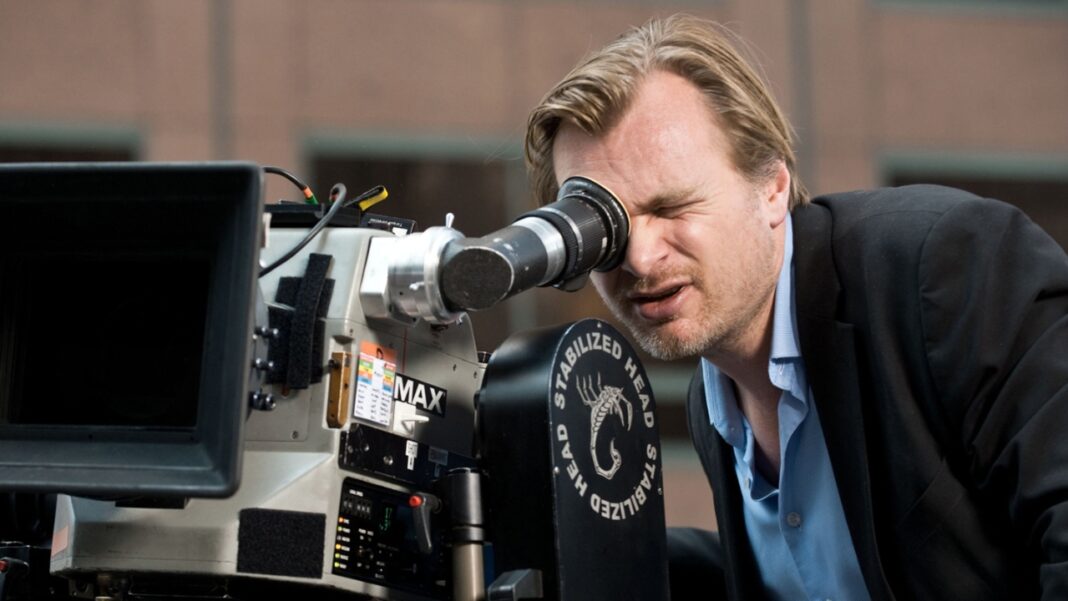
There are filmmakers who make movies, there are filmmakers who create franchises, and then there are filmmakers whose names alone become the selling point. Christopher Nolan belongs firmly in that last category.
In an era when Hollywood has become increasingly reliant on recognizable intellectual property, cinematic universes, sequels and reboots, Nolan has accomplished something pretty freakin rare: he has turned himself into the brand. Audiences don't simply buy tickets because Batman is on screen or because an action movie has impressive visual effects. We buy tickets because it says "A Film by Christopher Nolan."
That level of trust isn't built overnight. It comes from more than two decades of consistently delivering ambitious, visually stunning, emotionally resonant films that challenge audiences without ever talking down to them. Whether he's reinventing superheroes, bending time itself, exploring dreams, dramatizing one of history's most consequential scientific breakthroughs, or recreating the evacuation at Dunkirk with breathtaking realism, Nolan approaches every project with the same philosophy: respect the audience's intelligence.
His films demand attention. They invite repeat viewings. They spark debates that continue for years after their release. Ask ten people what the ending of Inception means, whether the protagonist of Memento is truly seeking justice, or if Tenet is brilliant or bewildering and you'll probably get ten different answers. Few modern directors inspire that level of discussion.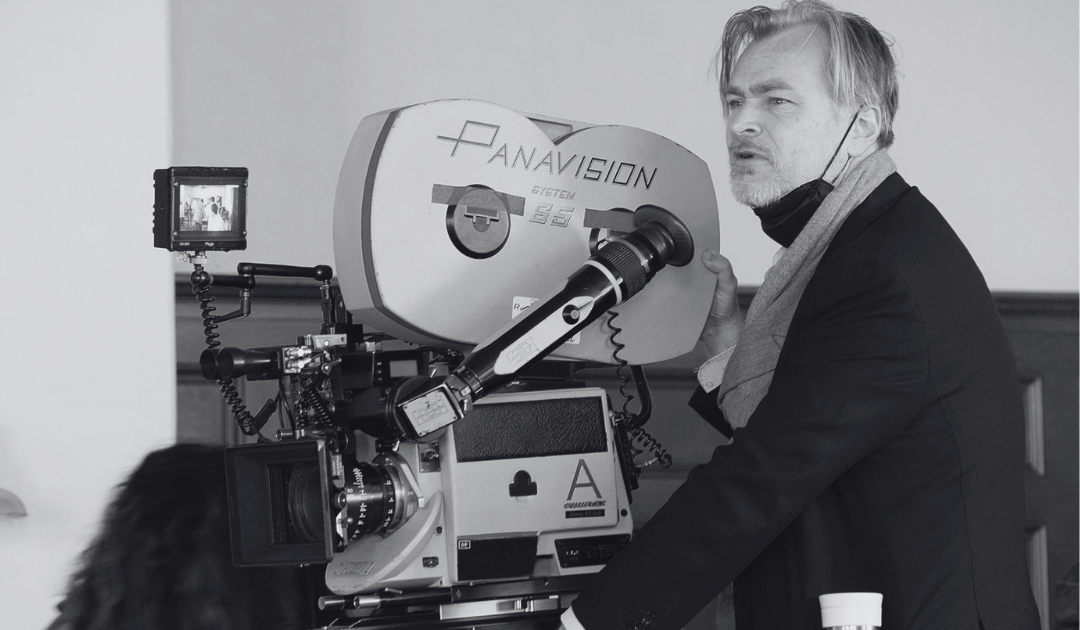
Part of what makes Nolan unique is his refusal to separate spectacle from substance. Many blockbuster filmmakers excel at creating unforgettable action sequences, while many independent filmmakers specialize in deeply personal storytelling. Nolan has spent his career proving that audiences don't have to choose between the two. Massive practical effects, IMAX photography, intricate narratives, philosophical questions, and emotional character arcs all coexist within his work. One moment you're watching a city fold onto itself or a fighter plane scream across the beach at Dunkirk. The next, you're contemplating memory, identity, sacrifice, grief or humanitys place in the universe.
His influence on modern filmmaking can't be overstated. Before Batman Begins, superhero films were largely viewed as colorful escapism. Before The Dark Knight, comic book movies were rarely discussed alongside serious crime dramas or awards contenders. Inception reminded Hollywood that audiences would enthusiastically embrace original science fiction if it respected their intelligence. Interstellar reignited mainstream fascination with hard science fiction, while Oppenheimer demonstrated that a three-hour, R-rated historical drama built around theoretical physics could become one of the biggest box office successes of the decade and win the Academy Award for Best Picture.
Nolan has also become one of cinema's most passionate advocates for the theatrical experience. While much of the industry has embraced digital filmmaking and streaming-first distribution, he has remained one of film's strongest defenders. He continues to shoot on large-format film whenever possible, champions IMAX presentation, and insists that movies deserve to be experienced on the biggest screen available. That commitment has helped preserve technologies and exhibition formats that might otherwise have faded into history.
Another defining characteristic of Nolan's career is consistency. Nearly every director experiences dramatic highs and lows, but Nolan's filmography remains remarkably cohesive. Although each project explores different genres - including neo-noir, psychological thriller, superhero epic, mystery, war film, science fiction and historical drama - they all feel unmistakably like Christopher Nolan films. Themes of time, memory, obsession, sacrifice, guilt, identity, and the consequences of human ambition appear again and again, creating a body of work that feels interconnected despite telling entirely different stories.
What makes Nolan especially fascinating is that he has achieved insanely enormous commercial success without sacrificing artistic ambition. His movies often refuse easy answers. They trust audiences to connect the dots, to wrestle with complicated ideas and to leave the theater still thinking about what they've just seen. Rather than explaining every mystery, Nolan frequently invites viewers to become active participants in the storytelling process. That willingness to embrace ambiguity has become one of his greatest strengths.
Today, Nolan stands alongside filmmakers like Steven Spielberg, Martin Scorsese, Quentin Tarantino, James Cameron and Denis Villeneuve as one of the defining cinematic voices of his generation. Every new project becomes a cultural event months before audiences know much about the story, simply because his name appears above the title.
This guide explores every stage of Christopher Nolan's remarkable career, from his humble beginnings making low-budget independent films with friends to becoming an Academy Award-winning filmmaker responsible for some of the most influential movies of the 21st century. Along the way, we'll examine each of his feature films, his distinctive filmmaking style, his most important collaborators, the recurring themes that define his work and the legacy he continues to build with every new release.
If you've ever left one of Christopher Nolan's films wanting to immediately watch it again, you're in exactly the right place, degenerates!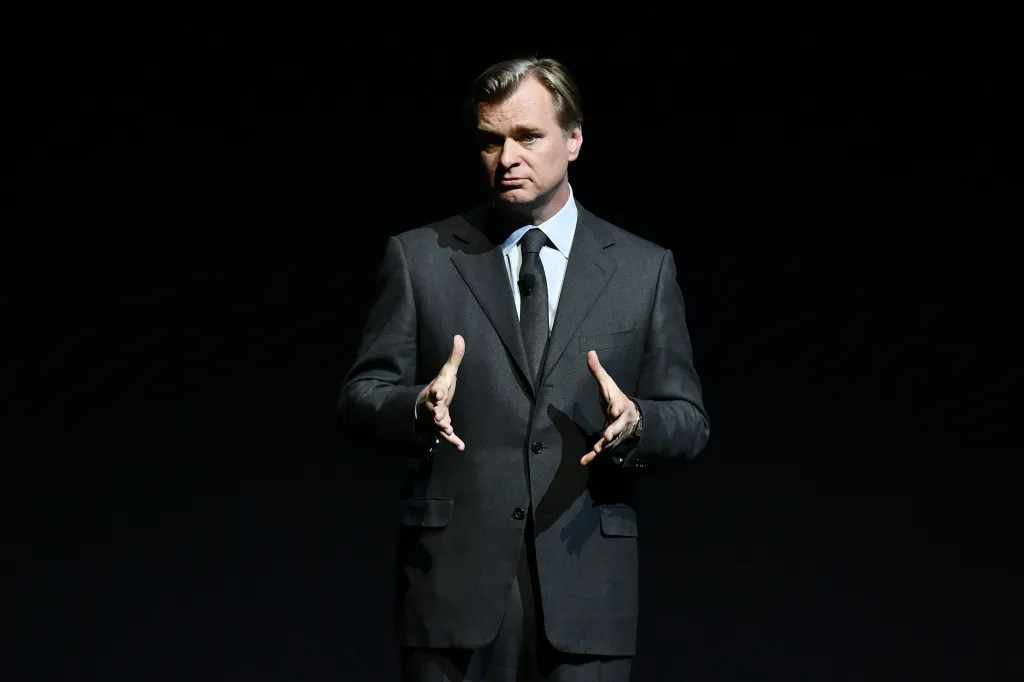
Who Is Christopher Nolan?
Long before Christopher Nolan became one of the few filmmakers whose name alone could sell a movie, he was simply a kid fascinated by cameras, storytelling, and the seemingly impossible idea that moving images could transport audiences to entirely different worlds.
That fascination never went away, it simply evolved into one of the most remarkable directing careers in modern cinema.
Christopher Edward Nolan was born on July 30, 1970, in London, England, to an English father who worked in advertising and an American mother who was a flight attendant before later becoming an English teacher. Growing up with ties to both the United Kingdom and the United States gave Nolan a unique perspective that would later influence his career. He holds dual British and American citizenship and has spent much of his professional life working comfortably within both cultures.
From an early age, Nolan was captivated by movies in a way that went beyond simply watching them. While many children dreamed about becoming astronauts, athletes or musicians, Nolan became fascinated with how films were actually made. According to Nolan, seeing 2001: A Space Odyssey as a child had an enormous impact on him. Stanley Kubrick's groundbreaking science fiction masterpiece demonstrated that movies could tackle enormous philosophical ideas while remaining visually spectacular. Decades later, echoes of Kubrick's influence would be visible throughout Nolan's own work, particularly in Interstellar.
His father gave him access to a Super 8 camera while he was still a child and Nolan immediately began experimenting with filmmaking. Rather than simply recording family events, he created miniature adventure films using toys, homemade effects and stop-motion animation. These early projects may have been simple, but they revealed an instinct that would define his career: if he couldn't afford a visual effect, he would figure out another way to create it.
Throughout his career, Nolan has repeatedly chosen practical effects over computer-generated imagery whenever possible. Whether rotating an entire hallway for Inception, crashing a real airplane for Tenet, or detonating large-scale practical explosions for Oppenheimer, the mindset traces directly back to those childhood experiments with a Super 8 camera. The tools became more sophisticated, but the philosophy remained remarkably similar.
As a teenager, Nolan continued making short films while developing an interest in literature, philosophy, architecture, and science. Those subjects would eventually become central ingredients in his screenplays. Unlike many blockbuster filmmakers who prioritize spectacle above all else, Nolan has consistently used genre storytelling to explore larger questions about memory, identity, morality, time, obsession, and human nature.
When it came time for university, Nolan attended University College London (UCL), where he studied English Literature. At first glance, the choice might seem surprising for someone determined to become a filmmaker, but Nolan has often explained that studying literature strengthened his understanding of narrative structure and storytelling. Rather than attending a traditional film school, he immersed himself in analyzing stories that had stood the test of time.
His decision also had a practical benefit. UCL's film society gave him access to cameras and editing equipment that would have otherwise been financially out of reach. It became his unofficial film school.
During his university years, Nolan produced several short films while learning every aspect of production firsthand. Instead of specializing in one discipline, he gained experience writing, directing, shooting, editing, and producing. That hands-on education proved invaluable later, allowing him to communicate effectively with every department on set because he understood the technical and creative challenges each one faced.
It was also during this period that Nolan met Emma Thomas, a fellow student who shared both his creative ambitions and his passion for filmmaking. Their relationship would become one of the most successful creative partnerships in Hollywood history. Thomas would eventually produce nearly every feature film Nolan directed, helping transform his ambitious ideas into reality while overseeing the enormous logistical challenges behind productions that often span multiple continents.
Unlike directors who discover their voice gradually over decades, many of the characteristics audiences now associate with Christopher Nolan were already evident in his earliest work. Nonlinear storytelling, morally complicated protagonists, unreliable perspectives, philosophical themes, and narratives built around puzzles rather than straightforward plots all appeared long before he ever stepped behind the camera for a Batman film or an IMAX epic.
Those formative years also taught Nolan another lesson that has shaped his entire career: limitations can become creative advantages. Without large budgets or expensive technology, he learned to maximize every location, every actor, every camera setup, and every editing decision. That discipline helped him create his first feature film on an extraordinarily small budget, proving that compelling storytelling could overcome financial constraints.
The independent film Nolan made with friends on weekends would launch a career unlike almost any other, introducing audiences to a filmmaker who believed that intelligence and entertainment were never mutually exclusive. Within just a few years, Christopher Nolan would go from borrowing equipment and shooting around everyone's day jobs to directing some of the largest and most influential films ever made.
And remarkably, despite the vastly larger budgets, his approach to filmmaking has never fundamentally changed. He still begins with the story, trusts his audience, and believes that cinema works best when it challenges viewers as much as it thrills them.
Christopher Nolan Movies in Order
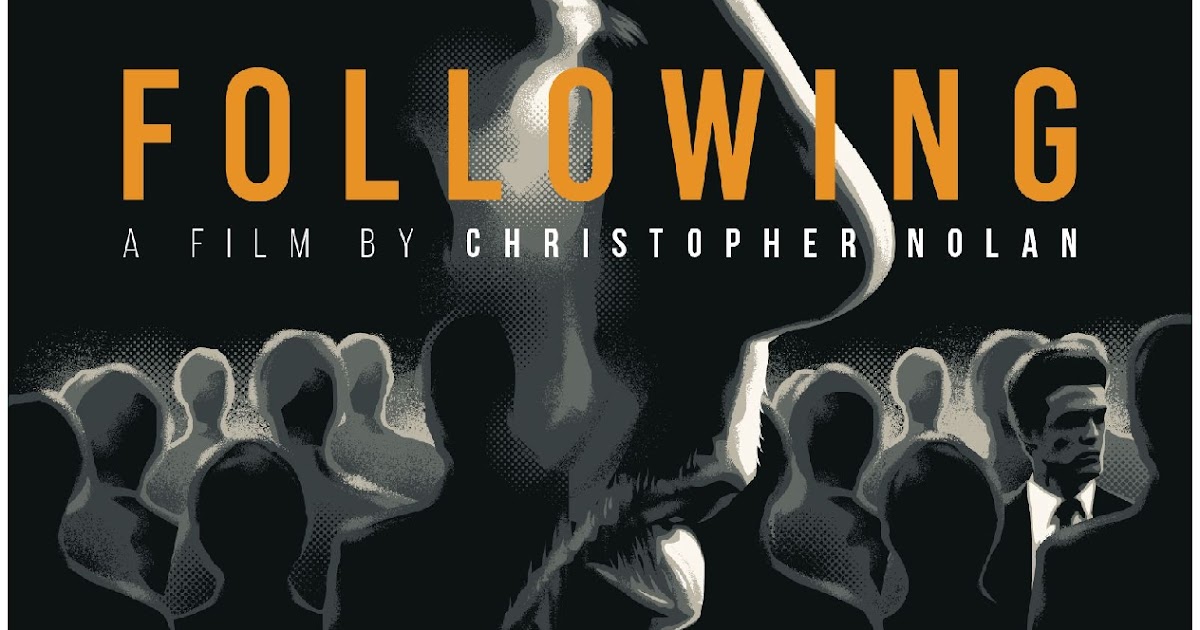
Following (1998)
Before Christopher Nolan was directing some of the biggest movies ever made, he was making one with little more than determination, borrowed locations and a group of friends willing to spend their weekends shooting scenes around London.
Released in 1998, Following remains one of the most impressive feature debuts in modern independent cinema. Made for an estimated budget of just $6,000, the black-and-white neo-noir thriller announced the arrival of a filmmaker whose ambition far exceeded his resources.
Rather than treating those limitations as obstacles, Nolan used them to sharpen every creative decision.
The Story
The film follows Bill, an unemployed aspiring writer who spends his days following strangers through the streets of London in hopes of finding inspiration for his fiction. At first, the activity seems harmless enough. Bill establishes one simple rule for himself: never follow the same person twice.
That rule doesn't last.
Even in his very first feature, Nolan demonstrates his fascination with unreliable perspectives and narratives built around incomplete information. The audience is constantly forced to question what is true, what has been manipulated, and who is really controlling events.
Those ideas would become hallmarks of nearly every film he directed afterward.
Nolan's First Narrative Puzzle
Although Memento is often credited with introducing Nolan's nonlinear storytelling style, Following actually laid the groundwork two years earlier.
Rather than unfolding chronologically, the film jumps between multiple points in time without immediately informing viewers where they are in the story. Differences in Bill's appearance - including changes to his hairstyle and clothing - serve as subtle clues that reward attentive audiences.
The structure creates suspense not by withholding action but by withholding context. As viewers gradually piece together the timeline, earlier scenes take on entirely new meanings.
It's an approach Nolan would refine repeatedly throughout his career.
Why It Matters
For longtime fans, it offers a fascinating glimpse into the origins of a filmmaker who had already developed many of the techniques that would later make him world-famous. For aspiring directors, it serves as a reminder that creativity often matters far more than budget.
Nearly three decades later, Following remains proof that Christopher Nolan didn't become a distinctive filmmaker after Hollywood discovered him.
Buy Following (1998) Criterion Collection Blu-Ray on Amazon!
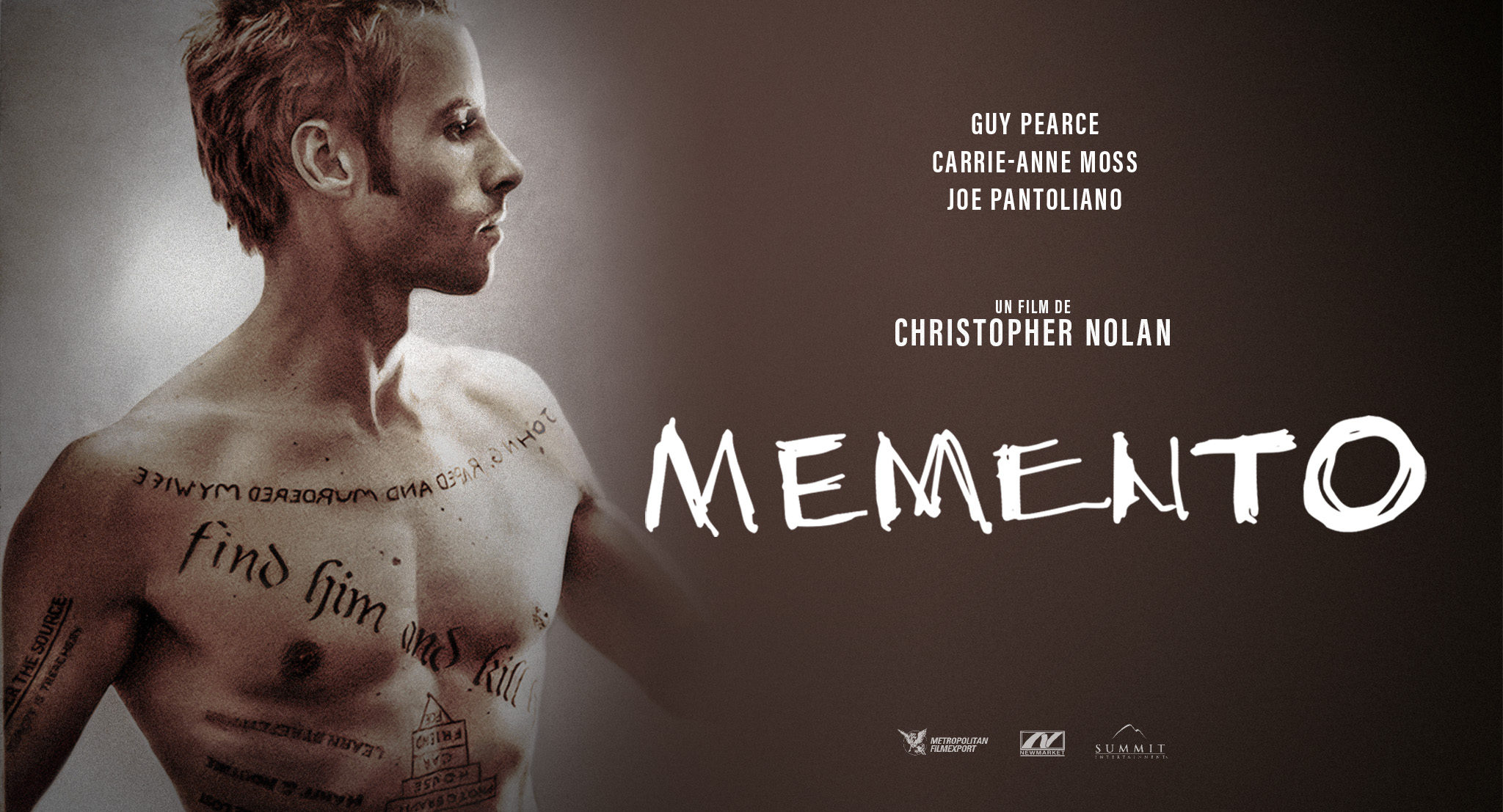
Memento (2000)
If Following introduced Christopher Nolan as a filmmaker to watch, then Memento established him as one of the most original storytellers of his generation.
Released in 2000, the film was unlike almost anything mainstream audiences had seen before. On paper, it's a relatively straightforward noir mystery about a man trying to solve his wife's murder. In execution, it's one of the most brilliantly constructed screenplays ever filmed, forcing viewers to experience the story in much the same way as its protagonist.
More than two decades later, Memento is still regularly cited as one of the greatest psychological thrillers ever made and remains the movie that truly launched Christopher Nolan's career.
The Story
Leonard Shelby, played brilliantly by Guy Pearce, suffers from anterograde amnesia after a violent attack that left his wife dead. Although he can remember everything that happened before the assault, he can no longer create new long-term memories. Every few minutes, his recent experiences disappear, forcing him to rely on handwritten notes, photographs, tattoos, and carefully developed routines to navigate everyday life.
Leonard believes the man responsible for murdering his wife escaped justice, and he has dedicated what remains of his life to tracking down the killer. Because Leonard cannot remember what happened a few minutes earlier, every conversation begins from scratch. Every clue has to be rediscovered. Every decision is based on evidence that he himself can no longer verify.
Rather than presenting Leonard's condition from the outside, Nolan places the audience inside it. We learn information only when Leonard learns it, and just as quickly, we lose the context needed to understand what comes next.
It's an astonishingly immersive storytelling device.
A Revolutionary Narrative Structure
The first thing most people remember about Memento is its unusual structure.
The film consists of two separate timelines that gradually converge. One storyline is presented in black and white and moves forward chronologically. The other, shown in color, unfolds in reverse order, with each scene ending where the previous one began.
At first, the structure feels disorienting. Every new scene begins without explanation, and the audience has to spend several minutes figuring out who everyone is, where Leonard is, and what has already happened.
That confusion isn't a gimmick. It's literally the point.
Because Leonard cannot retain recent memories, every moment of his life begins with uncertainty. By telling the story backward, Nolan transforms viewers into active participants rather than passive observers. We experience Leonard's frustration firsthand, constantly questioning people, motives, and even our own assumptions.
Why It Matters
More than twenty-five years after its release, Memento continues to appear on lists of the greatest films of the 21st century. Film schools analyze its screenplay. Critics revisit it regularly. New audiences continue discovering it, often emerging with the same reaction viewers had in 2000: the immediate desire to watch it again.
Buy Memento (Blu-Ray) on Amazon!
Insomnia (2002)
After the breakout success of Memento, Christopher Nolan found himself at a crossroads that has derailed more than a few promising directors. Hollywood wanted him.
The question was whether he could retain his distinctive voice while working within the big studio system.
His answer came in the form of Insomnia, a psychological crime thriller that, at first glance, seemed like an unexpected choice. Rather than directing another original screenplay filled with fractured timelines and narrative puzzles, Nolan chose to remake a critically acclaimed 1997 Norwegian film.
For many directors, that might have felt like a step backward.
Instead, it became the bridge that connected independent Christopher Nolan to blockbuster Christopher Nolan.
The Story
Set in the remote town of Nightmute, Alaska, Insomnia follows veteran Los Angeles detective Will Dormer, played by Al Pacino, who travels north with his partner to investigate the murder of a teenage girl. Of course, the case quickly becomes more complicated than anyone expects.
During a tense pursuit through dense coastal fog, Dormer accidentally shoots and kills his own partner. Rather than admitting what happened, he allows local authorities to believe the fatal shot came from the fleeing suspect.
That split-second decision changes everything.
Nolan's First Studio Film
Insomnia represented Christopher Nolan's first experience directing a major Hollywood production. Warner Bros. entrusted him with a substantial budget, internationally recognized stars, and the pressure that comes with remaking a respected foreign film. Many filmmakers entering the studio system compromise their style in exchange for bigger opportunities but Nolan didn't.
Although Insomnia is more straightforward than Memento, it still feels unmistakably like one of his films. Rather than emphasizing elaborate twists or flashy visual techniques, he focuses on psychological deterioration and moral ambiguity.
The result is quieter than many of his later movies but it is never, ever less compelling.
Looking back, it's easy to see Insomnia as the film that convinced studios Nolan could handle productions on a much larger scale. Without it, there may never have been Batman Begins.
Why It Matters
It may not inspire the same endless debates as Inception or Tenet, but Insomnia quietly accomplished something just as important.
It proved that Christopher Nolan wasn't simply an innovative independent filmmaker.
Buy Insomnia (Blu-Ray) on Amazon!
Batman Begins (2005)
Some movies revive a franchise. Some movies redefine a character. But very, very few completely change the course of an entire genre. Batman Begins accomplished all three.
Released in 2005, Christopher Nolan's first Batman film arrived at a time when the Caped Crusader was no longer viewed as one of cinema's most exciting superheroes. Just eight years earlier, Batman & Robin had become a cultural punchline, remembered more for bat nipples (perky as they might be), ice puns, and neon sets than compelling storytelling. The franchise was effectively dead, and many wondered whether audiences even wanted another Batman movie.
Nolan believed the problem wasn't Batman. The problem was that audiences had stopped believing Batman could exist.
Fear as the Central Theme
Every Christopher Nolan film revolves around one or two core philosophical ideas. For Batman Begins, that idea is fear. Bruce fears bats. Criminals fear Batman. The citizens fear Gotham's decay. The League of Shadows believes civilization itself must fear destruction in order to renew itself. Even Scarecrow literally weaponizes fear through a hallucinogenic toxin.
Rather than treating fear as something heroes must eliminate, Nolan presents it as something they must understand. So, Bruce Wayne doesn't conquer his fear, he learns to use it. That giant distinction becomes one of the film's defining messages. Courage isn't the absence of fear. It's the willingness to act despite it.
Why It Matters
It rescued Batman from creative stagnation, established Christopher Nolan as one of Hollywood's premier blockbuster filmmakers, and laid the foundation for what many still consider the greatest superhero trilogy ever produced.
More importantly, it proved that audiences were ready for comic book movies that challenged them intellectually just as much as they entertained them.
Buy Batman Begins (4K Blu-Ray) on Amazon!
The Prestige (2006)
If Batman Begins proved Christopher Nolan could reinvent one of the world's most famous superheroes, The Prestige reminded audiences that his greatest passion still lay in original, intellectually ambitious storytelling.
Released in 2006, The Prestige arrived just one year after Batman Begins, yet it couldn't have been more different. Rather than exploring vigilantism in Gotham City, Nolan turned his attention to Victorian-era magicians whose professional rivalry slowly transforms into an all-consuming obsession. The result is a psychological thriller, a period drama, a mystery, a science fiction story, and a meditation on sacrifice all at once.
The Story
Set in late nineteenth-century London, The Prestige follows two talented illusionists, Robert Angier and Alfred Borden, who begin as colleagues before becoming bitter enemies after a tragic accident during a stage performance.
Each man believes the other is responsible for destroying his life.
As the years pass, their rivalry escalates from professional competition to personal warfare. Every new illusion is answered by a more elaborate one. Every public humiliation demands revenge. Their determination to outperform one another gradually consumes not only their careers but also their families, relationships, and sense of morality.
Obsession Is the Real Villain
While audiences often remember The Prestige for its twists, its true subject is obsession. Unlike many films about rivalry, The Prestige never suggests that competition itself is dangerous. Instead, Nolan argues that obsession becomes destructive when success matters more than the people around us.
It is a theme that echoes throughout his career.
Why It Matters
Today, many critics and fans regard it as one of Christopher Nolan's greatest achievements. It frequently appears near the top of rankings of his filmography, and it has become a favorite among filmmakers and screenwriters because of its extraordinary narrative craftsmanship.
Buy The Prestige (4K Blu-Ray) on Amazon!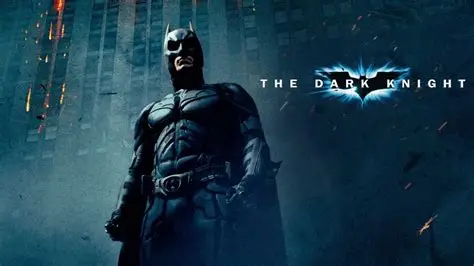
The Dark Knight (2008)
The Dark Knight quite literally was not just a blockbuster hit, and not just a critical darling, but it completely changed the way the superhero genre was perceived.
Released in the summer of 2008, Christopher Nolan's second Batman film wasn't simply one of the year's biggest movies. It became a genuine cultural phenomenon, earning widespread critical acclaim, breaking box office records around the world and permanently reshaping expectations for superhero cinema. Two decades later, it remains the benchmark against which virtually every comic book movie is measured.
Heath Ledger's Unforgettable Joker
It is impossible to discuss The Dark Knight without acknowledging Heath Ledger's extraordinary performance.
Before the film's release, his casting generated considerable skepticism. Many audiences knew Ledger primarily from romantic dramas and character-driven performances, making him an unexpected choice to portray Batman's greatest enemy. Those doubts disappeared almost immediately.
Ledger's Joker bears little resemblance to any other interpretations of the character. He has no clear origin story, no elaborate criminal empire, and no desire for personal wealth. His appearance is unsettling rather than theatrical, with smeared makeup, scarred cheeks, and clothing that looks as though it has been assembled from whatever he could find.
Nolan wisely refuses to explain the Joker completely, recognizing that mystery is one of the character's greatest strengths.
Ledger plays the role with astonishing unpredictability. Every movement, pause, laugh and shift in tone creates the sense that the Joker is improvising his own reality from moment to moment. His calmness during acts of extraordinary violence is often more unsettling than the violence itself.
The performance earned Ledger a posthumous Academy Award for Best Supporting Actor and is widely regarded as one of the greatest performances in cinematic history.
Why It Matters
Today, it stands not only as one of the greatest superhero movies ever made but also as one of the defining films of the 21st century. It demonstrated that comic book adaptations could grapple with profound philosophical questions while still delivering unforgettable entertainment, and it cemented Christopher Nolan's reputation as one of the most important filmmakers of his generation.
For many directors, creating a film as influential as The Dark Knight would have represented the pinnacle of a career.
Buy The Dark Knight (4K Blu-Ray) on Amazon!
Inception (2010)
After reinventing Batman and creating what many consider the greatest superhero movie ever made, Nolan could have easily continued making franchise films for the foreseeable future. Instead, he bet his career on an original idea that studios had considered too complicated to finance for nearly a decade.
The result was Inception - one of the most ambitious and influential science fiction films of the 21st century.
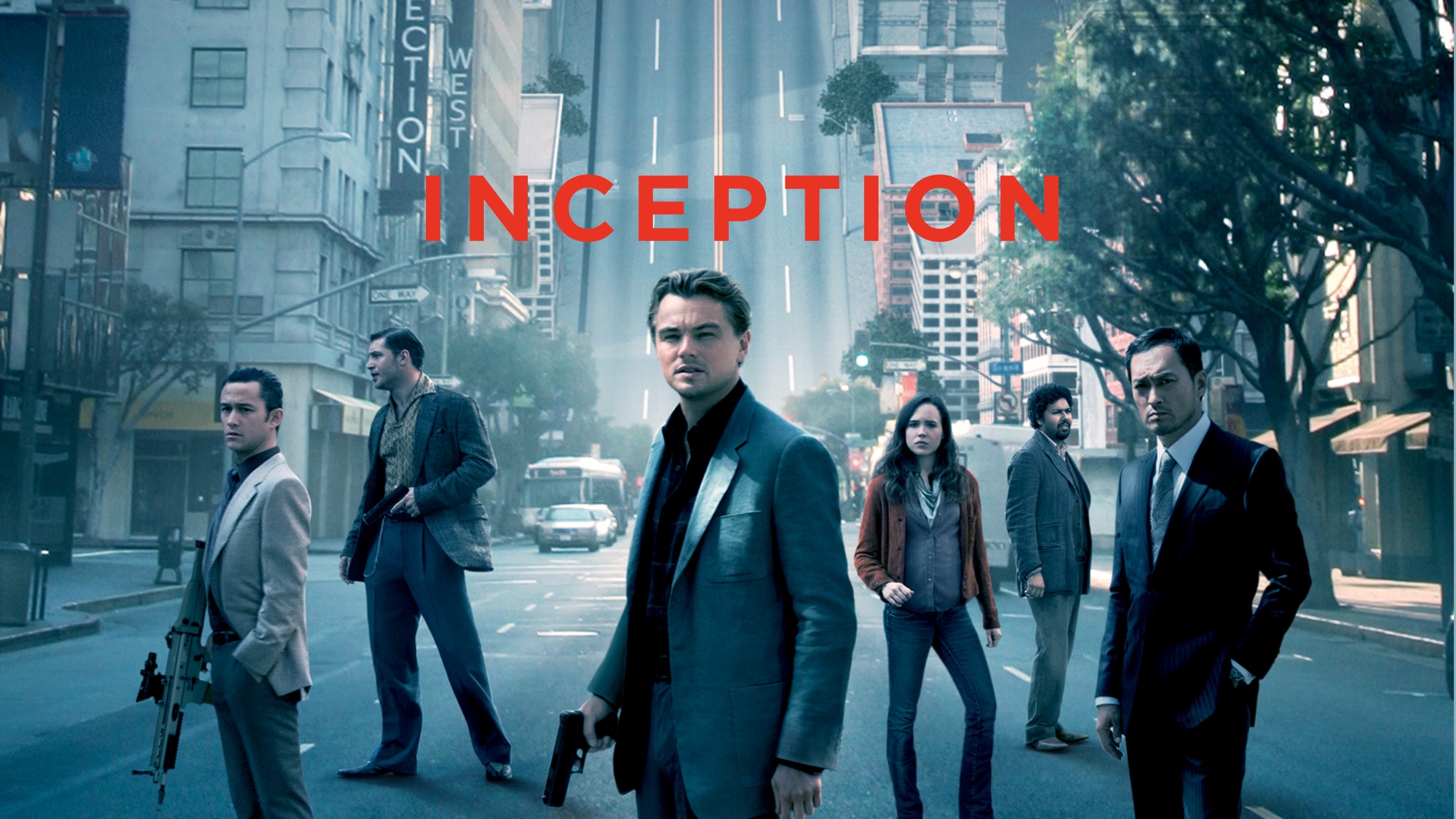
Inception combined blockbuster spectacle with philosophical questions about reality, memory, guilt and grief. It challenged audiences to follow multiple timelines unfolding simultaneously across several layers of dreams while delivering breathtaking action sequences unlike anything we'd seen before.
The Story
Dom Cobb, played by Leonardo DiCaprio, is one of the world's most skilled extractors - specialists who enter other people's dreams to steal valuable information from their subconscious.
Haunted by the death of his wife, Mal, and unable to return home to his children because he is wanted for a crime he insists he did not commit, Cobb accepts what appears to be one final assignment.
Rather than stealing an idea, he must plant one.
The task, known as inception, is considered nearly impossible because ideas implanted artificially are usually rejected by the subconscious mind. To succeed, Cobb and his team must construct multiple layers of dreams, each operating according to different rules and different rates of time.
Dreams Within Dreams
The concept that defines Inception is actually pretty simple. Different dream levels experience time at dramatically different speeds.
What begins as an intriguing science fiction idea gradually evolves into one of the most extraordinary narrative structures Nolan has ever attempted.
During the film's climax, four separate dream levels unfold simultaneously, each operating according to its own physical environment, pacing, and passage of time. Each sequence influences the others, requiring audiences to understand multiple interconnected timelines unfolding at once.
Insanely, Nolan presents this complexity with such precision that even first-time viewers can follow the emotional stakes of every level.
Why It Matters
After proving he could reinvent superheroes, he proved something even crazier. He could convince millions of people around the world to spend an evening inside one of the most complicated dreams ever put on film - and they would happily come back to experience it again.
Buy Inception on 4K UHD Blu-Ray here!
The Dark Knight Rises (2012)
Ending a successful trilogy is one of the most difficult challenges in filmmaking.
The first film introduces the world. The second raises the stakes. The third has to deliver a satisfying conclusion while honoring everything that came before it. More often than not, audiences leave feeling that the finale never quite lived up to its predecessors.
Christopher Nolan understood that challenge better than most.
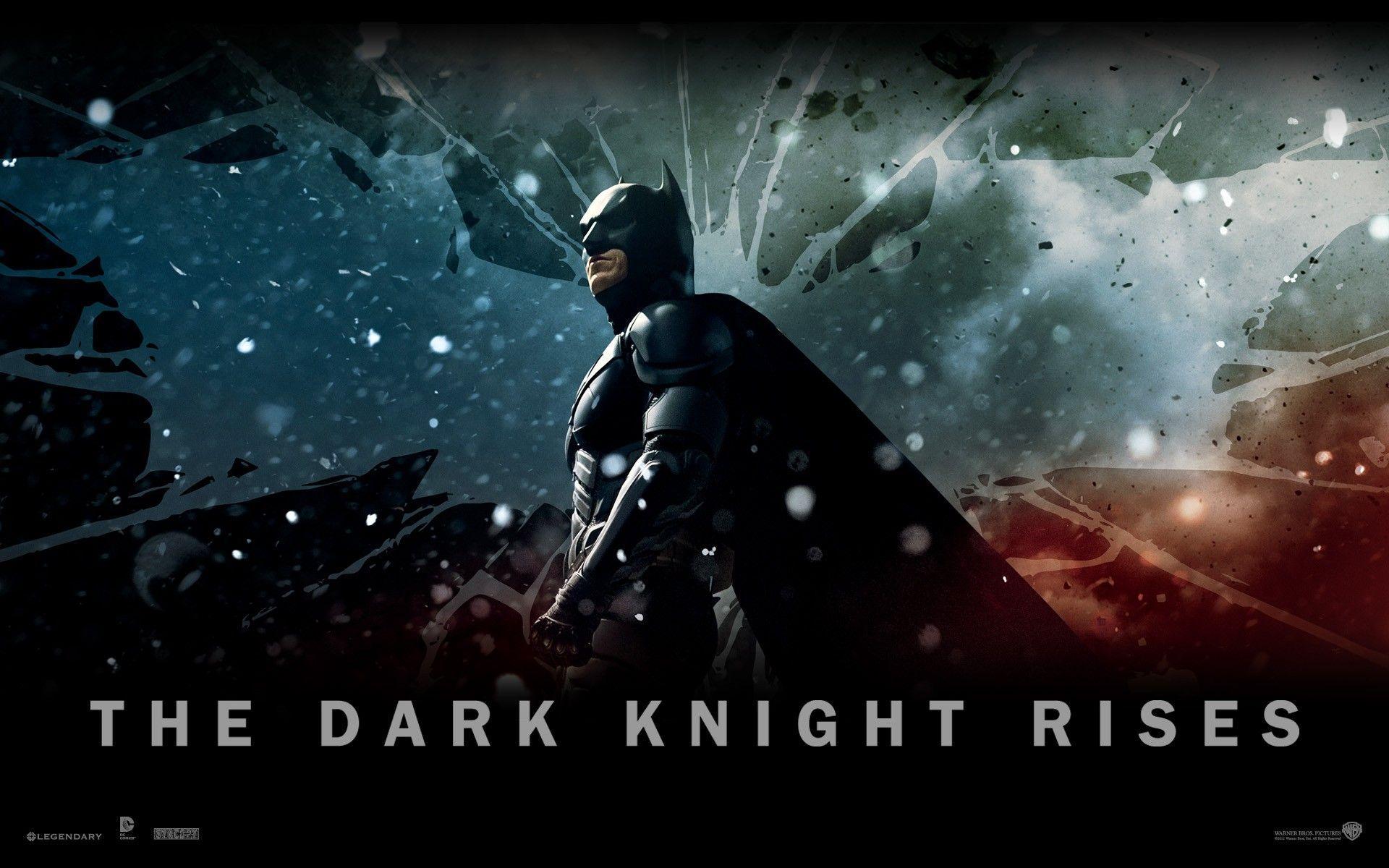
Rather than trying to make a bigger version of The Dark Knight, he chose to tell a different kind of story. The Dark Knight Rises isn't primarily about Batman defeating another villain. It's about Bruce Wayne confronting the consequences of a life defined by sacrifice and deciding whether he can become something more than the symbol he created.
The Story
Eight years have passed since the death of Harvey Dent. Batman has disappeared.
Bruce Wayne has become a reclusive billionaire who rarely leaves Wayne Manor, physically broken by years of crime fighting and emotionally exhausted by the burden of protecting Gotham. A masked mercenary named Bane arrives in Gotham with a carefully orchestrated plan to dismantle the city's institutions and expose the lies upon which its newfound stability has been built. As Gotham descends into chaos, Bruce is forced to confront a painful reality.
The city still needs Batman. Unfortunately, Bruce is no longer certain he can become him again.
Bruce Wayne's Final Transformation
One of the most compelling aspects of The Dark Knight Rises is that Bruce Wayne spends much of the film failing.
Unlike previous entries in the trilogy, Batman begins this story diminished rather than triumphant. Years of injuries have taken their toll. His confidence has eroded, his body no longer responds as it once did, and the mission that once gave his life purpose has left him isolated.
Christian Bale embraces this vulnerability. His Bruce Wayne is haunted by loss, weighed down by regret, and quietly wondering whether his sacrifices accomplished anything lasting. The performance reflects a man who has spent so long becoming Batman that he no longer knows how to exist without the mask.
That emotional exhaustion gives the film its heart. Bruce's greatest challenge isn't defeating Bane, it's rediscovering hope.
Why It Matters
Together, the three films transformed Batman from a comic book icon into one of modern cinema's most fully realized characters. They also changed Hollywood's expectations for superhero storytelling, proving that blockbuster entertainment could embrace psychological complexity, philosophical depth, and genuine emotional resonance without losing its ability to thrill audiences.
Buy The Dark Knight Rises (4K UHD Blu-Ray) here!
Interstellar (2014)
After concluding his Batman trilogy, Christopher Nolan could have pursued virtually any project in Hollywood. Instead, he made a deeply personal science fiction film about love, family and humanity's future.
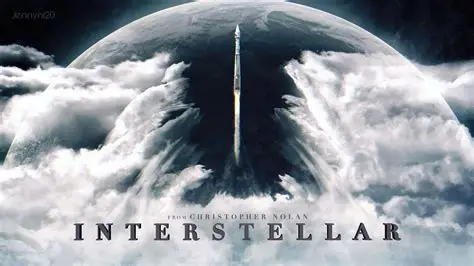
On the surface, Interstellar is a giant epic sci-fi adventure about astronauts traveling through a wormhole in search of a new home for humanity. Beneath that spectacle, is one of Nolan's most emotional films, exploring what parents owe their children, how grief shapes our decisions, and whether hope can survive when the odds seem impossible.
The Story
In the not-too-distant future, Earth is dying. Crop failures have become increasingly common, massive dust storms plague the planet and humanity faces the very real possibility of extinction. Society has largely abandoned dreams of exploration in favor of simple survival.
Joseph Cooper, a former NASA test pilot turned farmer, spends his days trying to provide for his family while raising two children, Tom and Murph. Although Cooper loves his life as a father, he cannot ignore the feeling that humanity has stopped reaching for something greater.
When a mysterious gravitational anomaly leads him and Murph to a secret NASA facility, Cooper discovers that a team of scientists has identified a wormhole near Saturn. On the other side may exist several potentially habitable planets capable of ensuring humanity's survival.
The mission requires Cooper to leave his children behind, not knowing whether he will ever see them again. That decision becomes the emotional foundation of the entire film.
Science Meets Human Emotion
One of Interstellar's greatest accomplishments is its refusal to choose between scientific accuracy and emotional storytelling.
Christopher Nolan worked closely with theoretical physicist Kip Thorne throughout the film's development. Thorne didn't simply advise on technical details; he helped shape the story's scientific framework, ensuring that concepts such as wormholes, black holes, gravitational time dilation, and higher-dimensional space remained grounded in accepted physics whenever possible.
This collaboration produced some of the most scientifically accurate visualizations ever created for a major motion picture.
The black hole Gargantua became particularly significant. The visual effects team developed entirely new rendering techniques based on Thorne's equations, producing imagery so realistic that it contributed to published scientific research after the film's release.
Why It Matters
It is about using extraordinary ideas to better understand what it means to be human. That has always been Nolan's greatest strength, and Interstellar may be the purest expression of it.
Buy Interstellar (4K UHD Blu-Ray) here!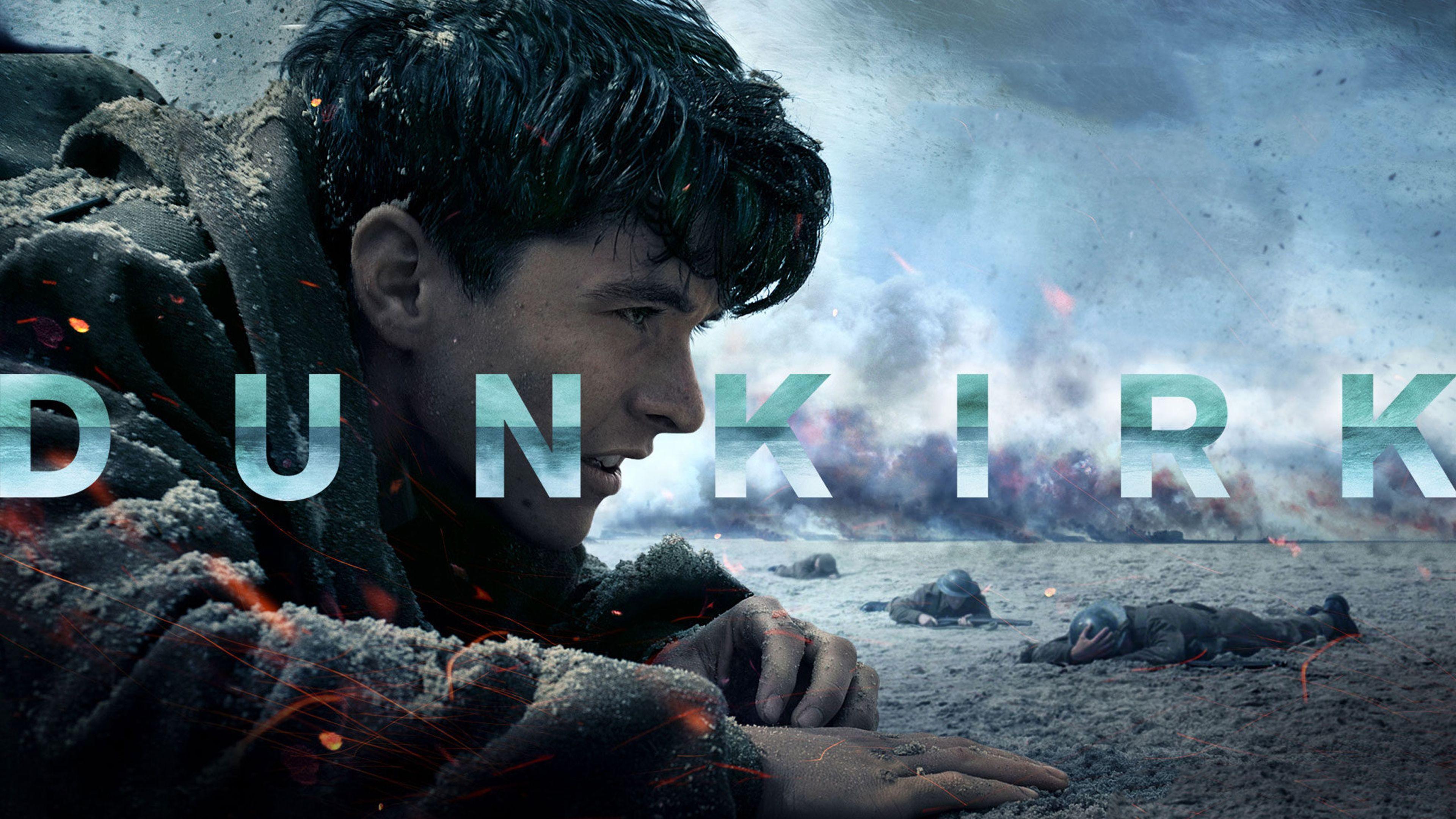
Dunkirk (2017)
By the time Christopher Nolan announced that his next film would tell the story of the evacuation of Dunkirk during World War II, many audiences expected a traditional war epic in the vein of Saving Private Ryan or The Longest Day.
Instead, Nolan delivered something far more unconventional.
Dunkirk is not primarily about military strategy, political leaders, or even individual heroism. It is a film about survival. It strips away lengthy exposition, sentimental speeches, and conventional character arcs in favor of placing the audience inside one of history's most extraordinary rescue operations.
Three Stories, Three Timelines
Perhaps the film's most incredible achievement is its narrative structure. Rather than telling the evacuation chronologically, Nolan divides the story into three interconnected perspectives.
The Mole follows soldiers trapped on the beach over the course of one week.
The Sea follows a civilian boat traveling from England to Dunkirk over one day.
The Air follows Royal Air Force pilots defending the evacuation over one hour.
Each storyline unfolds at a different pace because time passes differently depending on the characters' circumstances.
This structure allows Nolan to create extraordinary suspense while illustrating how countless individual experiences combined to shape one historic moment.
Why It Matters
Today, Dunkirk is widely regarded as one of the greatest war films ever made. Rather than competing directly with classics that emphasize battlefield heroics or political leadership, it carved out its own identity by immersing audiences in the lived experience of survival.
After psychological thrillers, superhero epics, science fiction adventures, and historical mysteries, he proved he could also create one of the most gripping war films of the modern era without abandoning the narrative experimentation and technical precision that had defined his career from the very beginning.
Buy Dunkirk (4K UHD Blu-Ray) here!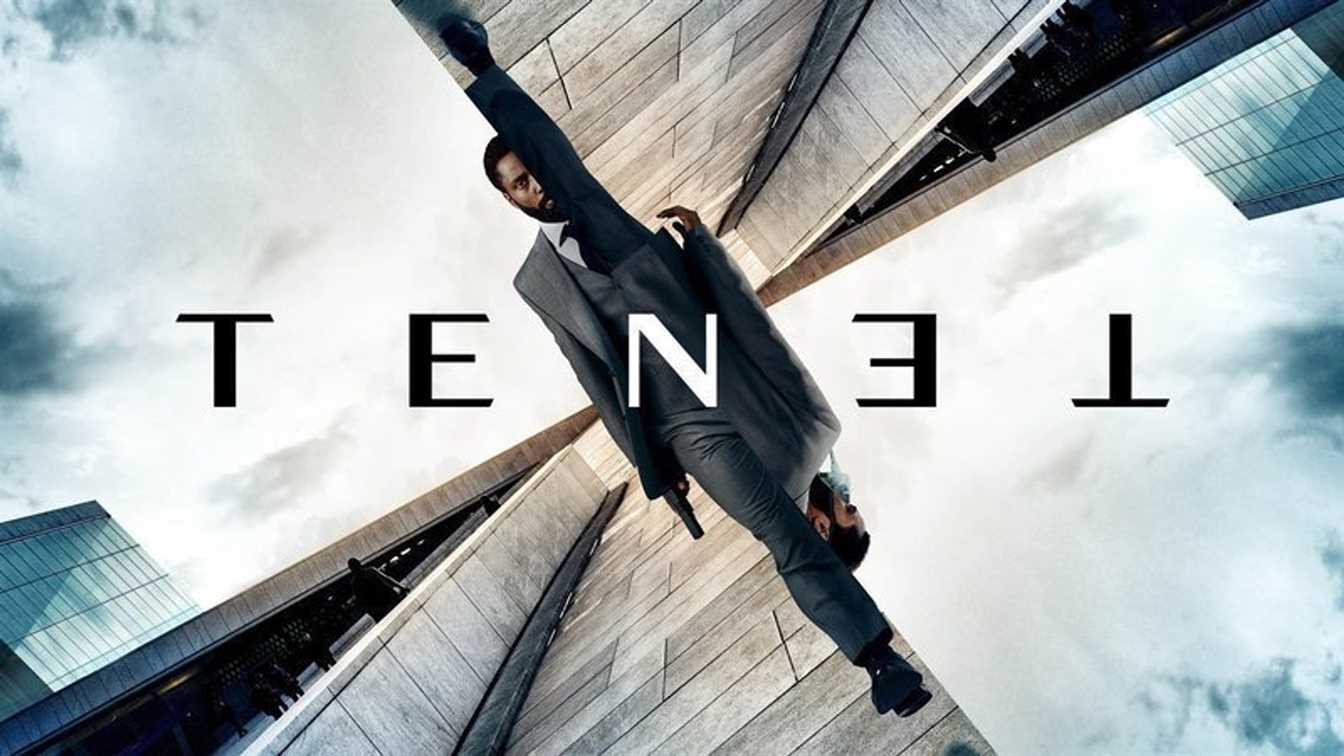
Tenet (2020)
No other film in Nolan's career has inspired as much fascination, frustration, admiration and debate as Tenet.
Released in 2020, Tenet became both a blockbuster spectacle and a lightning rod for discussion. Some viewers immediately hailed it as one of Nolan's boldest achievements. Others found its intricate mechanics and dense exposition difficult to follow. Years later, it remains one of the most divisive entries in his filmography.
What almost everyone agrees on, however, is that Tenet represents one of the most ambitious action films ever attempted as Nolan introduced a concept that fundamentally altered how action itself could be filmed.
The Story
The film follows a CIA operative known only as the Protagonist, played by John David Washington. After surviving a failed mission, he is recruited into a secret organization called Tenet and introduced to a phenomenon unlike anything he has ever encountered.
Certain objects and people can become "inverted," causing them to move backward through time while the rest of the world continues moving forward.
As the Protagonist begins to understand the implications of inversion, he uncovers a global conspiracy involving Russian oligarch Andrei Sator, whose access to future technology threatens not merely the present but the entire history of humanity.
Action Designed Around Time
Nearly every Christopher Nolan film contains memorable action sequences but Tenet required Nolan to rethink how those sequences could function altogether.
The now famous highway chase unfolds simultaneously from forward and inverted perspectives, allowing viewers to witness the same event through opposing temporal directions.
The film demanded extraordinary planning. Actors had to learn choreography performed both normally and in reverse. Vehicles often traveled backward during filming. Practical effects had to function convincingly regardless of playback direction.
Why It Matters
Today, Tenet has developed an increasingly passionate following. It stands as one of Nolan's boldest creative risks, a film that refuses to simplify its ideas or apologize for demanding close attention from its audience.
Whether viewers ultimately consider it one of his masterpieces or one of his most challenging experiments, Tenet embodies the quality that has defined Nolan's entire career.
Buy Tenet (4K UHD Blu-Ray) here!
Oppenheimer (2023)
By the time Christopher Nolan announced that his next film would tell the story of J. Robert Oppenheimer, some observers questioned whether a three hour, R-rated historical drama about theoretical physics could attract mainstream audiences.
Nolan had spent much of his career proving that blockbuster filmmaking could be intellectually ambitious, but this seemed like an entirely different challenge. There were no superheroes, no elaborate sci-fi concepts and no franchise recognition to attract casual moviegoers. Instead, the film would focus on the brilliant yet deeply conflicted scientist who helped develop the atomic bomb and spent the rest of his life wrestling with its consequences.
Against virtually every conventional expectation, Oppenheimer became one of the defining cinematic events of the decade.
The Story
Based on Kai Bird and Martin J. Sherwin's Pulitzer Prize-winning biography American Prometheus, Oppenheimer chronicles the life of physicist J. Robert Oppenheimer from his early academic career through the creation of the Manhattan Project and the political fallout that followed.
Rather than presenting a straightforward biography, Nolan structures the film around two interconnected timelines.
One follows Oppenheimer's rise from gifted theoretical physicist to scientific director of the Los Alamos Laboratory, where he oversees the development of the first atomic weapons during World War II.
The second looks at the government hearings that stripped Oppenheimer of his security clearance years later, exploring how political fear, personal rivalries and shifting public opinion transformed a celebrated national hero into a deeply controversial figure.
Science, Politics, and Moral Responsibility
Like many of Nolan's films, Oppenheimer refuses to reduce complex questions to simple answers. He resists portraying Oppenheimer either as a hero or a villain, instead exploreing the reality that extraordinary scientific progress often carries consequences beyond the control of those who initiate it.
The film repeatedly asks whether knowledge itself can ever be morally neutral. Instead of providing definitive conclusions, Nolan invites audiences to wrestle with these questions themselves.
Why It Matters
More importantly, Oppenheimer demonstrated that ambitious, uncompromising filmmaking could still captivate audiences around the world. In an era often defined by franchise fatigue and streaming algorithms, Nolan proved that viewers were still willing to spend three hours with a challenging historical drama if the story respected their intelligence and rewarded their attention.
It was a fitting triumph for a filmmaker who had spent his entire career refusing to underestimate his audience.
Buy Oppenheimer (4K UHD Blu-Ray) here!
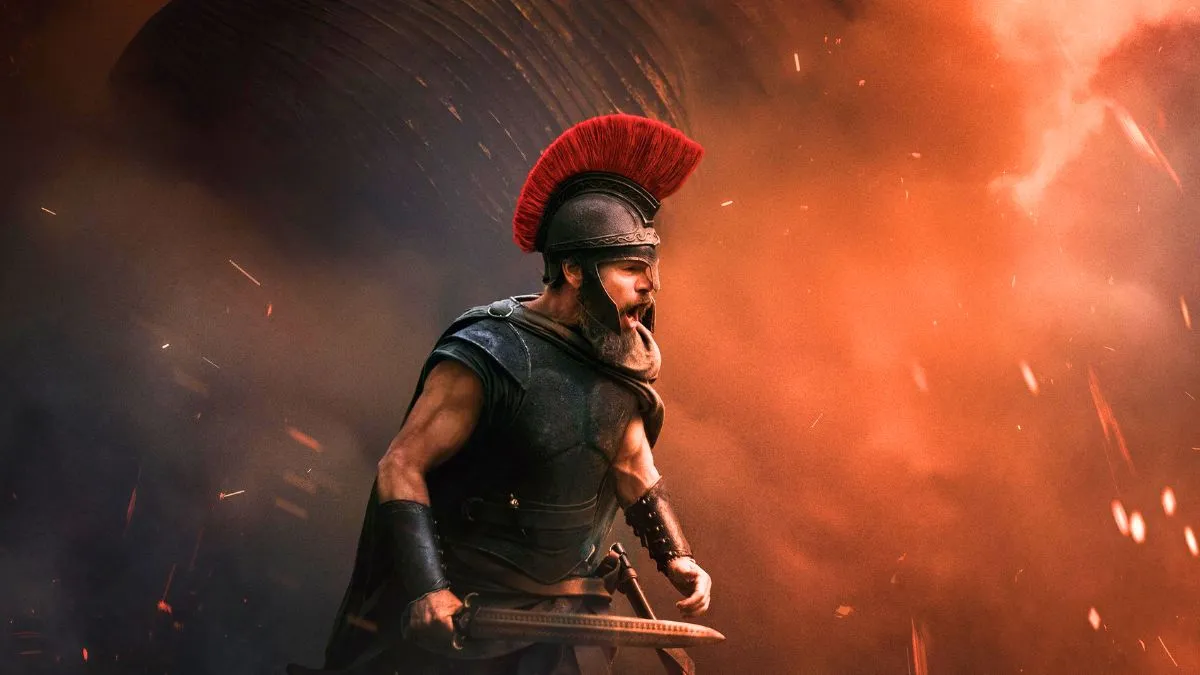
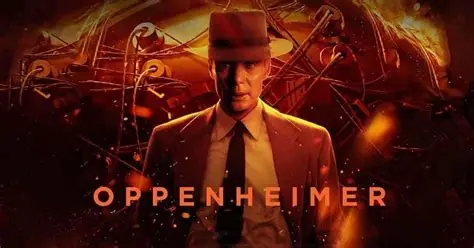
The Odyssey (2026)
Throughout Christopher Nolan's career, every new project has arrived with a sense of anticipation. Audiences wondered how he would reinvent Batman. They debated what Inception was actually about before it reached theaters. They questioned how Interstellar would balance science with emotion, whether Tenet could make its ambitious concept work, and whether Oppenheimer could transform a historical biography into blockbuster cinema.
His adaptation of The Odyssey is no different.
For the first time in his career, Nolan is tackling one of the oldest and most influential stories ever written. Rather than adapting a modern novel or creating an original screenplay, he is bringing Homer's epic poem to the screen, a work that has shaped literature, mythology and storytelling for nearly three thousand years.
Why the Story Fits Christopher Nolan So Well
Although The Odyssey marks Nolan's first direct adaptation of ancient mythology, many of its themes have appeared throughout his filmography for decades. Nolan has always been fascinated by journeys that are as psychological as they are physical.
Few stories embody that idea more completely than The Odyssey.
Why It Matters
For Nolan, it is another opportunity to demonstrate that the oldest stories can still feel new when told with imagination, technical innovation, and emotional honesty.
Christopher Nolan's Filmmaking Style
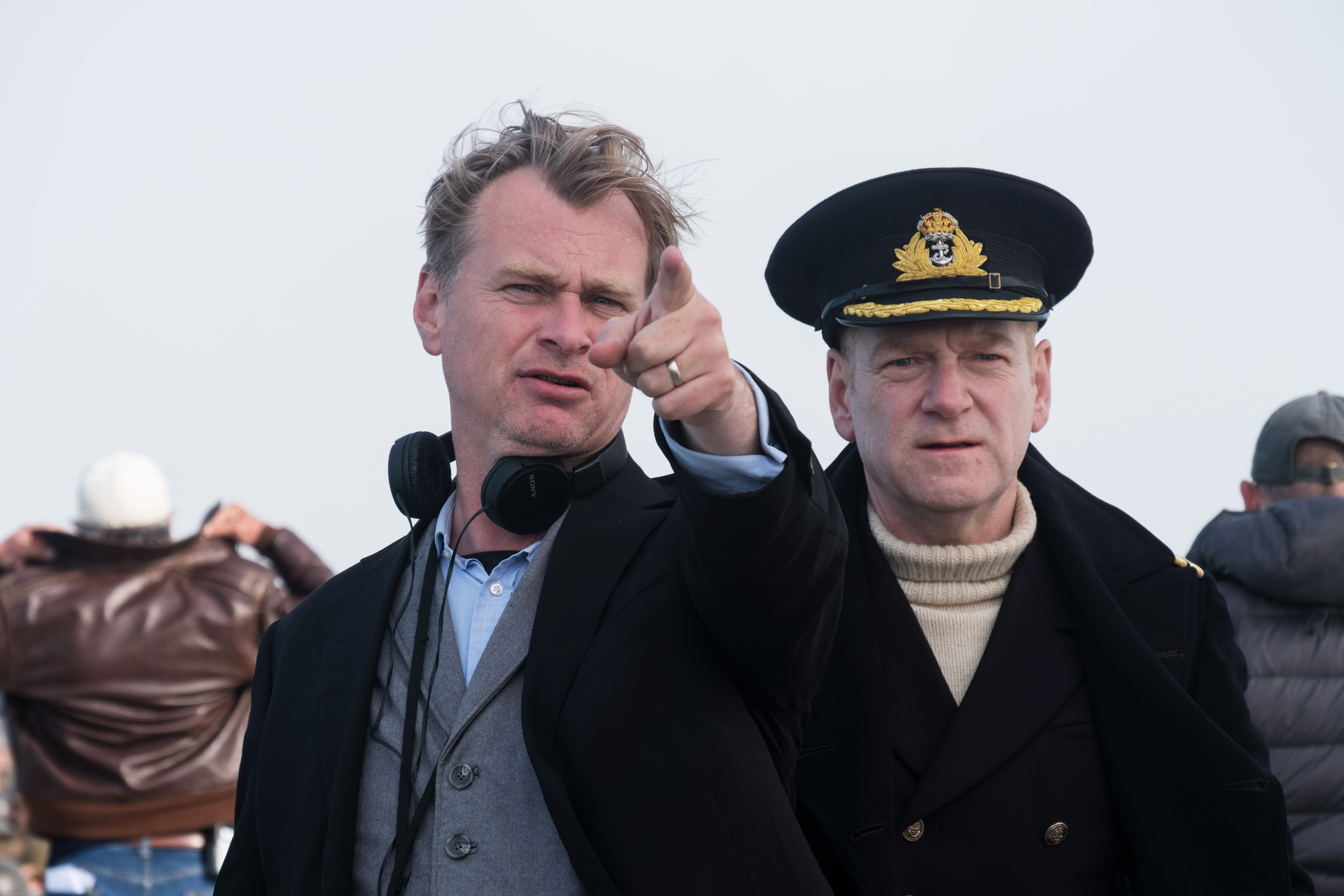
One of the reasons Christopher Nolan has become such a recognizable filmmaker is that his movies feel unmistakably like his, regardless of genre.
Most directors eventually develop visual techniques or favorite actors, but Nolan's signature runs much deeper than that. His films are connected by common ideas, recurring themes, technical choices, and a storytelling philosophy that has remained remarkably consistent from Following to Oppenheimer. Whether he's making a noir thriller, a superhero epic, a historical drama or a science fiction adventure, you can usually identify a Christopher Nolan film within minutes.
What's particularly impressive is that these recurring elements never feel repetitive. Instead, they evolve from project to project, allowing Nolan to revisit familiar questions while approaching them from entirely new perspectives.
Time Is His Greatest Storytelling Tool
No concept appears more frequently throughout Nolan's work than time. Many filmmakers treat time as a simple framework in which stories unfold but Nolan treats it as one of his primary characters.
In Memento, time moves backward, forcing audiences to experience the protagonist's memory loss firsthand. The Prestige constantly shifts between different periods, hiding crucial information until the precise moment it becomes emotionally meaningful. Inception introduces multiple dream levels where time passes at dramatically different speeds. Interstellar transforms Einstein's theory of relativity into heartbreaking emotional drama, while Dunkirk tells one historical event across three separate timelines unfolding simultaneously. Tenet goes even further by allowing characters to move through time in opposite directions.
Even films that appear more conventional still revolve around time in important ways.
Batman Begins examines how childhood trauma shapes adulthood. The Dark Knight Rises explores what years of sacrifice have done to Bruce Wayne. Oppenheimer moves freely between decades, demonstrating how one decision continues echoing throughout a lifetime.
For Nolan, time is never measured by clocks - its measured by memory, regret, anticipation and consequence.
Practical Effects Above All Else
Although Nolan embraces new technology when it serves the story, he has remained one of cinema's strongest advocates for practical filmmaking. Whenever possible, he captures events physically rather than creating them entirely through computer-generated imagery.
That philosophy has produced some of the most memorable sequences in modern cinema like the rotating hallway fight in Inception, The Dark Knight's vehicle chases through real city streets, vintage aircrafts in Dunkirk and the Boeing 747 crash for Tenet.
Even when visual effects are necessary, Nolan typically uses them to enhance practical photography instead of replacing it. The result is imagery that often feels more tangible than effects-heavy productions because actors are responding to environments and events that genuinely exist around them.
Obsession & Ambiguity Drives Nearly Every Story
If one character trait appears more frequently than any other in Nolan's protagonists, it is obsession. His characters rarely just pursue goals, they become consumed by those goals. It's seen again and again in every one of Nolan's films from Bruce Wayne's obsession with vengeance to Oppenheimer's dedication to scientific discovery. His films continually ask where healthy ambition ends and dangerous obsession begins.
And he has never been afraid to leave audiences with unanswered questions. The ending of Inception remains one of the most debated conclusions in modern cinema. The Prestige invites viewers to reconsider everything they have seen. Even Oppenheimer concludes by suggesting that scientific breakthroughs continue influencing humanity long after their creators are gone.
Importantly, Nolan rarely uses ambiguity simply to appear mysterious. His open endings encourage audiences to continue thinking after the credits roll and that generates discussion and debate.
He has often suggested that movies should not end the moment viewers leave the theater but should continue evolving through discussion, interpretation, and reflection. That philosophy explains why his films inspire so many conversations years after their release.
Every Film Begins With an Emotional Question
Although Christopher Nolan is frequently described as an intellectual filmmaker, his stories almost always begin with deeply human emotions.
What would you do if you couldn't trust your own memory?
What would you sacrifice for greatness?
Can someone who has devoted his life to vengeance ever find peace?
How do you let go of overwhelming guilt?
Would you leave your children if it meant saving their future?
Can knowledge become a burden too heavy to bear?
The elaborate concepts come later.
At their core, Nolan's films are not about dreams, black holes, magic tricks or quantum mechanics.
They are about people.
That is why audiences continue returning to his work. The extraordinary ideas capture our attention, but the emotional truths keep us invested. Beneath the technical innovation, philosophical questions, and breathtaking spectacle lies a filmmaker who has always understood that the most powerful stories are ultimately about the choices people make when confronted with the impossible.
Christopher Nolan's Greatest Collaborators
Although Christopher Nolan is often discussed as a singular creative force, his films are the result of remarkably consistent collaborations with some of the most talented artists working in cinema.
Unlike many directors who frequently change creative teams, Nolan has spent much of his career building long-term relationships with producers, cinematographers, composers, editors, production designers, and actors who understand his working style. These partnerships have allowed his films to develop a distinctive identity that extends far beyond his writing and directing.
The consistency of these collaborations is one of the reasons a Nolan film feels immediately recognizable. The same attention to practical filmmaking, immersive sound, large-format photography, intricate production design, and emotionally grounded performances appears again and again because many of the same creative minds have been helping shape his movies for decades.
Emma Thomas: The Producer Behind Every Christopher Nolan Film
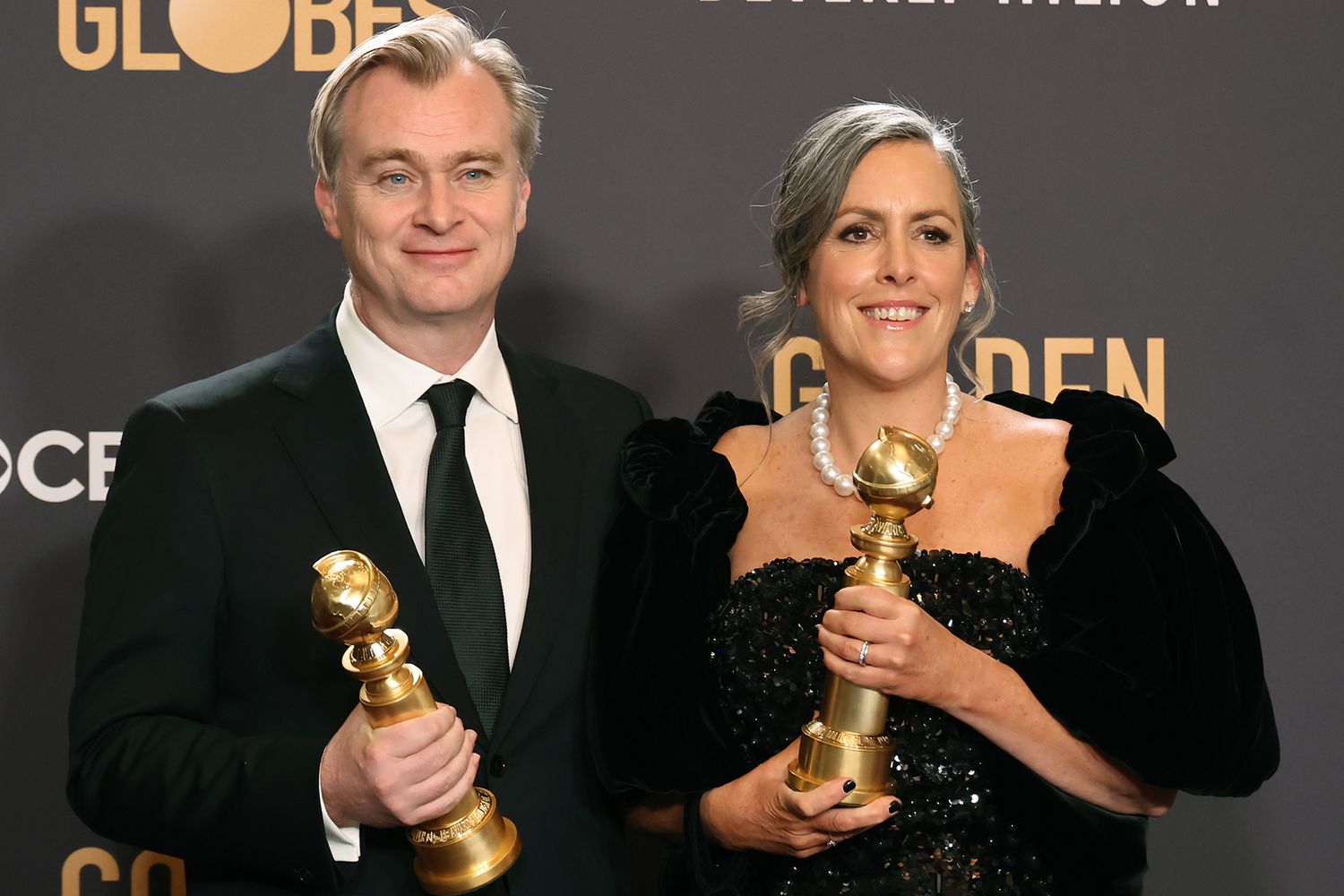
No collaborator has been more important to Nolan's career than his wife and producing partner, Emma Thomas.
The two met while attending University College London, long before either had established careers in filmmaking. Together, they made Nolan's earliest short films and his debut feature, Following, building their careers side by side from the very beginning.
Since then, Thomas has produced every Christopher Nolan feature film.
While directors often receive most of the public attention, producers are responsible for transforming ambitious ideas into practical realities. Thomas oversees enormous productions involving thousands of crew members, complex international schedules, and budgets that frequently exceed $100 million, all while protecting Nolan's creative vision.
Her influence extends far beyond logistics. Thomas has consistently championed projects that many studios initially viewed as commercially risky, including Inception, Interstellar, Dunkirk, Tenet, and Oppenheimer. Without her guidance behind the scenes, many of Nolan's most ambitious films might never have reached the screen.
Their partnership remains one of the most successful and enduring creative collaborations in Hollywood.
Wally Pfister: Defining Nolan's Early Visual Style
For much of Christopher Nolan's career, cinematographer Wally Pfister helped establish the visual language audiences came to associate with his films. Beginning with Memento, Pfister photographed Insomnia, Batman Begins, The Prestige, The Dark Knight, Inception, and The Dark Knight Rises.
His work balanced realism with cinematic grandeur. Rather than relying on stylized lighting or exaggerated camera movement, Pfister favored naturalistic imagery that grounded even the most extraordinary stories in a believable world and his photography consistently emphasized clarity, scale, and emotional intimacy.
Their collaboration earned widespread recognition throughout the industry, culminating in an Academy Award for Best Cinematography for Inception.
When Pfister transitioned into directing after The Dark Knight Rises, Nolan faced the challenge of replacing one of his closest creative partners.
Hoyte van Hoytema Takes the Camera Even Further
That replacement proved to be another extraordinary collaboration. Beginning with Interstellar, cinematographer Hoyte van Hoytema became Nolan's new visual partner, photographing Dunkirk, Tenet, Oppenheimer and The Odyssey.
Van Hoytema embraced Nolan's commitment to large-format photography while pushing the technology even further. His work combines breathtaking scale with remarkable intimacy, allowing audiences to experience both enormous landscapes and subtle human emotion with equal clarity.
His work on Oppenheimer earned the Academy Award for Best Cinematography and further cemented his reputation as one of the world's finest cinematographers.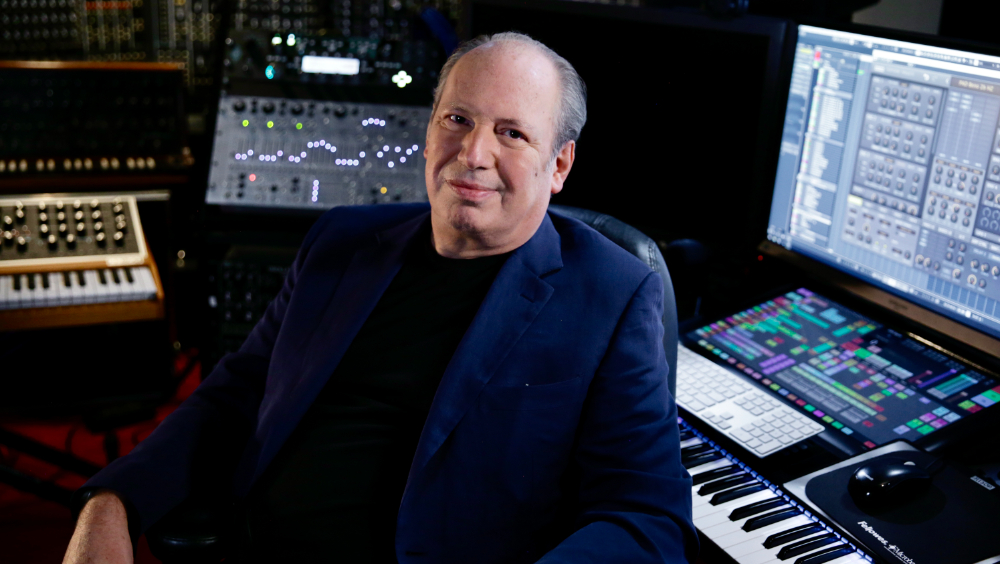
Hans Zimmer Changed the Sound of Modern Blockbusters
Few composer-director partnerships have been as influential as Christopher Nolan's collaboration with the one and only Hans Zimmer. Beginning with Batman Begins, Zimmer helped redefine what blockbuster film music could sound like.
Rather than relying exclusively on sweeping orchestral melodies, Zimmer emphasized rhythm, texture, and emotional momentum. His scores often function as engines driving the narrative forward rather than simply accompanying the action.
The pounding percussion of The Dark Knight, the unforgettable "BRAAAM" sound associated with Inception, and the majestic organ compositions of Interstellar have become iconic pieces of modern film music.
And Zimmer's work consistently avoids repeating himself. Each score reflects the emotional identity of its respective film while remaining unmistakably his own. His collaboration with Nolan influenced an entire generation of film composers, and echoes of those soundtracks continue to appear throughout contemporary blockbuster cinema.
Ludwig Göransson Continues the Musical Evolution
When Hans Zimmer became unavailable to score Tenet because of prior commitments, Nolan turned to Ludwig Göransson.
Rather than imitating Zimmer's style, Göransson developed a musical identity uniquely suited to Nolan's newer films. His score for Tenet combines electronic textures, distorted instrumentation, and relentless momentum that mirrors the film's unusual relationship with time.
For Oppenheimer, he took a dramatically different approach. The score emphasizes strings, particularly violins, creating music that reflects both scientific curiosity and growing emotional unease. It becomes increasingly haunting as Oppenheimer begins recognizing the consequences of his work.
Göransson's Academy Award-winning composition demonstrates Nolan's willingness to embrace new creative voices while maintaining the emotional power audiences expect from his films.
Nolan's Stable of Actors
No actor appears more frequently in Christopher Nolan's films than Michael Caine. Beginning with Batman Begins, Caine became something of Nolan's cinematic good luck charm, appearing in The Prestige, The Dark Knight, Inception, The Dark Knight Rises, Interstellar, Dunkirk, and Tenet.
His characters often serve as mentors or moral guides, providing stability amid extraordinary circumstances. The trust between director and actor is evident in every performance.
Nolan has repeatedly returned to actors who understand his approach to filmmaking. Cillian Murphy first appeared in all three films in The Dark Knight Trilogy, Inception, Dunkirk and Oppenheimer. Christian Bale led The Dark Knight Trilogy and The Prestige, delivering two entirely different but equally memorable characters (three if you count Batman and Bruce Wayne).
Tom Hardy first worked with Nolan on Inception before portraying Bane in The Dark Knight Rises and RAF pilot Farrier in Dunkirk. His versatility allowed Nolan to cast him in dramatically different roles without audiences ever feeling they were watching the same character.
Christopher Nolan's Awards and Achievements
Christopher Nolan spent much of his career in a somewhat unusual position. He was widely regarded as one of the greatest filmmakers working today, his movies earned billions of dollars at the global box office, critics consistently praised his work and audiences eagerly anticipated every new release. Yet for years, many of the industry's biggest awards seemed just out of reach.
That all changed dramatically with Oppenheimer.
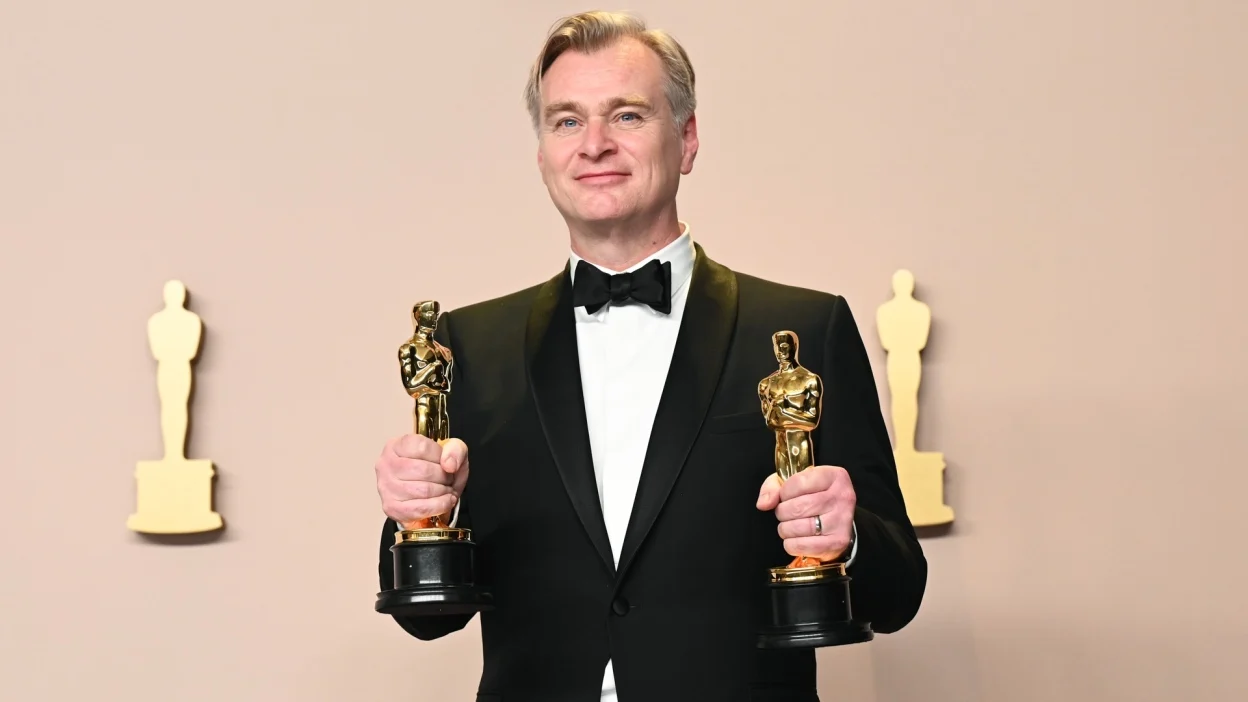
After more than two decades of redefining modern blockbuster filmmaking, Nolan finally received the Academy Award for Best Director, while Oppenheimer won Best Picture and became one of the most celebrated films of the year.
The recognition felt less like a breakthrough than a long-overdue acknowledgment of a career that had already transformed modern cinema.
Academy Awards
Christopher Nolan's relationship with the Academy Awards has been one of steady evolution.
Early in his career, Memento announced him as an extraordinary new storyteller by earning nominations for Best Original Screenplay and Best Film Editing. Although the film did not win, it introduced Nolan to Hollywood's highest level of recognition and demonstrated that ambitious, unconventional storytelling could compete alongside more traditional prestige films.
Over the following two decades, Nolan continued earning Academy Award nominations for his writing, directing, and producing. Inception received eight nominations and won four Academy Awards, including Best Cinematography, Best Visual Effects, Best Sound Editing, and Best Sound Mixing. Dunkirk followed with eight nominations of its own, winning Oscars for Best Film Editing, Best Sound Editing, and Best Sound Mixing.
Despite the acclaim surrounding films such as The Dark Knight, Inception, Interstellar and Dunkirk, Nolan himself repeatedly fell just short of winning Best Director.
Then came Oppenheimer.
The film received thirteen Academy Award nominations and won seven, including Best Picture, Best Director, Best Actor for Cillian Murphy, Best Supporting Actor for Robert Downey Jr., Best Cinematography, Best Film Editing, and Best Original Score.
For many observers, Nolan's Best Director victory represented one of the most satisfying Oscar moments in recent memory.
Box Office Success
Awards represent only one measure of Christopher Nolan's impact. Commercially, he has become one of the most successful directors in film history. Collectively, his films have earned billions of dollars worldwide while maintaining an extraordinary level of critical acclaim. Few filmmakers have consistently combined artistic ambition with mainstream popularity so effectively.
Even more impressive is how many of those successes were original stories.
Nolan also turned original concepts such as Inception, Interstellar, and Tenet into global hits. Oppenheimer demonstrated that even a three-hour historical drama centered on theoretical physics could become a worldwide box office phenomenon.
That track record has earned Nolan something almost unheard of in contemporary Hollywood: Creative freedom.
Studios routinely support his ambitious ideas because audiences have repeatedly demonstrated their willingness to follow wherever his imagination leads.
Preserving the Theatrical Experience
Although no trophy exists for defending movie theaters, Christopher Nolan's influence on the exhibition industry may ultimately become one of his greatest achievements. Throughout the digital revolution and the rapid growth of streaming platforms, Nolan has remained one of cinema's most outspoken advocates for theatrical exhibition.
He has consistently argued that movies are designed to be experienced collectively on the largest screen possible, particularly when photographed using IMAX and large-format film. His commitment has helped preserve film projection, encourage investment in premium theater technology, and remind both studios and audiences that certain stories deserve to be experienced as communal events.
In many ways, Nolan has become not only one of cinema's greatest filmmakers but also one of its strongest ambassadors.
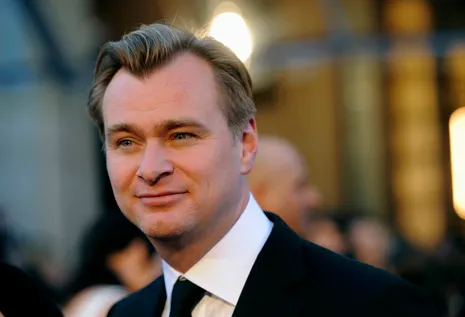
One of the Most Influential Directors of His Generation
For many filmmakers, winning the Academy Award for Best Director and Best Picture would represent the culmination of an entire career. For Christopher Nolan, it feels more like the beginning of a new chapter.
His filmography continues to evolve, his influence continues to grow, and each new project arrives with the kind of anticipation reserved for only a handful of directors in cinematic history.
Whether measured by awards, critical acclaim, box office success, or lasting cultural impact, Nolan has already secured his place among the greatest filmmakers of all time. The crazy part is that his story is still unfolding.
The Final Verdict on Christopher Nolan
Christopher Nolan’s career is remarkable not simply because of its box office totals, awards, or technical achievements, but because he has made ambition itself commercially viable. He has repeatedly convinced enormous audiences to embrace nonlinear mysteries, historical tragedy, philosophical science fiction, morally complicated superheroes and stories that demand their full attention.
Not every experiment works equally well for every viewer, and Nolan’s determination to challenge audiences can sometimes become his biggest weakness. His dialogue can be dense, his sound mixes can overwhelm it, and his fascination with structure occasionally creates emotional distance. Yet even his most divisive films are unmistakably the work of someone pushing himself rather than repeating an established formula.
That is why every Christopher Nolan movie still feels like an event. He has become one of the few filmmakers whose name functions as its own franchise, not because he gives audiences the same experience every time, but because he promises something ambitious, cinematic, and built for the biggest screen available.
And now with The Odyssey hitting new career peaks, Nolan has already secured his place among the defining filmmakers of the modern era. His movies ask us to look closer, listen harder, and reconsider what we thought we understood. Then, just when we believe we have solved the trick, he invites us to watch it all over again.

On Air Talent / Creator / Author / Producer
Kyle McMahon is an American television personality, radio host, journalist, actor, singer and songwriter. He is known for appearing in Oprah's Lifeclass, the Oscar winning film Selma, hosting Pop Culture Weekly with Kyle McMahon on iHeart Radio and touring with LFO and O-Town.

All the Movies, Shows & Specials Coming to 4K UHD & Blu-ray in October 2026
 Apple Podcasts
  YouTube
  Spotify
  iHeartRadio
  Audible
  Amazon Music
  JioSaavn
  Spreaker
  RSS Feed