Creepshow (1982) Review: George A. Romero & Stephen King’s Horror Classic Still Kills
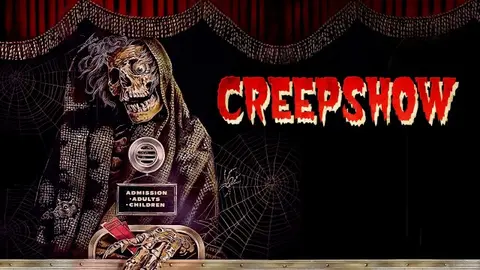
Creepshow (1982) Review: George A. Romero & Stephen King’s Horror Anthology Classic Still Kills
 I have a real weakness for horror anthologies. Give me a bunch of creepy stories, let them get weird, gross, funny and occasionally completely unhinged, wrap the whole thing in some kind of framing device and I am there. Creepshow is one of those movies that shows exactly why the format can work so ridiculously well when everyone involved understands the assignment.
I first saw Creepshow as a kid when it was playing on cable, and I loved it. I still love it. Watching it today, though, I can also admit something that might get me chased out of a horror convention with pitchforks: I think Creepshow could use a little editing. I am not talking about taking a chainsaw to the thing, so everybody can put down the friggin pitchforks. I just think a couple of the stories could be tightened enough to make an already great movie even better.
Because make no mistake, Creepshow is still an absolute horror classic.
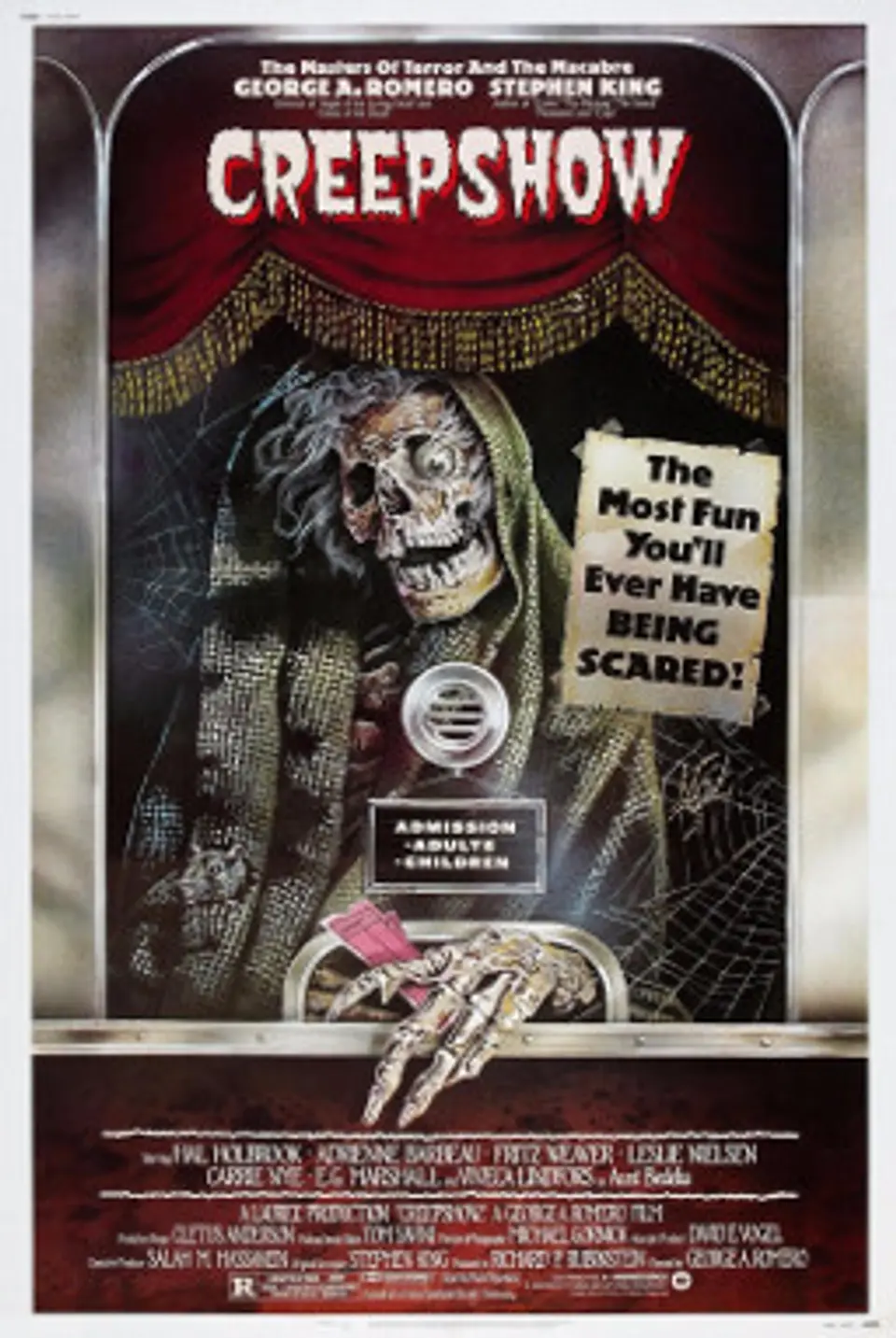
Directed by George A. Romero and written by Stephen King, the 1982 anthology is an unapologetic love letter to the EC horror comics of the 1950s, particularly titles like Tales from the Crypt, The Vault of Horror and The Haunt of Fear. Rather than simply borrowing the kinds of stories those comics told, Romero and King figured out how to make a comic book feel alive on screen.
The colors, transitions, frames, exaggerated lighting and illustrations bursting onto the screen are not just decoration slapped onto the movie to make it look cool. The comic-book aesthetic is baked into the DNA of Creepshow, and that is a huge part of why it still feels so distinctive more than four decades later. Plenty of horror anthologies have come and gone, but there is still only one Creepshow. Well, two if you count the sequels. Well, three if you count the Shudder series too. But that's not the point.  Snag a Creepshow Poster here.
Five Stories, One Very Twisted Comic Book
Creepshow gives us five stories - “Father’s Day,” “The Lonesome Death of Jordy Verrill,” “Something to Tide You Over,” “The Crate” and “They’re Creeping Up on You!” - wrapped inside a larger story involving a kid, his horror comic and one seriously creepy Creep.
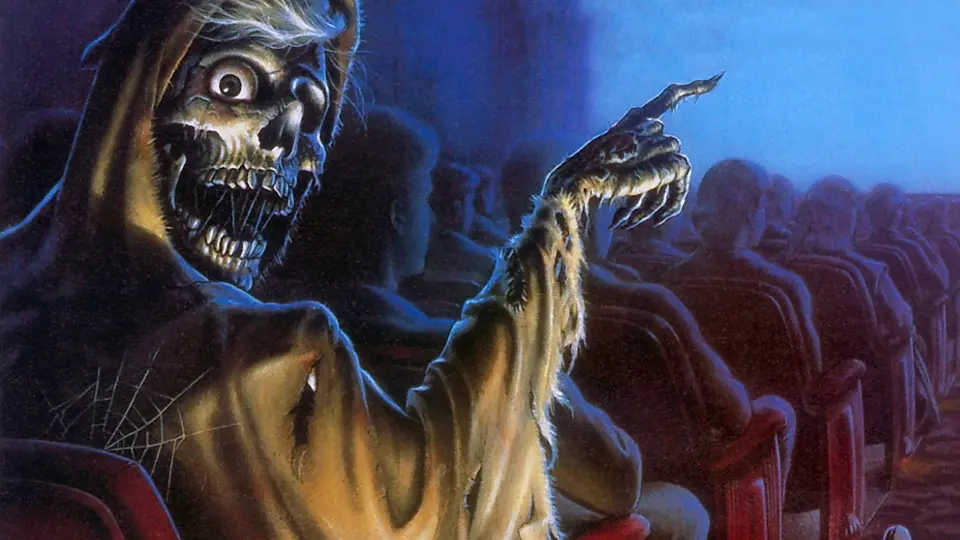
I love the Creep, and I actually wish we got more of him. He is not technically a horror host in the traditional sense, but he is essentially filling that role here as our macabre master of ceremonies, welcoming us into this bizarre collection of stories and giving the entire movie an identity beyond simply presenting five unrelated horror shorts.
That framing is important because anthology movies can sometimes feel like somebody took several short films, put them into the same folder and called it a movie. Creepshow never feels that way. The visual language, humor, tone, framing and comic-book presentation make the individual stories feel like they were all pulled from the same wonderfully disgusting comic. I love the anthology format, especially in horror, and when it is done this well, it is pretty much perfection.
“Father’s Day” Gets the Party Started
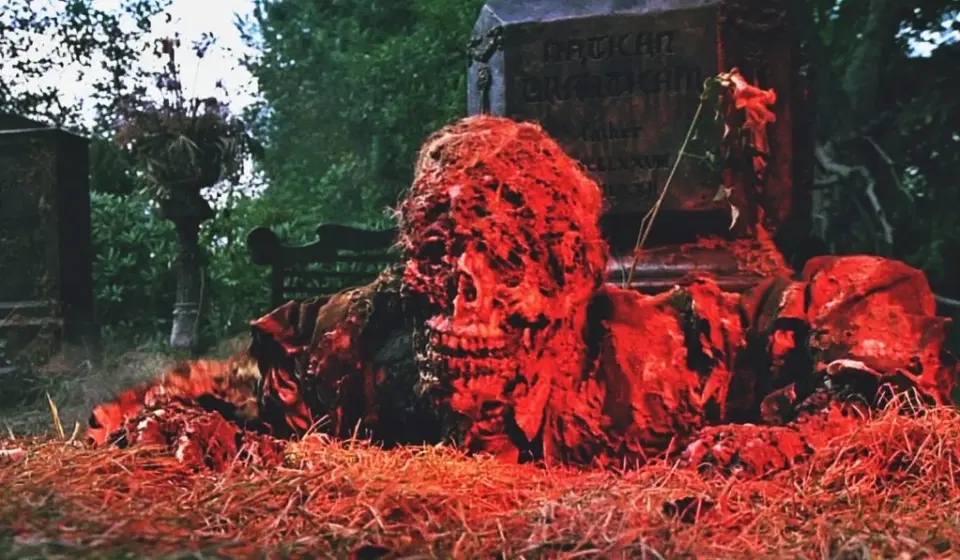
“Father’s Day” is probably my favorite segment, and it tells you almost immediately what kind of movie you are watching. The story is macabre, campy, funny and grotesque, with exactly the kind of nasty little sense of humor that makes Creepshow work for me.
Romero is not trying to make everything grounded, respectable or painfully serious. This is horror that understands how much fun horror can be, and there is a theatricality to “Father’s Day” that I absolutely love. The story itself works, the dark humor works and the campiness gives it exactly the personality it needs.
That distinction is important because camp does not mean the movie does not care about horror. Creepshow clearly loves horror. Everybody involved in the film clearly loves horror. Camp simply understands that horror can be ridiculous, colorful and funny without losing what makes the genre work, and “Father’s Day” establishes that balance beautifully.
beautifully.

Stephen King Goes Full Stephen King
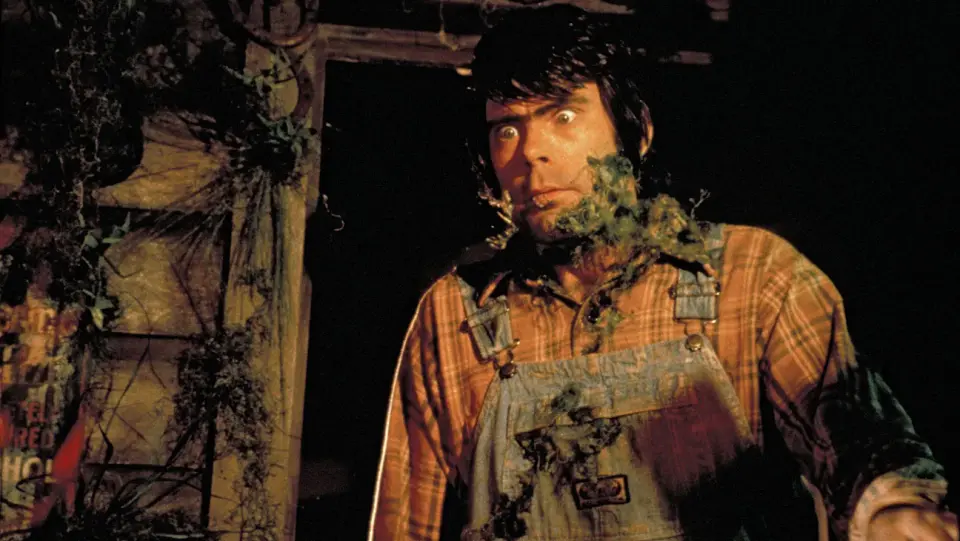
“The Lonesome Death of Jordy Verrill” is another favorite of mine, and I love basically everything about it. It is largely the story of one person, which gives the segment a wonderfully strange intimacy compared with some of the bigger ensemble stories surrounding it. That one person also happens to be played by Stephen King himself, who is clearly having the time of his life.
King is amazing because he hams it up to a degree that should probably require some kind of permit, but his performance fits the heightened world of Creepshow perfectly. A restrained, grounded version of Jordy Verrill would be a completely different character and, frankly, a lot less fun. King commits to the weirdness, making Jordy funny, sympathetic and ridiculous without ever seeming like he wandered in from another movie.
There is also something inherently delightful about watching one of the most famous horror writers in history physically step inside the kind of strange little story he might have written for one of those old comics. For a little while, King is not merely writing Creepshow; he is getting to play inside it, and his enthusiasm is infectious.
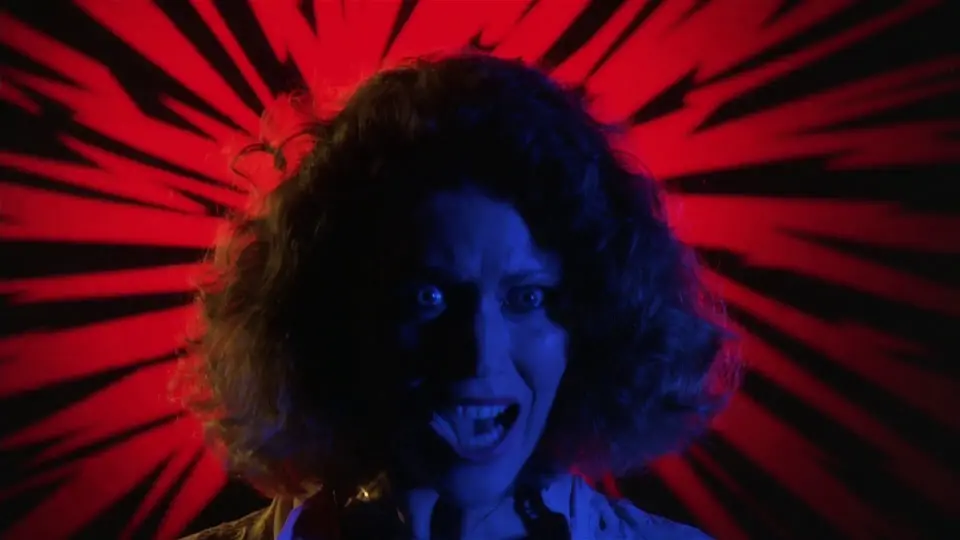
Leslie Nielsen Is a Pretty Amazing Psychopath
“Something to Tide You Over” might be the segment that unsettles me the most because its horror feels possible in a way some of the other stories do not.
Leslie Nielsen is absolutely fantastic here, particularly if your primary association with him comes from the comedy work that would eventually define so much of his career. He plays the material completely straight, and he makes for a pretty amazing psychopath. The horror is rooted in human cruelty rather than primarily coming from something fantastical, which makes the story disturbing in a completely different way from the more overtly monstrous material elsewhere in the movie.
Ted Danson is great opposite him, too, and the performances are a huge part of why the segment works. This is also where one of my issues with Creepshow becomes more noticeable, because as much as I like “Something to Tide You Over,” I think it could be tighter.
There are places where the segment could lose a little time without sacrificing anything important. That is VERY different from saying the story is boring, because it is not. In fact, the premise is one of the most genuinely terrifying in the movie precisely because it feels like something a sufficiently awful human being could actually do. I simply think a slightly leaner version would hit even harder.
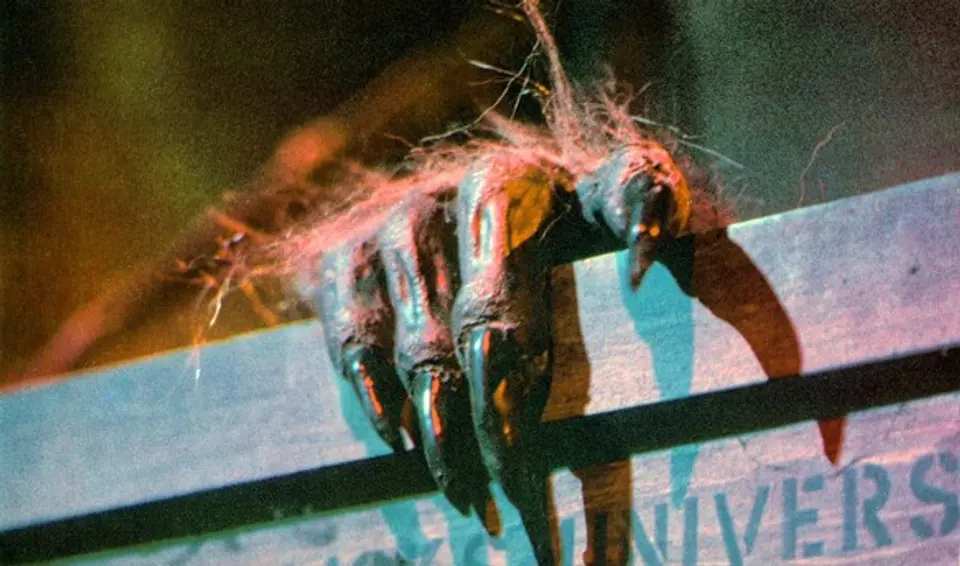
“The Crate” Is Great, but I Would Tighten It
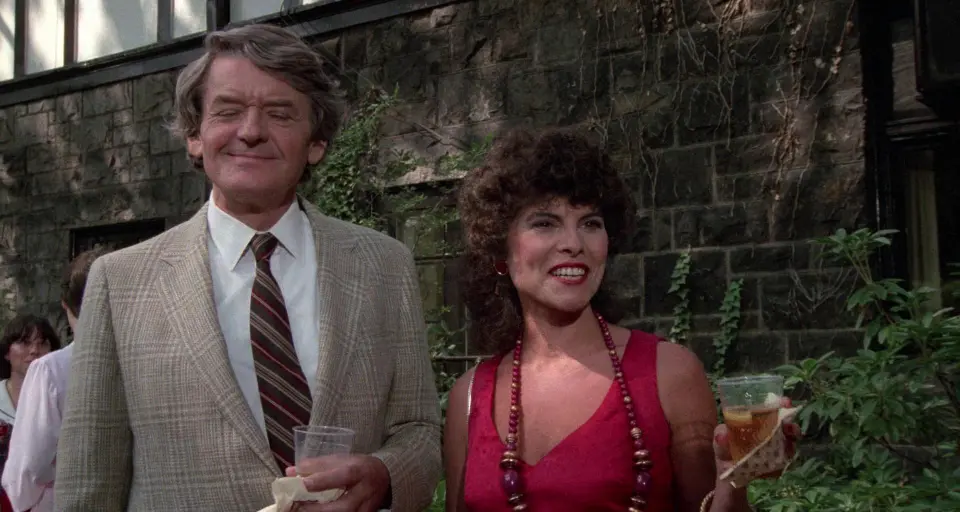
“The Crate” is another really good piece of horror storytelling, and Hal Holbrook and Adrienne Barbeau are fantastic. Barbeau, in particular, understands exactly what kind of movie she is in and she commits to it completely.
Honestly, the cast throughout Creepshow is kind of stacked if you think about it. Along with King, Nielsen, Danson, Holbrook and Barbeau, you have performers including Fritz Weaver, Ed Harris and E.G. Marshall moving through these stories. Romero and King are not treating the anthology format like an excuse to phone anything in. The movie is packed with recognizable talent, and everybody seems to understand the tone they are trying to create.
“The Crate” also delivers exactly the kind of creature-feature energy I want from an anthology like this, but it is the other segment where I think the pacing could be improved. Again, there is a big difference between finding something boring and thinking it could be tighter. I do not find “The Crate” boring; I just occasionally find myself wanting it to get to the next beat a little faster.
Creepshow runs around two hours, and that is a lot of real estate for an anthology movie. Part of the appeal of anthology storytelling is its momentum, because there is a particular thrill in finishing one nightmare and immediately opening the door to another. That makes pacing incredibly important. The stories here are strong enough that the movie survives its slower stretches, but I think some light editing would make the overall experience even stronger. Get NECA The Creep Creepshow 8" Figure here.
Even My Least Favorite Story Works
“They’re Creeping Up on You!” is probably my least favorite of the five, but I still enjoy it, which is honestly one of the biggest compliments I can give Creepshow as an anthology.
Anthology movies almost inevitably have one segment that feels noticeably weaker than everything around it, and this never becomes a story I want to skip. It is simply the one I connect with least. E.G. Marshall is great, the setup is wonderfully unpleasant, and the entire segment commits so aggressively to making your skin crawl that I have to respect it. If this is the weakest story in your anthology, you are doing pretty damn well.
Tom Savini is the GOAT
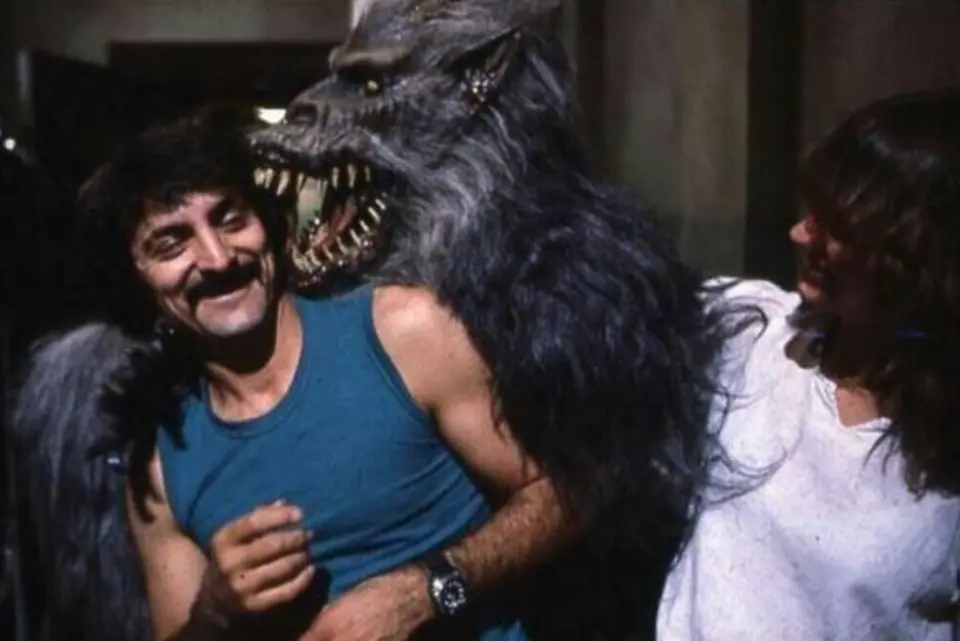
Then there is Tom Savini, and I am not sure what else I am supposed to say besides the fact that the man is the GOAT.
Savini’s effects work is essential to Creepshow because this movie needs physicality. The entire concept depends on translating the grotesque imagery of EC Comics into something tangible, and practical effects give these stories exactly that quality - the same legendary craftsmanship he brought to iconic slashers in our Ultimate Guide to the Friday the 13th franchise and Freddy vs. Jason: The Ultimate Guide. Everything has texture and weight, and the effects can be disgusting, absurd or creepy depending on what the story needs from them.
Most importantly, the effects are not fighting against the comic-book aesthetic; they are part of it. That craftsmanship is one of the reasons Creepshow remains such a fun movie to revisit. Get Tom Savini's book Grande Illusions: Books I & II here!
Romero and King Were the Perfect Combination
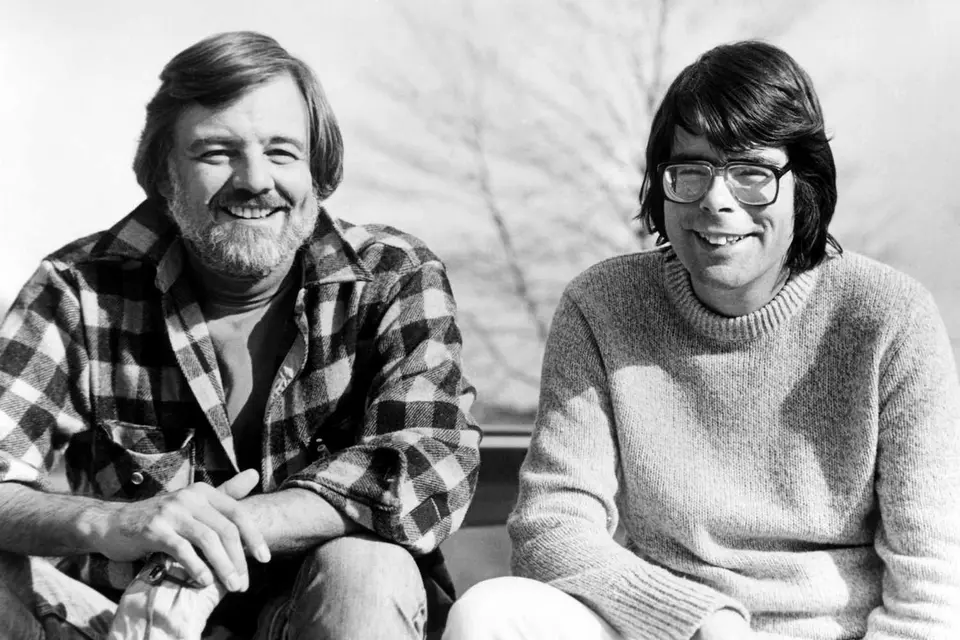
George A. Romero and Stephen King were a perfect pairing for this movie. King understands the wicked storytelling mechanics of those old morality tales, with their terrible people, terrible decisions, cosmic punishments and deliciously cruel twists, while Romero understands how to translate all of that into cinema.
More importantly, neither of them seems embarrassed by the material. There is no sense that Creepshow wants to elevate comic-book horror into something more “respectable,” because the movie respects it already. It understands the artistry in pulp and the joy of the grotesque, and it knows that something can be beautiful and disgusting, scary and hilarious, carefully crafted and completely ridiculous at the same time.
The EC Comics influence deserves a much deeper conversation than I am giving it here because it is fundamental to understanding why the movie looks and feels the way it does. That is territory for my The Ultimate Guide to the Creepshow franchise, though, because otherwise I will turn this review into a dissertation and neither of us has anywhere to be for the next six hours.
For the purposes of reviewing the movie today, what matters is that the style still works, and in some ways I think it might work even better now because there is still so little else that looks quite like it.
Horror Does Not Have to Be Miserable
One thing I appreciate more about Creepshow as time goes on is how much fun it allows horror to be. I love genuinely terrifying horror, and I love disturbing horror that leaves me staring at the ceiling at 2 a.m. wondering why I voluntarily put those images into my brain. Horror does not always have to traumatize me, though, and sometimes I want a macabre comfort movie.
That is what Creepshow has become for me.
There are disturbing ideas here, and “Something to Tide You Over” genuinely gets under my skin because of how horrifyingly human its premise feels. Overall, though, I am not putting on Creepshow because I want to be terrified. I am putting it on because I want to spend two hours inside this world, surrounded by the comic panels, crazy colors, monsters, Tom Savini effects, the Creep and Stephen King chewing scenery like somebody told him the scenery was going out of business tomorrow.
That amazing mixture of horror and comedy is the key, because neither side cancels out the other. The movie can make me laugh without undermining the horror, and it can get genuinely nasty without becoming miserable. That is exactly what I want from comfort horror. Get the FUNKO Creepshow - The Creep figure here.
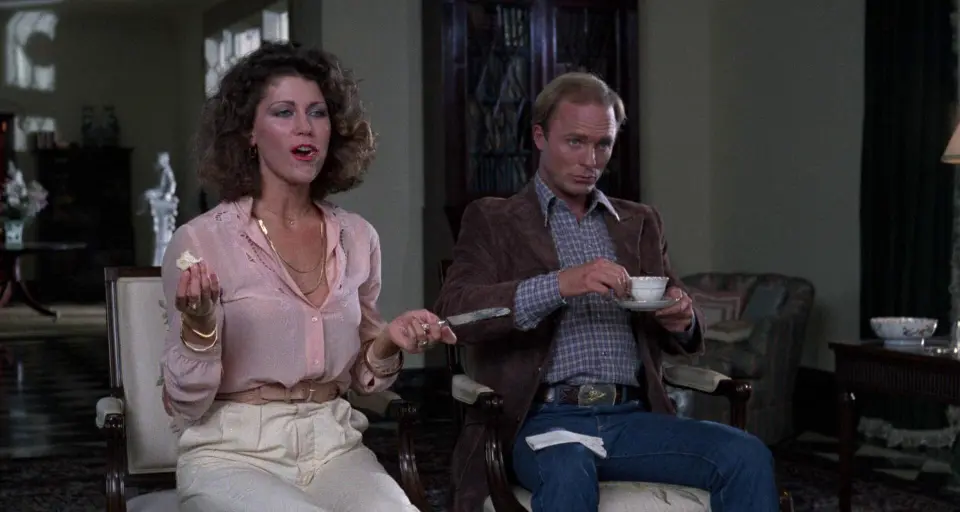
Does Creepshow Still Hold Up?
Absolutely, although I would still trim it, and I don't think those two opinions contradict each other at all, either.
Classics do not have to be flawless. In fact, I think our obsession with declaring beloved movies “perfect” sometimes makes conversations about them considerably less interesting. Creepshow has pacing issues, particularly in “Something to Tide You Over” and “The Crate,” and at roughly two hours the movie occasionally feels its length in a way that a punchier anthology probably should not.
I would not fundamentally change any of those stories, though. I am not looking at one of the segments and thinking it needs to go; I am looking at a couple of them and thinking they could get to the good stuff a little faster, because the good stuff is really good.
More than four decades later, the things that make Creepshow special have not faded. The visual identity is still incredible, the cast is fantastic, the practical effects are a joy, the humor works, and the anthology format remains incredibly effective. The collaboration between Romero and King still feels like one of those wonderful moments in horror history where exactly the right creative people found exactly the right project at exactly the right time.
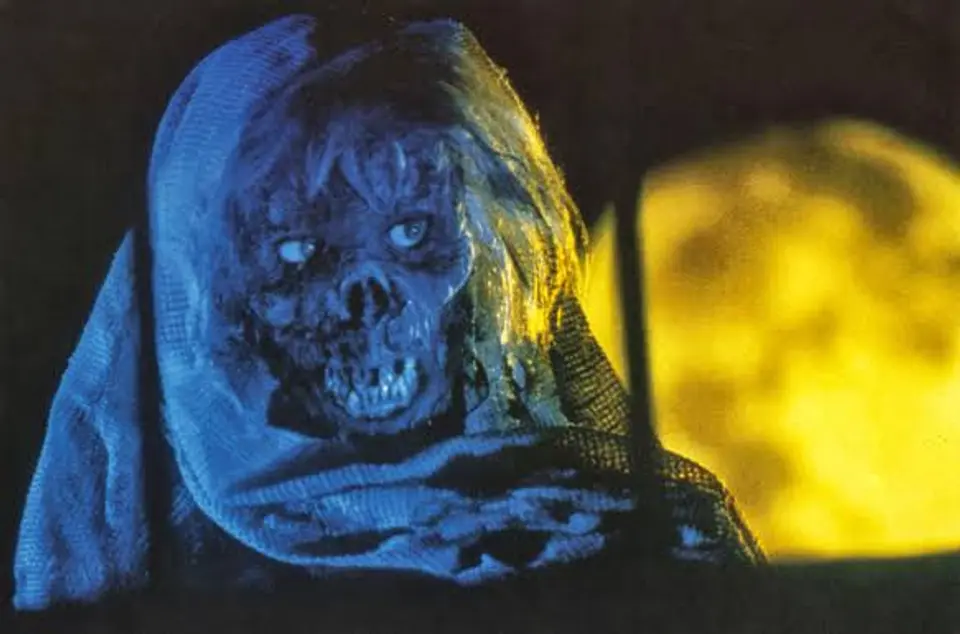
Creepshow Is Essential Horror Viewing
I do not think Creepshow needs me to rescue it from obscurity or argue that everyone has misunderstood some forgotten masterpiece. It is properly recognized as a horror classic, and it earned that reputation.
If you are serious about horror, I think it is a must-watch not simply because it is good, but because of its place in the history of the genre. You have George A. Romero directing a Stephen King screenplay, Tom Savini delivering the effects, a ridiculously good cast bringing the stories to life and the legacy of EC Comics being filtered through filmmakers who understood exactly what made that style of storytelling special.
It is also a shining example of what horror anthologies can accomplish when they are treated as a cohesive work rather than a collection of leftovers. Creepshow is campy, macabre, inventive, funny, occasionally disturbing and completely in love with horror. More than forty years later, that love is still infectious.
I could happily shave a few minutes off Creepshow, but I would also happily sit down and watch the whole thing again in a heartbeat. In fact, I did, hence this review. If you consider yourself a serious horror fan and somehow have not opened this particular comic yet, it is long past time for you.
Open the comic. I think you'll be very, very glad you did.

On Air Talent / Creator / Author / Producer
Kyle McMahon is an American television personality, radio host, journalist, actor, singer and songwriter. He is known for appearing in Oprah's Lifeclass, the Oscar winning film Selma, hosting Pop Culture Weekly with Kyle McMahon on iHeart Radio and touring with LFO and O-Town.

All the Movies, Shows & Specials Coming to 4K UHD & Blu-ray in October 2026
 Apple Podcasts
  YouTube
  Spotify
  iHeartRadio
  Audible
  Amazon Music
  JioSaavn
  Spreaker
  RSS Feed