The Complete History of Spider-Noir
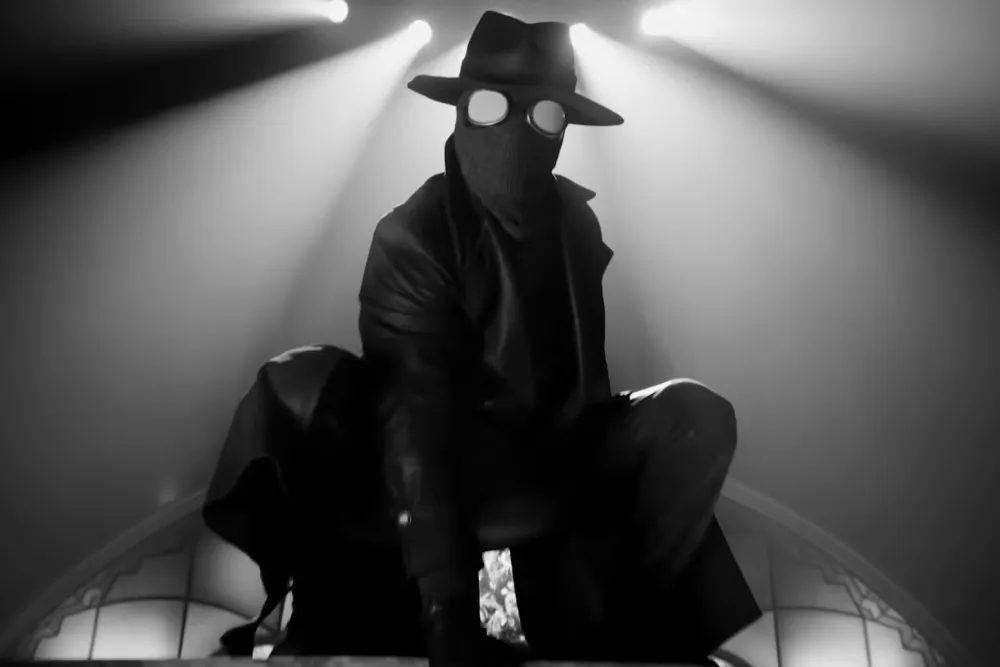
Before the trench coat. Before the fedora. Before the black and white aesthetic that made every frame look like it smelled faintly of cigarettes and existential dread… there was just Spider-Man.
Then Marvel decided: “What if Spider-Man…but emotionally exhausted?”
And so, Spider-Noir was born.
Over the years, Spider-Noir has gone from a niche alternate universe comic experiment to one of the most beloved Spider-Variants in the entire multiverse. He’s gritty, he’s violent and he talks like every sentence should be delivered under a flickering streetlamp while jazz plays somewhere in the distance. And yet somehow he became cool enough for Nicolas Cage to voice him and eventually headline a live-action series.
Not bad for a version of Spider-Man who literally punches Nazis.
So let’s dig into the complete history of Spider-Noir: where he came from, how Marvel Noir changed Spider-Man forever, why fans became obsessed with this depression-era vigilante, and how a bizarre comic book experiment evolved into one of Marvel’s most stylish success stories.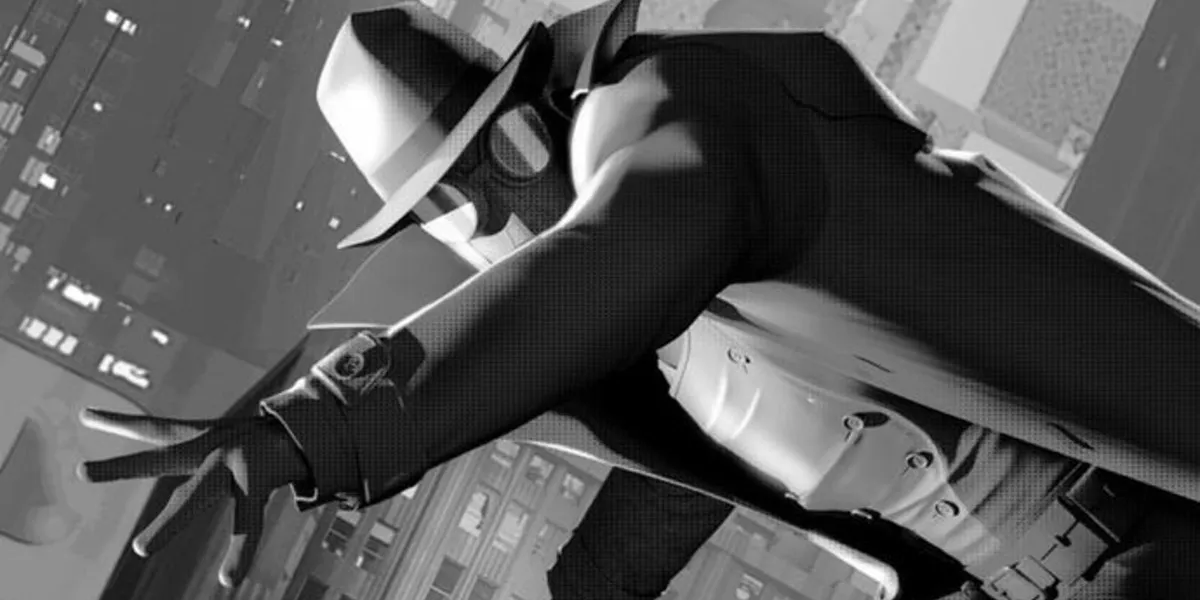
The Origins of Marvel Noir
To understand Spider-Noir, you first have to understand Marvel Noir itself.
In 2009, Marvel Comics launched the Marvel Noir line, a reimagining of classic Marvel heroes set during the Great Depression and heavily inspired by film noir, pulp fiction, hardboiled detective stories and 1930s crime fiction.
Basically: “What if superheroes had less hope and significantly more trauma?”
The imprint transformed iconic heroes into darker, more grounded versions of themselves. Instead of colorful costumes and futuristic cities, these characters lived in worlds filled with corruption, gangsters, political violence, murder and moral ambiguity.
The line included titles like:
- Spider-Man Noir
- X-Men Noir
- Daredevil Noir
- Wolverine Noir
- Luke Cage Noir
- Punisher Noir
And while some of those books developed cult followings, Spider-Man Noir immediately stood out.
Probably because Spider-Man already works surprisingly well as a tragic noir protagonist. Peter Parker has always been a guilt-ridden outsider trying to do the right thing while the universe repeatedly drop-kicks him emotionally. The noir setting simply stripped away the bright colors and leaned fully into the melancholy.
You know. Fun for the whole family.
The Creation of Spider-Man Noir
Spider-Man Noir debuted in 2009 in Spider-Man Noir by writers David Hine and Fabrice Sapolsky with art by Carmine Di Giandomenico.
This version of Peter Parker lived in 1933 New York City during the Great Depression. Instead of being bitten during a science experiment gone wrong, Peter was bitten by a mystical spider hidden inside an ancient idol after uncovering corruption tied to powerful crime figures.
Because in noir stories, nothing can ever just be normal.
This Peter Parker was radically different from the traditional version audiences had always knew. He was angrier, way more cynical and more willing to use violence. Less “friendly neighborhood Spider-Man” and more “terrifying urban myth who may or may not break your ribs.”
His enemies were also reimagined through the noir lens:
- Norman Osborn became a brutal mob boss known as “The Goblin”
- Vulture was transformed into a horrifying cannibalistic killer
- Sandman became a crime boss
- Felicia Hardy operated as a nightclub owner with criminal ties
The comic pulled heavily from classic noir imagery: shadows slicing across alleyways, political corruption, smoky clubs, crooked cops, and narration dripping with hardboiled detective energy.
And tbh? It was so friggin dope.
The Alternate Universe Concept
Spider-Noir exists in Marvel’s multiverse as Earth-90214.
Because Marvel absolutely refuses to let any universe just have a normal name that we can remember.
The character became part of Marvel’s expanding fascination with alternate-universe storytelling, particularly versions of Spider-Man that radically reinvented the core mythology while maintaining the emotional DNA of Peter Parker.
That’s really why Spider-Noir works.
Underneath the trench coat and moody monologues, he’s still Peter Parker: a young man shaped by tragedy who believes he has a responsibility to fight injustice, even when it destroys him personally.
Marvel’s Spider-Verse concept eventually turned alternate Spider-heroes into an entire ecosystem of fan-favorite characters:
- Spider-Gwen
- Spider-Man 2099
- Spider-Ham
- Peni Parker
- Spider-Punk
- Silk
- Miles Morales
But Spider-Noir always stood apart visually and tonally. He wasn’t futuristic or comedic. He felt dangerous.
And audiences love dangerous Spider-Man variants almost as much as they love debating who the “best” Spider-Man is online for twelve consecutive hours. (NERDS!)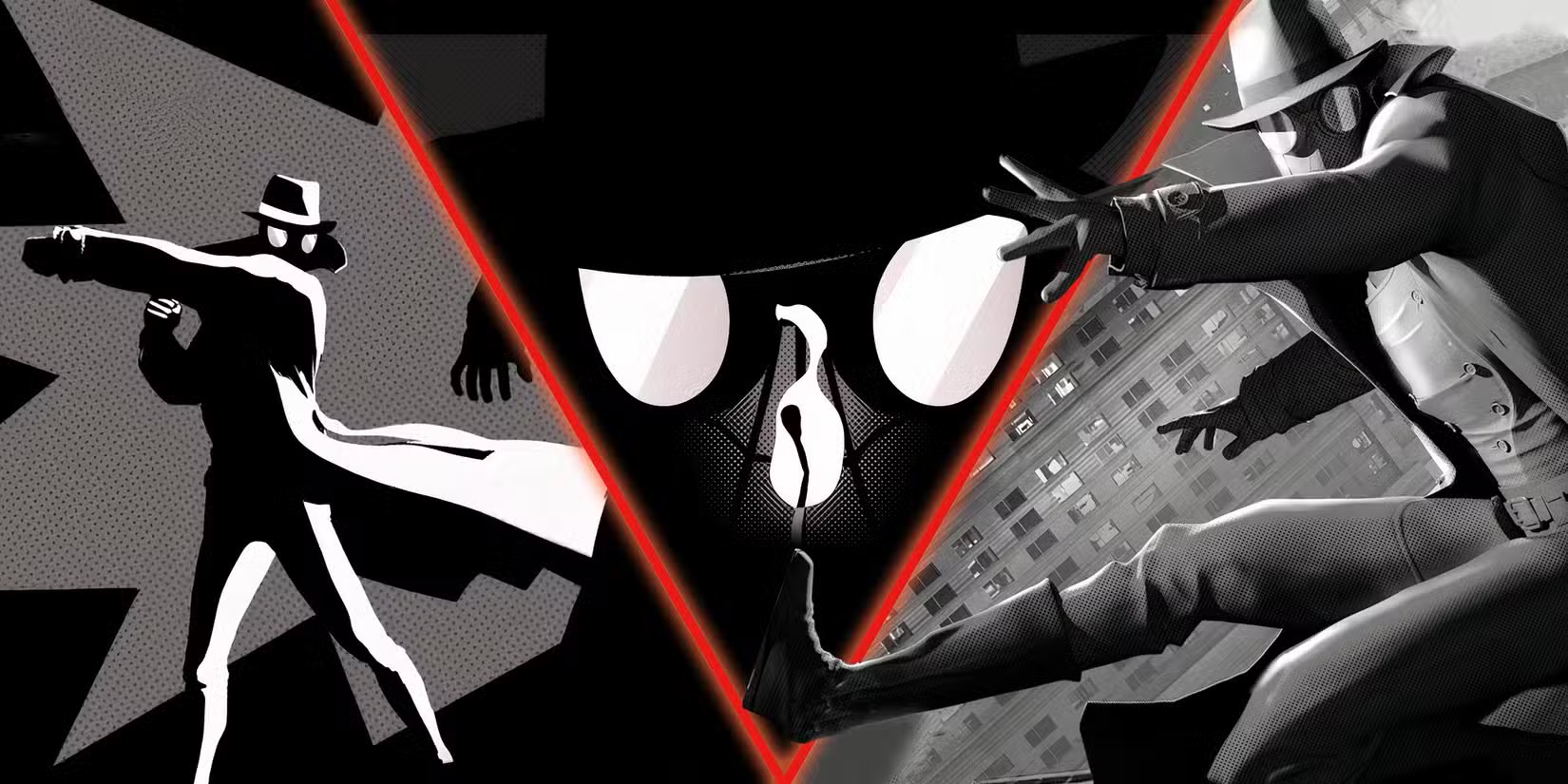
The Original Spider-Man Noir Comic Storyline
The original Spider-Man Noir miniseries follows Peter Parker as he investigates corruption and organized crime in Depression-era New York.
After his Uncle Ben is murdered while protesting corrupt businessmen and criminal exploitation, Peter becomes radicalized against the city’s elite power structures. His investigation eventually leads him to Norman Osborn’s criminal empire.
Unlike traditional Spider-Man stories, Spider-Man Noir embraced brutal violence and political commentary. The book dealt heavily with themes of economic inequality, fascism, systemic corruption, and class warfare.
This was definitely not your “Saturday morning cereal tie-in” Spider-Man.
Peter frequently operated more like a vigilante detective than an actual superhero. He carried guns at times. He intimidated criminals. He worked from the shadows.
And visually, the series looked absolutely freakin incredible.
The artwork emphasized deep shadows, rain-soaked streets, grimy cityscapes and expressionistic violence that felt heavily inspired by classic noir cinema and German Expressionism.
The success of the original series led to sequels and additional appearances, helping Spider-Noir evolve from a one-off experiment into a legitimate Marvel fan favorite.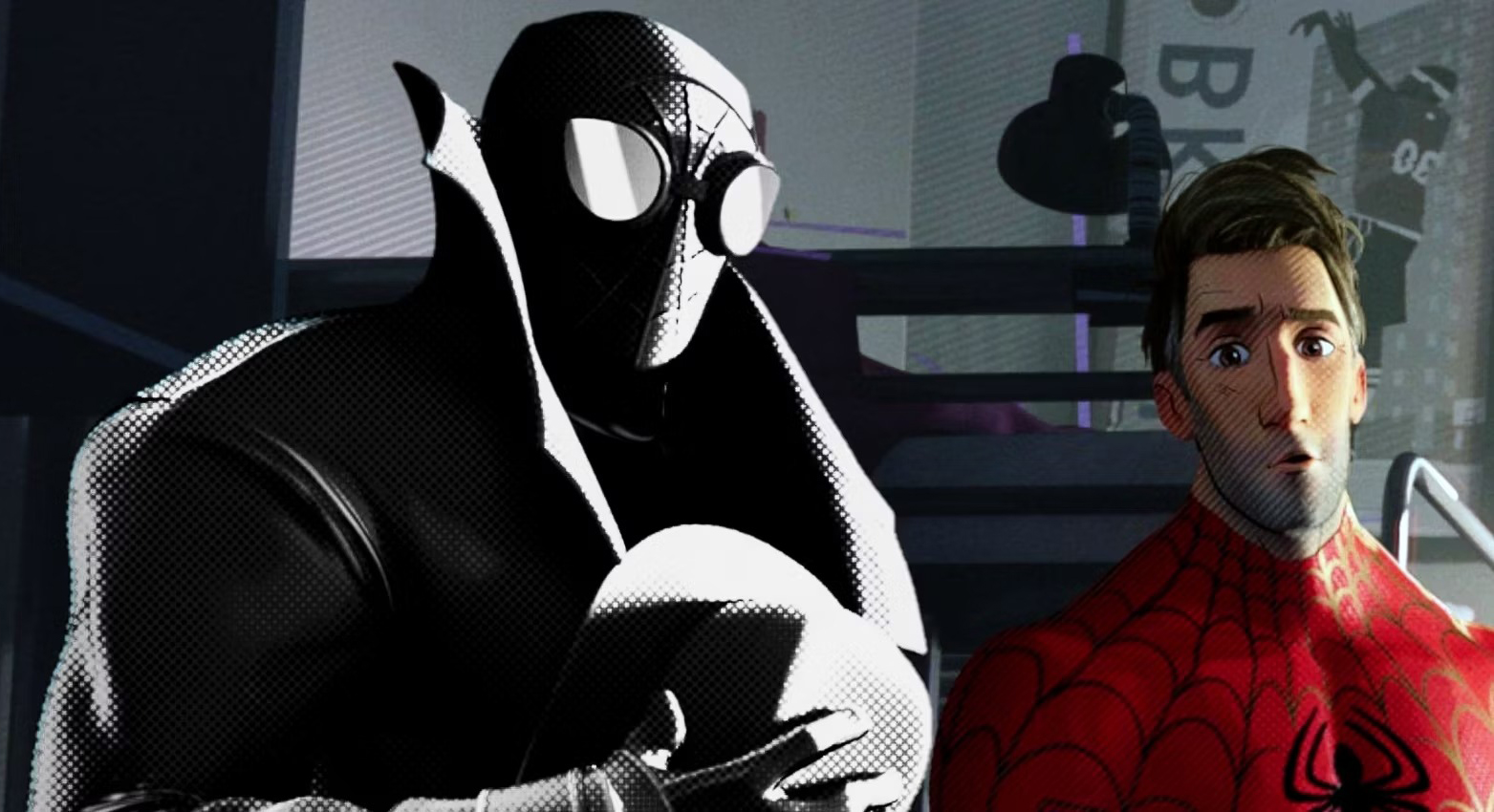
Spider-Noir Enters The Spider-Verse
Then came the moment that changed everything.
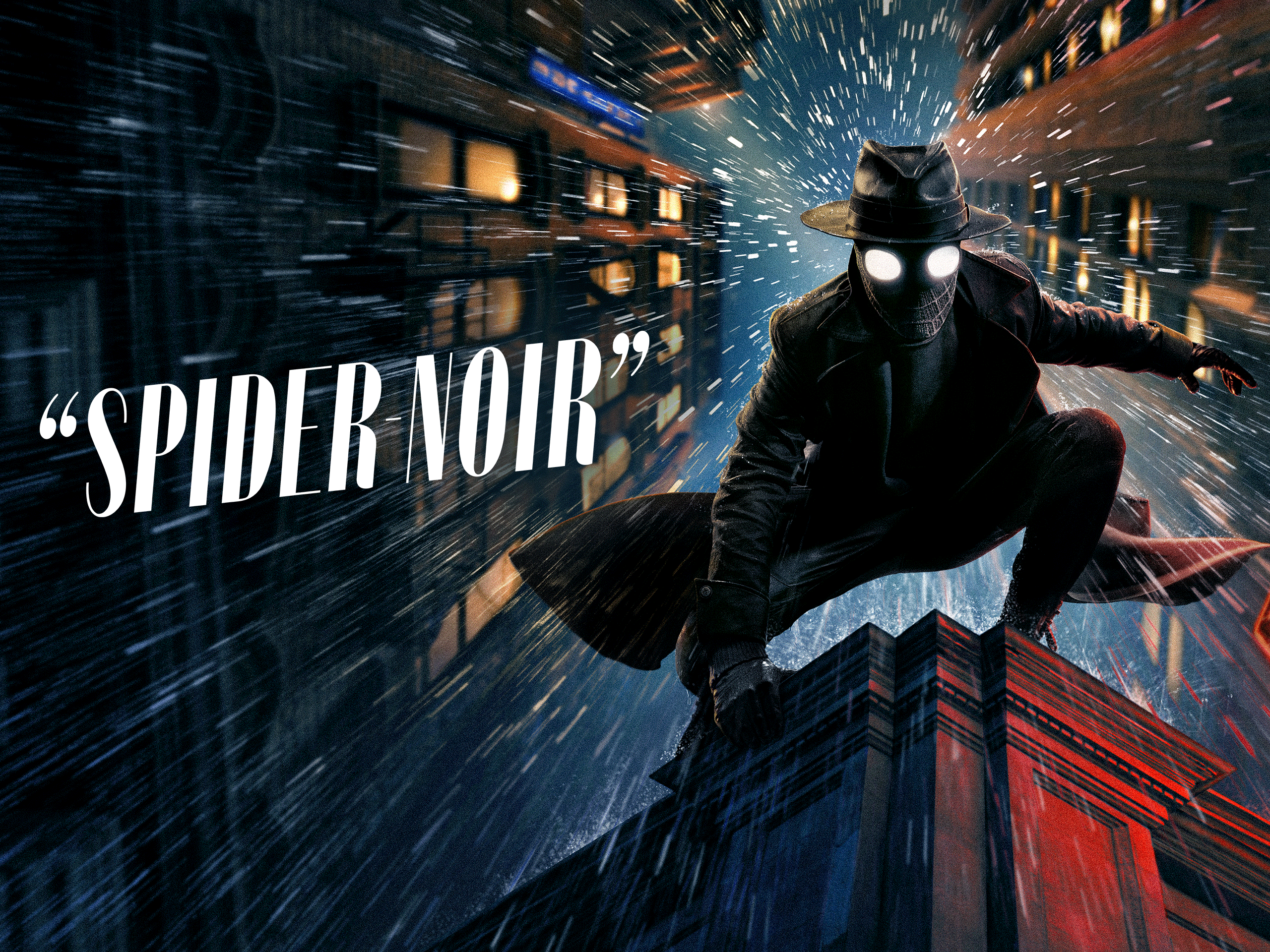
In 2018, Spider-Man: Into the Spider-Verse (get it on 4K on Amazon here!) introduced Spider-Noir to mainstream audiences.
And suddenly everyone became obsessed with the weird black-and-white Spider-Man voiced by Nicolas Cage.
Honestly? Understandable.
The film portrayed Spider-Noir as hilariously intense and perpetually confused by modern technology. He dramatically narrated everything, took Rubik’s Cubes extremely seriously, and treated basic objects like they were artifacts from another dimension.
Which… technically they were??
The character became an instant breakout favorite thanks to the film’s brilliant balance of comedy and sincerity. Underneath the jokes, Spider-Noir still carried emotional weight and genuine pathos.
The visual design was also stunning. The animation team incorporated noir-style lighting, monochrome textures, and stylized movement that made him visually distinct from every other Spider-person onscreen.
In a movie full of standout characters, Spider-Noir somehow managed to steal scenes while looking like he wandered in from a completely different film genre.
Which is honestly the dream.
Nicolas Cage and the Perfect Casting Choice for Spider-Noir
Casting Nicolas Cage as Spider-Noir may be one of the most inspired comic-book casting decisions ever made.
Cage approached the role with complete sincerity while channeling old Hollywood noir actors like Humphrey Bogart, James Cagney, and Edward G. Robinson.
The result was somehow both absurd and perfect.
Cage gave Spider-Noir an exaggerated old-school delivery style that instantly made the character memorable. Every line sounded like it came from a detective film discovered in a haunted movie theater basement.
Fans immediately connected with the performance, and Spider-Noir’s popularity exploded after the film’s release.
It also didn’t hurt that Cage himself is a massive comic-book fan with deep ties to superhero culture. This is, after all, a man whose stage surname comes from Luke Cage.
Spider-Noir returned in Spider-Man: Across the Spider-Verse (get that on 4K on Amazon here!), further cementing the character’s place as one of the standout Spider-Verse personalities.
The Live Action Prime Video Spider-Noir Series
Eventually, the inevitable happened.
Hollywood looked at Spider-Noir and said: “What if we made this entire thing live action and aggressively stylish?”
In 2024, reports confirmed that a live-action Spider-Noir television series was in development for Amazon MGM Studios and Sony Pictures Television.
Even more exciting? Nicolas Freakin Cage was announced to star.
The series, titled Spider-Noir, explores an aging private investigator in 1930s New York forced to confront his past as the city’s lone superhero.
Which sounds extremely on-brand for noir storytelling because apparently nobody in noir fiction is ever allowed to simply relax.
The live-action adaptation represents a major moment for the character. Spider-Noir evolved from a niche alternate-universe comic into the centerpiece of a prestige live-action streaming series.
That’s an insane glow-up.
It also signals how much audiences have embraced alternate Spider-Man storytelling beyond Peter Parker’s traditional continuity. Marvel and Sony discovered that fans genuinely love weird, experimental takes on Spider-Man mythology - especially when those takes fully commit to a unique aesthetic and tone.
Why Spider-Noir Works
Spider-Noir succeeds because he taps into something timeless.
The noir genre naturally complements Spider-Man’s core themes: guilt, responsibility, loneliness, corruption, sacrifice and the feeling that doing the right thing often comes with personal suffering.
Spider-Noir simply amplifies those ideas through a darker lens.
He’s still Peter Parker. He’s just operating in a world where hope feels harder to find.
Visually, he also offers something radically different from standard superhero storytelling. The trench coat, fedora, monochrome palette, shadow-heavy environments, and detective-style narration make him instantly recognizable.
And unlike some alternate-universe gimmicks that feel shallow, Spider-Noir has genuine thematic depth underneath the cool aesthetic.
Also, let’s be 100% honest here:
A Spider-Man who punches corrupt politicians while monologuing like a 1940s detective is objectively entertaining.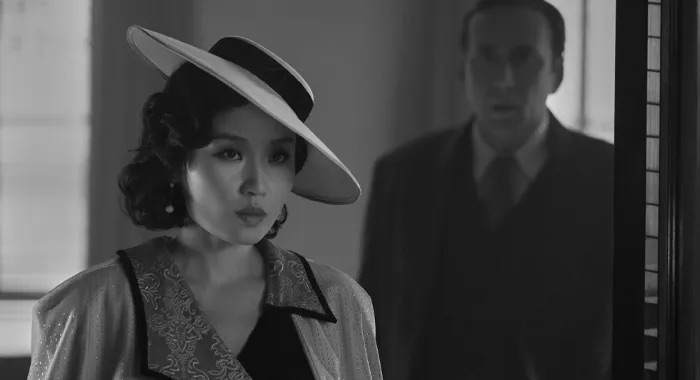
The Legacy of Spider-Noir
Today, Spider-Noir stands as one of Marvel’s most successful alternate-universe reinventions.
What began as a limited comic experiment became a cult favorite comic series, a standout animated movie character, a major Spider-Verse icon and now a live-action tv series lead.
Not bad for “Spider-Man but sadder and wearing a hat.”
Spider-Noir also helped prove that audiences are willing to embrace radically different interpretations of familiar superheroes as long as those interpretations remain emotionally authentic.
And honestly, that may be the character’s greatest contribution to modern superhero storytelling.
He showed that Spider-Man could be weird.
Very, very weird.
And fans love him for it.

On Air Talent / Creator / Author / Producer
Kyle McMahon is an American television personality, radio host, journalist, actor, singer and songwriter. He is known for appearing in Oprah's Lifeclass, the Oscar winning film Selma, hosting Pop Culture Weekly with Kyle McMahon on iHeart Radio and touring with LFO and O-Town.

All the Movies, Shows & Specials Coming to 4K UHD & Blu-ray in October 2026
 Apple Podcasts
  YouTube
  Spotify
  iHeartRadio
  Audible
  Amazon Music
  JioSaavn
  Spreaker
  RSS Feed