Labyrinth - The Ultimate Guide to the 1986 Cult Classic Movie
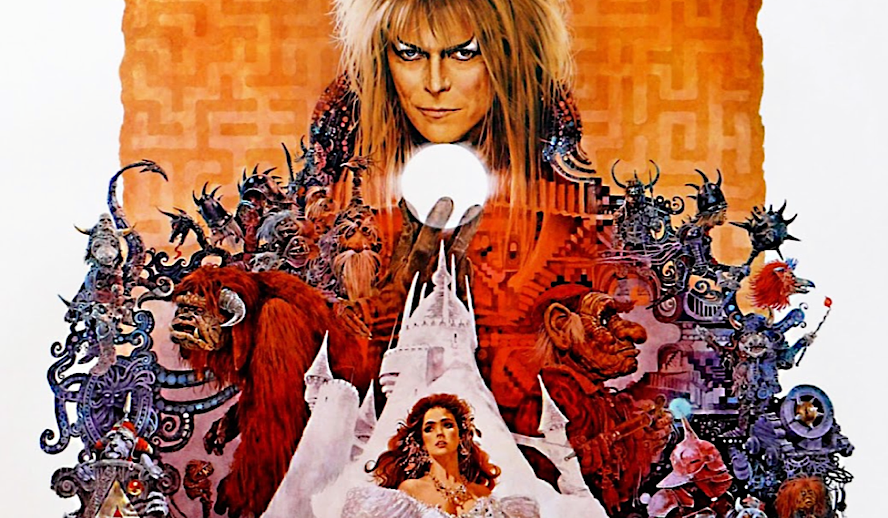
Welcome to the Maze
There are movies you watch, movies you love and movies that quietly rewire your personality. Labyrinth belongs firmly in that third category. Released in the mid-1980s and initially met with a shrug that would later age very poorly, the film has grown into one of the most enduring cult fantasies of all time. It’s whimsical without being cute, dark without being cruel and emotionally honest in ways that sneak up on you somewhere between a goblin musical number and a talking fox terrier riding a sheepdog into battle. Here is Labyrinth - the ultimate guide to the 1986 cult classic movie.
Labyrinth is often remembered for its imagery first: the hair, the eyeliner, the ballroom dream sequence that feels like a perfume commercial directed by Freud. But underneath the feathers and felt is a deceptively grounded coming of age story about responsibility, choice and learning that fantasy is intoxicating precisely because it isn’t real. That tension is why the film keeps finding new audiences decades later, each generation convinced it discovered the movie on its own, like a secret passageway only they noticed.
How Labyrinth Came to Be
By the mid-1980s, Jim Henson was at a crossroads. He had already changed television forever with The Muppet Show and had taken a bold, divisive leap into much darker fantasy with The Dark Crystal. That film’s uncompromising tone fascinated audiences but confused studios. Henson wanted to try again - this time blending fantasy with humor, music, and a clearer emotional anchor.
The conceptual DNA of Labyrinth pulls from classic fairy tales, Maurice Sendak illustrations, and Henson’s belief that children’s stories shouldn’t sanitize fear or uncertainty. He partnered with George Lucas, fresh off redefining blockbuster filmmaking with Star Wars, who served as executive producer and story contributor. Lucas brought structure and commercial instincts, while Henson protected the weird. Their collaboration resulted in a film that feels surprisingly personal for something so elaborate, as if a bedtime story somehow escaped into a soundstage. It's completely fantastical and completely captivating.
Casting the Maze: Heroes, Villains, and Icons
Casting Labyrinth was an exercise in risk. The Goblin King needed to be magnetic, unsettling, funny, and emotionally ambiguous without tipping into parody. Enter David Bowie, who approached the role not as a villain but as a performer hosting a very elaborate psychological test. Bowie shaped Jareth’s voice, posture, and musical presence, leaning into theatricality and sexual ambiguity in a way that was radical for a family film in 1986.
Opposite him, Jennifer Connelly anchors the film as Sarah, a teenager caught between fantasy and responsibility. Her performance is understated by design. Sarah isn’t heroic because she’s fearless; she’s heroic because she keeps going despite confusion, embarrassment, and regret. That relatability is what keeps the story from floating away into pure spectacle.
Supporting characters like Hoggle, Ludo, and Sir Didymus blur the line between actor and artifact. Each character feels alive not because they are realistic, but because their emotional logic is consistent. Fear, loyalty, insecurity, and courage all register clearly through layers of foam and fur.
The Puppets, Creatures, and Practical Magic
Labyrinth represents the absolute peak of large-scale practical fantasy filmmaking. Every creature is tangible, imperfect, and expressive. Hoggle alone required multiple performers to operate facial expressions and body movement, resulting in a performance that feels startlingly intimate. Ludo’s emotional beats land because you can see the effort behind every motion, every blink.
Jim Henson’s Creature Shop treated puppetry as acting, not novelty. The imperfections—slight delays, exaggerated gestures—become strengths. Modern CGI strives for realism; Labyrinth aims for presence. The goblins don’t look real, but they feel there, and that physicality is why the film still holds visual power decades later.
Music and the Sound of Fantasy
The soundtrack of Labyrinth is inseparable from its identity. David Bowie didn’t just contribute songs; he created a musical voice for Jareth that blurs diegetic performance and inner monologue. “Magic Dance” establishes dominance and whimsy simultaneously, while “As the World Falls Down” plays like a seduction wrapped in melancholy.
The instrumental score supports the fairy-tale structure without overwhelming it, allowing scenes to breathe emotionally. Over time, the soundtrack has taken on a life of its own, reissued, rediscovered, and absorbed into pop culture in ways few film scores manage. It isn’t nostalgia that keeps the music alive; it’s mood.
A Spoiler-Free Story Overview of Labyrinth
At its core, Labyrinth follows Sarah, a teenager frustrated with responsibility, who impulsively wishes away her infant brother. Her regret summons Jareth, ruler of a shifting maze, who offers her a challenge: solve the labyrinth within a limited time or lose what matters most. The journey forces Sarah to confront temptation, self-deception, and the seductive ease of escapism.
Rather than presenting fantasy as salvation, the film frames it as a test. Every shortcut has a cost. Every distraction delays growth. The maze becomes less about navigation and more about self-recognition.
Marketing, Release, and Box Office Reality
When Labyrinth hit theaters in 1986, studios didn’t quite know how to sell it. Was it a children’s film? A musical? A fantasy epic? The marketing leaned whimsical, underselling the darker themes and emotional complexity. Audiences expecting a straightforward kids’ movie were confused, while older viewers often dismissed it outright.
The box office reflected that confusion. The film underperformed, quickly labeled a disappointment. But home video told a different story. VHS rentals, cable airings, and word-of-mouth slowly built an audience that wasn’t ready for Labyrinth in theaters but absolutely was in living rooms.
Critical Reception: Then and Now
Initial reviews often praised the craftsmanship while questioning the tone. Critics struggled with a movie that refused to pick a single demographic lane. Over time, that resistance softened. Modern reassessment views Labyrinth as a rare hybrid: a fantasy film that respects children’s intelligence while acknowledging the emotional messiness of adolescence.
Today, the film is frequently cited in discussions of practical effects, gender dynamics in fantasy storytelling, and the power of cult cinema to outlive its original reception.
Legacy, Influence, and the Cult of Labyrinth
Few films inspire devotion like Labyrinth. Midnight screenings, cosplay, anniversary events, and academic essays all coexist comfortably within its fandom. The film’s imagery has influenced fashion, music videos, and fantasy aesthetics across decades.
Part of its endurance comes from its refusal to explain everything. Labyrinth trusts the audience to sit with ambiguity, to question power structures, and to recognize fantasy’s allure without surrendering to it completely. That tension keeps the conversation alive.
Sequels, Spin-Offs, and Expanded Stories
While sequel discussions have surfaced periodically, Labyrinth has largely resisted continuation on screen. Instead, its universe has expanded through comics, novels, and reinterpretations that explore different corners of the maze. The absence of a direct sequel has arguably strengthened the original’s legacy, preserving it as a singular experience rather than a franchise obligation.
Conclusion: You Have No Power Here
Labyrinth endures because it understands something essential: growing up isn’t about abandoning fantasy, but about choosing when not to live inside it. The maze doesn’t disappear when the credits roll. It waits, quietly, ready to be walked again by anyone willing to question what they want - and what they’re willing to give up to get it.
Frequently Asked Questions
Is Labyrinth appropriate for children?
Yes, though its themes are more complex than its marketing suggests. Younger viewers may enjoy the visuals, while older audiences often connect more deeply with the emotional journey.
Why is Labyrinth considered a cult classic?
Its initial box office failure contrasted with massive home-video success, leading to a passionate, intergenerational fanbase that continues to grow.
Will there ever be a sequel to Labyrinth?
Various projects have been discussed over the years, but none have materialized. The original remains intentionally self-contained.
What makes Labyrinth visually distinct today?
Its reliance on practical effects and puppetry gives it a tactile quality that modern CGI-heavy fantasy often lacks.

On Air Talent / Creator / Author / Producer
Kyle McMahon is an American television personality, radio host, journalist, actor, singer and songwriter. He is known for appearing in Oprah's Lifeclass, the Oscar winning film Selma, hosting Pop Culture Weekly with Kyle McMahon on iHeart Radio and touring with LFO and O-Town.
![image for The Ultimate 2026 Horror Movie Calendar: Every Release Date & Trailer [Updated]](https://getpodpage.com/image_transform_gate_v3/n3IwxhAIWyxfRVMzL2sjv0J1Y2JqTYIfjtioW_Uh4zc=/?image_url=https%3A%2F%2Fs3.us-west-1.amazonaws.com%2Fredwood-labs%2Fshowpage%2Fuploads%2Fimages%2F042cd408-8435-416b-9654-56c7246259eb.jpg&w=720&h=378&fill=blur)
The Ultimate 2026 Horror Movie Calendar: Every Release Date & Trailer [Updated]


