Ultimate Guide to Harry Potter and the Chamber of Secrets
From the book to the movie and everything in-between, here is the ultimate guide to Harry Potter and the Chamber of Secrets
By the time Harry Potter and the Chamber of Secrets arrived, the Wizarding World franchise was no longer a curiosity - it was a cultural machine. The first story introduced the world but the second one tested it. Darker, stranger and more morally complex, Chamber of Secrets is the moment the Harry Potter saga quietly reveals what it’s really about: inherited prejudice, historical guilt, and the terrifying idea that evil doesn’t always look like a villain - it sometimes looks like tradition.
This is the story where Hogwarts stops feeling completely safe, where the past refuses to stay buried and where Harry first confronts the uncomfortable question of whether destiny is something you inherit… or you choose.
The Book
Summary
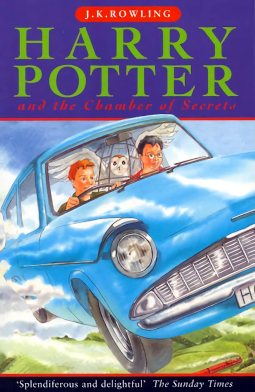
Harry Potter and the Chamber of Secrets, written by J. K. Rowling, picks up with Harry trapped in a miserable summer at the Dursleys before a chaotic rescue by Ron Weasley launches him back into the wizarding world.
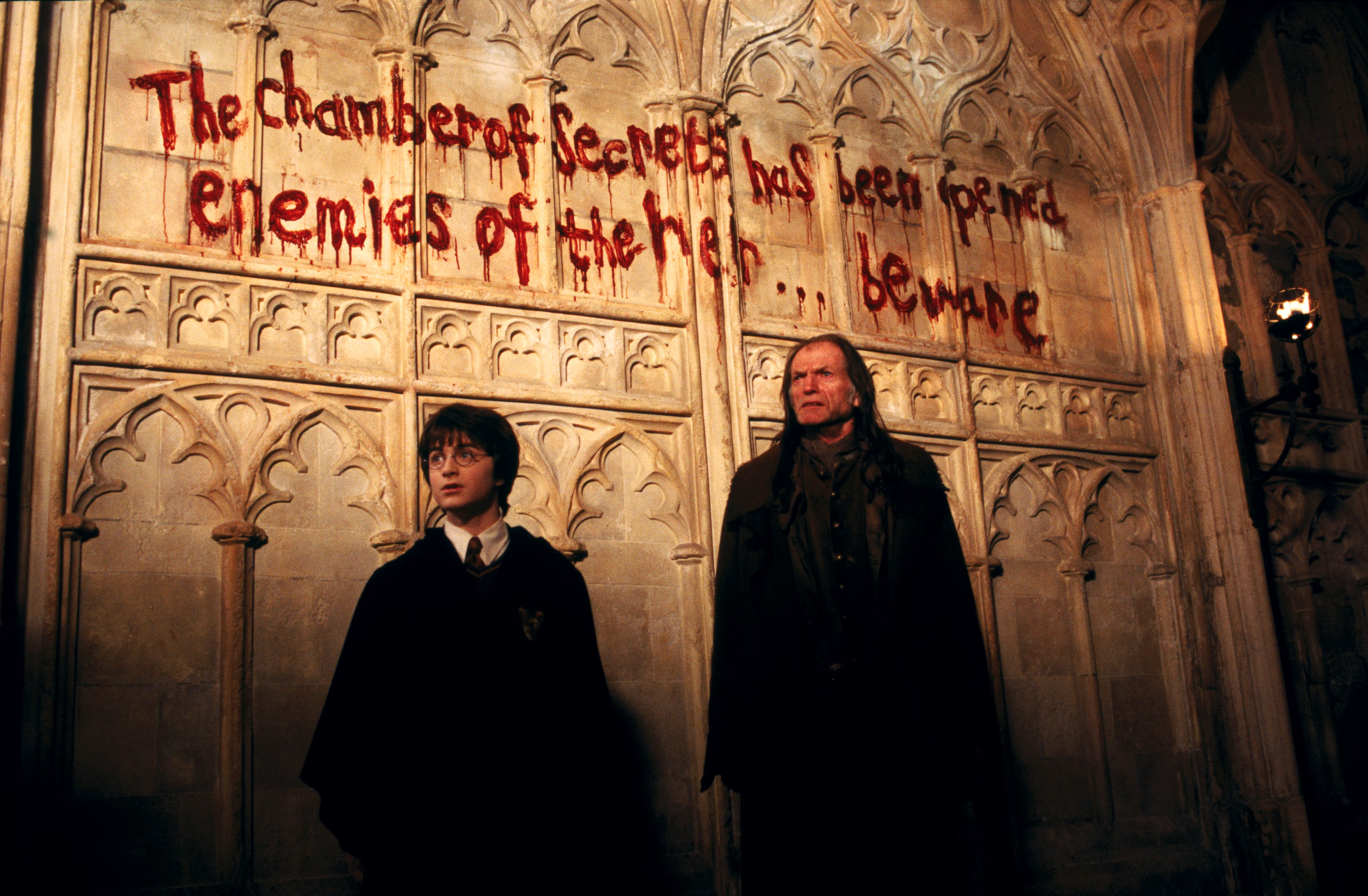
Soon after returning to Hogwarts, students are found mysteriously petrified. A chilling message appears on the wall: The Chamber of Secrets has been opened. As fear spreads, Harry discovers a hidden history involving Salazar Slytherin, a legendary monster, and a dark legacy tied to blood purity. The mystery culminates in Harry’s descent into the Chamber itself, where he confronts Tom Riddle’s memory, a basilisk, and the truth about Voldemort’s origins.
This is not just a whodunit - it’s a story about historical rot finally surfacing.
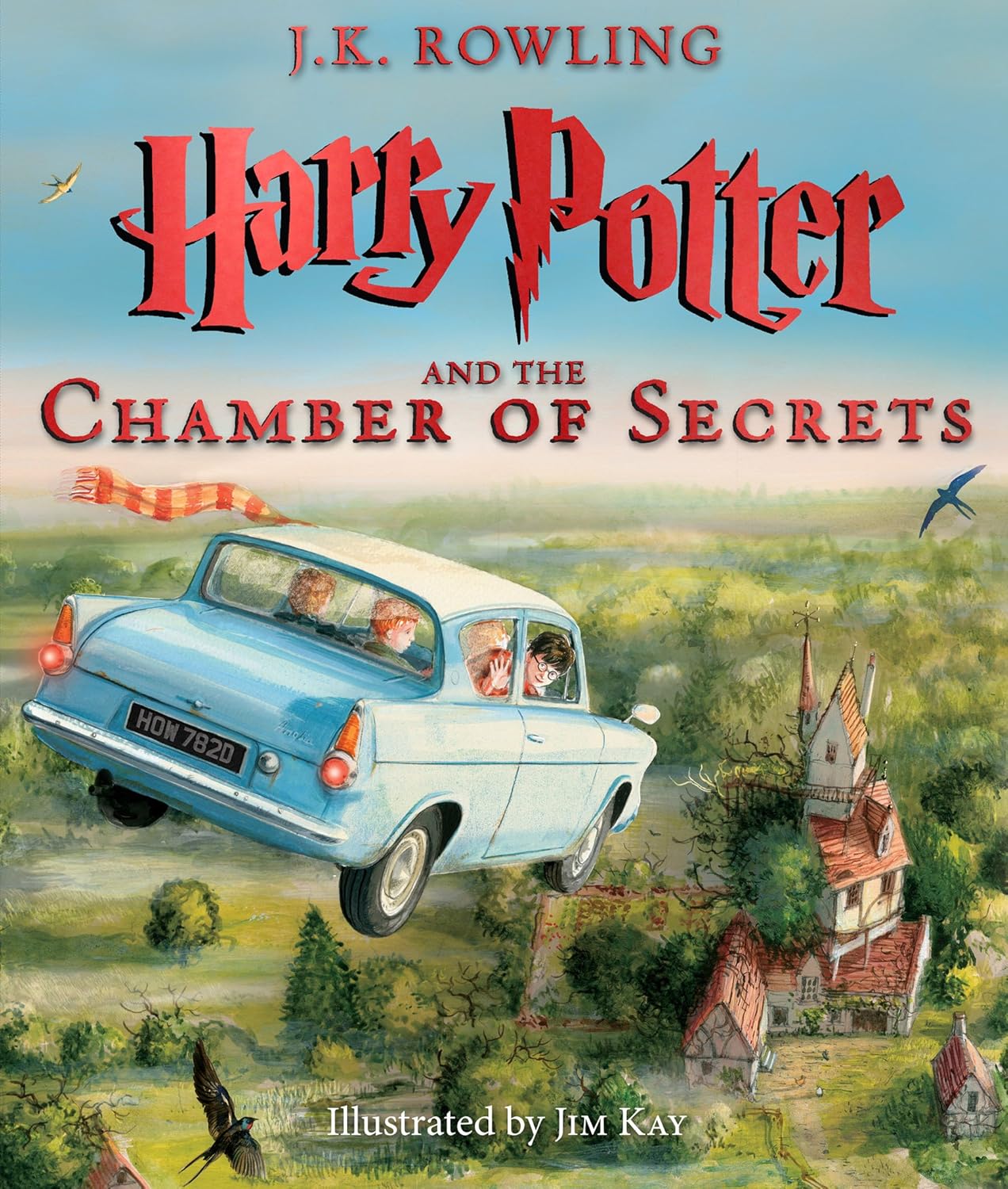
👉 Get Harry Potter and the Chamber of Secrets (Illustrated Edition) on Amazon here!
Themes
At its core, Chamber of Secrets is about prejudice as inheritance. The concept of “pure-blood” superiority mirrors real-world systems of exclusion, showing how bigotry embeds itself in institutions long before individuals choose to uphold it.
Memory is another central theme. The past isn’t gone in this story - it literally talks back. Tom Riddle’s diary becomes a metaphor for how dangerous nostalgia can be when it’s weaponized and romanticized.
And perhaps, most importantly, the book introduces the franchise’s defining idea: identity is shaped by choice, not origin. Harry’s fear that he belongs in Slytherin isn’t resolved by destiny - it’s resolved by his decisions.
Characters
This installment deepens the entire cast. Harry grapples with self-doubt in a way he never had before. Ginny Weasley moves from background character to emotional linchpin, revealing the quiet vulnerability beneath her shyness. Lockhart embodies fraudulent celebrity culture long before influencer discourse existed - famous for stories that were never his.
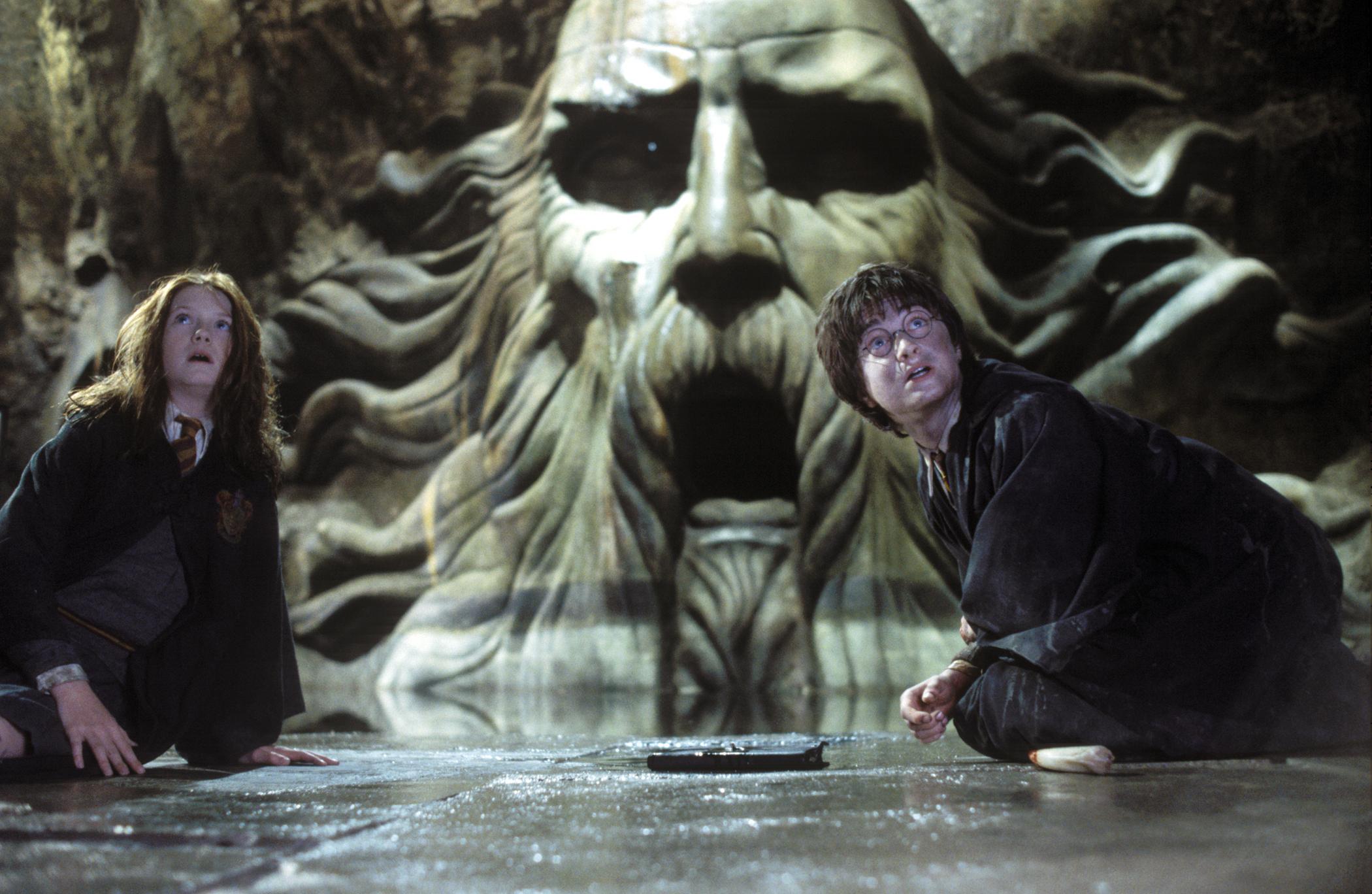
Most notably, Tom Riddle debuts not as a monster, but as a charming, intelligent boy. The horror lies in how recognizable he is.
The Film Adaptation
Overview
Harry Potter and the Chamber of Secrets was directed by Chris Columbus and released November 14, 2002. At nearly three hours, it remains the longest film in the franchise - a deliberate choice to preserve the book’s complexity rather than streamline it.
Development of the Chamber of Secrets Movie
The development of Harry Potter and the Chamber of Secrets began almost immediately after the release of Sorcerer’s Stone, not because Warner Bros. was rushing blindly, but because the scale of the phenomenon demanded momentum. The studio understood that Harry Potter was not just a hit - it was a generational, universe shaking property - and that delays risked aging the cast out of their roles and cooling cultural heat.
Unlike the first film, which required extensive world-building and audience trust, Chamber of Secrets entered development with a rare advantage: the rules had already been established. Hogwarts, Quidditch, wand magic, and the tone of the universe were now familiar. This allowed the creative team to focus less on introduction and more on expansion and escalation.
Director Chris Columbus returned with a clear mandate: remain faithful to the book while allowing the story to grow darker and more complex. Columbus has often described Chamber of Secrets as the point where the series begins to reveal its long-term intentions. From a development standpoint, this meant leaning into suspense, horror imagery, and moral ambiguity without abandoning the accessibility that made the first film successful.
One of the earliest and most significant development decisions was runtime. The screenplay retained more material from the novel than most studio sequels would have allowed, resulting in a final cut approaching three hours. Rather than trimming aggressively, Warner Bros. chose to embrace the length, recognizing that audiences were invested enough to follow a denser narrative. This decision would prove critical in preserving character arcs, mythology and especially tonal continuity.
The screenplay closely adhered to J.K. Rowling's novel, with Rowling remaining involved as a guiding presence. While she did not write the script, her influence was felt in what the film chose not to change. Key lore elements - Parseltongue, the diary, the Chamber’s origins—were treated as foundational mythology rather than disposable plot devices, signaling that this story mattered far beyond its individual installment.
Technologically, development also had to account for increased ambition. The creation of Dobby represented a major leap forward in CGI character performance. Unlike the mostly environmental and practical effects of the first film, Chamber of Secrets required a fully digital character capable of expressing emotion, physical comedy, and menace while interacting convincingly with live actors. This challenge shaped production planning from the earliest stages and influenced everything from shot composition to performance blocking.
Creature design also took on a more prominent role. The basilisk was conceived not simply as a monster, but as a force of inevitability - something ancient, vast, and almost mythological. Development discussions emphasized scale and dread over spectacle, reinforcing the idea that this threat predated Harry and would outlast him.
Another critical development consideration was tone management. The team had to balance moments of genuine fear with humor and warmth, particularly for younger viewers. Characters like Gilderoy Lockhart and Dobby were intentionally amplified to provide tonal counterweights to the darker storyline. This balancing act became a defining skill the franchise would rely on in later, much darker installments.
Finally, Chamber of Secrets was developed with an eye toward franchise longevity. Subtle visual and narrative choices - lingering on Tom Riddle’s charm, emphasizing Hogwarts’ history, planting seeds of moral complexity - were not just about this film, but about what the series would eventually become. In many ways, this was the installment where the filmmakers stopped thinking in terms of sequels and started thinking in terms of a saga.
In hindsight, the development of Chamber of Secrets represents the moment Harry Potter transitioned from a successful adaptation into a carefully stewarded cinematic legacy. It proved the series could deepen, darken and complicate its world without losing its audience - a lesson that would shape every Potter film that followed.
Casting
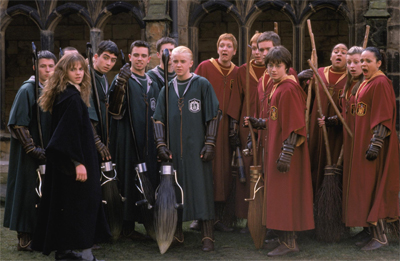
The young cast returned with visibly improved confidence. Daniel Radcliffe brings more emotional range to Harry, while Rupert Grint and Emma Watson grow into stronger comedic and dramatic rhythms.
New additions steal the show. Kenneth Branagh's Gilderoy Lockhart is a pitch-perfect satire of ego and fraud, while Jason Isaacs debuts Lucius Malfoy with aristocratic menace that would echo across the franchise.
Key Differences Between the Book and the Movie
While Harry Potter and the Chamber of Secrets is often cited as one of the most faithful adaptations of the series, its faithfulness is largely structural rather than thematic. The broad plot remains intact, but the film subtly reshapes the story’s sharpest ideas to better suit a younger, mass audience - and to fit the visual demands of blockbuster filmmaking. The 350+ page book probably wouldn't have translated as well in a beat by beat blockbuster movie.
The most notable softening occurs around the book’s political and historical undercurrents. In Harry Potter and the Chamber of Secrets, blood purity is treated not just as a villainous belief, but as a deeply entrenched ideology embedded in Hogwarts itself. The book lingers on how casually this prejudice is accepted, joked about, or ignored by otherwise “good” characters. The film retains the concept, but compresses it into clearer moral shorthand: blood purity is bad, Slytherin is suspicious, Lucius Malfoy is obviously dangerous. What’s lost is some of the discomfort - the sense that this rot predates Voldemort and survives him.
Several Hogwarts staff subplots are also streamlined or removed entirely. The novel spends more time exploring adult incompetence, denial, and institutional paralysis, particularly in how the school responds to escalating danger. The film trims these moments for pacing, shifting the story more decisively onto Harry, Ron and Hermione. As a result, Hogwarts feels less like a flawed bureaucracy and more like a neutral backdrop temporarily under siege.
Character nuance is another area where compression has consequences. Ginny Weasley’s internal struggle is more deeply felt in the book, where her isolation and guilt unfold gradually. In the film, her possession is treated more as a mystery reveal than a psychological descent. Similarly, Tom Riddle’s manipulation is more overt on screen, trading the book’s slow-burn unease for clearer villain signaling.
That said, the film gains something crucial in exchange: visual and narrative clarity.
The mechanics of the mystery - Parseltongue, the diary, the basilisk and the Chamber’s history - are rendered in concrete, memorable imagery. What is abstract or inferred on the page becomes unmistakable on screen. For younger viewers especially, the film makes the mythology easier to grasp without flattening the stakes. The Chamber feels ancient and forbidden, the monster unmistakably lethal, and Tom Riddle’s connection to Voldemort visually undeniable.
In short, the adaptation trades subtlety for accessibility. The book invites readers to sit with uncomfortable ideas about heritage, complicity and institutional failure. The film prioritizes momentum, atmosphere and visual storytelling, ensuring the mystery lands cleanly while still allowing the darker tones to emerge.
Rather than undermining the story, this shift helps explain why Chamber of Secrets works so well across generations: the book challenges readers to think, while the film ensures they never lose their way through the labyrinth.
Visual and Musical Impact
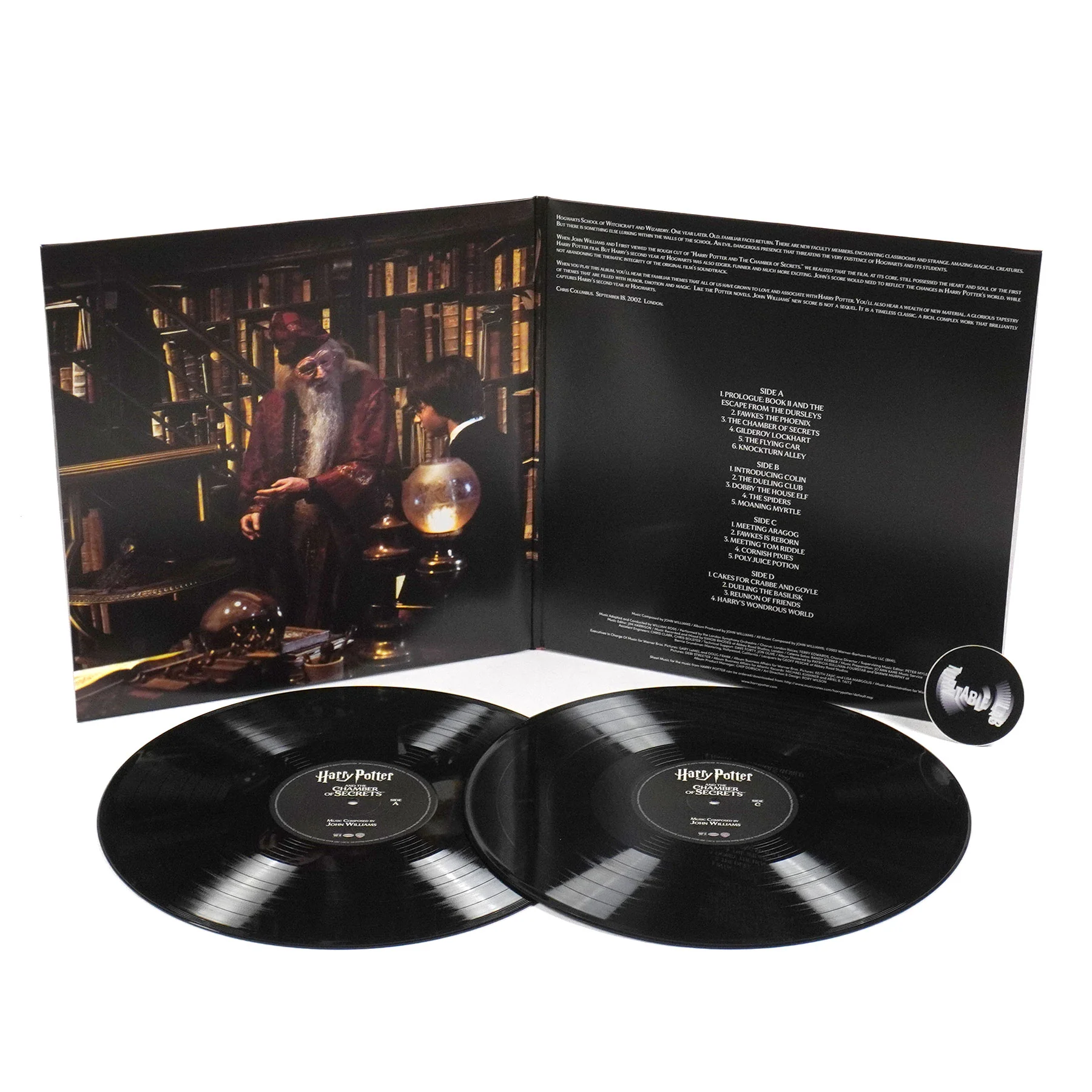
John Williams' score evolves here, introducing darker motifs that foreshadow what the series will become. Visually, the basilisk sequence and the living diary effects were groundbreaking at the time, blending practical sets with early 2000s CGI that still holds surprising weight.
The Chamber itself feels ancient, oppressive, and wrong - exactly as it should.
👉 Get Harry Potter and the Chamber of Secrets (Vinyl) on Amazon here!
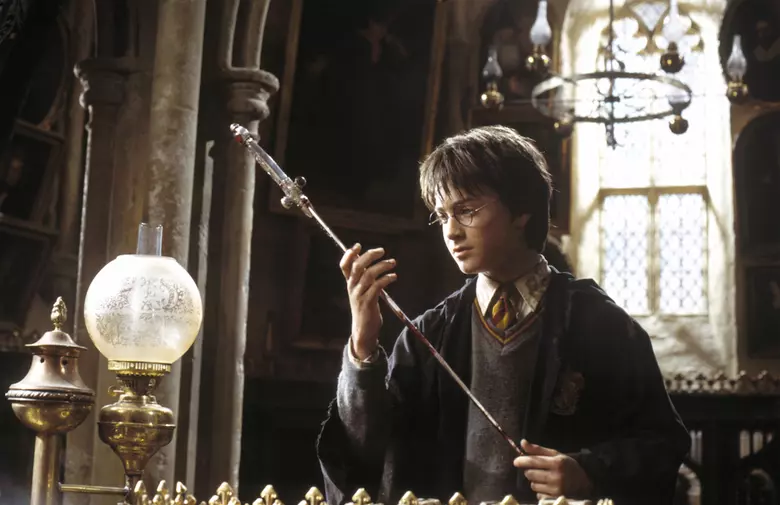
Marketing the Film
By the time Harry Potter and the Chamber of Secrets entered its marketing phase, Warner Bros. was no longer introducing a new fantasy property - it was managing a global phenomenon. The campaign was designed not to explain Harry Potter, but to reframe it, signaling clearly that this was not simply a repeat of the first film.
The studio leaned heavily into the story’s mystery and menace, positioning Chamber of Secrets as darker, scarier and more emotionally intense. Trailers and TV spots emphasized ominous whispers, shadowy corridors, and the repeated warning that “the Chamber has been opened.” The central idea was simple but effective: Hogwarts was no longer safe, and childhood wonder was giving way to real danger. This tonal shift reassured older fans that the series would mature alongside them while still remaining accessible to younger audiences.
Key marketing materials foregrounded specific visual hooks - the blood-written message on the wall, the slithering presence of the basilisk, and Harry speaking Parseltongue - without fully revealing their context. Rather than spoiling the mystery, the campaign teased questions: Who opened the Chamber? Who can be trusted? And what does Harry’s connection to it mean?
Character marketing also evolved. While Harry remained central, the campaign gave increased visibility to new figures like Gilderoy Lockhart and Lucius Malfoy, subtly expanding the franchise’s moral landscape. Lockhart was sold as comic relief and celebrity satire, while Malfoy’s cold, aristocratic presence signaled a more grounded and human form of villainy than audiences had seen before.
Dobby, meanwhile, became an unexpected marketing breakout. While he was a source of chaos and tension within the story, the character’s design and humor made him instantly recognizable. Warner Bros. leaned into this duality, using Dobby in promotional spots, toys and tie-in materials that balanced his unsettling nature with slapstick charm. He quickly emerged as one of the franchise’s most merchandisable characters, helping bridge the tonal gap between darkness and accessibility.
The campaign extended well beyond trailers. Tie-in books, toys, video games, fast-food promotions, and retail partnerships saturated the market in the months leading up to release. Unlike the first film, which introduced a world, Chamber of Secrets marketing sold continuity - the promise that this was an ongoing story worth following, collecting, and growing up with.
In retrospect, the campaign succeeded not just in selling a movie, but in teaching audiences how to watch Harry Potter going forward: expect danger, expect mystery, and expect that the magic comes with consequences.
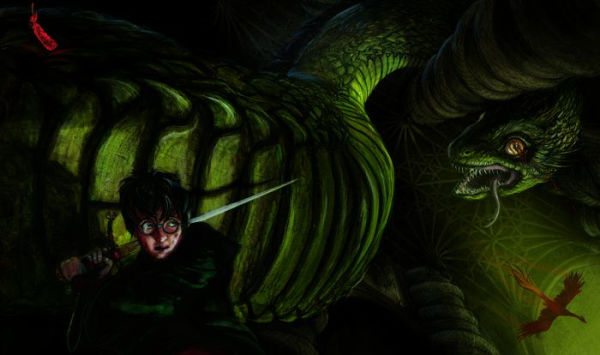
Marketing Shift from Sorcerer’s Stone to Chamber of Secrets
The marketing campaign for Harry Potter and the Sorcerer’s Stone was built almost entirely around invitation. Warner Bros. sold the first film as a gateway - an introduction to a hidden world waiting just beyond the ordinary. Trailers emphasized discovery: receiving a Hogwarts letter, walking through Diagon Alley, seeing the Great Hall for the first time. The promise was wonder, safety, and escapism. Hogwarts was positioned as a refuge, and Harry’s story as a wish fulfillment fantasy.
By contrast, the campaign for Harry Potter and the Chamber of Secrets marked a deliberate tonal pivot in marketing. Rather than inviting audiences into the world, the marketing warned them that something had gone wrong inside of it.
Where Sorcerer’s Stone leaned on bright imagery, swelling music and the reassurance of mentorship figures like Dumbledore and Hagrid, Chamber of Secrets trailers were structured around unease. Familiar locations were shown in shadow. The school corridors felt narrow instead of grand. Dialogue snippets emphasized fear, secrecy and history repeating itself. The central question was no longer “What is this world?” but now “What is this world hiding?”
This shift extended to how danger was framed. In the first film’s marketing, threats were abstract and distant - Voldemort existed mostly as a rumor, a shadow. In Chamber of Secrets, danger was immediate and personal. Students were being attacked. Walls were marked. The monster was not theoretical - it was active. Even Harry himself was reframed as a potential threat, with Parseltongue positioned as something unsettling rather than cool.
Another key difference was audience positioning. Sorcerer’s Stone marketing spoke primarily to families and younger viewers, reassuring parents that the film was safe, magical and wholesome. Chamber of Secrets widened its appeal by signaling to older audiences that the series would grow darker and more complex. The messaging subtly acknowledged that many viewers had aged alongside the books - and that the films intended to keep that same pace.
Importantly, Warner Bros. did not abandon the sense of wonder entirely. Instead, the marketing recalibrated it. Magic was still present, but now it carried consequences. Hogwarts was still magnificent, but no longer invulnerable. The campaign taught audiences how to recalibrate their expectations: this was no longer just a fantasy about discovering magic, but a story about surviving it.
Looking back, this marketing shift was crucial. It prepared audiences for the tonal evolution that would define the rest of the franchise and ensured that Harry Potter wouldn’t be trapped in perpetual childhood - because audiences weren't trapped in perpetual childhood. Chamber of Secrets didn’t just change the story - it changed how the series was sold, setting the template for every darker chapter that followed.
Box Office for Harry Potter and the Chamber of Secrets
When Harry Potter and the Chamber of Secrets opened in November 2002, it wasn’t just another sequel - it was a stress test for whether the Harry Potter phenomenon had real staying power beyond novelty.
In North America, the film debuted at #1 at the box office, opening on November 15, 2002. It earned $88.4 million in its opening weekend across more than 3,600 theaters, one of the largest November openings in history at the time. While slightly below the debut of Sorcerer’s Stone, the number was widely viewed as a massive success, especially given the darker tone and longer runtime. In the movie business, films with longer running times means less opportunities for showings in a single day.
The drop-off in subsequent weeks was modest. The film held the top spot for two consecutive weekends, facing competition from holiday releases but remaining a dominant presence throughout the Thanksgiving holiday weekend. By the end of its North American theatrical run, Chamber of Secrets had grossed about $262 million domestically, confirming that audiences were committed to the series - not just curious about it.
Internationally, the results were even more striking.
The film opened strongly across the United Kingdom, Europe, Asia, and Australia, with particularly massive numbers in the UK, where Harry Potter functioned as a homegrown cultural event. In several territories, it broke opening-weekend records or came within striking distance of them. The international rollout was staggered but aggressive, ensuring sustained global momentum rather than a short-lived spike.
Worldwide, Chamber of Secrets ultimately earned about $880 million in its first run, making it the second-highest-grossing film of 2002 globally, behind only The Lord of the Rings: The Two Towers. Combined with the first film’s success, this firmly positioned Harry Potter as one of the most reliable box office franchises in cinema history - years before the term “cinematic universe” became industry shorthand.
As for its theatrical lifespan, the film enjoyed a long, traditional run by early-2000s standards. It remained in wide release through the winter holidays and continued playing in theaters well into Spring 2003, bolstered by repeat viewings, school breaks, and family audiences. In many international markets, it stayed on screens for four to six months, an unusually durable performance for a blockbuster sequel.
In short, Harry Potter and the Chamber of Secrets didn’t just succeed - it actually stabilized the franchise. It proved that audiences would follow this world even as it grew darker, longer, and more complex, giving Warner Bros. the confidence to let future installments mature alongside their audience rather than retreat to safer territory.
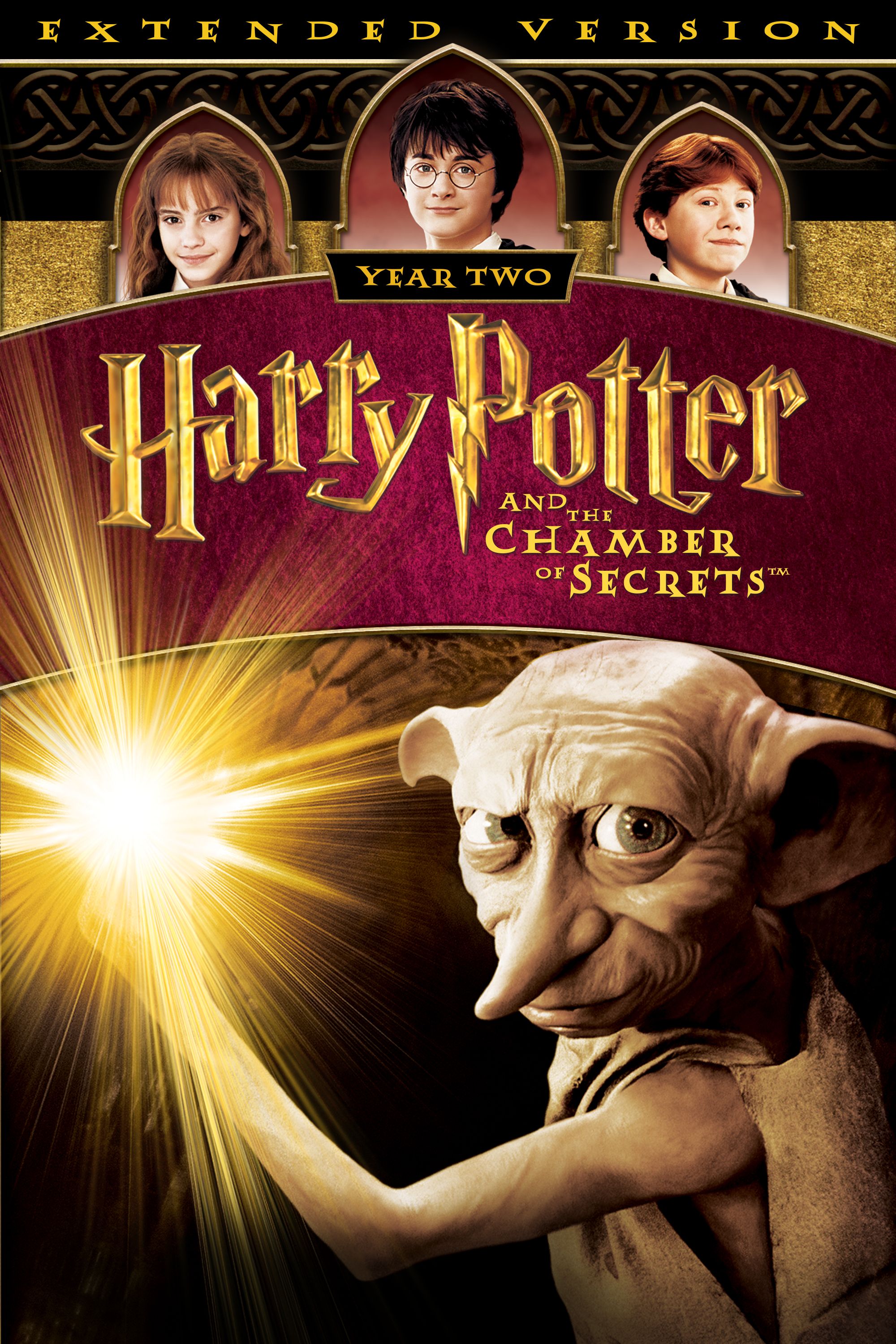
Home Media Release
When Harry Potter and the Chamber of Secrets arrived on home media, it wasn’t treated like a standard catalog release - it was positioned as a second major event in the film’s life cycle. By this point, Warner Bros. understood that Harry Potter wasn’t just a theatrical experience; it was something families would rewatch, collect, and grow up with.
The film was first released on VHS and DVD in April 2003, at a time when the industry was actively transitioning away from tape but still servicing both markets. VHS copies sold in enormous quantities, particularly to families with younger viewers, while the DVD release quickly became the preferred format thanks to its expanded bonus content and presentation.
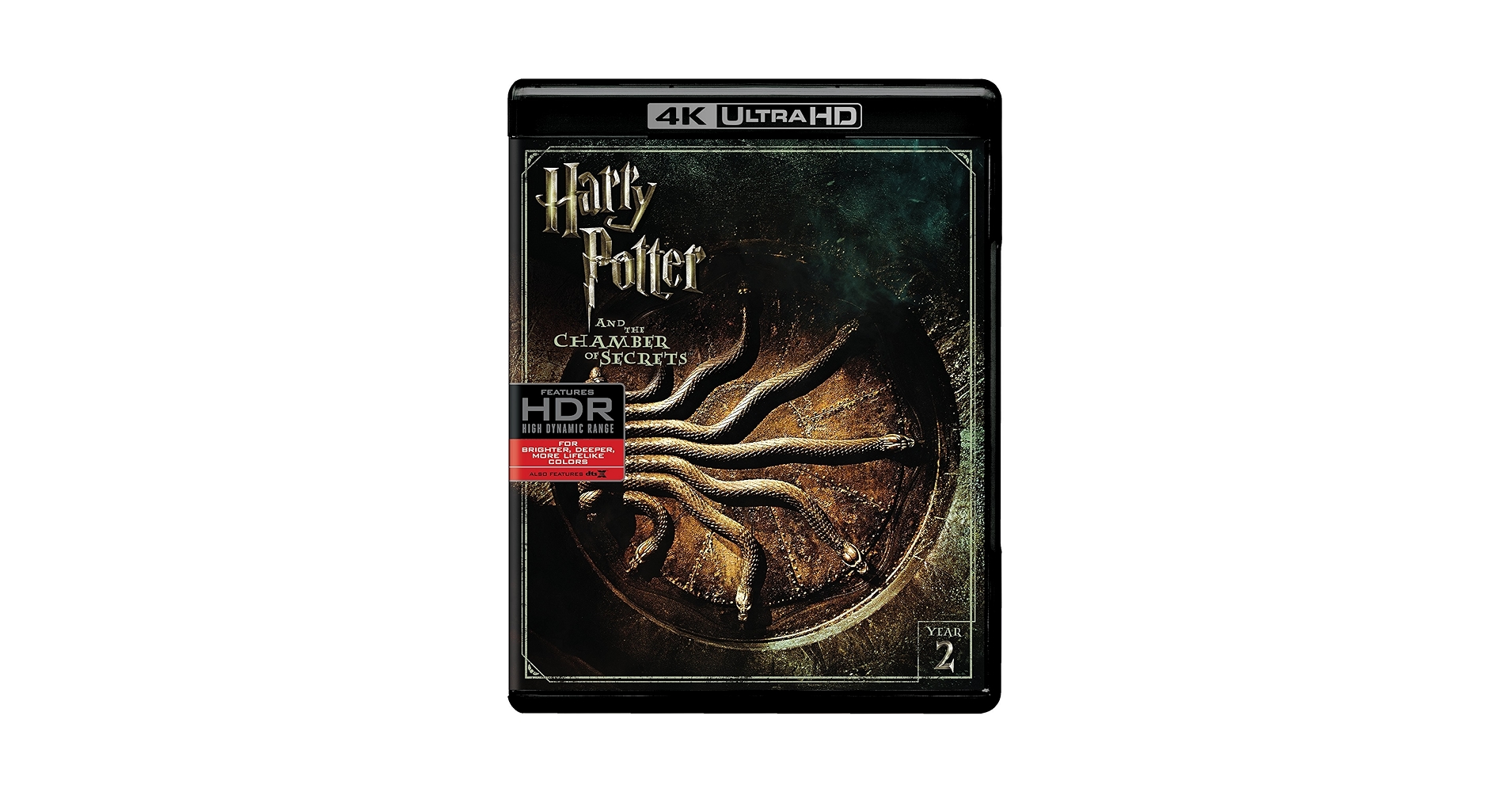
👉 Get Harry Potter and the Chamber of Secrets (4K UHD Blu-Ray) on Amazon here!
DVD Editions and Special Features
The DVD was offered in both single-disc and two-disc special editions, with the latter marketed heavily toward fans who wanted deeper access to the wizarding world. The special edition emphasized interactivity and immersion rather than simple promotional fluff.
Key features included:
Extensive behind-the-scenes documentaries covering production design, creature effects, and stunt work
Featurettes exploring the creation of Dobby, one of the most technically ambitious CGI characters of the era
Deleted scenes with optional commentary, offering insight into pacing decisions
Interactive Hogwarts-style menus designed to feel like extensions of the film’s universe
Unlike many early-2000s DVD extras, these features were clearly built with repeat viewing in mind. Warner Bros. wasn’t just selling a movie - they were selling time spent inside the world. And in my opinion, it's a huge reason the fandom only continued to grow.
Blu-ray and High-Definition Releases
As high-definition home media became standard, Chamber of Secrets was re-released on Blu-ray as part of both individual film editions and multi-film box sets. These versions featured remastered picture and sound, significantly improving the darker sequences in the Chamber itself and the basilisk battle.
Later Blu-ray collections bundled the film alongside the rest of the series, reinforcing the idea that Harry Potter was meant to be owned as a complete saga rather than consumed piecemeal.
On November 7, 2017, Harry Potter and the Chamber of Secrets was released on 4K UHD Blu-Ray for the first time. The set includes special features like Creating the World of Harry Potter, Part 2: Characters, The Chamber of Secrets Revealed, Screen Tests, Deleted Scenes and Trailers and TV spots.
👉 Get Harry Potter and the Chamber of Secrets (4K UHD Blu-Ray) on Amazon here!
Digital and Streaming Availability
With the rise of digital storefronts, Chamber of Secrets transitioned smoothly into digital purchase and rental formats, maintaining a steady presence across platforms. Over time, it became a recurring anchor title whenever the Harry Potter films shifted between streaming services, often driving spikes in franchise-wide viewership during holiday seasons.
Unlike many early-2000s blockbusters that faded into passive catalog status, this film remained an active performerwhenever it became newly available to stream.
Home Media Sales and Performance
Commercially, the home media release was a juggernaut.
The DVD debuted at #1 on home video sales charts, selling millions of units in its first weeks alone. Combined VHS and DVD sales generated hundreds of millions of dollars in revenue, making it one of the top-performing home media titles of its year.
More importantly, its success reinforced a crucial industry lesson: Harry Potter wasn’t just a movie franchise - it was a whole entire lifestyle property. Families bought it not once, but repeatedly, upgrading formats over time as technology evolved. That long-tail performance helped establish the franchise as one of the most reliable evergreen sellers in Warner Bros.’ history.
Legacy of the Home Media Era
In hindsight, Chamber of Secrets represents the peak of the DVD as a full experience era. Its menus, bonus content and presentation reflected a moment when studios believed - correctly - that fans wanted to live inside their favorite worlds, not just watch them. As I mentioned previously, I truly believe the home video releases and special features helped Harry Potter to leapfrog past other long running fandoms.
Even today, collectors often single out the early Harry Potter DVD releases as models of how home media could deepen fandom rather than merely archive it.
The Cultural Impact of Chamber of Secrets
Merchandise and Theme Parks
Elements introduced here - basilisks, Parseltongue, Tom Riddle’s diary - became staples across toys, apparel and later theme park attractions. The Wizarding World of Harry Potter would eventually bring the Chamber’s aesthetic into physical space, allowing fans to walk through the franchise’s darker mythology.
Lasting Fan Community
For many fans, Chamber of Secrets is the book that made the series feel serious. It sparked debates about Hogwarts houses, morality, and the nature of evil that still dominate fan spaces today. The revelation that Voldemort was once a student reframed the entire saga, encouraging readers to re-examine the past with new eyes.
Conclusion
Harry Potter and the Chamber of Secrets is where the franchise stops being a children’s fantasy and starts becoming a myth. It confronts the danger of inherited hatred, the seductive pull of nostalgia and the courage required to reject what history tells you that you are.
It’s not the flashiest installment, nor the most emotionally devastating - but it’s the one that quietly teaches Harry, and the audience, that monsters aren’t born. They’re remembered, taught, and allowed to grow.
And once the Chamber is opened, it never really closes again.
👉 Get Harry Potter 8 Film Set (4K UHD Blu-Ray + Digital) on Amazon here!
⬅️ Ultimate Guide to Harry Potter and the Sorcerer's Stone Ultimate Guide to Harry Potter and the Prisoner of Azkaban ➡️

On Air Talent / Creator / Author / Producer
Kyle McMahon is an American television personality, radio host, journalist, actor, singer and songwriter. He is known for appearing in Oprah's Lifeclass, the Oscar winning film Selma, hosting Pop Culture Weekly with Kyle McMahon on iHeart Radio and touring with LFO and O-Town.
Ultimate Guide to The Last Drive-In with Joe Bob Briggs