Madonna Albums Ranked & Reviewed: A Complete LISTEN! REACT! REVIEW! GUIDE
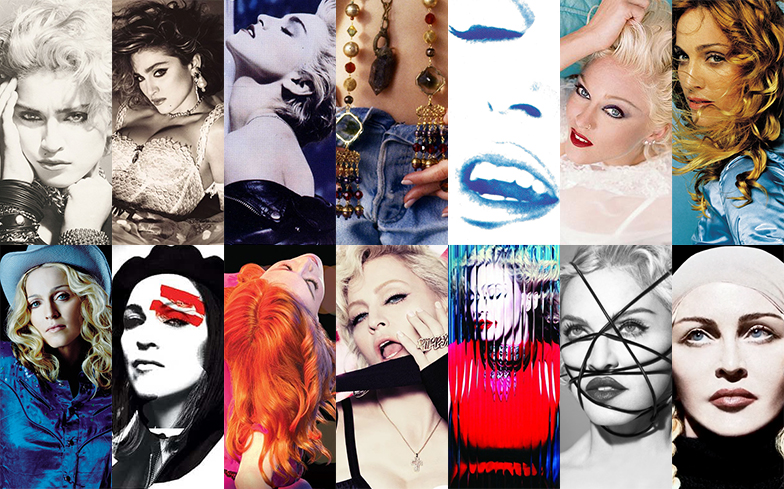
No pop star has weaponized reinvention quite like Madonna.
Across more than four decades, she’s shapeshifted through punk clubs, MTV dominance, religious controversy, electronica enlightenment, global politics, disco revivals and Lisbon art-house experiments - sometimes ahead of the curve, sometimes daring the curve to keep up.
This guide ranks and reviews every major Madonna album, including studio albums, soundtracks, remix projects, compilations, and companion releases, through the lens of LISTEN! REACT! REVIEW! - meaning cultural context, first-listen reactions, legacy impact, and whether the album still slaps in your headphones today.
Madonna's Albums Reviewed and Ranked
Madonna (1983)
Madonna’s self-titled debut album introduced a downtown club kid with a voice that sounded like confidence personified. Released on July 27, 1983, Madonna quietly climbed the charts before exploding into pop consciousness thanks to relentless singles, club play and heavy MTV rotation.
Tracks like “Holiday,” “Borderline,” and “Lucky Star” established her as a dance-pop force while laying the groundwork for the image-driven pop star model that would soon dominate the industry. It wasn’t the loudest debut of the decade - but it might be the most foundational.
📍Check out Madonna's Self Titled Album 'Madonna' - The Ultimate Guide here.
👉 Get Madonna (Vinyl) on Amazon here!
Like A Virgin (1984)
Released November 12, 1984, Like a Virgin didn’t just elevate Madonna - it detonated pop culture. Produced primarily by Nile Rodgers, the album fused dance, funk and provocation into something that felt dangerous on mainstream radio.
The title track, “Material Girl,” and “Dress You Up” turned Madonna into an icon and a lightning rod overnight. The VMAs wedding-dress performance sealed her place in pop history, while the album itself proved controversy could be commercially bulletproof.
📍Check out Madonna's Like A Virgin Album - The Ultimate Guide here!
True Blue (1986)
True Blue arrived as Madonna’s declaration of adulthood. Released June 30 1986, the album leaned into classic pop structures, emotional maturity and autobiographical themes tied to her marriage to Sean Penn.
With hits like “Papa Don’t Preach,” “Open Your Heart,” and “Live to Tell,” the album showcased a more controlled, vocal-forward Madonna while still dominating the charts globally. It remains one of her most commercially successful and widely beloved releases.
Who's That Girl (1987)
Released in July 21 1987, Who’s That Girl served as the soundtrack to Madonna’s film of the same name. While not a traditional studio album as it only contained four Madonna songs, it delivered one of her most enduring singles alongside a mix of pop and Latin-influenced tracks.
Though often overshadowed by her studio work, the album captures Madonna at the height of her late 1980's global domination.
You Can Dance (1987)
Released November 17 1987, You Can Dance was Madonna’s first remix album, one of the first remix albums ever - and a blueprint for how pop artists could recontextualize existing hits for club culture.
Extended mixes, new vocal takes and seamless transitions from her first three albums turned familiar songs into DJ-ready floor-fillers. It also proved Madonna understood dance culture as deeply as she understood pop stardom.
Like A Prayer (1989)
Like a Prayer marked Madonna’s artistic coming-of-age. Released March 20 1989, it fused pop with gospel, rock, dance and deeply personal themes about family, faith, and identity.
The title track’s video ignited controversy, corporate backlash, and cultural debate - exactly the environment Madonna thrives in. Sonically rich and emotionally raw, this album is often cited as her first true “statement” record.
I'm Breathless (1990)
Released May 21, 1990 alongside Dick Tracy, I’m Breathless leaned into jazz, Broadway and camp theatrics. Though technically a soundtrack companion, the entire album solely featured original songs written and performed by Madonna.
“Vogue” — an absolute cultural reset — alone ensures this album’s legacy, even as the rest of the project exists in a delightful, strange, and theatrical corner of her catalog.
The Immaculate Collection (1990)
Released November 12, 1990, The Immaculate Collection didn’t just compile hits - it freakin canonized them. Featuring new mixes using QSound technology, the album introduced Madonna’s catalog to an entirely new generation. This unbelievably white hot greatest hits collection was packed so full, it had to leave numerous #1's off its track list.
New songs “Justify My Love” and “Rescue Me” ensured this wasn’t just a nostalgia package but a living, breathing era.
Erotica (1992)
Released October 19, 1992 alongside the Sex book, Erotica remains Madonna’s most polarizing album. It leaned into house, hip-hop and New York club culture while confronting sexuality, power and taboo head-on.
Commercially misunderstood at the time, the album has since been critically re-evaluated as one of her boldest and most cohesive works.
Bedtime Stories (1994)
After the cultural backlash of Erotica, Madonna softened the edges with Bedtime Stories. Released October 24 1994, the album embraced R&B, trip-hop, and introspection.
“Take a Bow” became a career-defining ballad, while tracks like “Human Nature” doubled as self-defense manifestos.
Something To Remember (1995)
Released November 3, 1995, Something to Remember reframed Madonna as a serious vocalist and interpreter of emotion. Focusing on ballads, the compilation helped reset her public image from the massive backlash of Erotica and the Sex book ahead of Evita.
Evita (1996)
Madonna’s performance in Evita as Eva Perón earned her a Golden Globe and stunned skeptics. The soundtrack showcased vocal discipline and dramatic depth, forever altering perceptions of her abilities as a performer. While technically not a Madonna album in the traditional set, she dominates the tracklist across 31 tracks, either solo or with fellow cast members on 26 of them.
Ray of Light (1998)
After Evita, Madonna returned to pop transformed - Not just as a person but as a songwriter, vocalist and producer. Ray of Light introduced electronic textures, spiritual themes, and a newfound emotional clarity.
Often hailed as her masterpiece, the album redefined her artistry and influenced an entire generation of electronic-pop experimentation.
Music (2000)
Music fused electronic beats with Americana, humor and post-millennial confidence. The title track became an instant classic, while the album proved Madonna could still dominate the charts in a changing industry.
GHV2 (2001)
Released November 13, 2001, GHV2 focused on Madonna’s ’90s output, filling in gaps left by The Immaculate Collection and cementing her second decade of hits.
American Life (2003)
Released during a politically volatile moment, American Life stripped back the pop gloss in favor of introspection, critique and electronic minimalism.
Misunderstood on release, the album has since gained appreciation for its ambition and vulnerability.
Remixed & Revisited (2003)
Released on November 24, 2003, Remixed & Revisited served as a companion to American Life - and a partial course correction.
The EP combined high-profile remixes with stripped-down acoustic performances, offering two radically different interpretations of the same material. The acoustic tracks, in particular, reframed American Life as a songwriting-driven project rather than a purely electronic provocation.
While short, this release plays an important role in the American Life era’s long-term reappraisal.
Confessions on a Dancefloor (2005)
A full-throttle return to club culture, Confessions on a Dancefloor delivered nonstop dance energy and critical acclaim. The seamless mix format turned the album into a single extended experience.
I'm Going To Tell You A Secret (2006)
Released in 2006, I’m Going to Tell You a Secret documented Madonna’s Re-Invention Tour, widely regarded as one of the most ambitious tours of her career.
The accompanying live album captured a Madonna in transition - blending spiritual imagery, political commentary and reworked versions of classics into a theatrical, confrontational experience. While not a traditional “hits live” album, it reflects her shift toward tours as conceptual statements rather than greatest-hits jukeboxes.
This project also helped redefine what a Madonna live release could be: intimate, provocative and ideologically charged.
The Confessions Tour (2007)
Following the critical and commercial success of Confessions on a Dance Floor, The Confessions Tour arrived in 2007 as a victory lap - and a statement.
The live album preserved a high-concept, disco-fueled spectacle that blended religious imagery, political commentary and nonstop dance energy. Madonna didn’t just perform the album; she expanded it, remixing songs across her entire catalog into a continuous club experience.
This era reinforced her dominance as a live performer and set a benchmark for pop tours in the 21st century.
Hard Candy (2008)
Leaning into contemporary hip-hop and pop trends, Hard Candy reflected Madonna’s willingness to chase modern sounds — with mixed results.
Celebration (2009)
Released September 18, 2009, Celebration acted as a career-spanning victory lap while introducing new hits to her catalog.
Sticky & Sweet Tour (2010)
Released in 2010, the Sticky & Sweet Tour album documented what was, at the time and for a decade and a half after, the highest-grossing tour ever by a solo artist.
The setlist leaned heavily on Hard Candy and Confessions material while reworking classic hits into hyper-modern, stadium-sized performances. This release captures Madonna fully embracing the spectacle era of pop touring - massive visuals, aggressive choreography and genre-blending arrangements.
It’s less intimate than earlier live albums, but undeniably monumental.
MDNA (2012)
Chaotic and emotional, MDNA captured Madonna in transition - balancing EDM trends with deeply personal heartbreak.
👉 Get Madonna's MDNA (vinyl) on Amazon here!
MDNA World Tour (2013)
Released in 2013, the MDNA World Tour album reflected one of Madonna’s most controversial touring eras.
The performances were confrontational, politically charged, and often polarizing, mirroring the fractured reception of the MDNA studio album itself. Sonically aggressive and visually provocative, the tour doubled down on Madonna’s refusal to soften with age or public expectation.
As a live document, it captures Madonna at her most defiant.
Rebel Heart (2015)
Following one of the most infamous leaks in pop history, Rebel Heart became a messy commercial release but fascinating reflection of Madonna’s duality: rebel and romantic.
Rebel Heart Tour (2017)
The Rebel Heart Tour album, released in 2017, showcased a warmer, more reflective Madonna.
Balancing theatricality with vulnerability, the performances blended stripped-down moments with bombastic pop spectacle. The tour leaned more heavily into Madonna’s legacy than she ever had, while still asserting her relevance, reframing Rebel Heart as an album about duality rather than chaos.
As a live release, it stands out for its emotional range and sense of reconciliation between past and present Madonna.
Madame X (2019)
Four years after Rebel Heart, Madonna returned with Madame X, a politically charged, globally influenced, deliberately confrontational album that refused to chase trends.
📍 LISTEN: Pop Culture Weekly, Episode 24: Madonna & Madame X (featuring Monte Pittman)
Madame X: Music from the Theater Xperience (2021)
A raw, intimate live companion album capturing the stripped-down Madame X tour experience from a once in a lifetime tour where Madonna did theater residencies over stadiums and arenas.
Finally Enough Love: 50 Number Ones (2022)
Released August 19, 2022, Finally Enough Love: 50 Number Ones wasn’t just another hits compilation - it was a statistical flex.
Finally Enough Love celebrated Madonna’s unprecedented run of 50 number-one singles on Billboard’s Dance Club Songs chart, reintroducing her hits catalog through remixes and remastered production. It reframed her legacy through the lens of club culture, where her influence has arguably been most consistent.
👉 Get Madonna's Finally Enough Love: 50 Number Ones (vinyl) on Amazon here!
Veronica Electronica (2025)
Released July 25, 2025, after two and a half decades of rumors, Veronica Electronica finally emerged as a long-teased Ray of Light companion - altered from its original myth but fascinating nonetheless.
Bedtime Stories: The Untold Chapter (2025)
Released November 28, 2025, this archival project revisited the Bedtime Stories era with unreleased material, alternate takes and historical context - closing a long-standing chapter in Madonna lore.
Madonna's Iconic Discography
Ranking Madonna’s albums is ultimately an impossible task - not because the discography is too big, but because it refuses to sit still. Each record exists in conversation with the one before it, reacting to culture, backlash, technology and Madonna herself in real time. From downtown dance floors to global stadiums, from controversy to canonization, these albums don’t just reflect pop history - they actually and actively shaped it. Whether you agree with every ranking or feel personally attacked by at least three of them (you’re supposed to), this LISTEN! REACT! REVIEW guide isn’t about crowning a single “best” Madonna album. It’s about tracing the evolution of an artist who never stopped moving forward - and never waited for permission to do it.
Long live the Queen!
📍 WATCH: Madonna at 60: A Kyle2U Video

On Air Talent / Creator / Author / Producer
Kyle McMahon is an American television personality, radio host, journalist, actor, singer and songwriter. He is known for appearing in Oprah's Lifeclass, the Oscar winning film Selma, hosting Pop Culture Weekly with Kyle McMahon on iHeart Radio and touring with LFO and O-Town.
Ultimate Guide to The Last Drive-In with Joe Bob Briggs