The Complete Filmography of Luc Besson
The Complete Filmography of Luc Besson: Every Film, Every Era, and His Lasting Impact on Modern Cinema
When you talk about visually bold filmmakers who changed the look and feel of action and science fiction cinema, you have to talk about Luc Besson. So that's why I've compiled the complete filmography of Luc Besson.
He is the director who gave us Léon: The Professional. He is the mind behind The Fifth Element. He helped engineer the slick, European-flavored action boom of the 2000s. And whether you see him as an arthouse stylist, a blockbuster maximalist, or an architect of the modern assassin movie, his fingerprints are everywhere.
This is your complete, fully updated Complete Filmography of Luc Besson’s filmography, including every feature film he has directed and the major franchises he helped build behind the scenes.
Luc Besson’s Early Years: Atmosphere Over Everything
The Last Battle (1983)
Besson made his feature debut with The Last Battle (originally titled Le Dernier Combat), a stark, black-and-white post-apocalyptic film with almost zero dialogue. The movie focuses on survival in a desolate future world where communication has nearly disappeared.
From the beginning, Besson showed that he cared more about mood and visual storytelling than exposition. The film established his love for silence, minimalism, and imagery that communicates emotion without relying on constant dialogue. It also signaled that he was not interested in making conventional films.
Starring: Pierre Jolivet, Jean Bouise, Jean Reno
Subway (1985)
With Subway, starring Christopher Lambert and Isabelle Adjani, Besson leaned fully into style. Set in the neon-lit underworld of the Paris Métro, the film follows a petty criminal who becomes entangled in a strange underground society.
The film became associated with France’s “cinéma du look” movement, which emphasized stylized visuals, music-driven sequences, and characters who lived on the margins of society. This fascination with outsiders navigating heightened realities would become one of Besson’s defining themes.
Starring:
The Big Blue (1988)
The Big Blue was a massive success in Europe and cemented Besson as a major filmmaker. The film tells the story of two free divers whose rivalry and obsession with the ocean define their lives.
The movie is dreamy, emotional, and visually hypnotic. It also reflects Besson’s lifelong fascination with water, silence, and characters who feel more at home in extreme environments than in everyday society. It was the moment he proved he could deliver both spectacle and emotional depth.
Starring:
The Assassin Era: Reinventing the Action Genre
La Femme Nikita (1990)
La Femme Nikita tells the story of a troubled young woman who is transformed into a government assassin. The film blends stylized action with emotional vulnerability and helped establish the template for the modern female assassin thriller.
Its influence can be seen in countless later films and television series. More importantly, it reinforced Besson’s interest in lethal characters who are emotionally fragile and searching for identity.
Starring:
Léon: The Professional (1994)
With Léon: The Professional, Besson achieved international recognition. Starring Jean Reno, a young Natalie Portman, and an unhinged Gary Oldman, the film follows a solitary hitman who forms an unlikely bond with a young girl after her family is murdered.
The film remains controversial and widely debated, but it is undeniably influential. It combined operatic violence with surprising tenderness and solidified Besson’s reputation for pairing brutality with emotional intimacy.
Starring:
Atlantis (1991)
Although released between Nikita and Léon, Atlantis deserves its own mention. This documentary features stunning underwater imagery and no narration. It functions more as a visual meditation than a traditional documentary and further emphasizes Besson’s recurring obsession with the ocean.
Starring:
The Sci-Fi Spectacle Years
The Fifth Element (1997)
Few science fiction films look or feel like The Fifth Element. Starring Bruce Willis, Milla Jovovich, and Gary Oldman, the film is a colorful, operatic, futuristic adventure that blends comedy, action, and romance.
Over time, it has become a cult classic and a design icon. Its production design, costumes, and world-building continue to influence science fiction aesthetics decades later.
Starring:
The Messenger: The Story of Joan of Arc (1999)
Besson followed up with a large-scale historical epic starring Milla Jovovich as Joan of Arc. The film is intense, psychological, and visually grand. While it divided critics, it demonstrated Besson’s willingness to tackle historical and religious material with blockbuster scale.
Starring:
Reinvention, Franchises, and Global Ambition
Angel-A (2005)
After several years focused on producing, Besson returned with Angel-A, a black-and-white romantic fantasy set in Paris. The film feels intimate and stylized, echoing his earlier European work.
Starring:
The Arthur Trilogy (2006–2010)
With Arthur and the Invisibles and its sequels, Besson attempted to build a global family fantasy franchise. The films combined live action and CGI and were based on children’s books he authored. While reception was mixed, they revealed his ambition to create his own long-running cinematic universe.
Starring:
The Lady (2011)
Starring Michelle Yeoh, The Lady tells the story of Aung San Suu Kyi. The film is restrained and politically focused, marking a departure from Besson’s more stylized genre work.
Starring:
Lucy (2014)
Lucy, starring Scarlett Johansson, became a major global hit. The film imagines a woman who unlocks the full potential of her brain and evolves beyond normal human limitations. While scientifically questionable, the film delivered fast-paced action and strong box office returns.
Starring:
Valerian and the City of a Thousand Planets (2017)
Adapted from a French comic series, Valerian was an ambitious and visually stunning science fiction epic. Although it underperformed financially, its opening sequence and production design remain widely praised.
Starring:
The Return to Intimate Storytelling
DogMan (2023)
Starring Caleb Landry Jones, DogMan marks a return to character-driven storytelling. The film centers on a wounded outsider navigating trauma and survival, echoing many of Besson’s early themes.
Starring:
Get DogMan (Blu-Ray) on Amazon here!
Dracula: A Love Tale (2025)
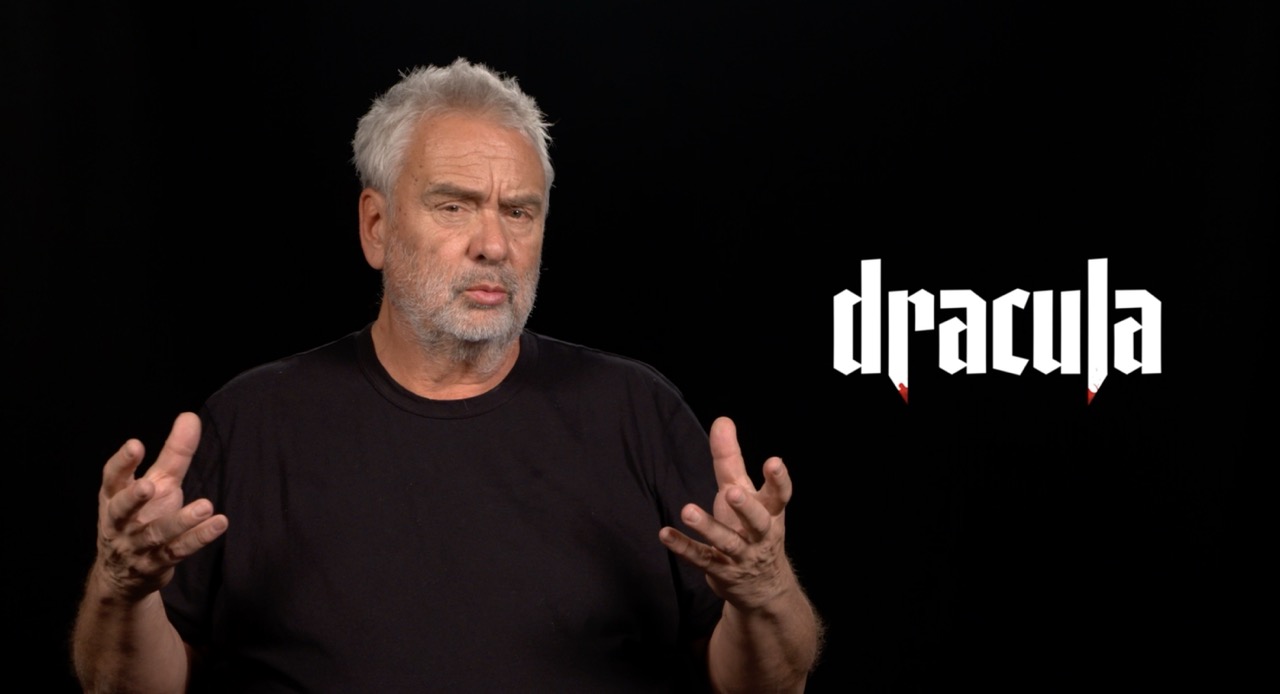
In Dracula: A Love Tale, Besson reframes the legendary vampire as a tragic romantic figure rather than a straightforward horror villain. The film emphasizes gothic atmosphere and emotional longing rather than jump scares, continuing his fascination with outsiders who love intensely and destructively.
Starring: Caleb Landry Jones, Zoë Bleu,
The EuropaCorp Effect: How Luc Besson Shaped 2000s Action
Beyond directing, Besson founded EuropaCorp and became one of the most influential producers in European action cinema. Through his writing and producing work on films such as The Transporter, Taken, Taxi, District B13 and Colombiana, he helped define a streamlined, high-concept style of action storytelling that dominated the 2000s.
These films often featured skilled but emotionally distant protagonists, kinetic fight choreography, and tightly focused revenge plots. Even when he was not in the director’s chair, his creative DNA was present.
Recurring Themes in Luc Besson’s Filmography
Across decades of work, several themes repeatedly emerge. Besson gravitates toward outsiders who struggle to fit into conventional society. He frequently centers lethal characters who are emotionally vulnerable. His films often prioritize bold visual design over strict realism. Whether in science fiction, historical epics, crime thrillers, or gothic romance, he returns to the idea that love and isolation are powerful, often destructive forces.
Final Thoughts: Why Luc Besson Still Matters
Luc Besson’s career has moved through distinct phases, from French stylist to Hollywood spectacle maker to global franchise builder and back to intimate storytelling. Not every project has been universally praised, and some have sparked intense debate. However, few filmmakers of his generation have shifted between art-house cinema and large-scale genre filmmaking with such confidence.
If you love bold visuals, emotionally intense outsiders, operatic action, and science fiction that is not afraid to be strange, then Luc Besson’s filmography offers a fascinating journey through four decades of modern cinema.
And whether you first met him through Léon, The Fifth Element, Lucy, or Dracula: A Love Tale, one thing is clear.... Luc Besson does not make small films. He makes big worlds.

On Air Talent / Creator / Author / Producer
Kyle McMahon is an American television personality, radio host, journalist, actor, singer and songwriter. He is known for appearing in Oprah's Lifeclass, the Oscar winning film Selma, hosting Pop Culture Weekly with Kyle McMahon on iHeart Radio and touring with LFO and O-Town.
Ultimate Guide to The Last Drive-In with Joe Bob Briggs