The BRIEF History of Pop Music: How It Started, Why People Love to Hate It, and Why It Refuses to Die
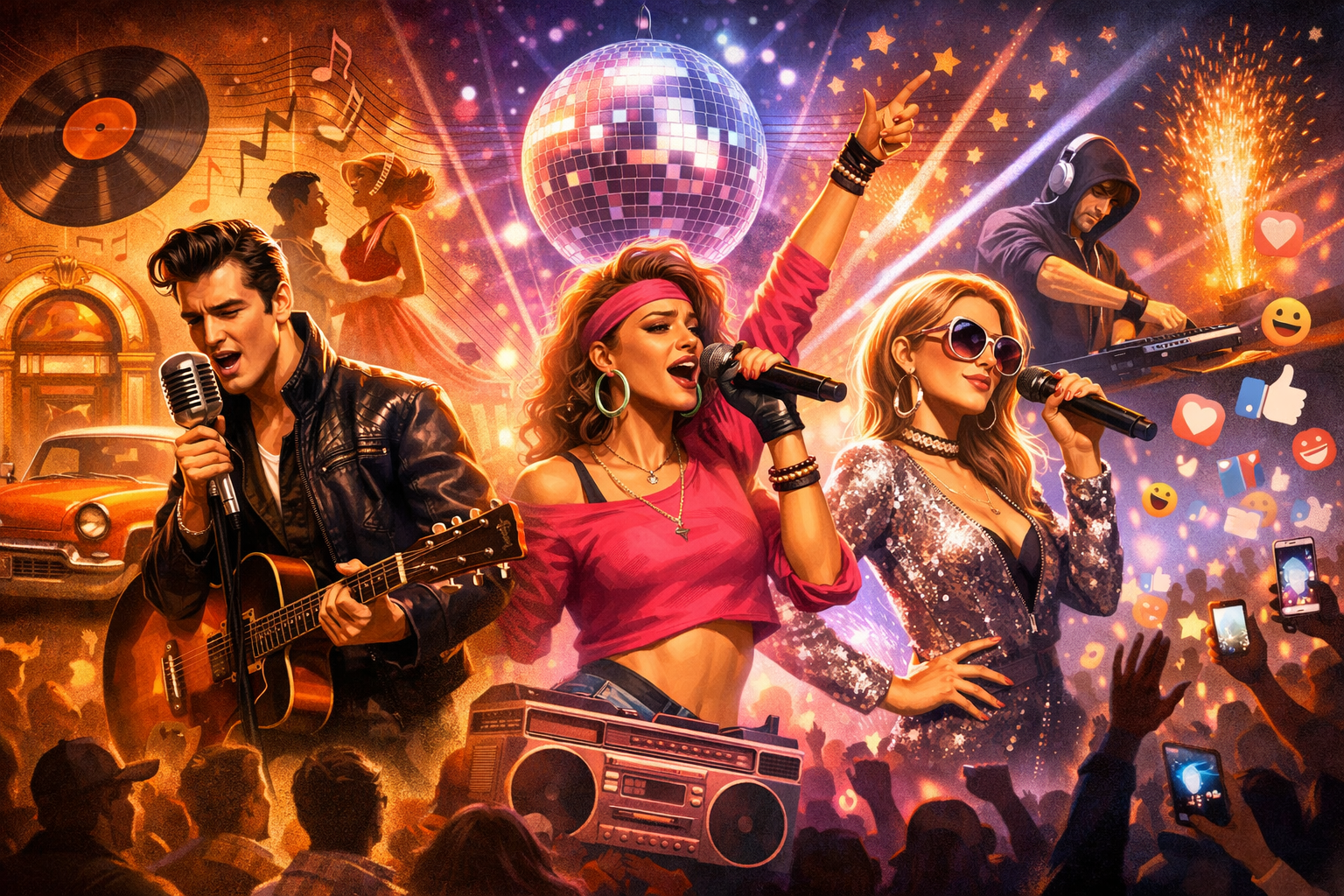
Pop music has been declared dead so many times you'd think it would take the hint. And yet, every year it comes back - with a new sound, a new face and a chorus you swear you hate until you're whisper-singing it at a red light, hoping nobody you know sees you. Here's the brief history of Pop Music - How it started, why people love to hate it and why it refuses to die.
First, Let's Clear Something Up About Pop Music
Before we can talk about the history of pop music, we need to establish one thing: pop - for the purposes of this article - is not a genre. It's not a sound. It's not even a chord progression.
Pop music is simply whatever the most people are listening to at the same time.
That's it. That's the whole definition. It's capitalism with a chorus. Pop music is always changing because attention changes, technology changes, and teenagers get bored faster than most of us can keep up with. It doesn't wait for approval and doesn't ask permission. It just shows up, dominates, and moves on.
And because pop is defined by what people are actually listening to rather than by any fixed sound or genre, it's been shapeshifting since the very beginning. Understanding pop music means understanding that its changing landscape - driven by technology, cultural shifts and generational mood swings - is the whole point. There is no "real" pop music to get back to. There's only the version that's happening right now, and the version that will replace it when we least expect it.
Where It All Started: Crooners, Chaos, and Two Very Dangerous Hips
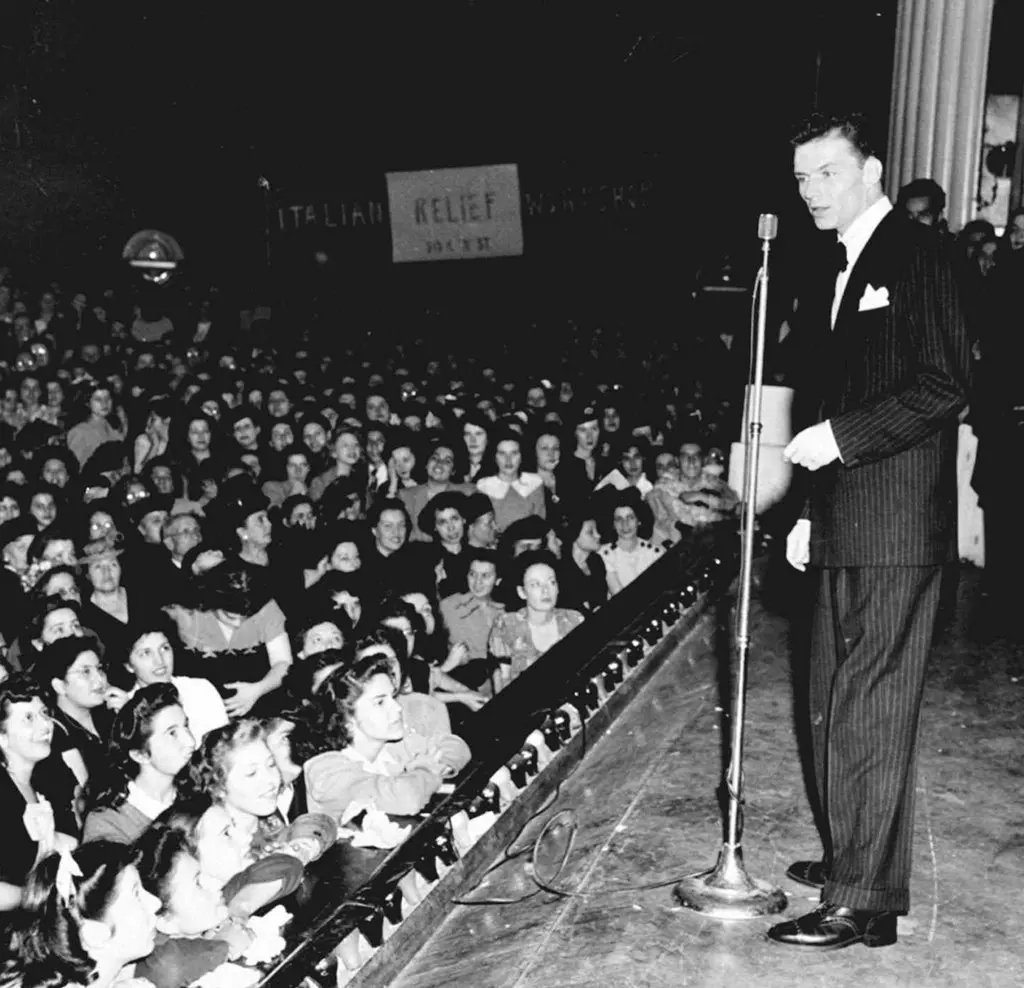
Pop music doesn't start with TikTok. It doesn't start with Madonna. It starts with crooners on the radio. Before radio, music was mostly live, formal and exhausting. After radio, music moved into your house. And suddenly, there were pop stars.
Frank Sinatra wasn't just popular - he caused mass hysteria. Teenagers screamed. Parents panicked. Doctors were consulted. Teen idol magazines were born, and absolutely nothing was learned from any of it. The blueprint for moral panic over popular music was established, and every generation since has faithfully followed it.
Then came Elvis Presley. And oh boy, the hips. Adults were convinced civilization was ending. His hip movements were so apparently threatening to the social order that they became a genuine cultural controversy - TV cameras famously filmed him from the waist up to protect innocent eyes from the pelvis situation. Not the first time adults decided that a young person's body language was going to destroy society. Definitely not the last.
Then the '60s happened, and pop music officially became a youth movement. That's the moment adults realized they were no longer the target audience — and they took that very, very personally. The Beatles didn't just make hits; they changed fashion, music and even how fame worked. They transformed the entire concept of what a pop star could be: not just an entertainer, but a cultural force. At the same time, Motown Records was perfecting pop precision with catchy, polished songs that sounded simple but hit you much deeper emotionally. Pop was no longer just entertainment. It was identity. And nothing scares adults more than young people enjoying things.
The '70s: What If Pop Music Was Just... A Lot?
The '70s asked one bold question: what if pop music was a lot? And the answer was a resounding yes.
Disco exploded. Dance floors ruled everything. The Bee Gees were everywhere — you couldn't escape them. And rock fans hated disco so much that they organized disco demolition nights across the country, where they would literally blow up records instead of just, you know, not buying them. The level of organized rage directed at a genre of music that was, fundamentally, just about dancing is one of the most revealing moments in pop history.
Meanwhile, David Bowie walked in and asked what would happen if music questioned gender, identity, and reality itself. Pop said sure, why not, and absorbed that too - because pop absorbs everything eventually.
What the '70s ultimately proved is something that still rings true today: people don't hate pop music. They hate how popular that music is. The rage was never really about the music. It was about who the music belonged to, and the fact that it wasn't them.
The '80s: When Pop Became Something You Watched
Then came the '80s, and everything changed. Again.
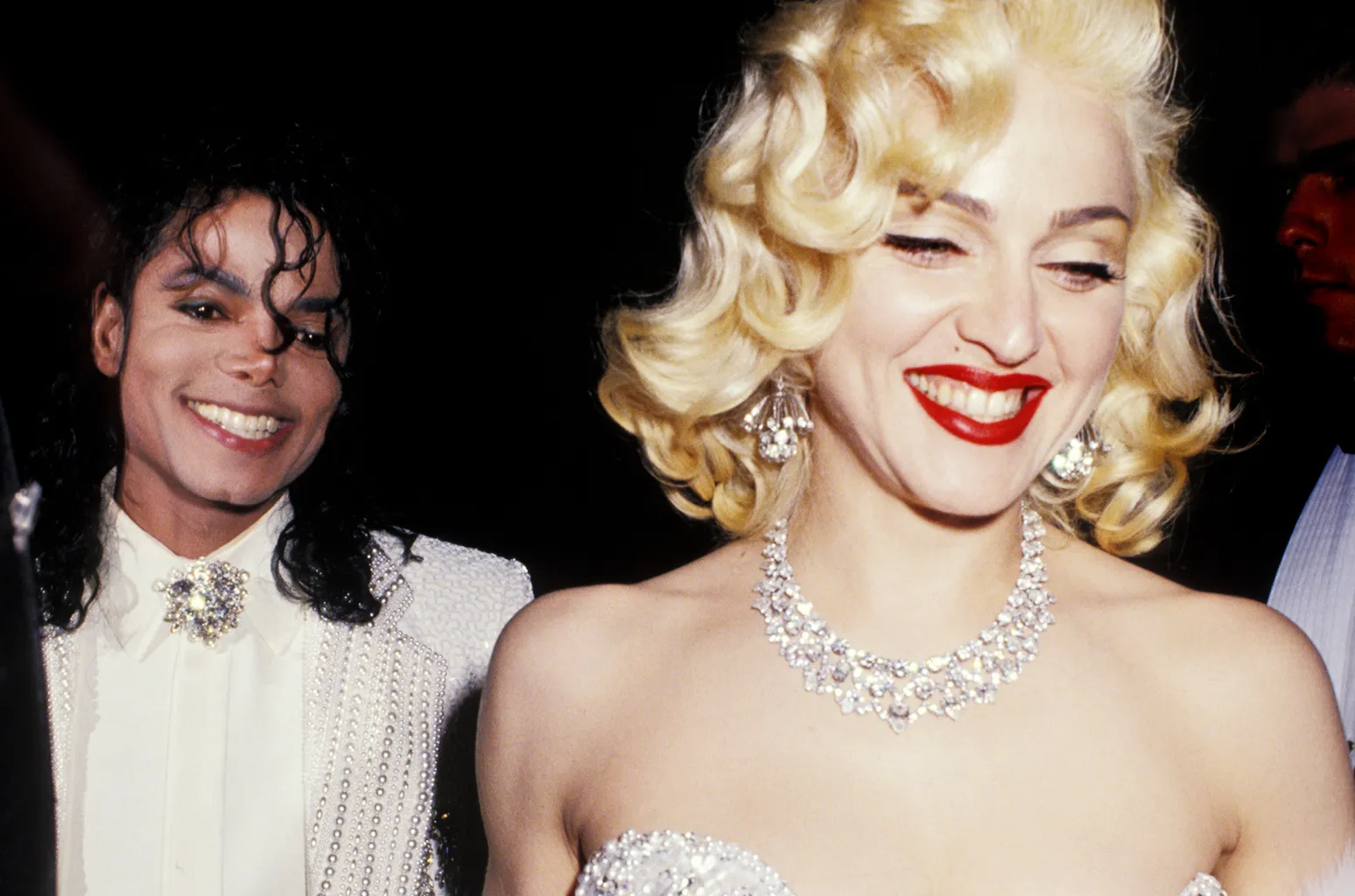
MTV launched, and suddenly pop music wasn't just heard - it was seen. Looks mattered. Style mattered. Talent mattered, mostly. But vibes? Vibes mattered more. If you didn't have a visual identity in this era, you didn't exist. Which is why every artist suddenly owned a fog machine and a frankly irresponsible amount of hairspray.
Madonna turned reinvention into an art form - the blueprint, in fact. She didn't just release music; she became a constantly evolving visual statement that forced the culture to keep up with her. Michael Jackson turned music videos into an art form - the blueprint, in fact. Thriller wasn't just a song; it was a short film that redefined what a music video could be and set a standard the industry spent decades chasing.
The era also gave us George Michael, Prince, Cyndi Lauper, and Tina Turner - a murderer's row of artists who understood that in the MTV age, the camera was as important as the microphone.
The Late 90's Pop Manufacturing Explosion
The late '90s then took pop manufacturing to its logical conclusion: boy bands, pop princesses, hooks engineered to live rent-free in your brain forever. Backstreet Boys, *N SYNC, Britney Spears - teenagers loved it and adults hated it, which is pop music's official seal of approval. And as always, about 10 to 15 years later, everyone who claimed to hate it suddenly pretended they loved it all along. Pop that belongs to young people is always dismissed as shallow, right up until nostalgia makes it safe to admit the truth.
Technology Broke Everything (And Then Fixed It Differently)
Then technology broke everything. Napster showed up and asked what if music was free? Artists responded with something along the lines of "Cool, cool - wait, what?" The traditional music distribution model, which had structured the entire industry for decades, crumbled basically overnight.
Then streaming arrived, and Spotify didn't just change how people listen to music = it changed what becomes popular. Algorithms now influence what rises to the top, which is how everyone ended up listening to the same albums at the same time around the world while insisting they all have completely unique, personal taste. Songs got shorter because apparently three minutes is all anyone deserves now. Pop music sped up. Fame cycles compressed. Someone can blow up overnight and be forgotten in three business days - less, if they do something stupid.
But here's what's genuinely remarkable about the streaming era: pop music is more democratic than it has ever been. Anyone can blow up. Anyone can connect. Anyone can soundtrack someone else's life - including, as the logic goes, a guy who recorded an entire song in his car while eating Taco Bell. That's terrifying, and also kind of incredible, and it's completely consistent with what pop music has always done: go wherever the people are.
Why Pop Music Keeps Winning
Pop music survives because it reflects us - our moods, our messes, our moments. It's easy to mock. It's a lot harder to admit that it carried you through something real: a rough time, a love, a breakup, a Wednesday afternoon that felt like it would never end.
Pop sticks because it marks time. That song you heard at 16 doesn't just bring back a melody - it brings back a whole version of yourself. That's not shallow. That's actually the opposite of shallow.
"Pop isn't shallow; it's human."
No matter how many times someone with a microphone and a podcast declares pop music dead, it comes back - always with a new sound, a new face, and a chorus you swear you hate until you catch yourself singing it somewhere embarrassing. Pop music's survival has never depended on critical approval or cultural gatekeepers. It depends on whether it reflects what people are actually feeling, and it turns out people keep having feelings. What a nightmare. What a gift.

On Air Talent / Creator / Author / Producer
Kyle McMahon is an American television personality, radio host, journalist, actor, singer and songwriter. He is known for appearing in Oprah's Lifeclass, the Oscar winning film Selma, hosting Pop Culture Weekly with Kyle McMahon on iHeart Radio and touring with LFO and O-Town.
Ultimate Guide to The Last Drive-In with Joe Bob Briggs